 Drape Haus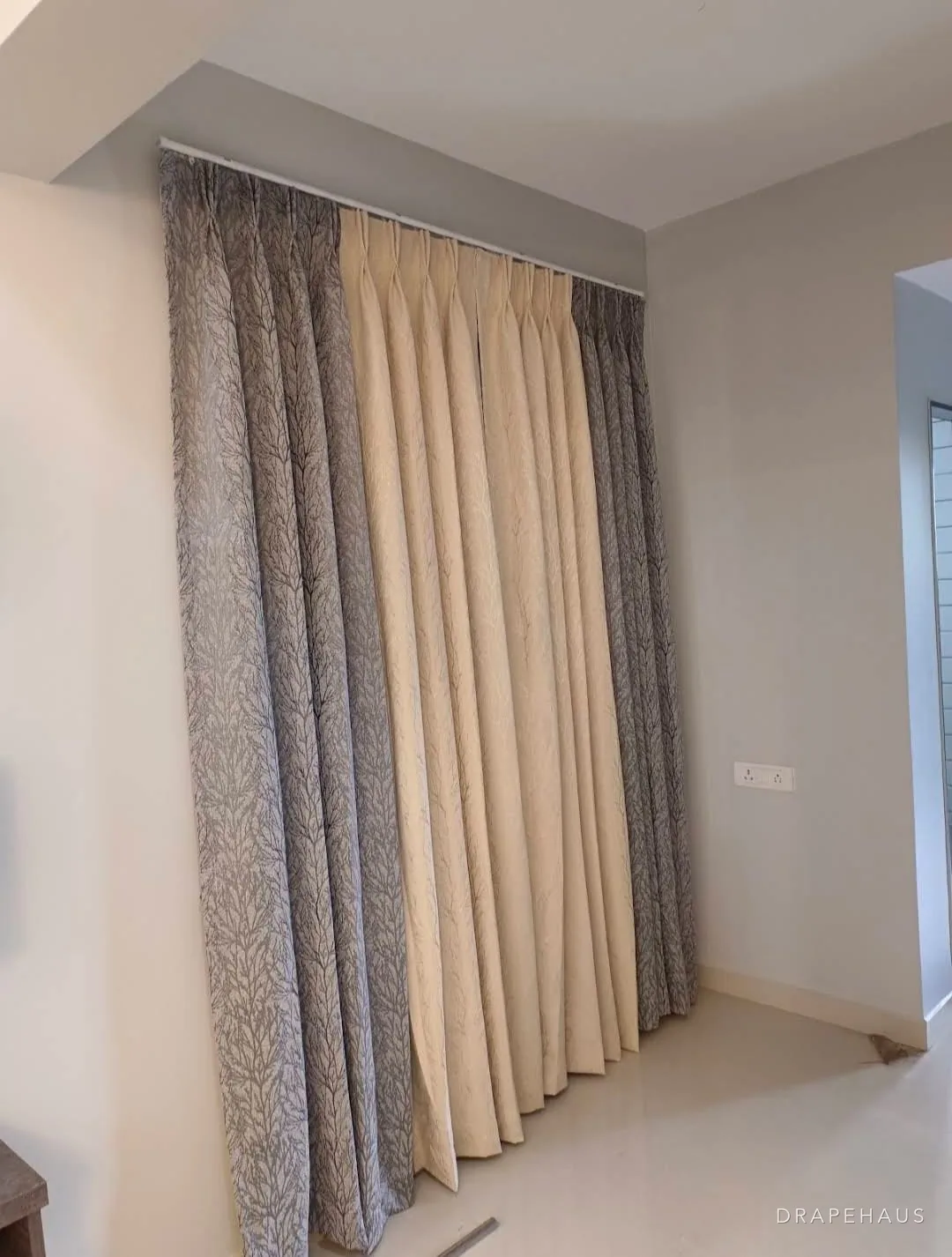
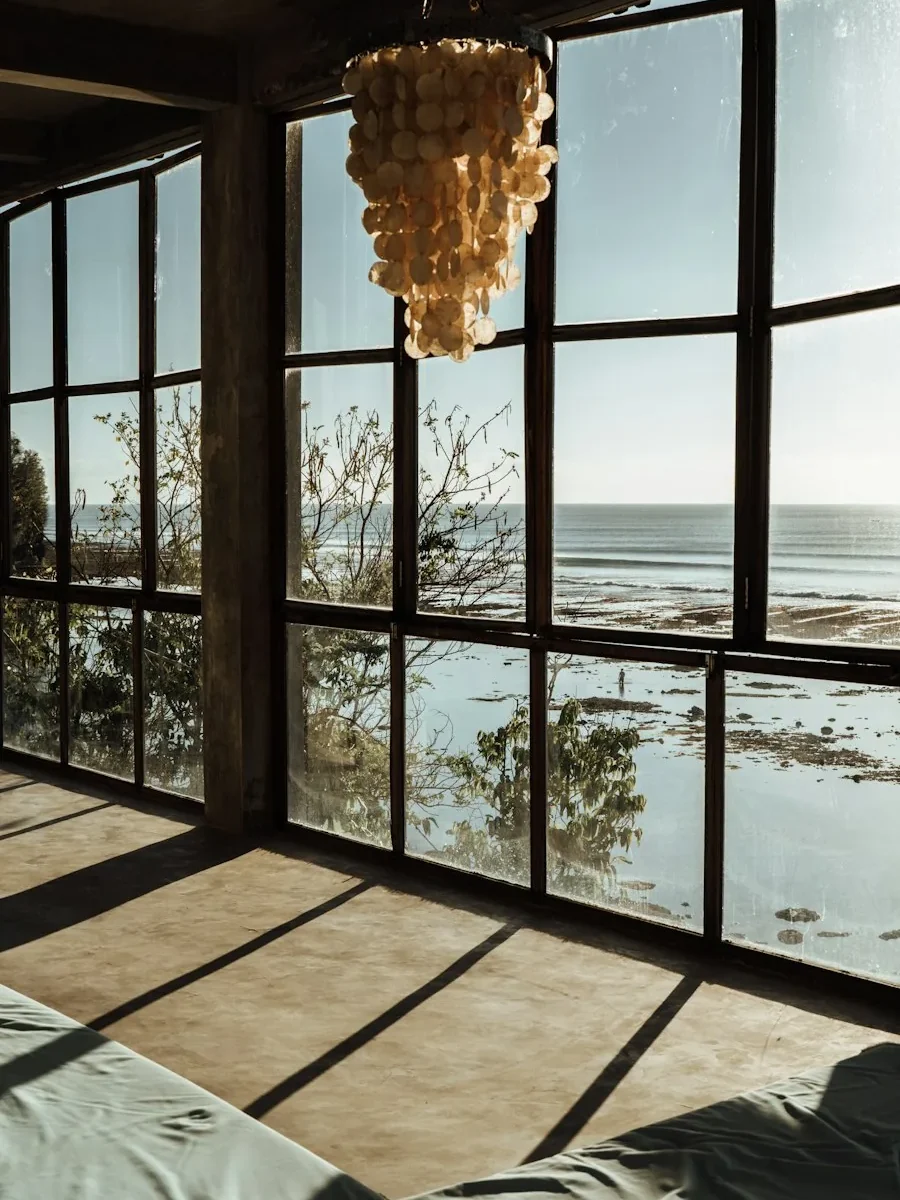
The best curtain ideas for a living room in Goa answer four questions before they answer any question of taste: where the sun comes in and when, who can see in after dark, how the air needs to move, and what the monsoon will do to the fabric. Get those right and almost any style looks good. Get them wrong and the prettiest fabric ends up faded on one edge, flapping into the ceiling fan or smelling of damp in August.
In practice, the ideas below come down to a handful of moves. Hang curtains high and wide so tall windows look taller and the glass stays clear when they are open. Use sheers for daytime privacy and breeze, and add a lined layer where the room faces the road or the afternoon sun. Choose linen, cotton or a good linen-look blend for a relaxed coastal room, knowing how each behaves in humid air. Pick colour from the floor and the timber, not from a mood board. And fit hardware that survives salt air and sits clear of the fan.
Every one of these can be tried before anything is made. Our curtain simulator lets you see sheer, lined and layered options at different heights, and the living room curtains page sets out the fabrics we recommend for Goan sitting rooms.
Start with the window: light, privacy and air
Stand in the living room at three times of day: mid-morning, late afternoon and after dark with the lamps on. In the morning you will see which windows take direct sun and which only bright sky. In the afternoon, on a west-facing wall, you will see the low sun reach across the floor and onto the sofa. After dark, look at the room from the gate or the road. A room that feels private by day can be a lit stage at night.
Each opening then gets its own job. A window onto a walled garden may need nothing more than a sheer. A window on the road side needs something that closes completely in the evening. A wide sliding door onto the balcão needs a curtain that stacks well clear of the opening so people can walk through it, and a fabric light enough to move in the breeze without tangling.
Air is the Goan addition to this list. Living rooms here are often kept open for long stretches of the year, and curtains have to let air through when drawn, dry quickly after a humid night and not catch on furniture or fan blades. This is why heavy, close-woven fabrics that work in an air-conditioned flat elsewhere often feel wrong in an open Goan sitting room.
- Mark every window and door with the time it takes direct sun
- Note which openings can be seen from the road or a neighbour at night
- Measure the ceiling height and the wall space either side of each opening
- Note where the ceiling fan sits and how far its blades reach
- Note which doors are used as walkways to the balcão or garden
Ideas for tall windows: hang high, wide and to the floor
Many Goan houses, old and new, have tall windows and generous ceilings. The single most effective idea for them is to fix the track or rod close to the ceiling rather than just above the window frame, and let the curtain fall to just clear the floor. The eye reads the fabric as the height of the room, and the window looks larger than it is. A short rod above the frame does the opposite and cuts the wall in two.
Width matters as much as height. Extend the track well beyond the frame on each side so the open curtains stack against the wall instead of across the glass. In a room where the view is the point, this is the difference between a framed view and a partly covered one. On a run of several windows along one wall, a single continuous track with curtains that can be drawn into separate stacks gives a calmer, more architectural look than several short rods.
Where the ceiling runs higher than a ladder can comfortably reach, as in a double-height living room, consider a ceiling-fixed track and, on the tallest openings, motorisation. Curtains that are hard to reach tend to stay in one position all year. Our article on double-height living room design, linked below, covers those rooms in more detail.
| Heading | Look | Best in a Goan living room for |
|---|---|---|
| Ripple-fold (wave) | Even, soft S-shaped folds; modern | Wide sliding doors and long runs on a ceiling track; stacks narrowly |
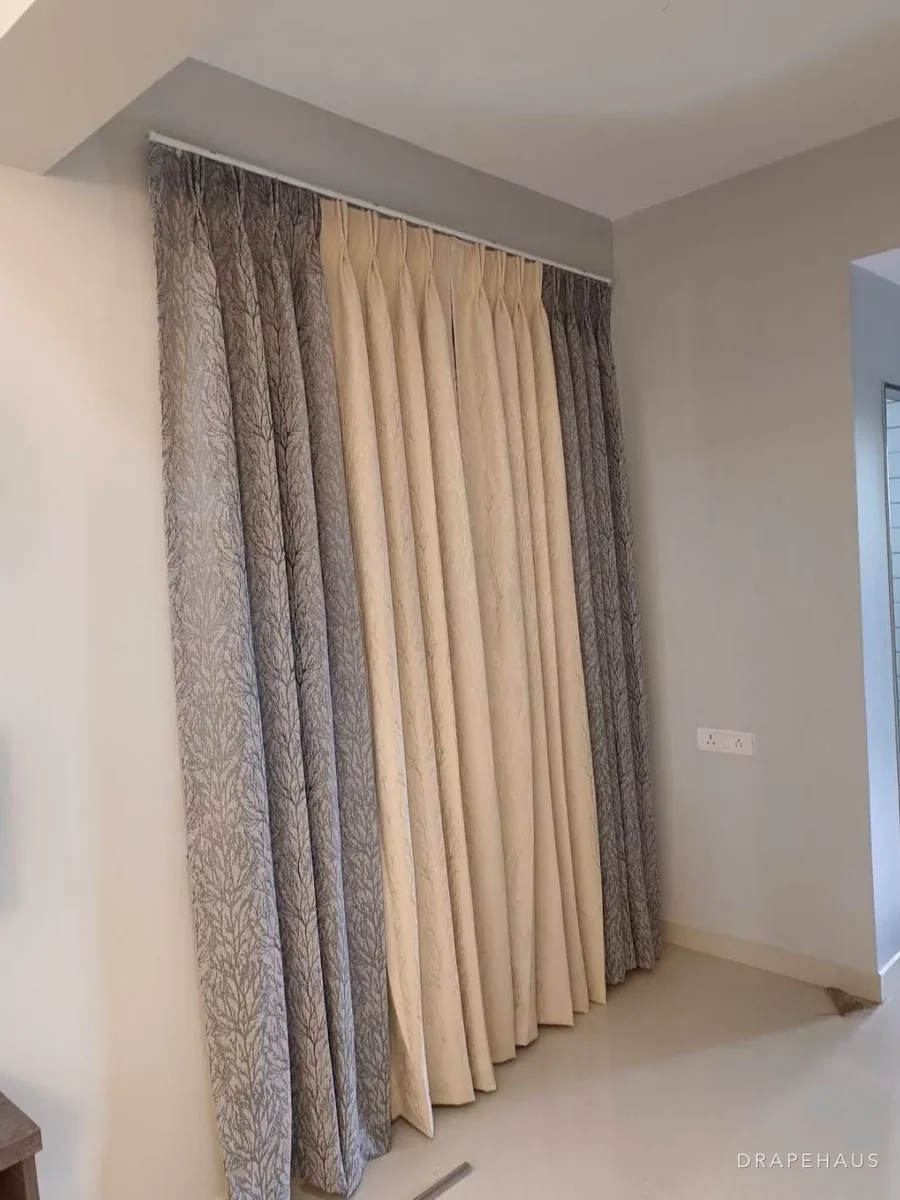
| Pinch pleat | Tailored, formal folds | Lined curtains in a traditional or heritage room |
| Eyelet | Deep, relaxed folds on a pole | Single windows where a visible pole suits the style |
| Pencil pleat or gathered | Soft, informal gathers | Sheers and light cottons on simple tracks |
Planning something like this?
We visit homes across North and South Goa, measure on site, and bring samples to see in your own light.
Sheer curtains for a living room: breeze by day, privacy from the road
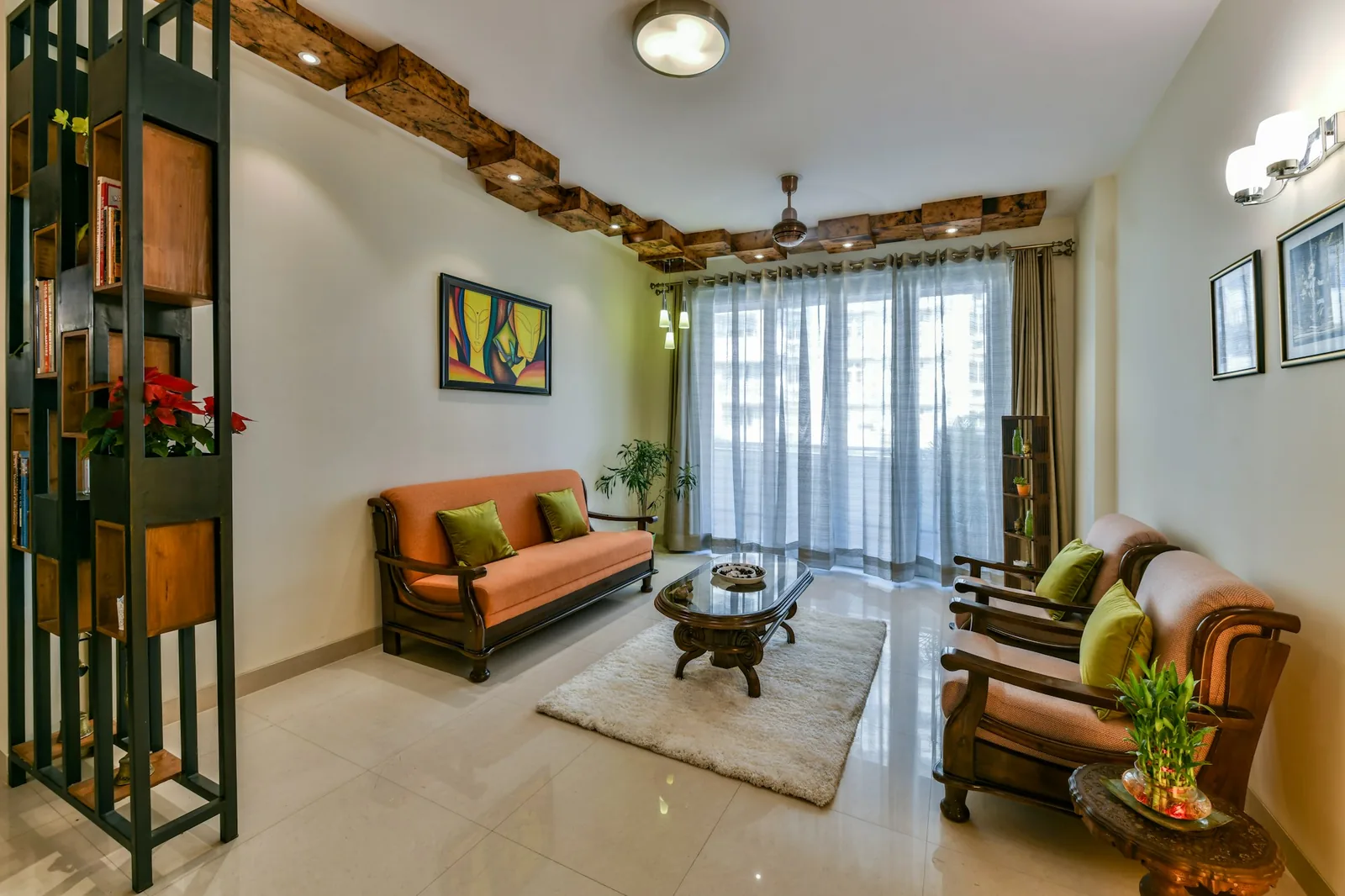
Sheer curtains are the most useful single idea for a Goan living room. Drawn across an open window, a sheer filters glare, softens the view and blocks the casual look in from the lane, while letting air through. On a bright morning the room stays light. Our sheer curtains range includes linen, linen-look and fine polyester voiles that all work this way.
The limit of a sheer is the evening. Privacy from a sheer depends on the outside being brighter than the inside. Once the lamps are on indoors, the balance reverses and a sheer shows the room to anyone outside. If the living room faces a road or close neighbours, plan an evening layer behind or in front of it, or use a denser sheer and accept a little less view by day.
In a breezy room, choose the weight of the sheer for the wind. A very fine voile will billow, wrap itself round a chair and, in a strong monsoon gust, flick at anything on a side table. A slightly heavier weave, a weighted hem or a curtain that sits inside the frame line all help. Keep sheers drawn back on wet, windy days so driven rain does not soak the fabric at an open window.
A sheer gives privacy by day and none at night with the lights on. If the room faces the road, plan the evening layer at the same time.
Linen and cotton curtains in a humid room
Linen curtains for a living room are a natural choice for a relaxed coastal house: they have a soft, uneven texture, filter light beautifully and look better slightly creased than pressed. Cotton is similar in spirit, a little smoother and usually easier to wash. Both breathe, which matters in a room that is never sealed.
Humidity changes how they behave. Natural fibres take up moisture from the air, and Goa's air holds a great deal of it: IMD's normals for Panjim put morning humidity at 88–91% from June to September. Linen and cotton curtains can relax and lengthen slightly in very humid weather and draw up again as the air dries. On a floor-length curtain that can mean a hem that touches the floor in August and floats in January. A good workroom allows for this, and a linen blend or a linen-look polyester moves less.
Natural fibres also need more care through the monsoon. Keep them drawn back during dry spells so air reaches the fabric and the glass, and do not leave them pressed against a window that is running with condensation. A lining in cotton protects the face fabric from sun and helps it hang, while still letting it breathe. The linen curtains page goes further into weights and blends.
Layering for a west-facing living room
A living room that faces west takes the full force of the afternoon sun, low and straight in, at the hottest time of day. Panjim's mean daily maximum peaks at 33.6°C in May. In that room, a single curtain is always a compromise: open it and the glare and heat pour in, close it and you lose the light and the view.
Layering solves it. A sheer on the window side of a double track stays drawn through the afternoon, cutting glare while keeping the room bright. A lined curtain on the room side draws over it in the evening, or on the hottest afternoons. Modelling for the US Department of Energy by Lawrence Berkeley National Laboratory found that in cooling-dominated climates, all the window attachments it studied saved energy, which is a useful reminder that closing curtains against the sun is not only about comfort.
Sun also costs fabric. The Canadian Conservation Institute notes that direct sunlight reaches roughly 30,000 to 100,000 lux, against the 50 lux museums use for light-sensitive textiles, and that light fades colours while ultraviolet weakens cotton, silk and wool. The sheer takes that punishment so the main curtain does not, and a lining protects the face fabric. Our guide to west-facing glare and the layered curtains page show the combinations that work best.
Colour and pattern with white walls, oxide floors and teak
Many Goan living rooms share a palette before a single curtain goes up: white or lime-washed walls, a red or black oxide floor or terracotta tiles, and dark timber in doors, window frames and furniture. Curtain colour works best when it is chosen from that permanent palette rather than from a paint chart. A curtain one or two shades warmer than white looks calm against lime wash; pure optical white can look blue and clinical next to it.
On a red oxide floor, earthy colours sit naturally: rust, ochre, indigo and faded greens. Against teak and rosewood, oat, sand and soft stone keep the timber as the richest thing in the room. If you want strong colour, put it in a smaller window, in the cushions or in a patterned border on a plain curtain, where it can be changed in a few years without remaking every curtain in the room.
Pattern should suit the scale of the wall. On a tall window, a large print or a wide stripe reads well; a small, busy print starts to look restless at three metres high. Vertical stripes add apparent height in a room with a modest ceiling. And for any coloured fabric on a sunny window, ask about lightfastness and lining, because the edge that catches the sun will fade first.
- White or lime-washed walls: ivory, oat, sand or a warm stone
- Red oxide or terracotta floors: rust, ochre, indigo, muted green
- Dark teak and rosewood: pale neutrals that let the timber lead
- Sea-facing rooms: soft blues and greys in textured weaves
- Heritage rooms with painted walls: take the curtain from the floor, not the wall
Rods or ceiling tracks, and curtains near a ceiling fan
A decorative pole suits a single window and an informal room, and the curtain becomes part of the look. A track, wall-fixed or ceiling-fixed, suits wide openings, long runs, layered curtains and anything that needs to draw smoothly every day. Ceiling tracks are also the cleanest answer where a window runs right up to the ceiling, leaving no wall above the frame for a bracket. Compare the options on our ceiling curtain tracks page.
Ceiling fans are the Goan complication. ENERGY STAR's guidance is to mount a ceiling fan in the middle of the room, at least 7 feet (about 2.1 metres) above the floor and 18 inches (about 45 cm) from the walls. In a large room, that keeps the blades well away from the curtains. In a smaller living room, or one where the fan was fitted off-centre, a full sheer can lift into the downdraught and drift towards the blades. Check the reach of the fan before choosing curtain length and weight, and use a heavier sheer, a weighted hem or a tie-back on the window nearest the fan.
Near the sea, choose hardware for corrosion before looks. Plain steel rods, brackets and hooks rust in salt air and leave orange marks on pale fabric. Aluminium tracks and stainless or coated fittings last. A track also takes the weight of a lined curtain better over a wide span than a pole, which can sag between brackets.
Before choosing a full-length sheer, stand under the ceiling fan on its highest speed and see where the air goes.