 Drapehaus
Drapehaus
Preparing the room
Drapehaus
Preparing the room
Home type
Handover is the worst moment to make permanent decisions and the moment everyone makes them. The flat is empty, echoing and unfurnished, there is a date to move in, and windows are suddenly urgent because the neighbours can see in.
By the Drapehaus studio · 19 September 2026 · How we write
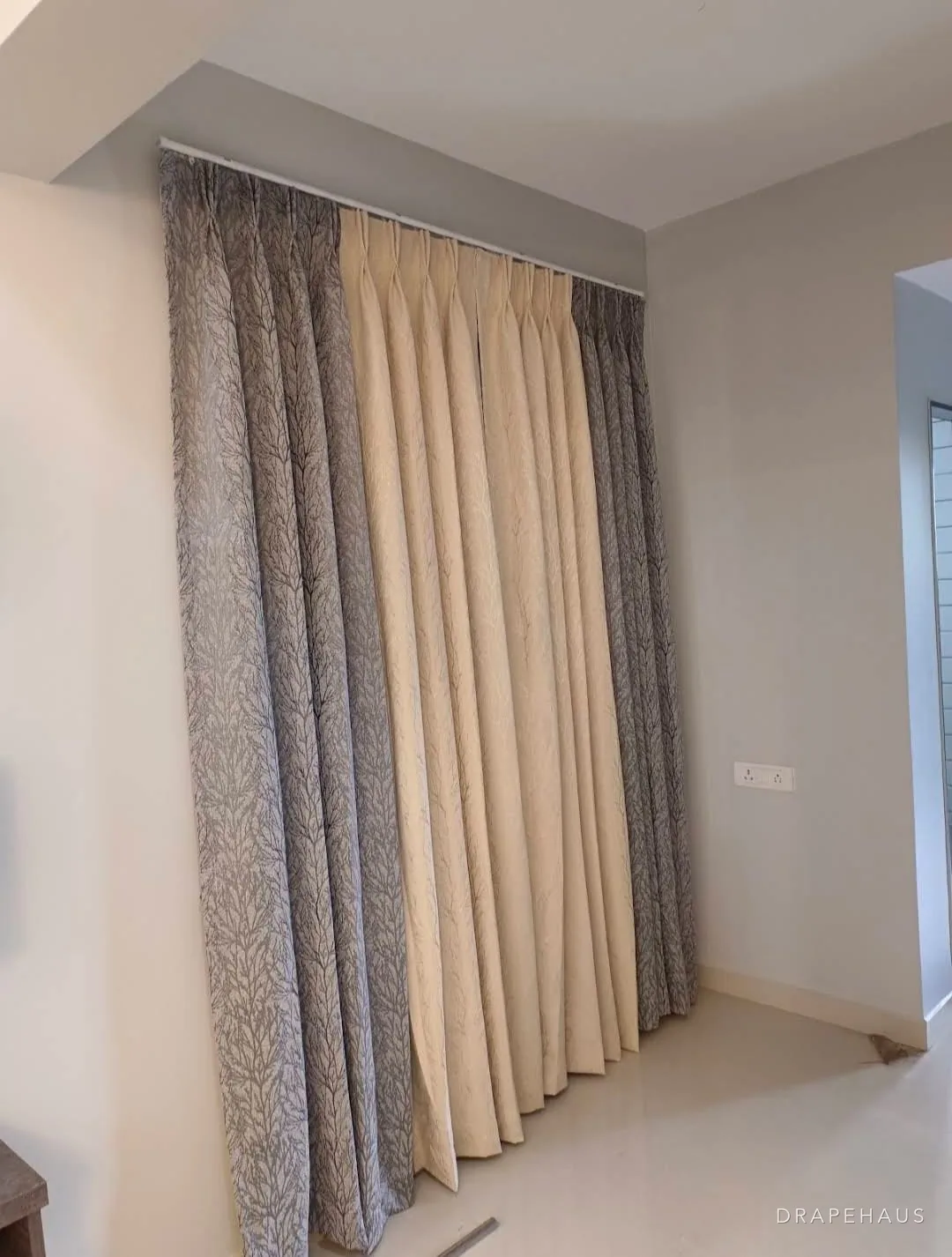
Decisions made in that state are consistently wrong in the same ways. Fabric chosen against bare white walls looks different once furniture and colour arrive. Everything gets specified at once, including rooms nobody will use for a year. And the urgent privacy problem gets solved with a permanent installation when a temporary one would have done.
The better approach is to separate what is genuinely urgent from what merely feels urgent, and to get the parts that are expensive to change right while deferring the parts that are inexpensive to change later.
Decide now anything structural or hidden: recessed ceiling tracks, power for motorised treatments, and any fixing that needs to go in before decoration is finished. These cost little at this stage and are expensive or impossible later.
Decide now the bedrooms, because sleep matters immediately and blackout is functional rather than decorative. Getting the geometry right — the curtain wide enough, high enough, returning to the wall — is what makes a dark room, and it is worth doing properly from the start.
Defer the living areas if you can bear to. Fabric choices made against bare walls and no furniture are routinely regretted. A temporary solution for a few months costs very little and prevents an expensive mistake.
The genuine urgency at handover is usually being overlooked, particularly in a dense development where the opposite block is thirty metres away. That is a real problem and it needs solving on day one.
It does not need solving permanently. Temporary paper or fabric pleated blinds cost very little, fit without tools, and handle overlooking for months while the real decisions are made properly. They are cut to width with scissors and stuck up with adhesive.
The mistake is buying permanent treatments in week one because of a problem that an inexpensive temporary solution would have covered. Most of the regret we see in new-build work traces back to that single decision.
Rather see it in your own room?
We bring samples to the house, measure every window, and specify for the light and exposure you actually have.
More on this — tap a heading to read
Where a developer has provided curtain track or rods as part of the handover, check them before building on them. Builder-supplied track is frequently the lightest-duty available, sized exactly to the opening with no stacking allowance, and fixed into whatever was behind the plaster.
Sized-to-the-opening track is the most common issue. It means the curtains can never clear the glass, so the room is permanently darker than it should be and the window looks smaller than it is. Replacing the track at the outset costs a fraction of living with it.
Also check what the glazing actually is. Single-glazed clear glass on a west elevation will need solar control regardless of what curtains go up, and it is far less wasteful to establish that before choosing fabric than after.
Before any window is dressed, it should pass its own snagging check. Open and close every sliding door and window, look at the seals and the drainage slots in the sill tracks, and check the corners of the frames for gaps. New buildings often have windows that were never tested under driven rain, and a leak discovered after new curtains are hanging is a leak that ruins them.
Look above and around each opening too. Beams that drop below the ceiling, air-conditioning units placed directly over the glass, sockets and switches right where a curtain would stack, and wardrobes built tight to a window reveal all change what can be fitted. Noting them at handover, rather than on the day of installation, gives time to ask the developer to move something while they are still on site.
Finally, check where power is available. A socket or spur near a large window, or at the head of a tall one, is what makes a mains-powered motor straightforward later. If none exists, now is the time to ask for one, before paint and flooring are finished. A spur that costs little to add now can save chasing a finished wall later, and it keeps every motorisation option open even if the decision itself is some way off.
New apartments and villas suit clean, well-engineered systems. Ceiling-fixed track with a ripplefold heading gives an even, contemporary line on full-height glass and stacks tightly at the sides. Double track allows a sheer and a heavier curtain to work independently. Roller blinds fitted neatly within a reveal suit bedrooms, kitchens and bathrooms where fabric curtains would be in the way.
Motorisation is easiest to decide now. Large sliding doors, tall windows and bedrooms where blackout matters are the obvious candidates, but the more important question is whether power can reach them without chasing new walls. Battery and solar options exist for later, but mains power planned at handover is the simplest long-term answer. It avoids battery changes on windows that are hard to reach.
Whatever is chosen, prefer widely supported systems in finishes that suit the building's exposure. In a coastal block, powder-coated or anodised aluminium and stainless fixings avoid the rust stains that mark new paint within a season. Widely supported systems also mean replacement parts and service remain available years later, when a glider breaks or a motor needs attention. A proprietary track that disappears from the market leaves a new home with an orphaned system, and the only fix is replacing the whole run.
The time of year a home is handed over changes the order of priorities. A handover in April or May, the hottest part of the year, makes heat control on west-facing glass urgent. A handover just before the monsoon, which normally arrives in the first week of June, makes it sensible to wait and see how the windows behave in driven rain before hanging anything expensive.
The first monsoon in a new building is a test. Leaks, condensation and damp patches show up then, and new concrete and plaster are still releasing moisture of their own. Fabric hung in that first season should be easy to take down and wash, and any curtain soaked by a leak needs drying within a day or two before mould sets in.
Many families want the new home finished for Diwali or the Christmas and New Year season. Working back from those dates, the real decisions on living-room fabric should be made in late summer, once furniture is in, so there is time to make and fit before the festive rush. Bedrooms, done properly at handover, will already be settled by then.
A good share of new Goan apartments are bought to let, at least for part of the year. If that is the plan, specify for it from the start. Bedrooms need genuine blackout with side control, mechanisms need to survive strangers, and fabric should be mid-toned and washable rather than precious. Decorative flourishes can wait for the owner's own rooms.
Standardising sizes, systems and fabric across the flat, and across other units the owner holds, means a manager can replace anything quickly from stock. A written schedule of every window, drawn up at handover when the flat is empty and easy to measure, is worth more than any individual product choice. It lets a manager reorder without a site visit.
A property let to tourists must be registered with the Department of Tourism before it operates, and insurers or platforms may ask about the fire performance of curtains. Take advice on the current requirements, and consider inherently flame-retardant fabric where the flat will be let on short stays. Keep the certificates with the registration paperwork, so they can be produced if an insurer, platform or inspector asks, and so a future owner knows what was installed.
Diagnosis
WhyColour and texture were judged against bare white walls and an empty room, which is nothing like the finished condition.
FixUse temporary blinds for living areas and defer the real decision until the room is furnished. Only bedrooms genuinely need resolving immediately.
WhyBuilder-supplied track was sized exactly to the opening with no stacking allowance either side.
FixReplace the track and extend it 30 to 40cm past the opening. Inexpensive at the start, and it permanently changes how light the room is.
WhyNo power was run to the window because the decision came later than first fix.
FixDecide on motorisation before decoration. Failing that, battery and solar motors avoid chasing a finished wall.
WhyA real and immediate problem, but one that feels like it demands a permanent answer.
FixTemporary pleated blinds, fitted without tools, for a few months. Solve the urgency quickly and the permanence properly.
WhyThe windows were never tested under driven rain before handover, and the leak was found only after the curtains were hanging against it.
FixSnag every window for seals and drainage at handover, keep first-season fabric washable, and dry any soaked curtain within a day or two.
WhyThe indoor unit was placed directly above the window, so its airflow runs straight down the fabric and pushes it off the track line.
FixAsk the developer to move the unit if still possible, or set the track further forward, add weighted hems and choose a heavier fabric at that window.
Checklist
Run power for motorised treatments before decoration finishes
Form recessed track pockets before ceilings are closed
Check builder-supplied track for stacking allowance before using it
Resolve bedrooms properly and immediately; blackout is functional
Use temporary blinds for living areas until furniture arrives
Establish what the glazing is before choosing fabric
Snag every window for leaks, seals and sill drainage before dressing it
Note beams, AC units, sockets and wardrobes that limit where curtains can go
Ask for power at large or tall windows before paint and flooring finish
If the flat will be let, standardise sizes and systems from day one
From the Journal
All articlesFAQ
Solve privacy quickly and temporarily, resolve bedrooms properly, and defer everything else. Temporary pleated blinds cost very little and fit without tools. Fabric chosen against bare walls in an empty flat is the single most common regret in new-build work.
Check it first. Developer track is usually the lightest-duty available and is very often sized exactly to the window with no stacking allowance, which means the curtains can never clear the glass and the room stays permanently darker than it should be. Replacing it at the outset costs little.
Before decoration is finished, if you want mains power at the window. After that, chasing a finished wall is disruptive and expensive. Battery and solar-charged motors are a good retrofit answer if the moment has passed.
Bedrooms. Blackout is functional rather than decorative, it affects sleep from the first night, and getting the geometry right — wide enough, high enough, returning to the wall — is what actually darkens a room. Living areas can wait until furniture arrives.
For living areas, it is often worth it. The first monsoon reveals leaks, damp patches and condensation in a new building, and those affect where and how curtains should hang. Bedrooms cannot wait, so fit washable blackout there immediately and use temporary blinds elsewhere until the building has shown how it behaves.
Open and close every window and sliding door, check the seals and sill drainage slots, and look for gaps at frame corners. Note beams, air-conditioning units and sockets near each opening, and ask for power at any large window you might motorise. Problems raised at handover are far easier to fix while the developer is still on site.
Ripplefold suits most new apartments, particularly on full-height glass. It gives an even, contemporary wave, stacks tightly at the sides and runs smoothly on a ceiling track. Pinch pleat gives a more tailored, traditional look and suits rooms with a classic scheme. Both work well on double track with a sheer behind.
Keep reading