 Drapehaus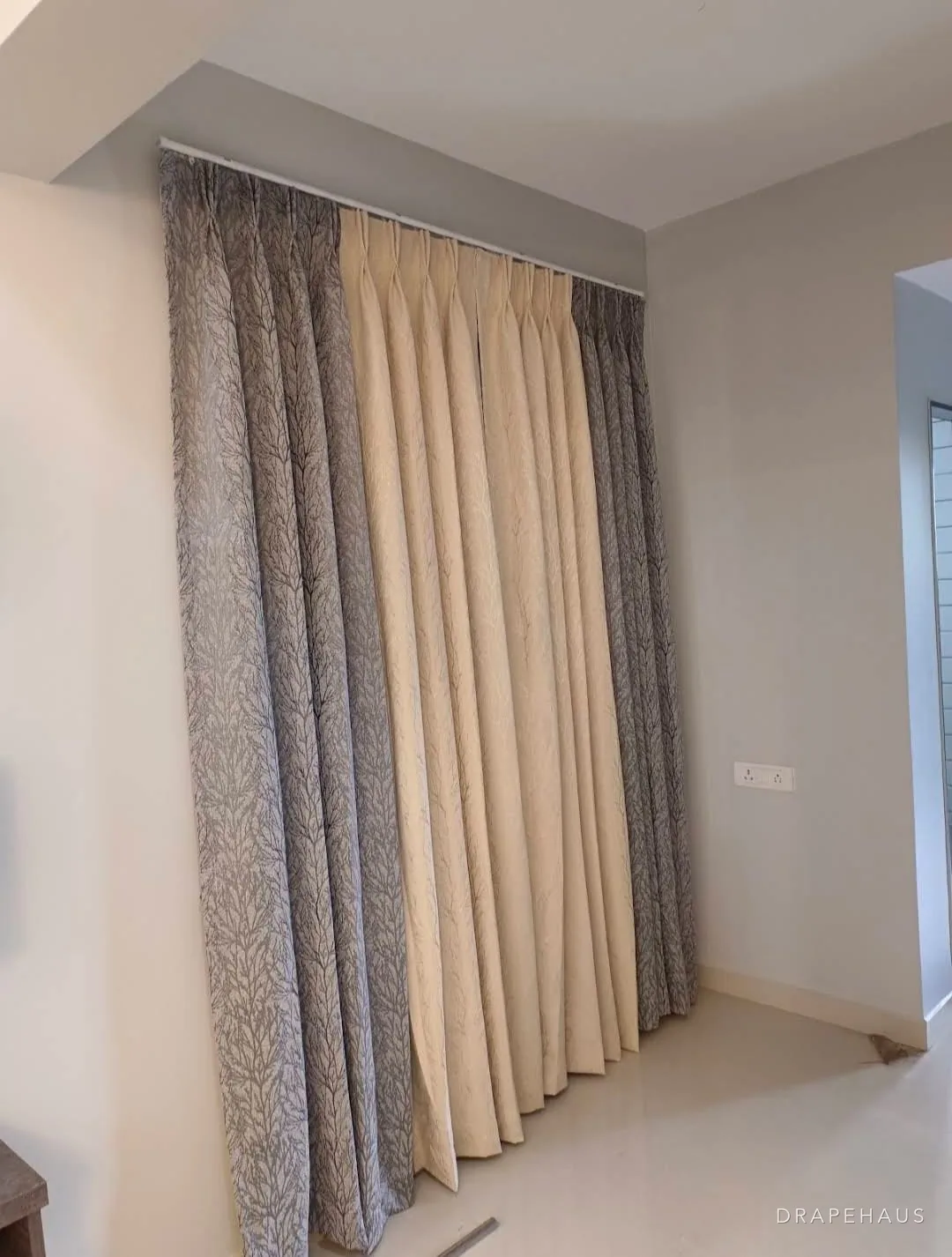
Most living room interior design advice assumes a room with windows on one side and a door to the rest of the house. A villa living room in Goa is different in almost every respect. It usually opens directly to a verandah or garden, often through full-width sliding or folding doors. It faces some part of the western sky. It is used from morning coffee to late dinners, by family, guests or renters, and it may be closed up for weeks at a time in the monsoon.
So the priorities differ too. The questions that decide whether the room works are how it handles low afternoon light, what happens at the threshold with the verandah, what the seating is made of and how it copes with damp, which rugs can survive the floor, and how the windows are dressed so that light, view, privacy and heat can all be adjusted through the day. This piece takes them in turn.
Living room interior design starts with west light
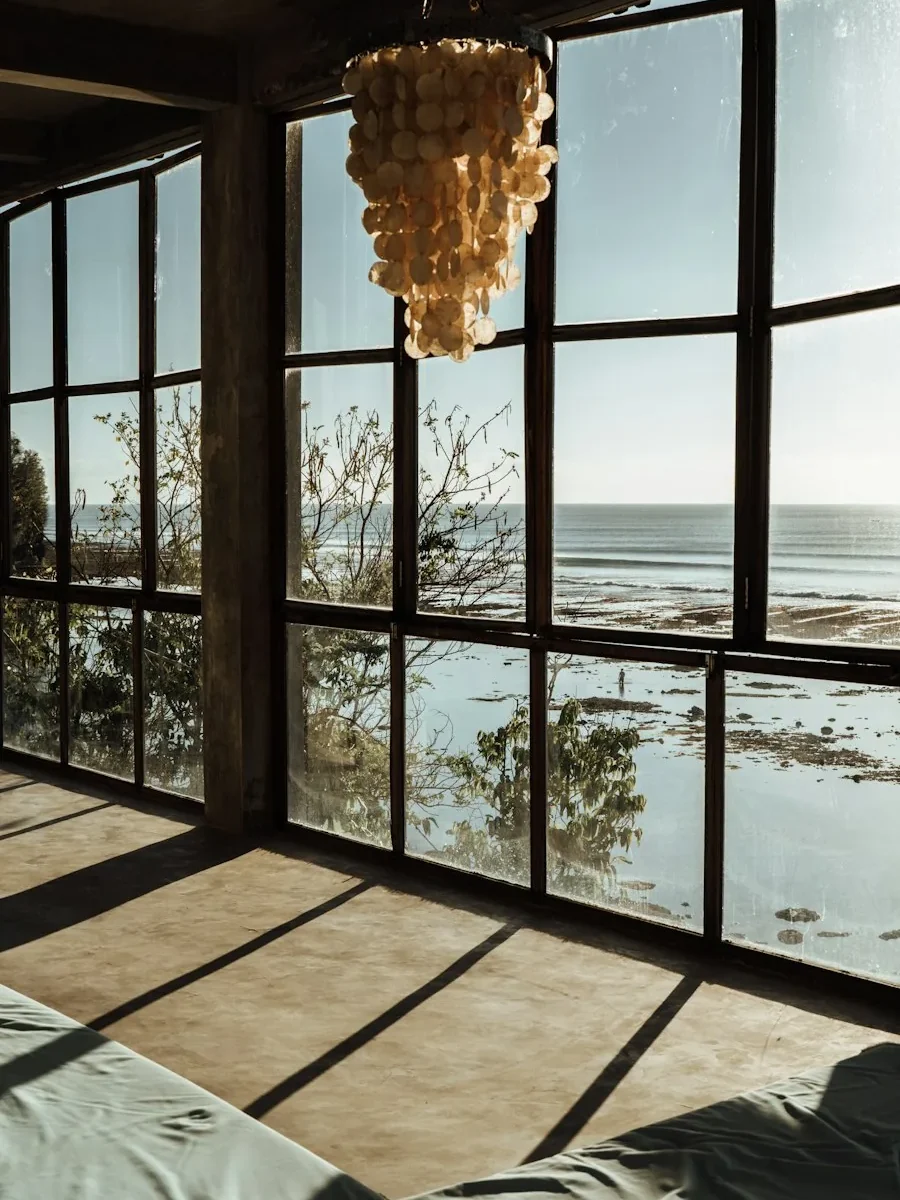
The living room is the room most often placed to face the sunset, and the room most often unusable because of it. From mid-afternoon the sun drops low enough to come in under verandah roofs, straight across the floor and into the eyes of anyone on the sofa. Screens become unreadable, polished floors throw reflected glare onto the ceiling and heat builds in fabric and stone.
The best fix is outside. US DOE figures put the reduction in solar heat gain from awnings on west-facing windows at up to 77%, and PNNL's summary of recent research found exterior shades cut heat-danger hours by about 55%, compared with about 18% for interior roller shades. A deeper verandah, an extended pergola or external blinds are worth serious consideration at design stage. Our guide to west-facing glare explains why sheers alone do not solve it.
Inside, the room needs a layer that cuts glare but keeps the view, used every afternoon. A solar screen roller or a dense sheer on its own track does this; a heavy curtain drawn against the sun makes the room dark and still lets heat through the glass. Seating should be placed so no one faces the west glass in the late afternoon.
The verandah threshold
In a Goan house the verandah is part of the living room for much of the year. The design question is where the room really ends: at the glass, or at the verandah's edge. Treating the two as one space — continuous flooring, related colours, seating that looks across rather than facing away — makes both feel larger. Treating the threshold as a hard line makes the room feel shut in whenever the doors are open.
Practically, the threshold is where insects, rain, dust and salt come in. Pleated or sliding insect nets for doors let the doors stay open in the evening, and a clear zone of hard, washable floor just inside the doors keeps sand and wet feet off the rug. Anything upholstered that sits near the opening should be treated as semi-outdoor and made accordingly. When the monsoon arrives the threshold reverses: the doors close, the verandah furniture comes in or is covered, and the living room has to feel complete without the view. Curtains across the glass help here, softening a wall of dark wet glass in the evenings.
Planning something like this?
We visit homes across North and South Goa, measure on site, and bring samples to see in your own light.
Seating that survives humidity
Sofas and armchairs are the largest pieces of upholstery in the house and the hardest to protect. They sit for months in air that IMD records at 83–91% relative humidity through the monsoon, they absorb spills and sweat, and in a rental villa they take heavy use. Frame, foam and fabric all need to be chosen with that in mind.
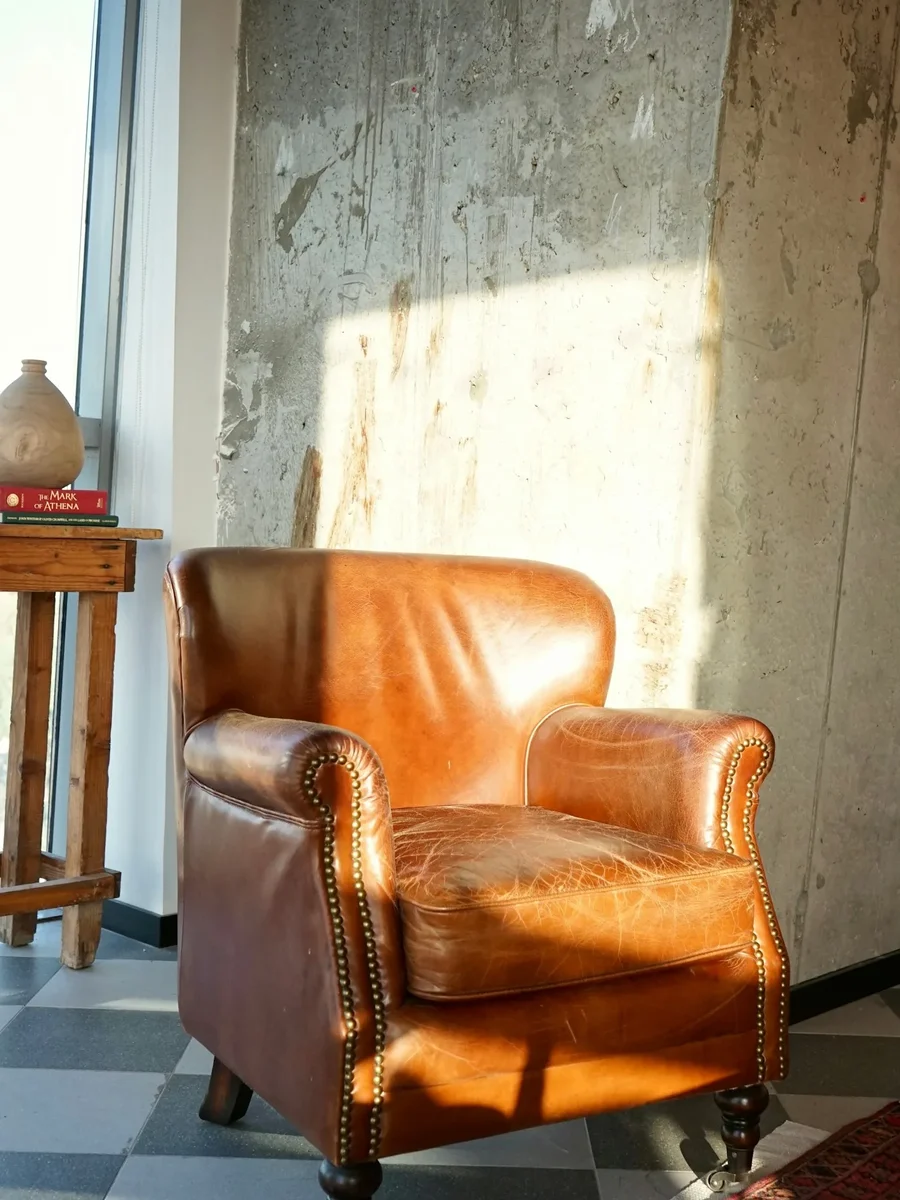
Frames should be kiln-dried hardwood or engineered board that has been treated against termites and sealed, standing on legs rather than solid plinths so air passes underneath. Foam should be a high-density grade with a breathable wrap. Fabric should be cleanable, fade-resistant and rated for the use: BS 2543 places general domestic upholstery at 20,000 Martindale rubs and heavy domestic at 25,000. Removable covers make an enormous difference over the life of the piece. These are the points to settle when ordering custom sofas. Leather is the most vulnerable choice in a closed house, as it grows mould readily in sustained humidity. It can work in a living room that is air-conditioned and occupied year-round; in a villa closed for the monsoon it needs covers, air and regular conditioning.
Rugs on stone and tile
Most villa living rooms have hard floors, which suits the climate and needs a rug to make the room habitable. The rug defines the seating area, absorbs sound and gives warmth underfoot in the air-conditioned evenings. It should be large enough that at least the front legs of every seat sit on it; a small rug floating in the middle of a large floor makes the furniture look adrift.
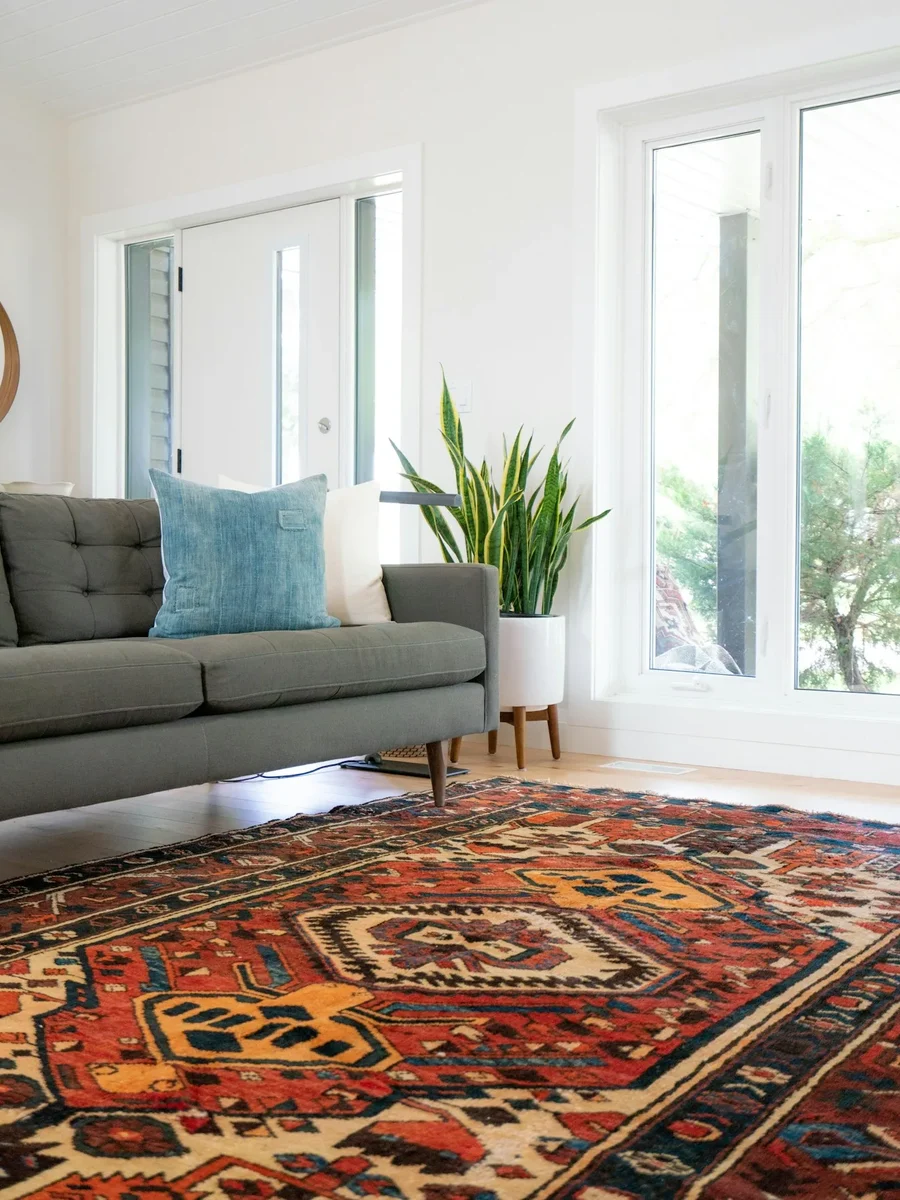
Wool is the classic choice and it is naturally resilient, but it holds moisture and must be lifted, dried and stored if the house closes for the monsoon. Flatweaves and dhurries are lighter, easier to roll and dry faster. Near the verandah doors, a flatweave or a synthetic designed for outdoor use copes better with sand and damp feet than a deep pile. Place a breathable underlay beneath any rug on stone, both to stop it moving and to let air pass underneath. A rug laid directly on a floor that is cool and slightly damp in July can develop mould on its back long before anything shows on the face.
Layering sheers and drapes on tall windows
The window treatment in a villa living room has to do four jobs at different times: cut glare in the afternoon, give privacy at night, reduce heat, and soften a large area of glass. No single layer does all four. The usual answer is two layers on a double track: a sheer or solar screen nearest the glass for daytime, and a lined curtain on the room side for evenings and heat. Our page on layered curtains shows the combinations.
Living room curtains for tall windows need a track mounted well above the frame or at the ceiling, so the fabric falls in one unbroken line, and enough stacking space either side that both layers clear the glass when open. Where the windows are genuinely tall or wide, motorisation is the difference between a treatment used daily and one left in one position. Fabric choice follows light exposure. The layer that meets the sun should be fade-resistant, and ordinary window glass blocks most UVB but not UVA, which contributes to fading indoors. Keep delicate silks and naturally dyed linens for the room-side layer, where they are protected.
One layer for the sun, one for the night; a single curtain asked to do both does neither well.