 Drape Haus
Drape Haus
Preparing the room
Drape Haus
Preparing the room
Living Room · Wall Panels
A panelled wall can give a living room its focal point, hide the cables behind the television and cover tired plaster — provided the material suits a wall that may be damp for four months a year.
In short
For a Goan living room, PVC and WPC panels are the safest choices on external or monsoon-exposed walls; fluted and real-wood finishes suit dry internal walls. Fix any seepage first, fit on battens with an air gap where the wall is prone to damp, and agree cable routes before the panels go up.
What your living room asks of wall panels
See it in your living room
We bring samples to your home, hold them to your light and measure every opening — anywhere in North or South Goa.
The best wall to panel is usually the one you look at most: behind the television, or behind the sofa as seen from the entrance. Avoid panelling every wall; one strong wall makes a room feel finished, several can make it feel boxed in.
Check whether the chosen wall is external and which way it faces. In Goa, south- and west-facing external walls take the driven rain of the south-west monsoon and are the most likely to be damp on the inside.
PVC and WPC panels tolerate moisture; natural wood and MDF don't, unless the wall is internal and dry. On older houses with lime plaster or laterite, a battened installation that leaves an air gap behind the panels is safer than gluing directly to the wall, because the wall can still breathe and dry out.
Before any panel goes up, find and fix seepage — a cracked parapet, a failed window sill, a leaking pipe. Covering a damp wall only hides the problem until mould or a tide-line shows at the joints.
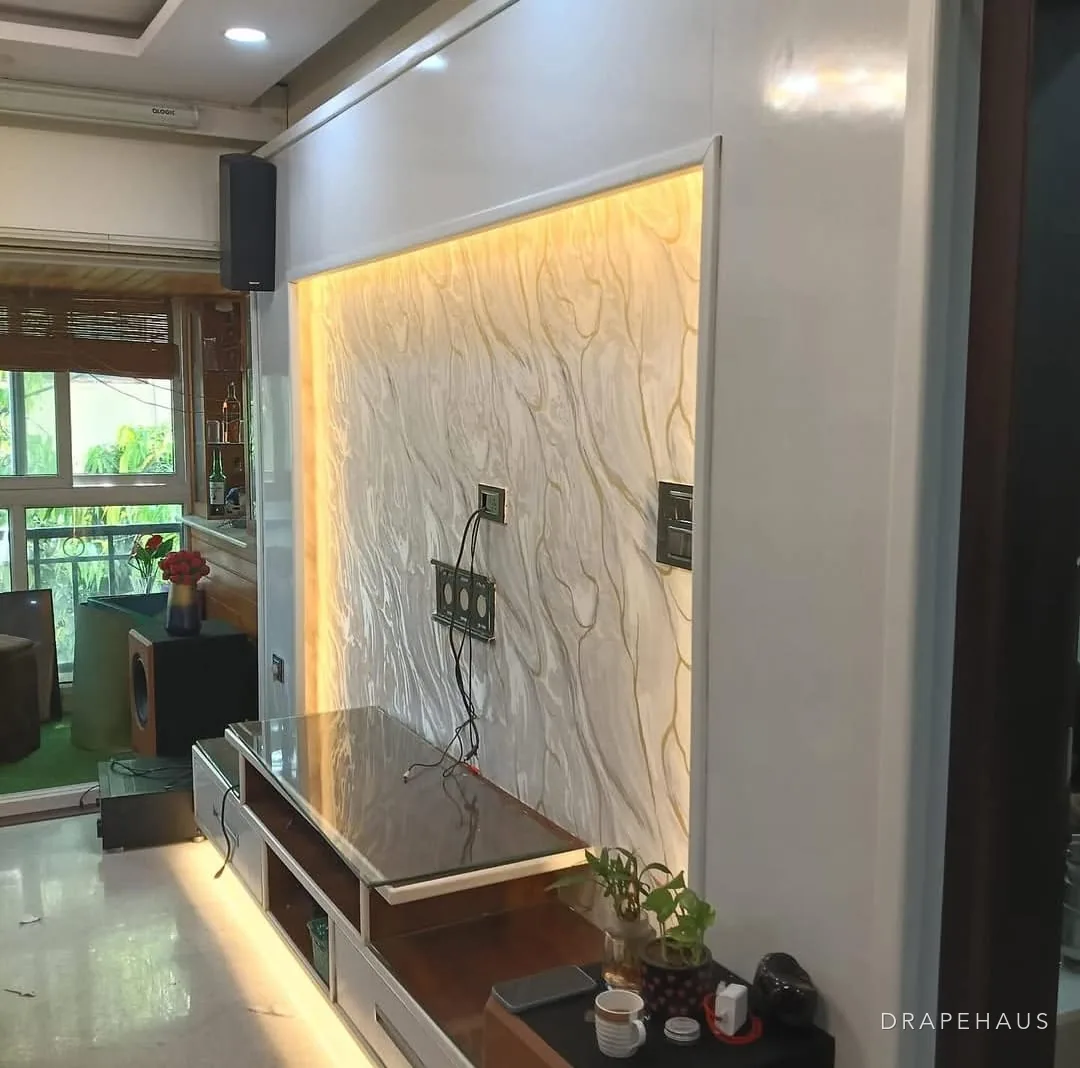
Decide the screen size and mounting height first, sitting on your own sofa, then the positions of sockets and cable entry. A panelled wall can include a recess for a set-top box or speakers, a floating shelf, and concealed lighting along a fluted edge. Changing these after the panels are fixed means taking them down.
Leave access: one removable panel or a service hatch behind the screen saves a lot of trouble when the router or the cables need changing.
Matte finishes hide fingerprints and don't throw window reflections onto the screen; gloss shows every wave in the wall behind it. Wood tones warm a room with white lime-washed walls; pale stones and greys keep a sea-facing room calm.
Grazing light from a strip at the top or side brings out fluted and textured panels in the evening. Plan the light at the same time as the panels so the wiring can be hidden.
In Goa
Moisture moves through laterite walls during the rains and dries out slowly afterwards. Ventilated battens, moisture-resistant panels and a seepage check before fitting are what keep a panelled wall looking good after its first monsoon.
Near the sea, use non-corroding screws and clips so rust doesn't bleed through the joints. In a house closed for the season, leave the room ventilated so the cavity behind the panels doesn't stay damp.
More for your living room
Wall Panels for other spaces
We measure and fit wall panels across Goa — Panjim, Porvorim, Dona Paula, Mapusa, Candolim, Calangute, Assagao, Anjuna & Vagator, Siolim, Benaulim, Colva, Varca, Cavelossim, Margao, Majorda, Vasco da Gama, Canacona & Palolem, Ponda.
FAQ
On walls that see damp, PVC or WPC. On dry internal walls, fluted, wooden or textured panels work well. We check the wall before recommending a material.
They hide it for a while, but damp behind panels leads to mould and swelling. Fix the seepage first, then panel.
Yes. We plan the screen position, cable routes, sockets and any shelving or lighting before fitting the panels.
Acoustic or fabric-faced panels do. Solid PVC or WPC panels mostly change the look rather than the sound.
Yes. We visit homes across North and South Goa, check the wall's condition and measure for a written quote.