 Drape Haus
Drape Haus
Preparing the room
Drape Haus
Preparing the room
Dining Room · Wall Panels
The wall behind the dining chairs takes knocks, scuffs and splashes every day. A panel protects it and gives the room a backdrop worth sitting in front of.
In short
Panel the wall behind the chairs or the one the table faces. Wall moulding or wainscoting to dado height protects against chair backs and looks classic; fluted or WPC panels make a modern feature; PVC panels are the most practical for a damp wall or one beside the kitchen.
What your dining room asks of wall panels
See it in your dining room
We bring samples to your home, hold them to your light and measure every opening — anywhere in North or South Goa.
The wall behind the chairs is the practical choice — it's the one that gets damaged. The wall the table faces, or the one behind a sideboard, is the decorative choice — it's the one people look at during a meal. In a small dining area, panelling one wall is usually enough; doing all four can feel boxy.
If the dining area is part of a larger hall, panelling the dining-side wall defines the zone. Line it up with the table and the pendant so the three read together.
Dado-height panelling — roughly a third of the wall, finished with a rail — is the traditional dining-room answer. It protects exactly where chairs and hands touch, and leaves the upper wall for paint, a mirror or a wallpaper. It suits Goan houses with high ceilings, where a full-height panel can feel heavy.
Full-height fluted or WPC panels make a bolder modern statement and work well in flats with standard ceilings, where vertical lines make the room feel taller. They are also better at hiding an uneven or patched wall completely.
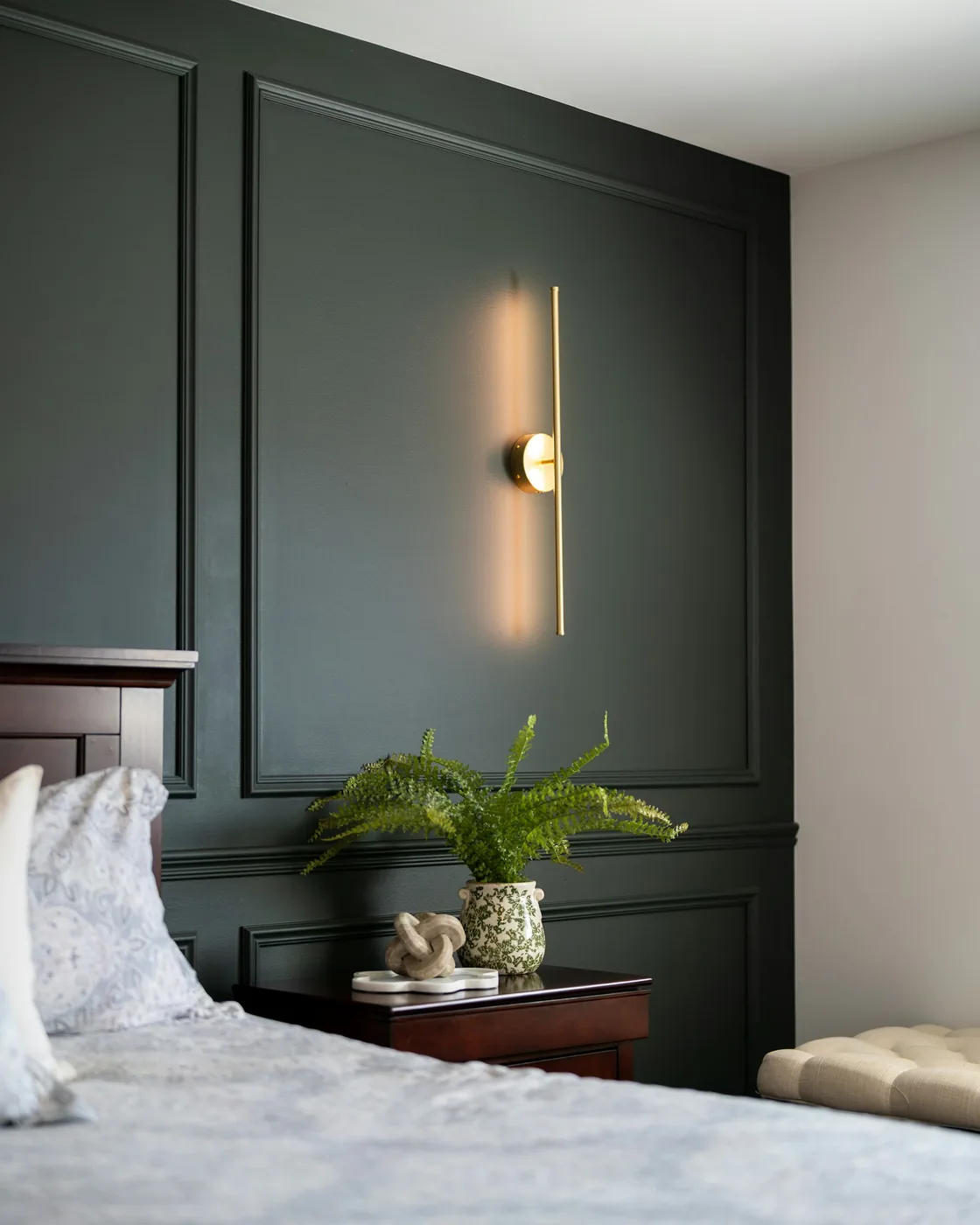
Matt finishes hide fingerprints and are kinder under a bright pendant. Gloss and marble-look finishes reflect the lamp and look dramatic, but show every smear — fine behind a buffet, harder behind chairs where children sit. Fluted panels look their best with light grazing across them from a wall light or a cove.
If you want wall lights or a mirror on the panel, decide before installation so wiring and fixings are planned in, not cut afterwards.
Take the panel colour from the table or the chairs rather than from the walls. A warm wood-look panel behind a dark table with cane chairs feels very Goan; a pale fluted panel with a light oak table feels calm and modern. If you also plan wallpaper above a dado, choose the two together.
In Goa
Laterite and older lime-plastered walls can stay damp for weeks during the monsoon. Gluing a sealed panel flat onto such a wall can trap moisture behind it. On walls like this we check for damp first and, where needed, fix panels on a frame with a small air gap, and use moisture-tolerant materials such as WPC or PVC rather than MDF.
Real timber panelling is lovely but invites termites and moves with the humidity. Unless the wall is dry and the wood is properly treated, a wood-look composite is the safer choice in Goa.
More for your dining room
Wall Panels for other spaces
We measure and fit wall panels across Goa — Panjim, Porvorim, Dona Paula, Mapusa, Candolim, Calangute, Assagao, Anjuna & Vagator, Siolim, Benaulim, Colva, Varca, Cavelossim, Margao, Majorda, Vasco da Gama, Canacona & Palolem, Ponda.
FAQ
Wall moulding or wainscoting for a classic look and protection from chairs; fluted or WPC panels for a modern feature; PVC where the wall is damp or next to the kitchen.
PVC, WPC and laminated finishes wipe clean with a damp cloth. Matt finishes hide marks better than gloss.
Yes, if the wall is checked for damp first. On damp walls we fix panels on a frame with an air gap instead of gluing them flat.
Dado height — about a third of the wall — protects where chairs hit and suits high ceilings. Full height suits flats and modern feature walls.
Yes, across North and South Goa. We visit, check the wall, show samples and give a written quote.