 Drape Haus
Drape Haus
Preparing the room
Drape Haus
Preparing the room
Wall Panels
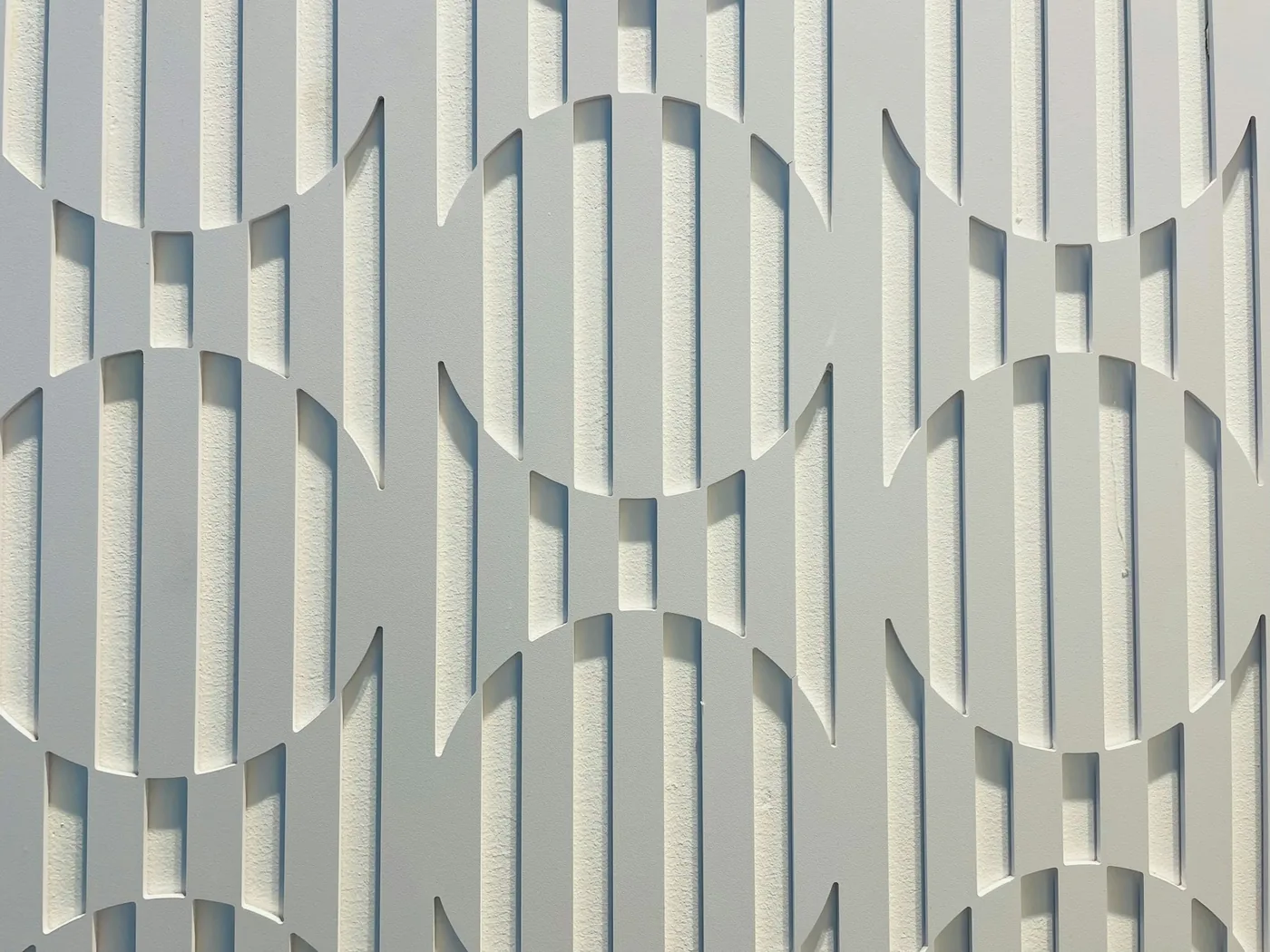
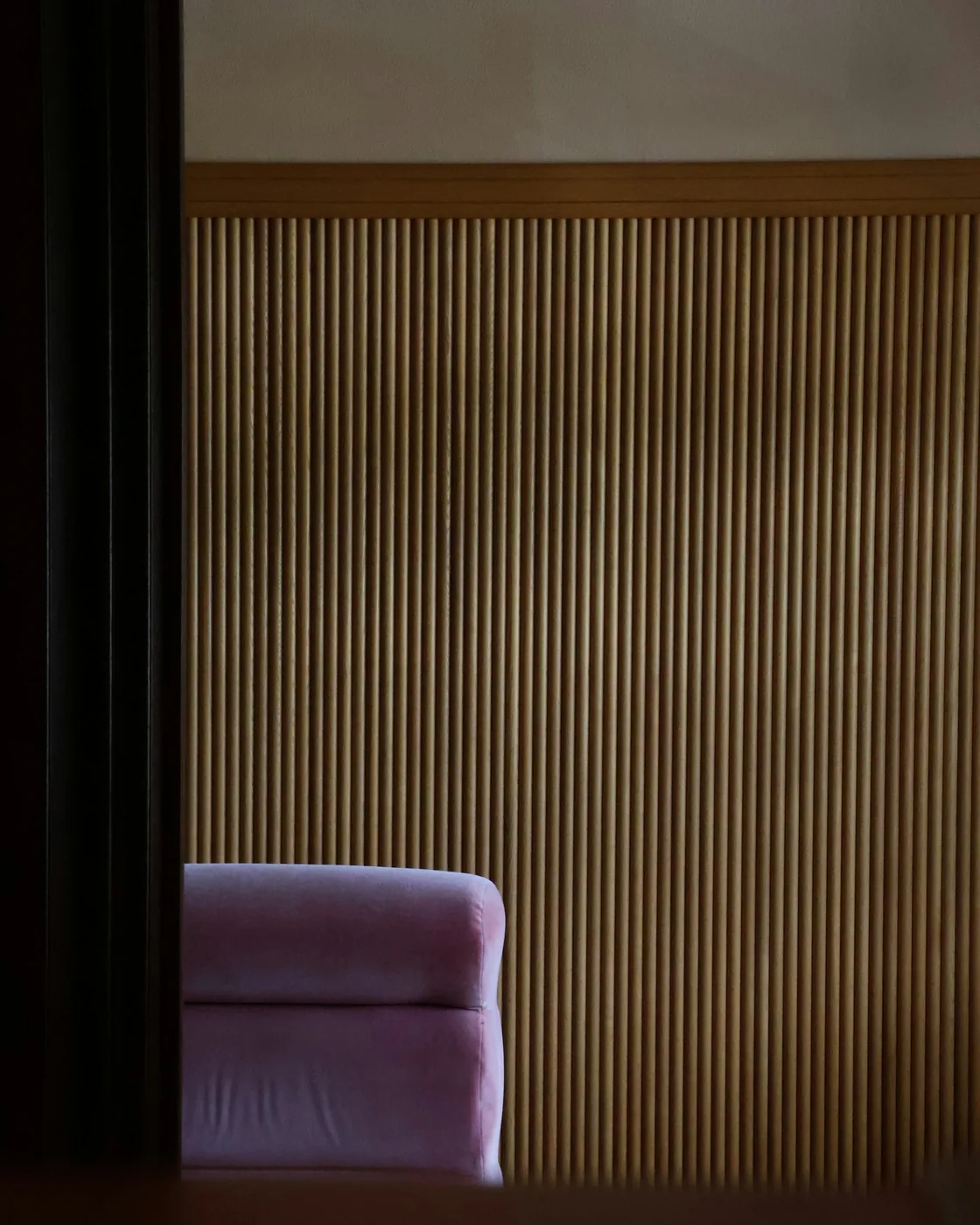
Panels with a run of rounded or squared ribs, set vertically to give a wall rhythm, shadow and a sense of height. Fluting is a design device first; the material underneath it is a choice we make for the room.
In short
By the Drape Haus studio · How we write
Is it right for you?
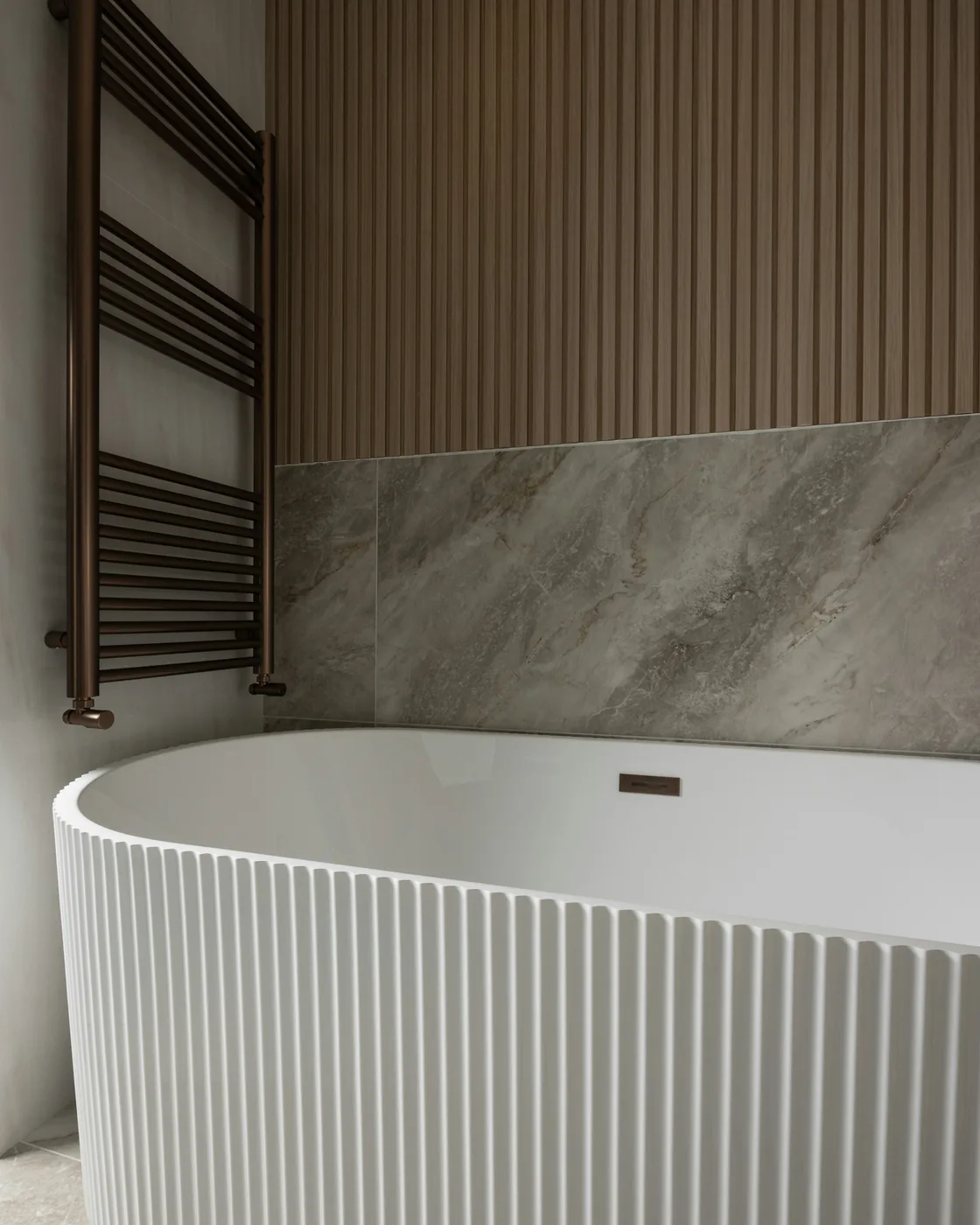
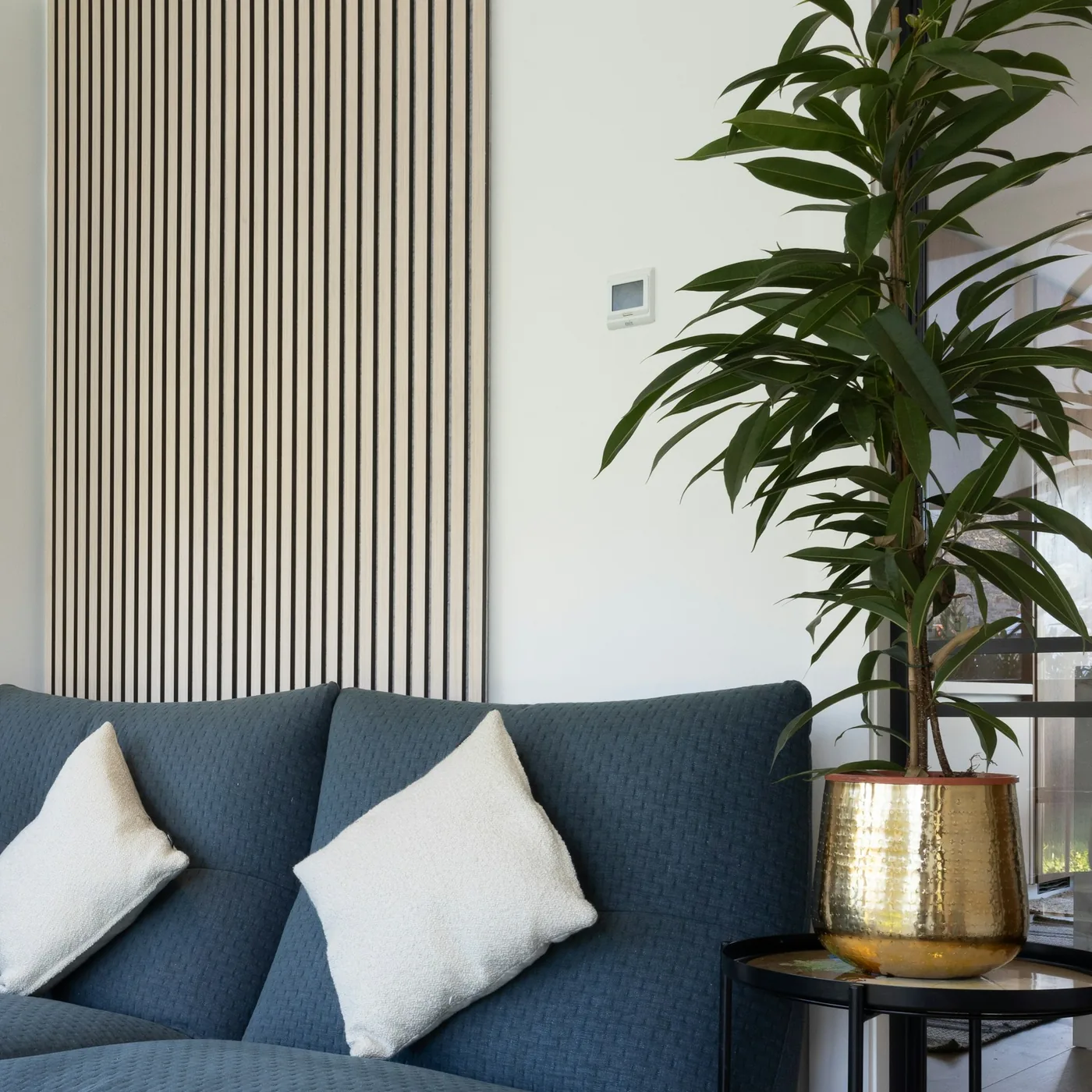
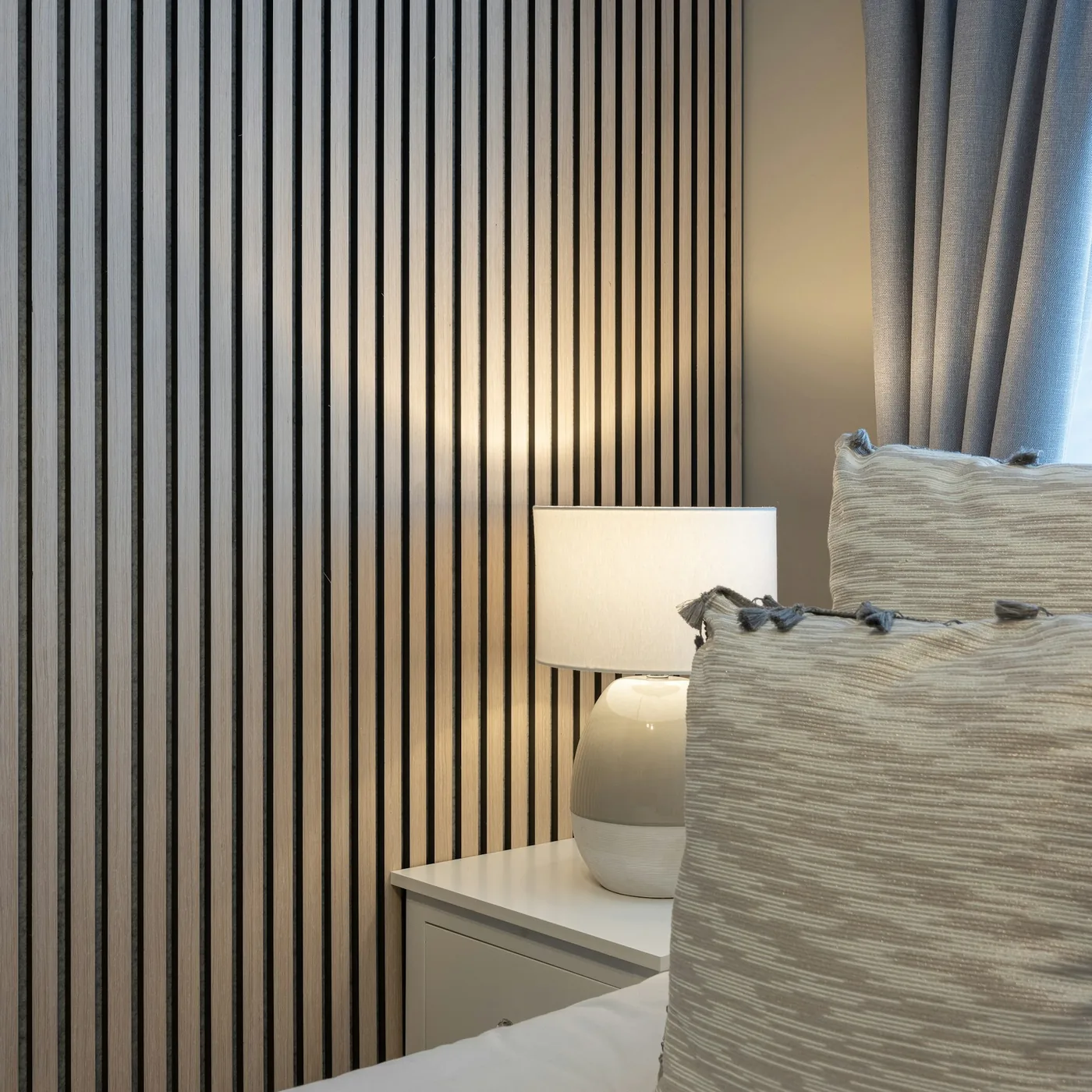
Fluting is an old architectural idea borrowed from the column: a run of parallel grooves or rounded ribs that catches light on one edge and holds shadow on the other. On a wall, it turns a flat plane into something with depth and rhythm, and because the lines are vertical, it draws the eye upward and makes a room feel taller than it is. The same profile is often called reeded when the ribs are convex and fluted when the channels are concave, though in everyday use the two names are swapped freely.
As a design device it works best in moderation. One wall behind a bed, a panel framing a television, the front of a reception counter or a column wrapped in ribs gives a room a clear focus. Clad every wall in a small room and the effect becomes busy and slightly corporate. The strength of fluting is contrast, so it needs plain plaster, paint or a smooth surface beside it.
The choice of material decides how it lives in a Goan house. PVC and WPC versions shrug off monsoon humidity and do not interest termites, which is why most fluted walls fitted today are one or the other. Painted MDF gives the crispest profile and a perfect colour match but must stay dry. Solid timber is the most beautiful and the most demanding. This guide explains each one, how flute width and wall size relate, how corners and ends are finished, and how to keep the grooves clean.
The details
The same fluted profile reads very differently depending on scale. Fine, close ribs look like a textile from across the room; broad half-rounds look architectural and bold. We set out the flutes against the actual wall, so the ribs land sensibly at corners, switches and door frames rather than being cut in half at the edge.
Fluted panels are made in PVC, WPC, MDF and solid timber. PVC and WPC are the dependable options in a humid house. MDF gives the crispest painted flute but must be sealed on every face and kept well clear of damp walls and floors. Solid timber is the richest and the most demanding.
Light is what makes fluting work. A ceiling wash or a strip of light along the top casts a shadow down every groove; flat front light makes the same wall look plain. We plan the lighting with the panels, not after them.
The practical downside is dust. Every groove is a ledge, and near the sea a fine film of salt and dust settles in them. A soft brush attachment once a fortnight keeps them crisp.
Your options
The look is one family, but what the ribs are made of changes how the wall copes with damp, how it can be finished and how it ages. Profile choices sit on top of that.
Swipe for all 6 →
The honest view
Depth without heavy construction
A thin panel gives the play of light and shadow you would otherwise only get from carved joinery or panelling built out from the wall.
Makes ceilings feel higher
The vertical lines lead the eye upward. In a flat with a standard ceiling height this is one of the simplest ways to add apparent height.
Hides minor wall faults
Small cracks and uneven plaster disappear behind the cladding, and the ribs disguise slight variations in level better than a flat sheet would.
Good partner for lighting
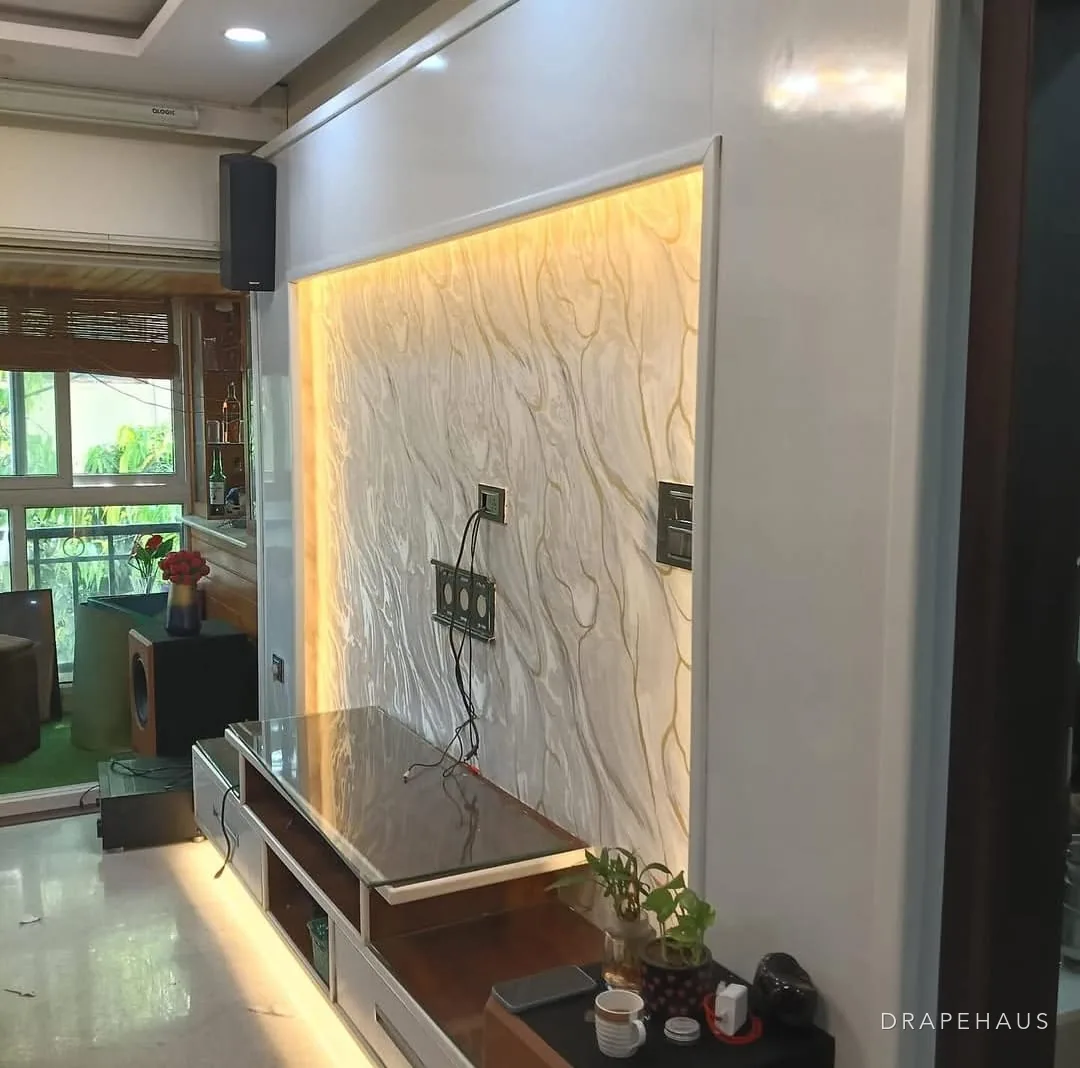
A grazing light from above or below brings the profile alive at night, which makes fluting a natural choice for bed walls and TV backdrops.
Grooves hold dust
Every channel is a ledge. Near a road or the sea, dust and salt film settle in the flutes and need brushing out rather than a quick wipe.
Joins and ends need planning
Panels come in set widths. Ending mid-flute or at an awkward sliver at a corner spoils the rhythm, so the layout must be worked out first.
MDF and timber dislike damp
In a damp room or on a wall carrying moisture, painted MDF swells and timber can cup or grow mould. Material and wall must be matched.
Easy to overdo
Too much fluting, or flutes that are too fine for a large wall, quickly looks busy. It needs restraint and plain surfaces around it.
Side by side
People choosing fluting are usually also weighing up a flat panel, wall moulding or wallpaper. Each answers a different brief.
| Fluted panels | Flat PVC or WPC panels | Wall moulding | Textured wallpaper | |
|---|---|---|---|---|
| Depth and shadow | Strong, linear | None | Framed, classical | Visual only |
| Humidity tolerance | High in PVC and WPC | High | Depends on material | Paper-dependent |
| Hides wall faults | Well | Very well | Poorly | Poorly |
| Cleaning | Brush the grooves | Wipe flat | Dust the ledges | Gentle sponge |
| Style | Contemporary to mid-century | Clean, plain | Classic, Portuguese, colonial | Any |
| Changing later | Remove panels | Remove panels | Prise off and fill | Strip and repaint |
Swipe to compare →
A fluted panel at bed height with plain paint above it often looks more considered than full-height fluting on every wall.
Rather see it in your own room?
We bring samples to the house, measure every window, and specify for the light and exposure you actually have.
Room by room
The usual home for a fluted feature, either behind the sofa or framing the television. Keep the rest of the walls plain and let one surface carry the texture.
A fluted bed wall, sometimes with an integrated headboard and a warm strip of light at the top, is calm and enveloping. WPC or PVC suits a room that is shut through the day with the air conditioning off.
Fluting on the wall behind a sideboard gives a dining corner its own identity. Avoid it right beside the table if children are around, as grooves collect food splashes.
PVC fluting can work on a dry wall or behind a vanity, but not inside the shower area, where grooves trap soap and water and the panel is no substitute for tiling and waterproofing.
Steam and grease settle in the flutes. On an island front or a breakfast counter away from the hob it works; behind the cooking area it does not.
Fluted counters and walls are durable, recognisable and easy to light. WPC takes knocks from bags and trolleys better than PVC.
PVC or WPC fluting gives a photographable feature wall that tolerates a closed, humid house between bookings. Choose a mid-tone so scuffs and dust show less.
In depth — tap a heading to read
The single most important design decision is the scale of the rib. Narrow flutes read as a fine texture from across the room and suit small walls, furniture fronts and close viewing. Wider ribs read as distinct lines and suit large walls, double-height spaces and rooms seen from a distance. A fine flute on a very large wall turns into a grey shimmer; a broad rib on a narrow column looks clumsy.
Depth matters as much as width. Shallow grooves give a soft texture that almost disappears in flat daylight. Deeper grooves throw a stronger shadow and stay visible in daylight, but collect more dust. We look at the wall in the light it actually gets, often holding a sample against it in the morning and late afternoon, before settling on the profile.
Hold a sample flat against the wall and step back to the furthest seat in the room. That is the distance the texture has to work from.
Many Goan houses are built of laterite, which is porous and can carry moisture from the ground and from driving rain on the outer face. Before any panel goes up we check the wall with a moisture meter and look for tide marks, flaking paint, salt bloom and a musty smell. A wall that reads damp is diagnosed first: a leaking gutter, a failed external coating or rising damp has to be dealt with, because no cladding fixes it.
On a dry, flat wall, PVC and WPC fluting can be fixed directly with a suitable adhesive and clips. Where the wall is uneven, slightly suspect or simply old, we fix treated or composite battens first and mount the panels on those. That leaves a ventilation gap behind the cladding so air can move and any moisture can escape rather than being sealed against the plaster. For MDF and timber fluting, battens and a gap are not optional.
Fluting looks finished or unfinished at its edges. Where the panel stops in the middle of a wall, it needs an end trim, a mitred return or a clean stop against a contrasting surface. At an external corner the flutes can be mitred so the rhythm wraps round, or capped with a profile that suits the material. At internal corners, the layout should be set out so the last flute is not a thin sliver.
Sockets, switches and AC pipes are the other trap. A switch plate sitting half on a rib and half in a groove never looks right. We set out the panel joints first, then move or extend the electrical points, or build a flat zone where a cluster of switches has to live. This is far easier to decide before the panels are cut than after.
Fluting is made by light. A strip of LED in a recess at the top or bottom of the wall, washing along the surface, gives a strong rhythm of highlight and shadow. Light from directly in front flattens it. Warm white flatters timber tones; a neutral white suits pale painted or grey fluting.
Keep any light source clear of the panel surface. PVC and the films on composite panels do not like sustained heat, and halogen or poorly ventilated drivers tucked behind a panel can discolour or distort it. Modern LED strip in an aluminium channel runs cool enough, but the driver should sit where it can be reached and has air around it.
In a house shut for weeks in July, the air inside sits near saturation. PVC and WPC fluting are unaffected in themselves, but the grooves can grow a faint bloom of mould on dust and skin oils, especially in a dark room. A quick brush down before the house is closed, and a dehumidifier or occasional airing, keeps it clean.
Near the sea, salt settles in the channels and draws moisture, so the flutes can stay damp longer than a flat wall. Wipe them more often in sea-facing rooms. Metal end trims and fixings should be aluminium or stainless; plated steel will rust and stain the edges within a season or two.
Living with it
Run a soft brush or a vacuum brush attachment down each groove. Wiping across the ribs just pushes dust into the channels.
PVC and WPC take a damp cloth and mild soap. Dry the grooves afterwards so water does not sit in them.
Use a barely damp cloth and never let water run down the face. Touch up chips promptly so moisture cannot reach the core.
Oiled timber fluting needs a fresh coat when the grain starts to look pale and thirsty, usually after the dry season.
Look at the bottom edge and around switches after the monsoon. Swelling, lifting or a musty smell there is an early warning.
Avoid these
The effect depends on contrast. One or two surfaces look designed; a whole room of ribs looks like a showroom.
Fine flutes on a huge wall disappear, and fat ribs on a small surface overpower it. Match the rib to the viewing distance.
Adhesive-fixed panels on a wall carrying moisture trap it. Diagnose the damp, then fix on battens with a ventilation gap.
Painted MDF fluting in a bathroom or an unventilated ground-floor room swells at the joints. Use PVC or WPC there.
Points that land across a flute look like an afterthought. Plan the layout and move the electrics before cutting.
Checklist
More in wall panels
PVC, WPC, wood, fluted, acoustic and marble-effect panels, chosen for the wall they are going on as much as for the look.
Our process
One team from the first visit to the last bracket, so nothing is lost between the person who specified it and the person who fits it.
FAQ
PVC or WPC for humid rooms and ground floors. Sealed MDF or timber for dry, air-conditioned rooms where a painted or natural finish matters most.
Yes. Flexible fluted sheets bend around columns and gentle curves, and rigid ribs can be fixed individually on a curved frame.
Yes, in the grooves. A soft brush on a vacuum every couple of weeks is enough; avoid wet cleaning on MDF.
Vertical ribs add height and suit most rooms. Horizontal fluting widens a narrow wall but shows dust more and needs very level fitting.
PVC and WPC fluted panels are, because neither absorbs water or attracts termites. Painted MDF and solid timber can be used in dry, air-conditioned rooms with careful sealing and a ventilated fixing, but are a risk in damp or closed-up rooms.
Strictly, fluted means concave grooves cut into a surface and reeded means convex rounded ribs standing out from it. In practice both names are used for any vertical ribbed panel. The convex profile looks softer; the grooved or square profile looks crisper.
MDF fluting is made to be painted. Many WPC panels can be painted with a suitable primer. PVC with a printed film is usually left as supplied, because paint adhesion on the film is unreliable over time.
More than a flat wall, because each groove is a small ledge. A soft brush run down the flutes every week or two keeps them clean. Shallower profiles and mid-tone colours show dust less.
Yes, with flexible slotted panels or individual battens made for bending. The radius depends on the material and thickness, so we check the curve before choosing the product.
Next step
Rib width and depth look very different in hand and on a wall three metres away. We visit, check the wall for moisture and level, mark the switches and corners, and bring samples of PVC, WPC and painted profiles to hold up in your light. Then we draw the layout so the flutes land cleanly at every end and opening, and fit it with our own team. Book a home visit to start.