 Drape Haus
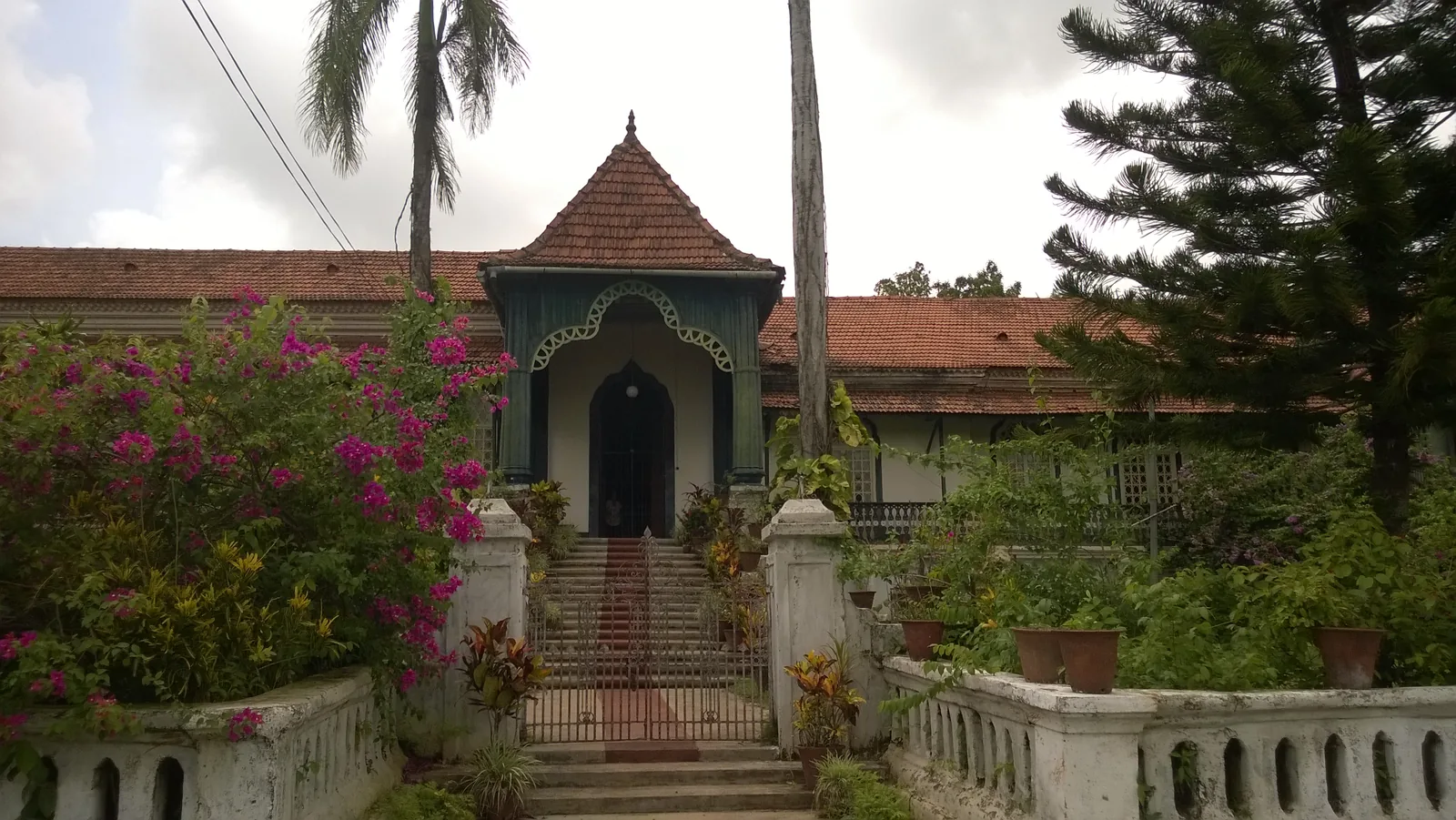
Loutolim is a village in Salcete, about nine kilometres from Margao, known for the number of large old family houses within a short walk of its church. The Government of Goa singles it out, with Chandor, as one of the rural places where the great Portuguese-era mansions of Goa are still found, and describes Loutolim as famous for the many large and beautiful houses spread within a radius of about a kilometre of the village centre.
Most of those houses are private homes. A few have been opened to visitors by their families, and some are now partly run as businesses. This guide describes them as buildings, drawing only on what their owners, the government or published reporting have said, and it gives no hours or fees, because arrangements change. If you want to step inside, ask locally and make an appointment.
For homeowners, Loutolim is also a useful reference. Its houses show how Salcete families arranged long reception rooms, chapels, courtyards and carved furniture, and how they dressed tall windows in a climate this wet. The last part of this guide turns those lessons into practical ideas for a modern house.
Where Loutolim is, and how it came to have so many big houses
Loutolim lies in Salcete taluka, close to the Zuari river, with the villages of Verna, Raia, Camorlim, Borim and Quelossim around it. The South Goa district administration places it about nine kilometres from Margao. Its older name is Lotli. According to the Government of Goa, the idol of Lord Ramnath was first housed in a temple at Lotli, a settlement set up by Gaud Saraswat Brahmins, and was later removed and taken to Bandivade in Ponda, then under Bijapur, to escape persecution under Portuguese rule.
Salcete was part of the territory the Portuguese held from the 16th century, and Loutolim's history in that century was abrupt. Encyclopaedia summaries record that in 1567 the Portuguese captain of Rachol fort ordered the destruction of the village's temples, that some villagers fled across the Zuari with their idols, and that those who stayed became Christian. The church of the Saviour of the World, Salvador do Mundo, was built by the Jesuits in 1586, according to José Lourenço's history of Goa's parish churches.
The great houses came later. As the Government of Goa explains, the owners of Goa's mansions were not usually Portuguese nobles but wealthy Goan merchants and high-ranking officials who were granted land, building with local laterite, timber and Mangalore tiles and furnishing their rooms with goods from around the world. Loutolim's families included lawyers, priests, officials and public figures, and their houses grew as their fortunes did.
How the village is laid out around its church
Loutolim's houses are not ranged along one square, as Braganza House is at Chandor. They are scattered along the lanes leading out from the church and the village centre, each set in its own compound. The government's description of a radius of about a kilometre is a good guide to the walk: most of the substantial houses are within easy reach on foot, but you will not see them all from one spot.
That pattern shapes the houses themselves. Because each stands in its own grounds rather than in a terrace, the long front can face the lane with a balcão and verandahs, while the back opens to a yard, a well and outbuildings. Gateposts and compound walls mark the line between public and private, and the house sits back behind them, usually raised on a plinth and reached by steps.
The season matters too. In Goa the monsoon usually runs from early June to late September, and the walk is far easier, and the houses easier to read, in the dry months between November and May, when shutters are open and gardens are cut back.
Planning something like this?
We visit homes across North and South Goa, measure on site, and bring samples to see in your own light.
The named houses: what is actually known
Four houses come up again and again in writing about Loutolim. What follows is limited to what their owners, the government or published reporting have said. Where a date comes only from a family, we say so. Where a house is now partly a business, we describe it only as a building.
The Figueiredo house is the one most often described as Loutolim's oldest. The family dates it to 1590 and says it has been in their hands for nineteen generations. A writer for The National in 2019 described a home of more than 4,500 square metres, reached by stone steps to a pale blue central entrance, with closed verandas stretching out on both sides. The family has told visitors that the craftsmen who built and furnished it were mostly from the local Hindu community, which is why Hindu deities appear carved on furniture. Reporting in 2026 describes a long restoration by the family after years of neglect, hand-painted wallpaper in the rooms, and parts of the house now used as a museum and for guests.
Casa Araujo Alvares is named, according to the family's own description, after Eufemiano Araujo Alvares, a lawyer of the colonial period, and is described by the family as about 250 years old. They describe a stairway with balustrades leading to the balcão, an open courtyard at the centre of the house, a family chapel with a painting of the Trinity shown in human form, an icon room, a dining hall and a formal hall with a wooden floor once used for dances. The family has opened it to visitors as a house museum.
The Costa mansion, according to the Government of Goa, was built in the 19th century by two wealthy brothers who were both priests, Padre Pedrinho and Padre Laurence. The government describes its architecture as straddling two worlds: Indian in form, with a low-pitched tiled roof and wide verandas, and European in detail, with Gothic windows and clustered columns. Finally, Loutolim is the home village of the cartoonist Mario Miranda, who died at his family's ancestral house in the village in 2011. Treat it, like every house here, as a private home.
| House | Date as given | Source of the date | Known for |
|---|---|---|---|
| Figueiredo house | 1590 | The family, as reported in 2019 and 2026 | Long front with verandas, carved furniture, family collections |
| Casa Araujo Alvares | About 250 years old | The family's own description | Central courtyard, chapel, icon room, dining and dance halls |
| Costa mansion | 19th century | Government of Goa | Low-pitched roof, wide verandas, Gothic windows, clustered columns |
| Miranda family house | Not published | — | Ancestral home of the cartoonist Mario Miranda; private |
Dates given by families are family history. They may be right, but they are not the same as a documented survey.
What Loutolim's houses have in common
Read side by side, the descriptions of these houses share a vocabulary that runs through Salcete's mansions. Each sits on a plinth and is approached by steps to a balcão. Each has a sequence of reception rooms at the front: a sala or salon for guests, sometimes a second, smaller sitting room, and in the larger houses a hall for music and dancing. Each keeps a family chapel or altar inside the house. And several are organised around an inner courtyard, the older Goan way of bringing light and air into a deep plan.
The interiors share a habit of mixing. The Government of Goa describes the mansions in general as built of local laterite and timber under Mangalore tiles, but furnished with porcelain from China and Macau, glass and mirrors from Venice, chandeliers from Belgium and furniture carved from rosewood by local craftsmen. In Loutolim that mixing reaches the furniture itself, with Hindu deities carved on chairs in a Catholic household, and, at Casa Araujo Alvares, a collection of icons alongside more than a thousand Ganesh figures, which the family presents as a mark of the village's communal harmony.
Finally, they share a scale. Rooms are long and tall, windows are many and set in a regular rhythm, and the furniture is arranged to be seen from the door. That is the quality worth borrowing, and we come back to it below. For a fuller picture of how such a house is planned, see our guide to Portuguese house plans in Goa, and for the furniture itself, our field guide to Goan furniture.
Seeing Loutolim respectfully
The Government of Goa's advice for heritage mansions is clear: most are accessible only on special request or by appointment, made directly with the owner or through the nearest tourist office, well in advance, and it is customary to make a small donation towards upkeep. That applies in Loutolim. A house that has opened to visitors in the past may not be receiving them this season, and a house that is now partly commercial will have its own arrangements.
Everything else is seen from the road, and that is no loss. The parts of a Goan house designed to be looked at, the steps, balcão, window rhythm, mouldings and colour, all face the lane. Walk slowly, stay on the road, and do not open gates, climb steps or sit on a balcão unless invited. Ask before photographing people, never photograph through open doors or windows, and keep lanes and gateways clear for the people who live there.
Go in the dry season and early in the day, when the light is low and the lanes are quiet. Start at the church, walk outward along the lanes, and give yourself time. If you want to combine Loutolim with Chandor and other villages, our guide to where to see old Goan houses suggests a route, and our piece on the oldest house in Goa explains why house dates in this part of Salcete are so often disputed.
What a modern home can borrow from Loutolim
The first lesson is arrangement. The reception rooms of these houses are furnished along their length, with a long settee or a pair of them, chairs set in conversation groups, and a central table or a rug that pulls the group together. In a modern living room, the same idea works at a smaller scale: one long sofa facing two chairs across a low table, rather than everything pushed against the walls. Our guide to heritage villa interiors goes further on scale.
The second is restraint with pattern. The walls are coloured, the floors often tiled, the furniture carved, so textiles in these houses work best plain or quietly textured. Natural linen curtains, hung from well above the window to the floor and pulled fully clear of the shutters, suit the tall openings and the soft light. Pattern goes into cushions, a runner or a single upholstered piece where it can be changed.
The third is how the windows are dressed. Old houses filter light rather than block it, with shutters and translucent panes doing most of the work. A full-height sheer, with a lined curtain only where a room needs darkness, gives a modern room the same quality. For a house of your own, whether a restored mansion or a new build in the Goan idiom, our guide to the Portuguese heritage house covers fixings and fit, and we can measure and make curtains for a Goan house to suit it.