 Drape Haus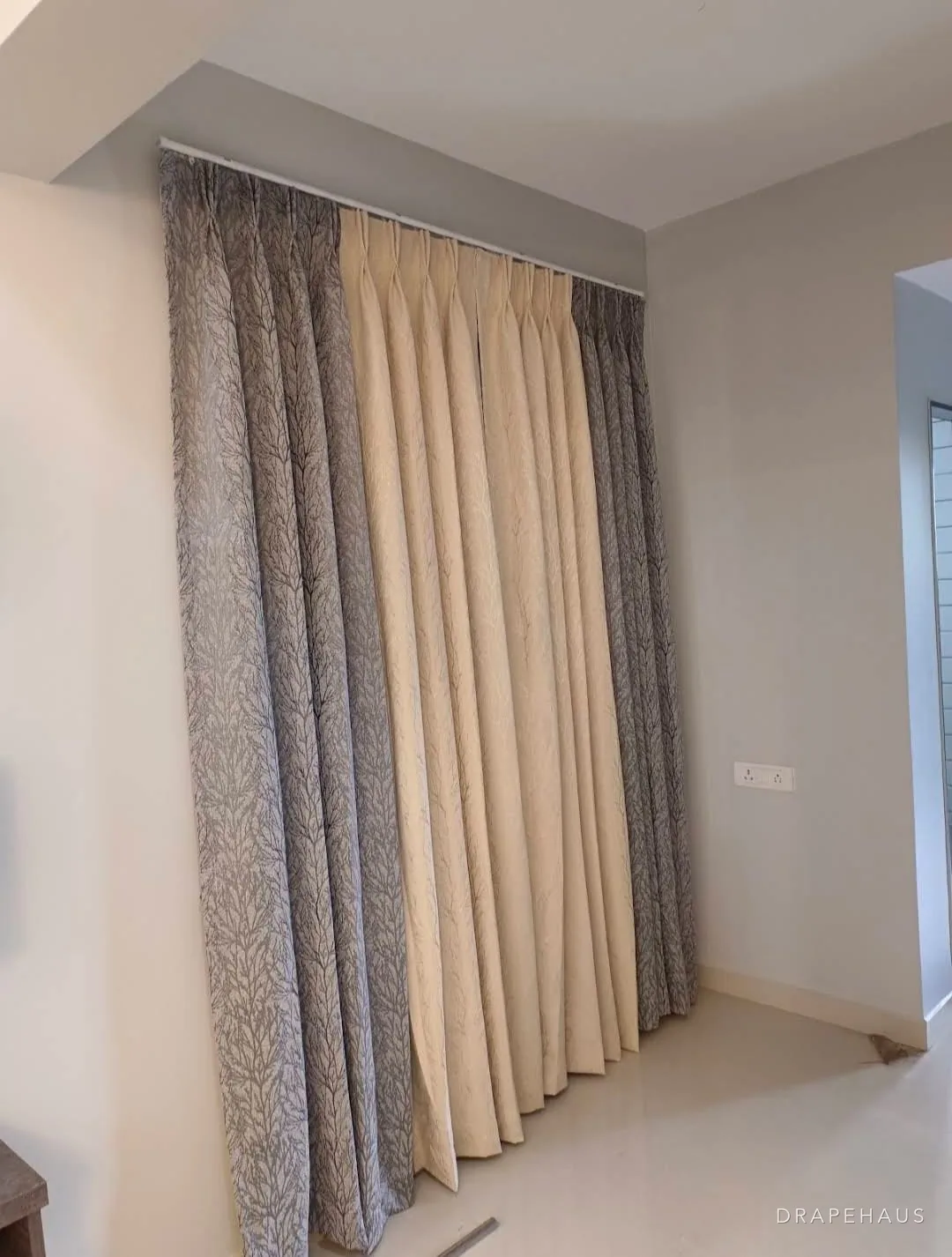
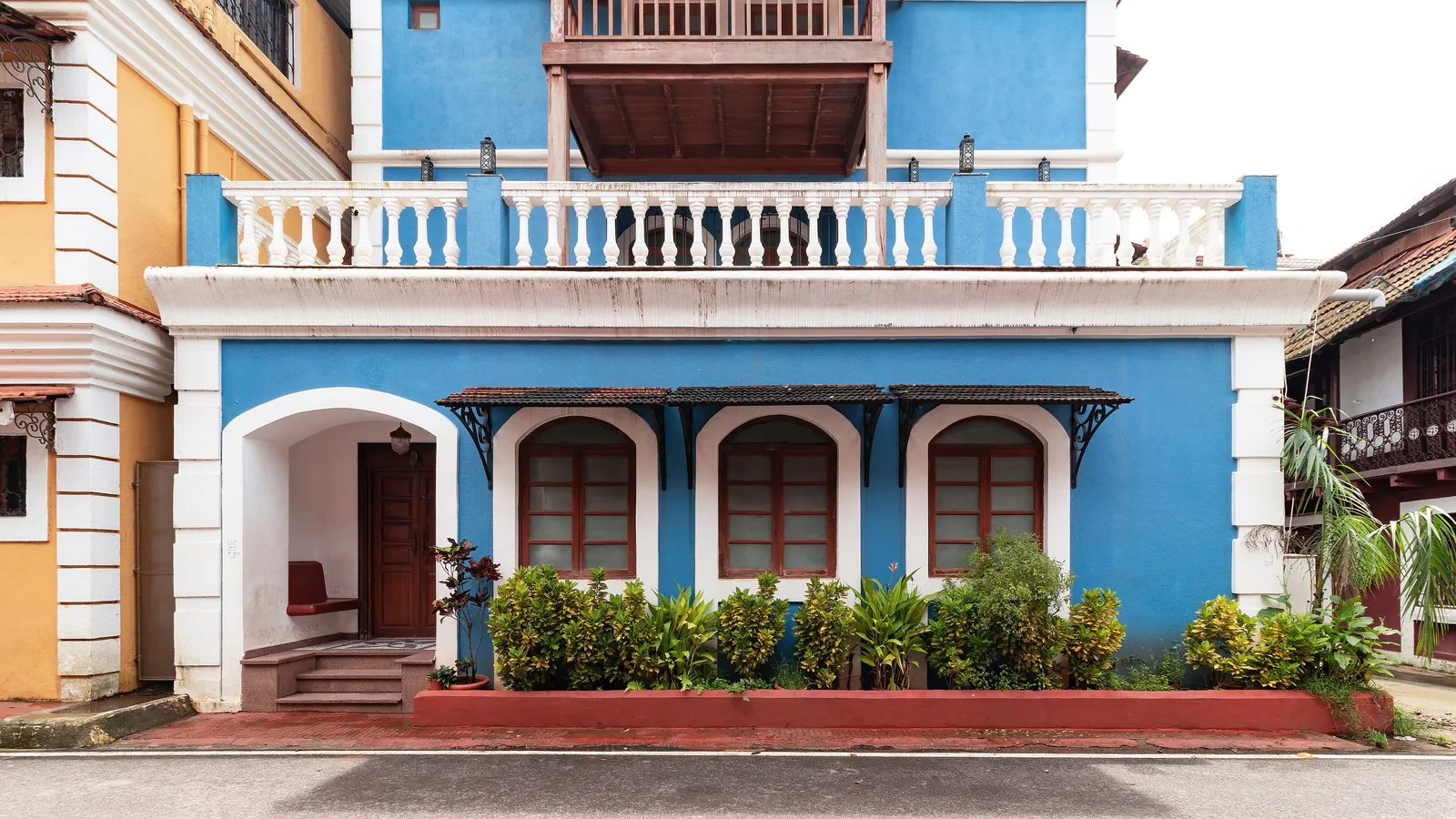
Goan houses are colourful for a mix of reasons, and only some of them are as tidy as the popular story. The version most people hear is that, under Portuguese rule, white was reserved for churches and chapels, so private houses had to be coloured, and owners could be fined for leaving a house unpainted. That account comes from published writing on Goan houses and is widely repeated. It is worth knowing exactly what it rests on, because the evidence on the ground is more varied than the rule suggests.
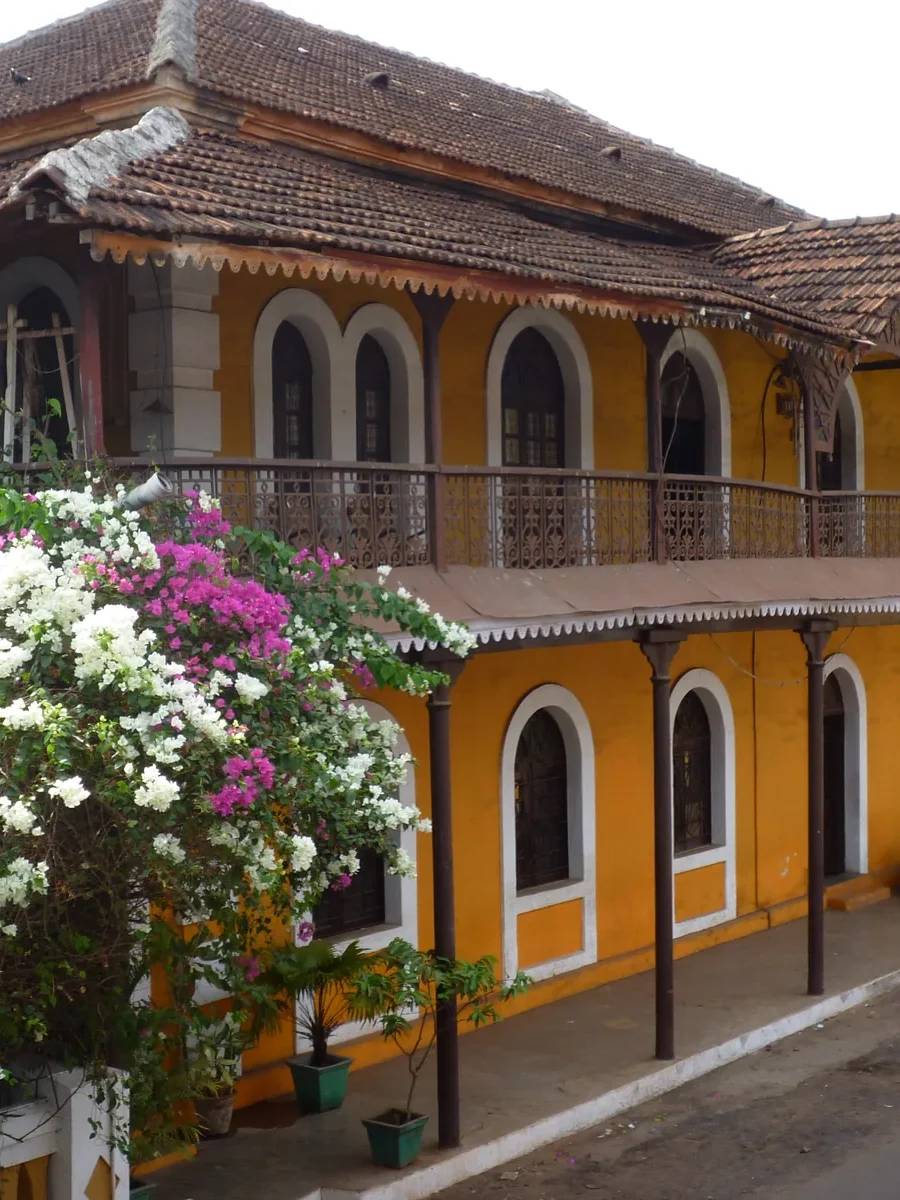
The other reasons are practical. Lime was the finish of every old Goan wall, and lime takes earth pigments well. Colour showed that a family was doing well. And a house repainted every year after the rains gives its owner a regular chance to choose again. The palette that resulted, oxblood, indigo, ochre, green and white, is one of the things that makes a Goan village recognisable.
This piece goes beyond the yellow house, which we cover in our article on the yellow houses of Goa. It looks at the whole palette, the pigments and lime behind it, what the monsoon does to colour, how to choose a colour today, and how to carry it indoors through fabric.
The no-white story: what it rests on
The account of the white rule that most writing repeats comes from Houses of Goa, a 1999 study of Goan domestic architecture, as summarised in encyclopaedia entries on Goan houses. It describes an unwritten rule during Portuguese rule that no private house could be painted white, a colour kept for churches and chapels, and notes that Hindu as well as Christian families observed it. The same sources say an owner could be fined if his house was not painted at all, and that colour was originally made from vegetable and natural dyes.
Two words in that account matter: unwritten rule. We have not found a published decree that sets it out, and the sources that repeat it do not cite one. That does not make it false. Customs enforced by the church, the neighbours and the parish can be as binding as any law. But it is fair to call it a documented tradition rather than a statute.
The evidence on the ground is mixed in a way that supports that reading. The Government of Goa's own page on a riverside mansion in Ribandar names three traditional colours of Goan exteriors: oxblood, white and indigo, describing white as very Portuguese and indigo as very Indian. And a story published by the Museum of Goa describes a house more than 150 years old that was painted white for roughly its first 30 years before its owners switched to indigo, then red oxide, then yellow ochre. White houses existed; coloured ones became the norm.
Treat the no-white rule as a well-attested custom, not a proven law. White trim is universal; whole white houses are rarer, but not unknown.
The Goan palette, colour by colour
Every colour on an old Goan house has a pigment behind it, and the pigment decides how the colour behaves in lime and in sun. The earth colours, ochres and iron oxides, come from the ground and are the most stable. Blues are trickier: the traditional blue is described as indigo, a plant dye, and blue can also come from mineral pigments such as ultramarine. Greens come from earths or mixtures.
The table below sets out the main colours, their usual sources and how they tend to age. It is a guide to behaviour, not a recipe. Two houses washed in the same named colour will rarely match, and a colour you mix today will never exactly match one mixed last year.
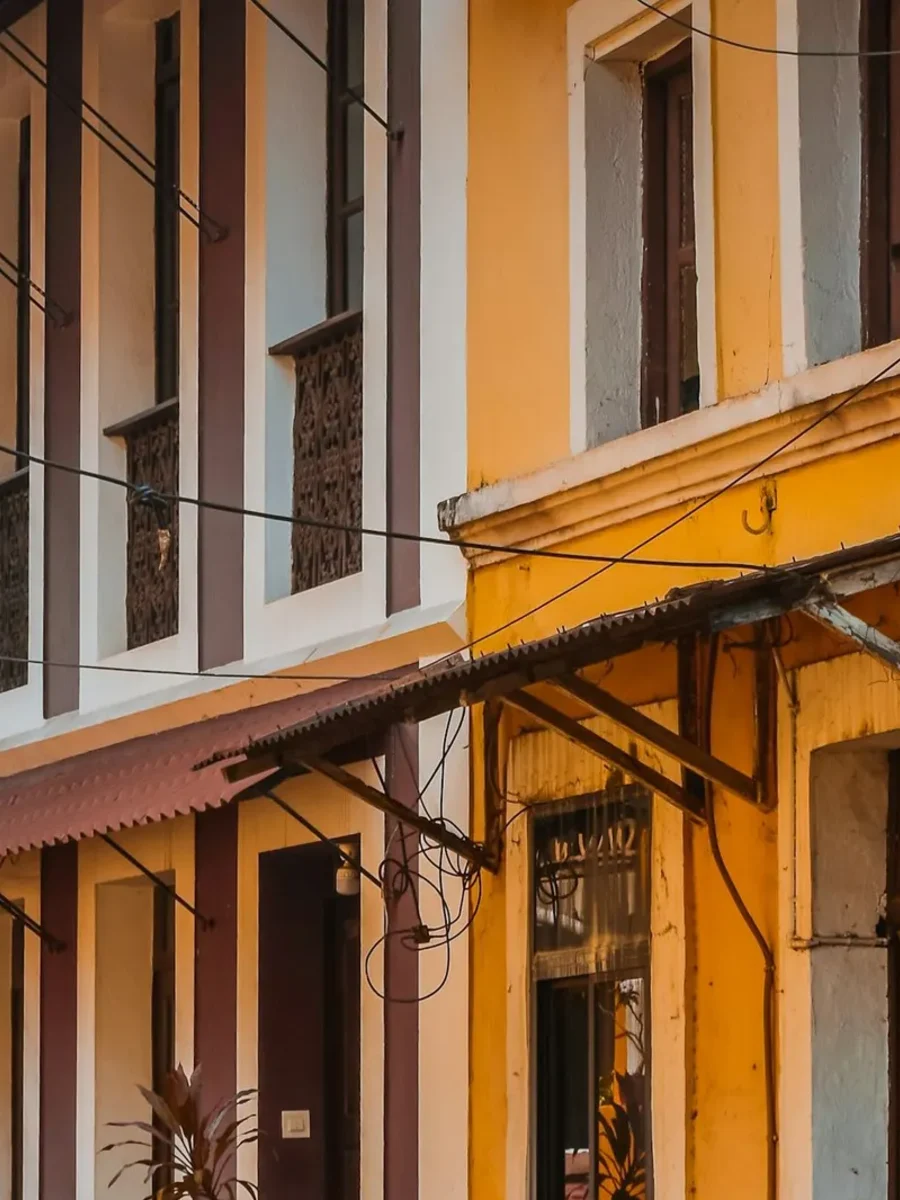
The rest of the house follows a quieter rule. Writing on Goan houses describes solid colours on the front facade and paler colours or white indoors, with stronger colour used as highlights. A study of traditional Goan Hindu courtyard houses notes that traditional facades used more earthy colours, closer to laterite and mud than to the bright washes of many Catholic street fronts. And on almost every house the white is on the trim: window surrounds, pilasters, cornices and mouldings, which frame the colour and make it read. Colour was not only paint, either: describing a mansion at Fatorda, on the edge of Margao, the Government of Goa notes how the family broke up the red wash of the house and its outer wall with decorative tiles, against the red of the masonry seats.
| Colour | Usual pigment | In lime and sun |
|---|---|---|
| Oxblood and laterite red | Red ochre or red iron oxide (hematite) | Very stable; earth reds are among the least likely to fade or react with lime |
| Yellow and ochre | Yellow ochre (iron oxide hydroxide) | Very stable; mellows rather than bleaches |
| Indigo blue | Indigo, a plant dye, or a mineral blue such as ultramarine | Indigo is the most lightfast natural dye; ultramarine resists alkali but not acid |
| Green | Green earth, or mixtures of blue and yellow | Green earth is not changed by light; mixed greens can shift as one part fades |
| White trim | Lime itself | Shows algae, dirt and rain streaks first, so it is renewed most often |
Planning something like this?
We visit homes across North and South Goa, measure on site, and bring samples to see in your own light.
Lime and pigment: how a colourwash works
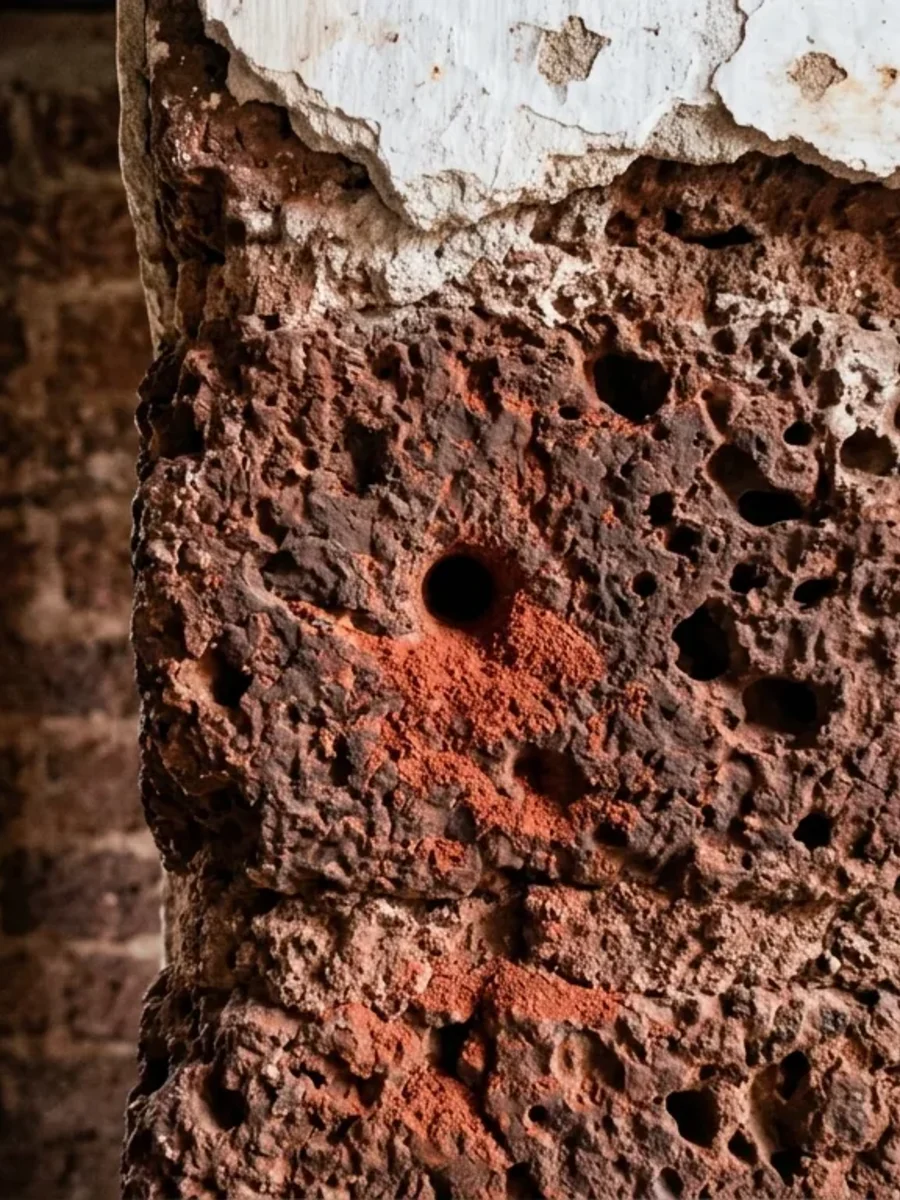
Old Goan walls are laterite or mud, plastered in lime, and the colour sits in a lime wash. A conservation guide to limewash in the Building Conservation Directory explains the chemistry. Limewash is slaked lime in water. It sets slowly by absorbing carbon dioxide from the air and turning back into calcite, whose crystals give limewashed walls their soft glow. Coloured limewash is limewash with pigment added, and the guide advises using earth pigments such as red and yellow ochres, because their colour comes from minerals and they are the least likely to fade in sunlight or react with the lime.
Colour science backs that up. Red ochre's colour comes from hematite, and the pigment reference ColourLex describes iron oxide pigments as absolutely stable, as cave paintings show. It describes indigo as the most lightfast of the natural organic dyes and not destroyed by dilute alkalis, and natural ultramarine as resistant to alkaline solutions, which is why it can be used in fresco, though it breaks down even in dilute acids. Green earth is not changed by light. In practice, that is why the earth colours dominate: they simply last.
The same guide gives two warnings anyone choosing a colourwash should hear. Limewash dries many shades lighter than it looks wet, so colours must be tested dry. And it is almost impossible to reproduce exactly the same colour from a new batch, because limewash is a hand-made material. Slight variation from wall to wall is part of the look.
What the monsoon, sun and salt do to colour
Goa's climate is hard on any finish. The India Meteorological Department's summary puts the state's normal annual rainfall at about 337 cm, with about 91% of it in the southwest monsoon and July alone bringing a third of the year's rain. The monsoon usually sets in during the first week of June and withdraws by about the third week of September. Wind-driven rain on a west or south-west wall washes a lime finish back faster than anywhere else on the house.
Lime handles this better than people expect, because it is a sacrificial coat. It wears back gently rather than peeling, and a fresh coat bonds to the old one. The conservation guide gives a figure that explains why it matters for old walls: in tests, limewash had a vapour permeability of about 350 units, against well below 75 for many masonry paints. A laterite wall that soaks up water in July needs to dry out in October, and a breathable finish lets it. A plastic coating over the same wall tends to trap water behind it until it blisters and flakes, which is why our guide to living in a laterite house is firm about breathable finishes.
Sun is the other half of the story. Strong west light bleaches the less stable colours first, which is why a mixed green can drift towards blue or yellow, and why a bright synthetic red on a sun-facing wall can look chalky after a few dry seasons. Salt air adds its own wear near the coast: salt deposits on walls attract moisture and can push finishes off from behind. The guide notes that, although salt was once added to some limewashes, the practice is avoided today because of the importance of keeping salts out of walls.
Keeping a colour: the repainting cycle
Goan houses were never painted once and left. The Museum of Goa notes that most Catholic families paint the exterior of their houses every year before Christmas, and the house it describes carries something like 150 coats of lime. That annual rhythm suits lime perfectly. The rains end in September, the walls dry through October and November, and a fresh wash goes on in the dry, settled weather before the festive season.
Timing matters for lime in particular. The conservation guide warns that a fresh coat is vulnerable to rain, which shows as white streaks or the colour washing out, and that curing is slowed by high humidity, with at least five days advised before recoating. In Goa that means limewashing in the dry season, from about November to May, not in the last weeks of the monsoon. For new work the guide recommends at least three coats, applied thinly and almost scrubbed into the surface.
Because batches never match exactly, repaint a whole elevation, or at least a whole panel between mouldings, rather than patching a single damp mark. A patch in a newly mixed colour will show for a season or two. If a section keeps failing, look for the water before repainting: a blocked gutter, a broken tile, or cement filler that is trapping damp. We are not painters or builders, so take this to someone who works with lime.
Choosing an exterior colour today
Start with the wall. If it is an old laterite or mud wall in lime plaster, choose a limewash or a genuinely breathable mineral finish, and choose from the earth palette, which lasts. If it is a modern concrete or block house, the choice is wider, and a good exterior emulsion is normal; the traditional colours still look right, but you can choose them for appearance rather than chemistry.
Then look at the street. A Goan village works as a set of neighbours who chose differently, not as a row of identical houses, and the custom of competing through colour is part of the tradition. Pick a colour that is distinct from the houses on either side but sits in the same family: warm earths, indigo, green. Very bright synthetic colours, and greys borrowed from city apartments, tend to look out of place against laterite walls, red tile roofs and green fields. If the house is in a heritage precinct, or may be listed, check with the planning authority before you change its colour.
Finally, test it properly. Paint large patches on a sunny wall and a shaded one, let limewash dry fully before judging, and look at them in the early morning, at noon and at dusk. Decide on the trim at the same time: crisp white on mouldings and window surrounds is what makes a Goan front read as Goan, and a cream or a pale grey changes the whole effect.
- Old lime-plastered walls: limewash or a breathable mineral finish, earth pigments first.
- Modern concrete walls: exterior emulsion is fine; choose colours that hold on sun-facing walls.
- Trim: white on window surrounds, pilasters and cornices frames the colour.
- Neighbours: distinct but related colours keep the character of the lane.
- Timing: paint in the dry season, never in the last weeks of the rains.
Carrying the façade colours inside
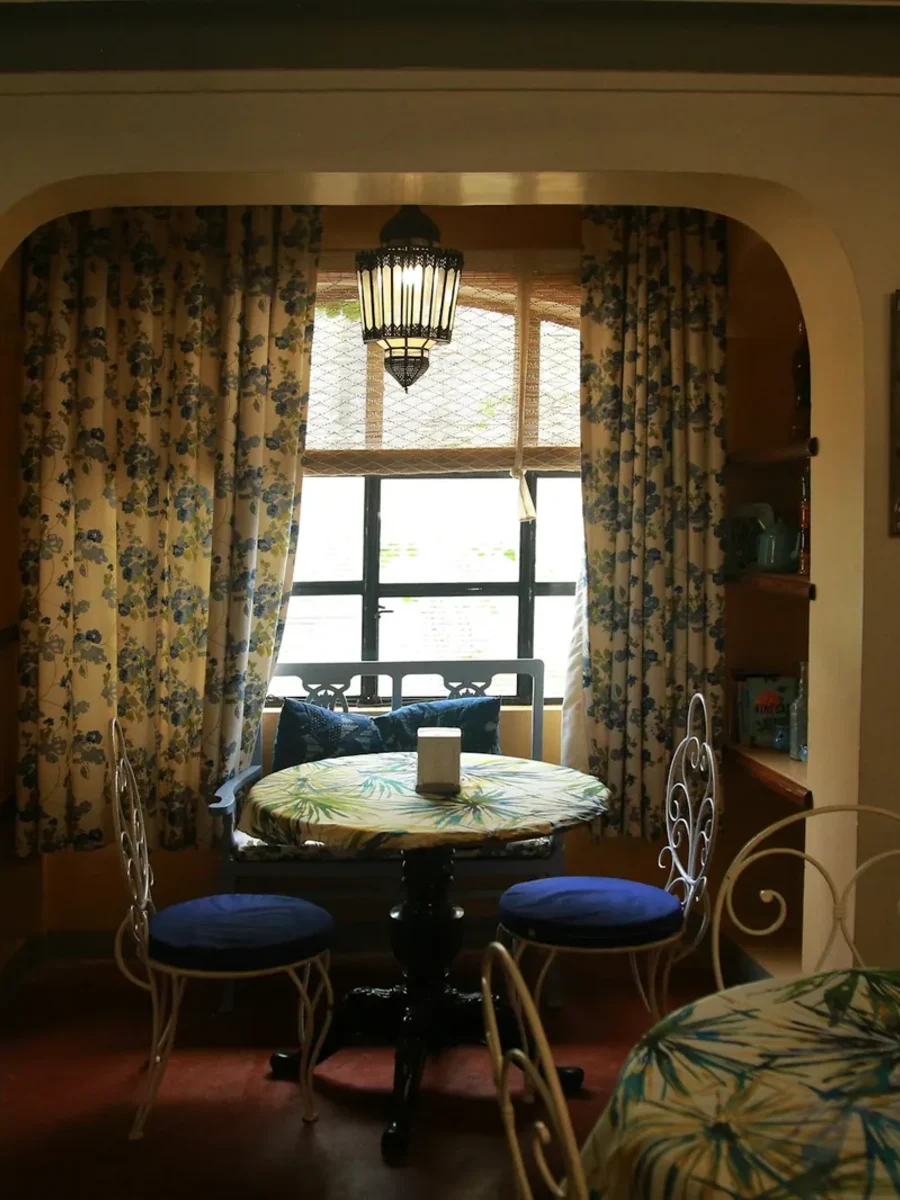
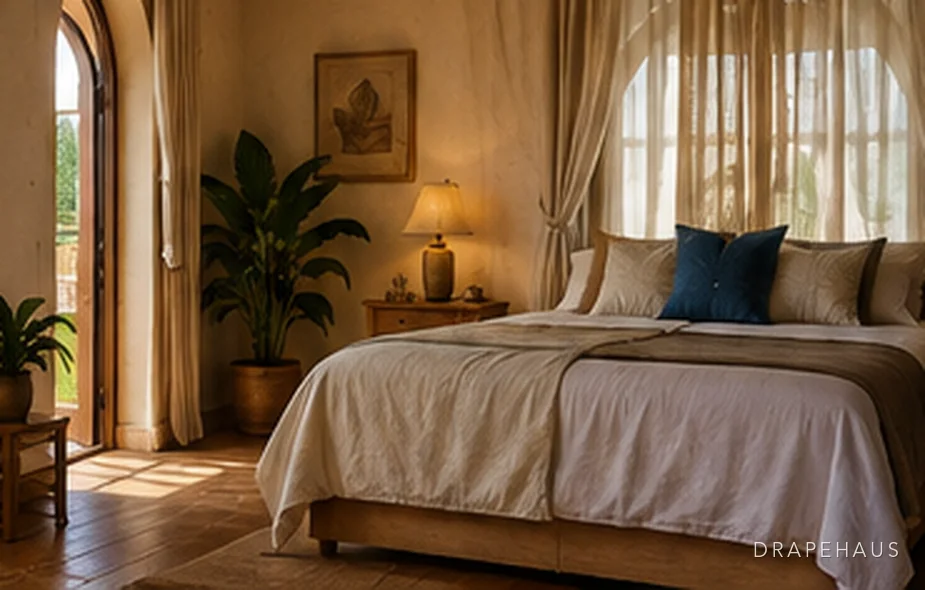
The tradition of paler interiors with strong highlights is a good starting point for a modern home too. Keep walls light, so the rooms stay bright behind deep verandahs and small windows, and bring the façade colour inside in fabric, where it can be changed. An oxblood house suits curtains in natural linen with oxblood or terracotta cushions; an indigo house suits white and blue together, which is about as Goan a combination as exists; an ochre house suits deep green and white.
Remember that the exterior colour changes the light indoors. Sun reflecting off an ochre or red verandah wall warms everything it falls on, and a blue house throws a cooler light. Look at fabric samples in the room, by the window, at the times of day you use it. Our linen curtains are a common base layer for that reason: they take reflected colour gracefully rather than fighting it.
Strong colours in fabric fade, just as they do on walls. A west-facing room in Goa will bleach a saturated cotton within a few seasons unless it is lined or shaded, and our guide to fading and sun damage explains the options. Cushions are the easiest place to carry a façade colour inside, because they can be swapped as the sun takes its toll; see our cushions and soft furnishings. You can try curtain colours against your own wall colour in the curtain simulator, and when you are ready we can bring samples to the house.