 Drape Haus
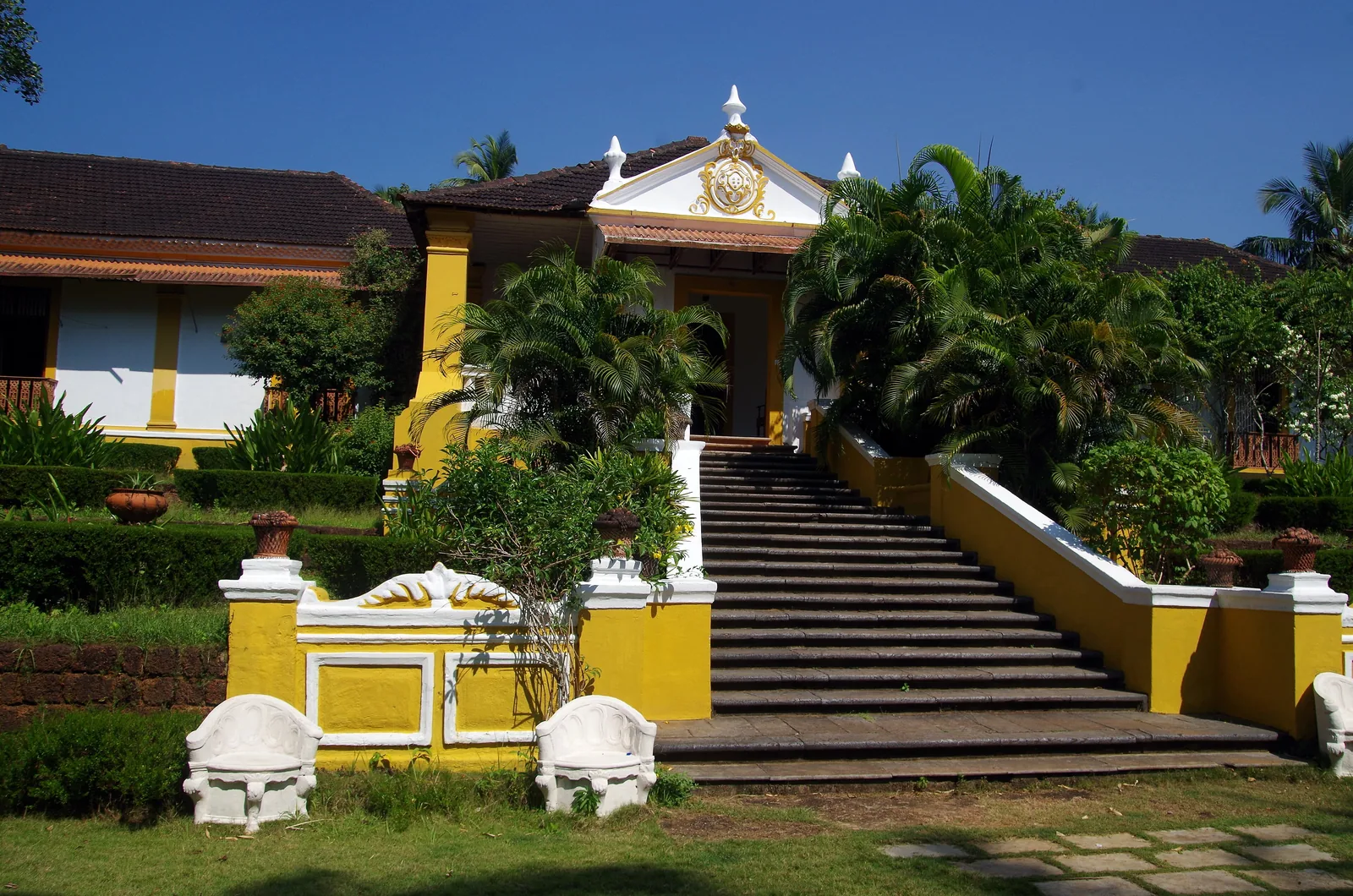
There is no settled answer to the question of the oldest house in Goa. No official body has named one, and the houses most often called the oldest are dated by family tradition, by tourism writing, or by a mixture of the two, with figures that do not always agree even for the same building. Anyone who tells you otherwise with complete confidence is repeating a claim, not reporting a finding.
What can be said is more interesting. A handful of houses have serious claims to fabric going back to the 16th century or earlier. The Government of Goa describes the original core of the Fernandes house in Chandor as built some 500 years ago. The Figueiredo family dates their house in Loutolim to 1590. Braganza House in Chandor is variously dated to the late 16th, the 17th and mostly the late 18th century, depending on whom you read. And the oldest surviving building in Panaji, by the government's account, is a palace built around 1500 that later served as the viceroys' residence, which is a house of a kind, though not a family home.
This piece sets those claims side by side with their sources, explains why old Goan houses are so hard to date, and shows how historians, and owners, go about finding out how old a house really is.
The houses most often called the oldest
The table below lists the claims that come up most often, who makes each one, and what it rests on. We have only included claims we could trace to a source, and we have kept the wording of each as close to its source as possible. Where a house is a private home or a business today, we describe it only as a building.
The pattern is clear once the claims are laid out. The strongest early dates are for parts of houses, usually an inner core, not for the whole building you see from the road. Most of the impressive façades are later. And the most precise dates, such as 1590, come from family history, which may well be right but has not, as far as we could find, been published with the documents behind it.
| House | Claim | Who makes it | What it rests on |
|---|---|---|---|
| Fernandes house (Voddlem Ghor), Chandor | Original Hindu-influenced house built some 500 years ago; Portuguese-style portion built in 1821; one of the oldest remaining palácios | Government of Goa tourism page; travel writing calls it the oldest house in Goa | Family tradition and the plan of the house, built around a central courtyard |
| Figueiredo house, Loutolim | Built in 1590, in the family for nineteen generations | The family, as reported by The National (2019) and The Better India (2026) | Family history |
| Braganza House, Chandor | Late 16th century; or 17th century; or mostly late 18th century | Family records as summarised on Wikipedia; Government of Goa; South Goa district administration | Family records and later surveys; built in phases |
| Adil Shah's Palace (Old Secretariat), Panaji | Panaji's oldest surviving building, built around 1500; viceregal residence from about 1759 to 1918 | Government of Goa | Historical record of the palace and its use; much altered |
| Palácio do Deão, Quepem | Built in 1787 | Travel guides, from the historical record of its builder | A documented founder and date, but far from the oldest |
Why the dates disagree: the case of Braganza House
Braganza House in Chandor shows how a single house can carry three different ages at once. The Government of Goa's tourism page says it was built in the 17th century. The South Goa district administration's page describes it as mostly late 18th century. An encyclopaedia summary of family records says the land was granted in 1576 and the original structure dates to the late 16th century, with extensions in the 17th and 19th centuries. A family member, interviewed for a Goan magazine, described a house built in three phases. All of these can be partly true at once.
The details also wobble. The same summary says the 1576 grant was made by a King Dom Luís of Portugal. But Portugal's king in 1576 was Sebastian, who reigned from 1557 to 1578, and the only King Luís reigned from 1861 to 1889. The Government of Goa page mentions King Dom Luís in connection with a pair of crested chairs given to the family, which would fit the 19th-century king. A writer for The National, meanwhile, was told the land itself was a gift from King Luís I. Family stories, retold across generations and then by visitors, drift. That is not dishonesty; it is how oral history works.
For a reader, the lesson is to ask what a date refers to. The founding of a family's estate, the oldest wall in a building, the date of the present façade, and the date a family moved in are four different things, and a single number on a website rarely says which one it means.
Before repeating any "oldest" claim, ask: oldest what? Land grant, inner core, façade, or family occupation are four different dates.
Planning something like this?
We visit homes across North and South Goa, measure on site, and bring samples to see in your own light.
Oldest fabric, oldest family seat, oldest building
It helps to separate three questions that the phrase oldest house blurs together. The first is the oldest standing fabric: which walls, of any house, were built earliest and still stand? The second is the oldest continuous family seat: which family has lived in the same house the longest? The third is the oldest building used as a home, which may not be a family house at all.
The Fernandes house is a candidate for the first. The Government of Goa describes an original house with a Hindu influence, built some 500 years ago, and a Portuguese-influenced portion built by the family in 1821. A Goa tourism portal describes it as built before the Portuguese era, around a central courtyard, with a hidden basement and escape passage. If the core is that old, it predates most of the architecture people think of as Goan, which is consistent with a wider point in writing on Goan houses: pre-Portuguese homes were inward-looking, around courtyards, and the outward-facing, ornamental street fronts came from the middle of the 18th century onwards.
The Figueiredo house is a candidate for the second, if its 1590 date and nineteen generations of continuous family ownership are taken at the family's word. Adil Shah's Palace in Panaji is the clearest case of the third: the Government of Goa calls it Panaji's oldest surviving building, built around 1500 as a palace and fortress, later a rest house and then, from about 1759 to 1918, the official residence of the viceroys. It is a seat of government, not a family home, and has been heavily altered, but it has been lived in for longer than most houses in Goa have stood.
How historians date an old Goan house
Dating a house properly means combining several kinds of evidence, because none is reliable alone. Written records come first. The Goa Archives, founded in 1595 as the Torre do Tombo of the Estado da Índia, hold records of village communities, land records, registers of baptisms, births and deaths, deeds and wills, and records from churches, mostly in Portuguese and Marathi in the Modi script. A deed of sale, a will or a partition between heirs can fix a house in time.
The building itself is the second source. Dates are sometimes set into the fabric: on a lintel, a gate pillar, a name plate or a chapel. The Fernandes house is a good example of a building whose phases are known, with a Portuguese-style portion dated to 1821 added to an older core. Plan type is another clue. An inward courtyard plan points to an older Goan tradition; an outward-facing front with a balcão and a formal sala usually belongs to the mid-18th century or later, or to a later refronting of an older house.
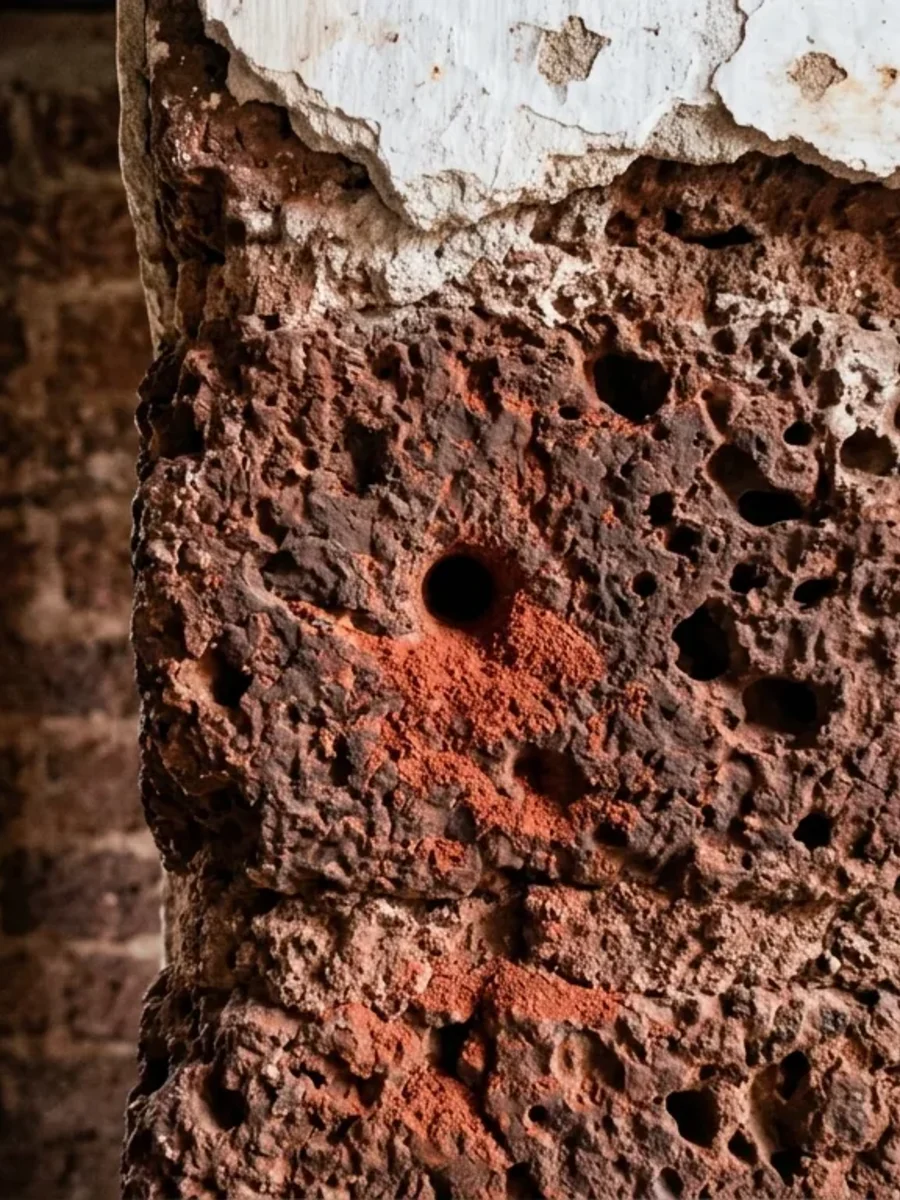
Materials narrow it further. Most Goan houses standing today were built between the 18th and early 20th centuries, and walls were of mud first and later of laterite. The red interlocking roof tiles known as Mangalore tiles only went into production in December 1865, at the Basel Mission factory in Mangalore, so a roof of that pattern was laid, or relaid, after that date. Cement repairs are modern. None of these clues dates a house on its own, and every Goan house has been reroofed many times, but together they let you say which parts are older than others.
- Documents: deeds, wills, partitions, land and village-community records, parish registers.
- Inscriptions: dates on lintels, gateposts, chapels and name plates — check whether they mark building, rebuilding or a family event.
- Plan: inward courtyard plans are generally older than outward street fronts.
- Walls: mud before laterite; thickness and the way walls join show where a house was extended.
- Roof: Mangalore-pattern tiles mean a roof laid after 1865, not that the walls are that recent.
- Repairs: cement, steel and modern glass mark later work, not original fabric.
What "500 years old" usually means in practice
Ages like 400 or 500 years are common in writing about Goan houses, and a visitor should read them generously but carefully. A house described as 500 years old has rarely stood unchanged for 500 years. It is more likely a family seat on the same site, with some early walls surviving inside later rebuilds, and a façade from the 18th or 19th century. That is still remarkable. It is just a different claim from a building that has survived intact.
The Government of Goa's own overview of the heritage mansions is careful in a way worth copying. It says Goa can perhaps claim to be the only place on the subcontinent where houses dating back to the 1700s are still in pristine condition and still inhabited by the families that built them. That is a strong, defensible statement. It does not name a winner, and it does not claim more than the 18th century for the houses as you see them.
Travel writing is less careful. One widely read newsletter calls the Fernandes house simply the oldest house in Goa. Another popular claim is that a house is older than the Taj Mahal, which the Figueiredo family has said of theirs. Both may be right about the buildings concerned. Neither settles the question, because nobody has surveyed all of Goa's old houses on the same basis.
If you own an old house: what its age means for you
Knowing which parts of your house are oldest is practical, not just interesting. The oldest walls are often mud or soft laterite in lime mortar, and they are the ones most easily damaged by cement plaster, plastic paint or a new opening cut in the wrong place. Our guide to living in a laterite house explains why these walls need to breathe, and the overview of Portuguese houses in Goa covers how the parts of the house work together.
A record of what you find also matters if the house is ever assessed for heritage protection or sold. Photographs, copies of deeds and notes on which parts are original are worth more than a family legend, however good the legend. If you are restoring, involve a conservation architect early; we are soft-furnishing makers, not historians or builders.
Old houses also bring old windows: tall openings, odd sizes, shutters that must still close, and walls that do not take ordinary fixings well. When the time comes to dress them, our guide to the Portuguese heritage house covers fixing and fit, and we can measure and make curtains that suit a house of any age. For more on reading old houses from the road, see our field guide to Goan architecture.
How to research the age of your own Goan house
A practical order of work. It costs little, and each step makes the next one easier.
Collect what the family already has
Gather deeds, wills, partition papers, old photographs, letters and any dates painted or carved on the house. Write down family stories as told, and note who told them, but treat them as leads rather than facts.
Photograph and sketch the house
Record every elevation and every room, and draw a rough plan. Mark wall thicknesses, changes in floor level and places where one part of the house meets another. Joins often show where it was extended.
Look for dates in the fabric
Check lintels, gate pillars, chapels, name plates and roof timbers for dates or initials. Note what each might commemorate: a building, a rebuilding or a family event.
Read the materials carefully
Note mud or laterite walls, lime or cement plaster, roof tile patterns and window types. Mangalore-pattern tiles mean the roof was laid after 1865; cement and steel mark later repairs.
Check the land records
The Directorate of Settlement and Land Records keeps the cadastral survey records for Goa. The survey number of your plot is the key to finding older records about it.
Visit the Goa Archives
The Archives hold village-community records, land records, deeds, wills and parish registers, mostly in Portuguese and Modi. Check current access arrangements before you go, and consider help with old Portuguese handwriting.
Ask the parish and the communidade
Church registers and village-community records can show when a family is first recorded in a ward. They will not date walls, but they can date a family's presence.
Bring in a conservation architect
For a firm view of which parts are oldest, ask a conservation architect to read the building alongside your documents, especially before any restoration work.