 Drapehaus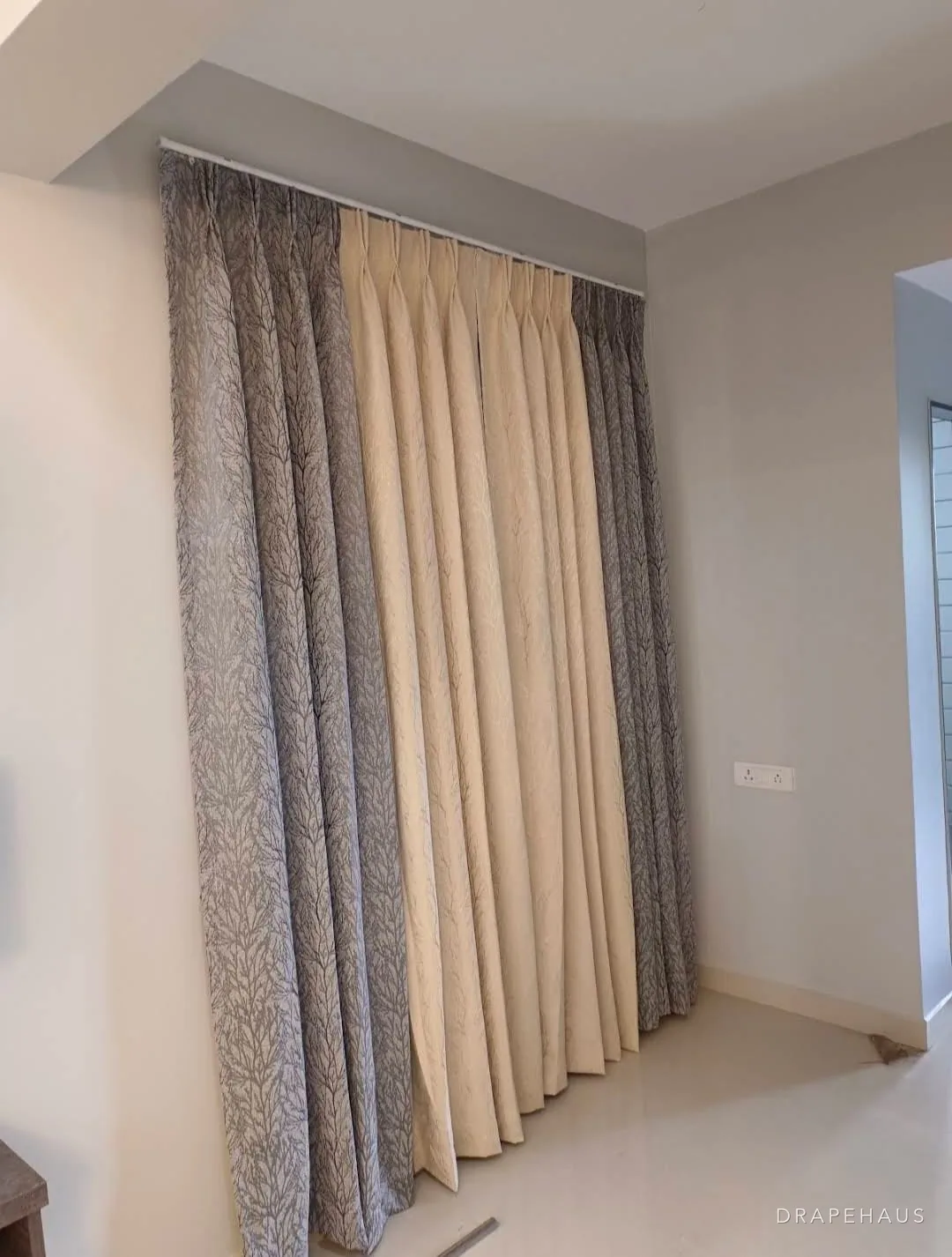
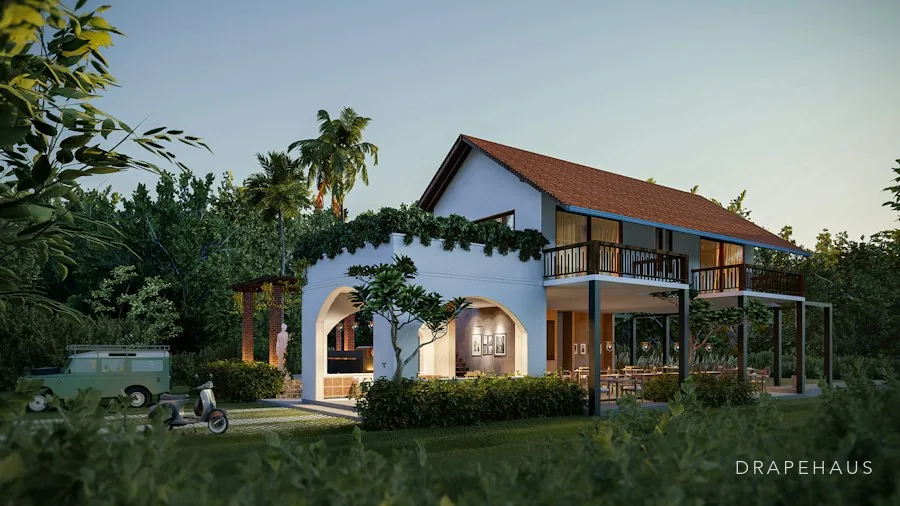
A heritage villa in Goa is easy to over-furnish. The rooms are large and tall, the owner arrives with a lorry-load of new pieces, and within a year the house looks like a hotel that happens to have old walls. The interiors that work best do the opposite: they keep the structure and the light of the house at the front, and let the furnishings follow.
That is not an argument for museum rooms. People live in these houses, often part of the year and often letting them when they are away, and they need good beds, dark bedrooms, working kitchens and comfortable seating. The skill in heritage home interiors is adding all of that without breaking the character of the house or its ability to cope with the monsoon.
This guide covers the decisions that matter most in a heritage house in Goa: scale, textiles, lighting, antique furniture in a humid climate, and what to modernise invisibly. For the history and anatomy of these houses, start with Portuguese houses in Goa.
What makes a heritage villa in Goa different inside
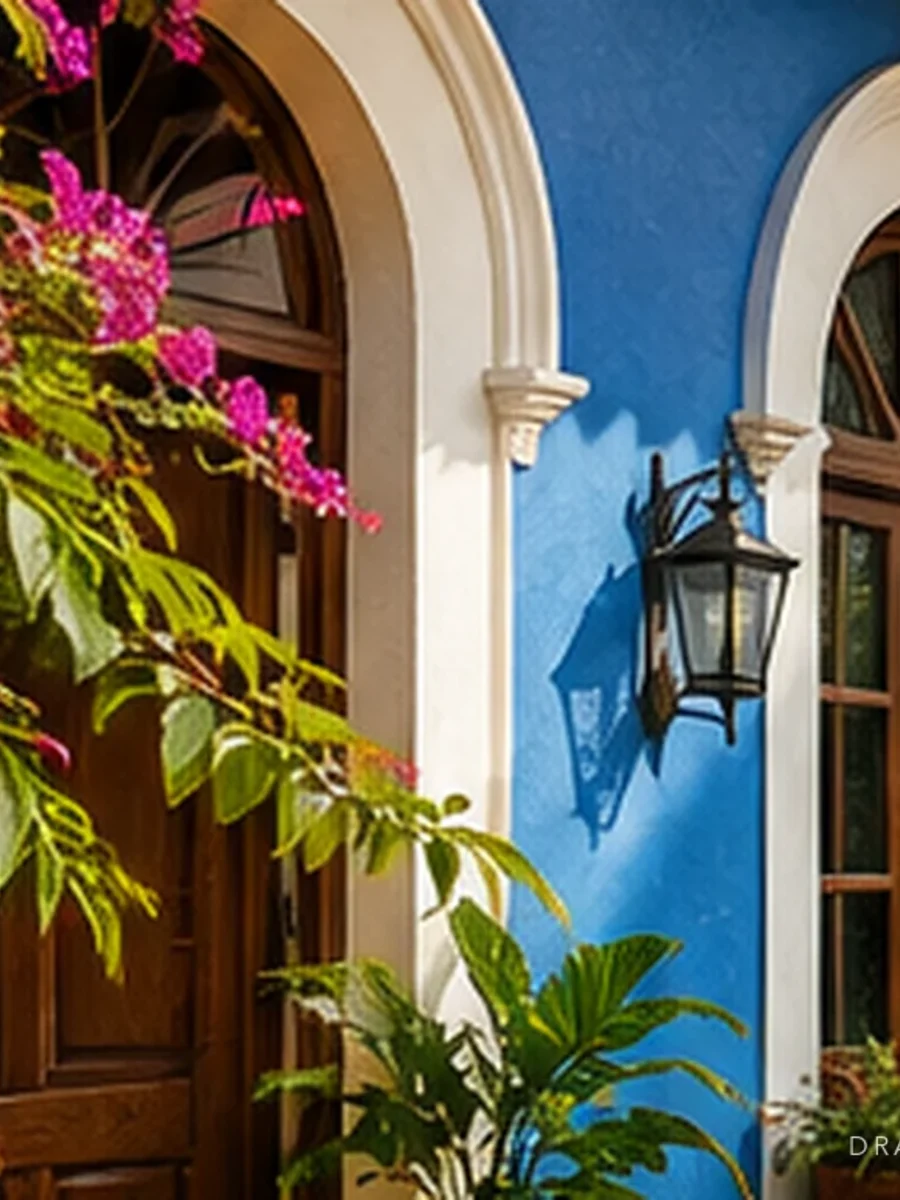
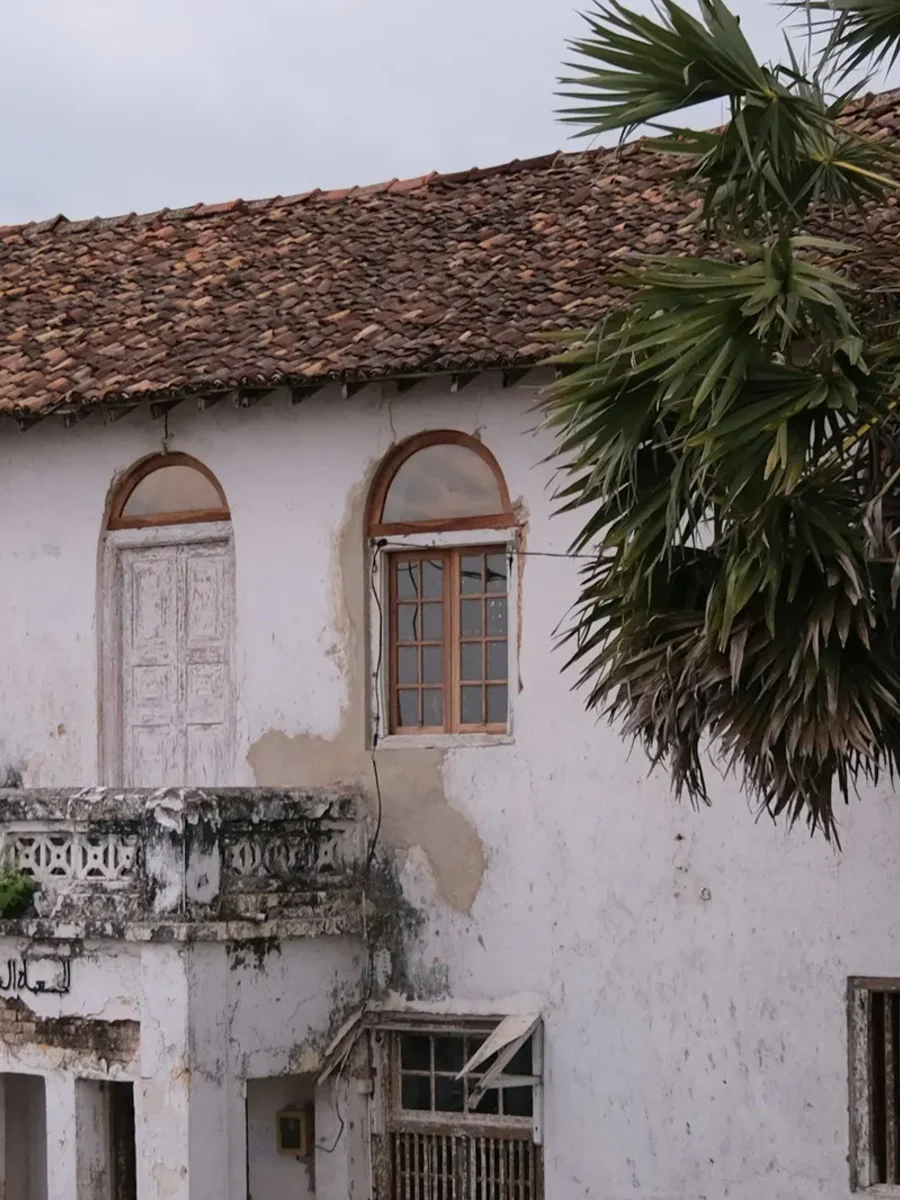
The rooms of an old Goan house were planned in a particular sequence — balcão, sala, then the private rooms and dining room behind — and they carry their own hierarchy of height and formality. Almost every room has a wooden false ceiling; floors range from lime and earth to imported tiles; the walls are thick, lime-plastered and often strongly coloured. There is already a great deal going on before a single piece of furniture comes in.
The other difference is air. A heritage house is designed to be ventilated, with tall openings and shutters, and its walls take up and release moisture through the year. Furnishing that blocks the openings, seals the walls or piles fabric against them works against the building. Good heritage interiors keep windows operable, keep furniture off external walls, and choose materials that tolerate humidity rather than fight it.
Furnish around the openings, not over them. If a shutter cannot close, something is in the wrong place.
Scale: sizing furniture and textiles for tall rooms
The commonest mistake in a heritage villa is buying for an apartment. Sofas, rugs, lamps and curtains that look generous in a city flat look like doll's-house pieces in a sala with a very high ceiling. Measure the room, not just the wall you plan to fill, and let the largest pieces be large.
Curtains follow the same rule. A curtain sized to a tall window in a taller room reads as a small rectangle of cloth. Start the drop well above the window head, take it to the floor, and give it enough fullness to read as a column rather than a flat panel. Our guide to Portuguese heritage houses explains how to do this without stopping the internal shutters from closing.
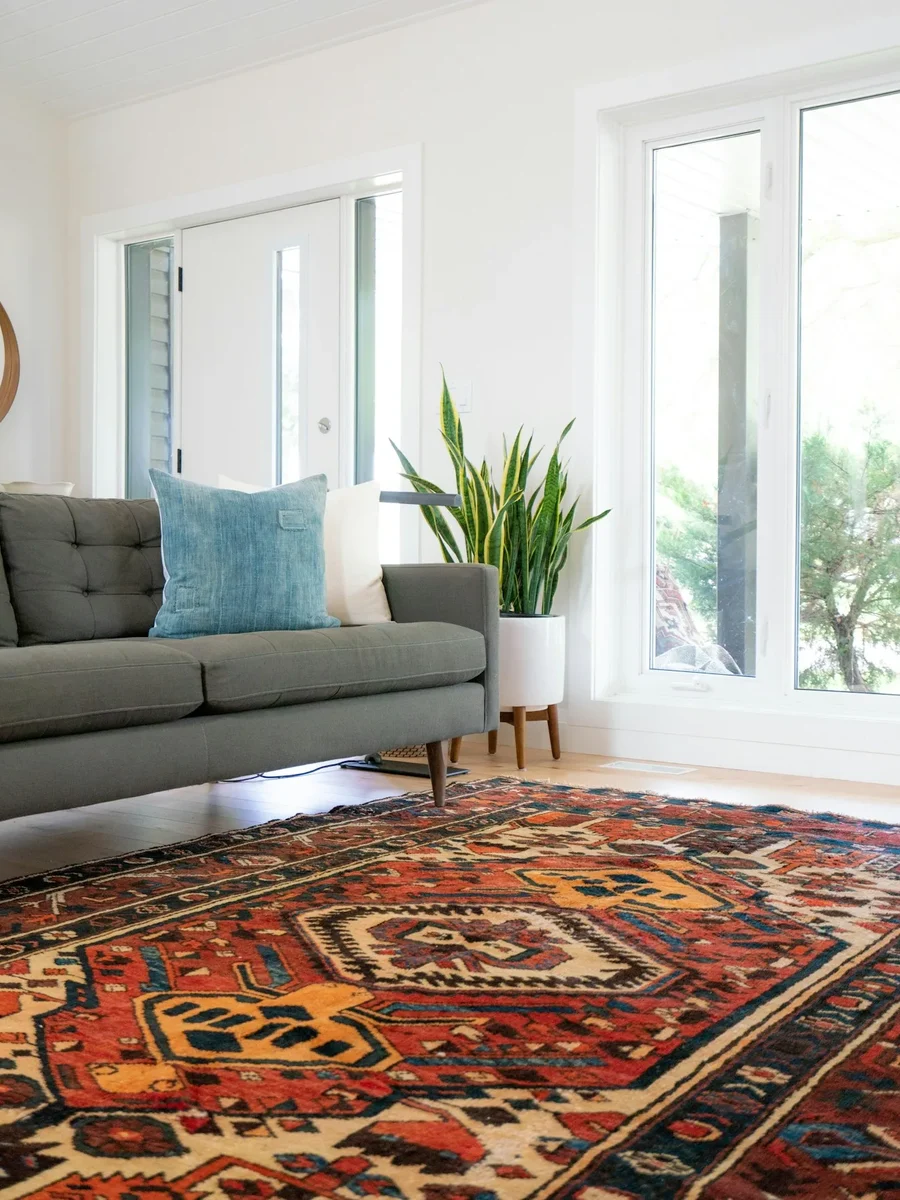
Rugs want the same generosity, but with a practical caveat. Flatweaves and dhurries can be rolled and stored through the monsoon; a heavy pile rug left down all year on a floor that breathes is a harder proposition. If a large rug does stay down, lift a corner every few weeks in the monsoon to check the back and the floor beneath, and keep the room ventilated.
Planning something like this?
We visit homes across North and South Goa, measure on site, and bring samples to see in your own light.
Period-appropriate textiles for heritage home interiors
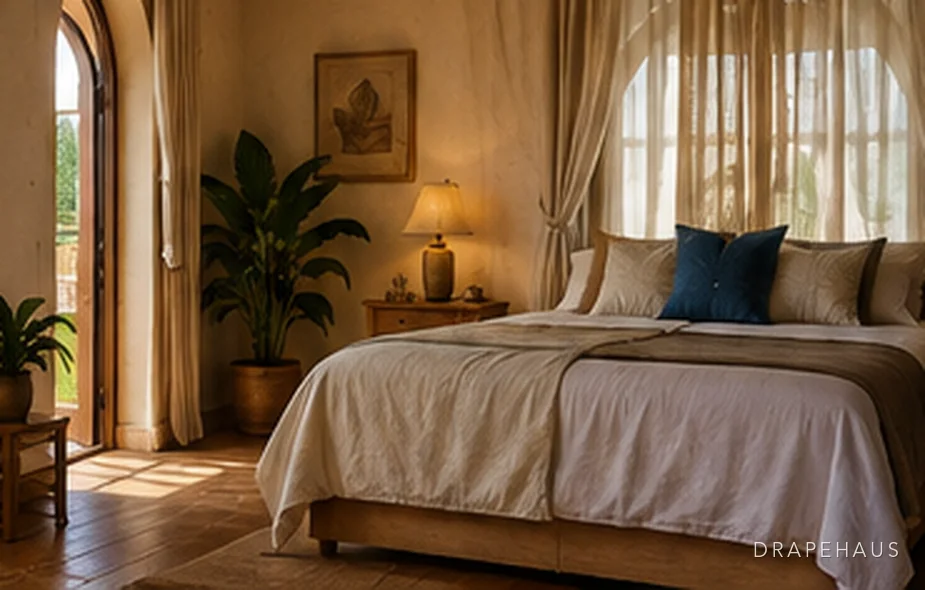
The textiles that look right in an old Goan house are mostly the textiles that behave well in its climate: linen, cotton, cotton-linen blends and fine voiles, in plain weaves or quiet textures. They breathe, they soften the light rather than blocking it, and they age well. Glossy synthetics and heavy printed velvets tend to look imported, and they are harder to keep fresh through the wet months.
Pattern belongs where the house already has it. With patterned tiles, carved furniture and coloured walls, plain curtains in a well-chosen tone usually do more than a print. Where you want pattern, put it in cushions, a single upholstered piece or a runner, where it can be changed. Our linen curtains are a common starting point in these houses for exactly that reason.
Linings deserve thought. A light cotton lining protects the face fabric and adds body without sealing it; coated blackout linings should be kept to bedrooms, and hung well off the wall so air can circulate behind them. Interlining, the extra layer used in cold climates for insulation, is rarely needed in Goa and holds moisture; it is usually better left out.
Lighting an old house without spoiling it
Rows of recessed downlights are the quickest way to make a heritage room look like a new build. They also mean cutting into wooden false ceilings, which is damaging and hard to reverse. The rooms were designed around daylight from tall windows and around light at human height in the evening, and that is how they still look best.
Layer the light instead: table and floor lamps around the edges of the room, picture lights or wall lights where there is something worth lighting, and a restored chandelier or pendant in the sala where the house had one. Warm colour temperatures sit better with lime plaster and old timber than cool ones. Where new wiring is needed, route it through floor voids or neat surface conduit rather than chasing the walls, as described in our guide to restoring an old Portuguese house.
Antique furniture in a humid climate
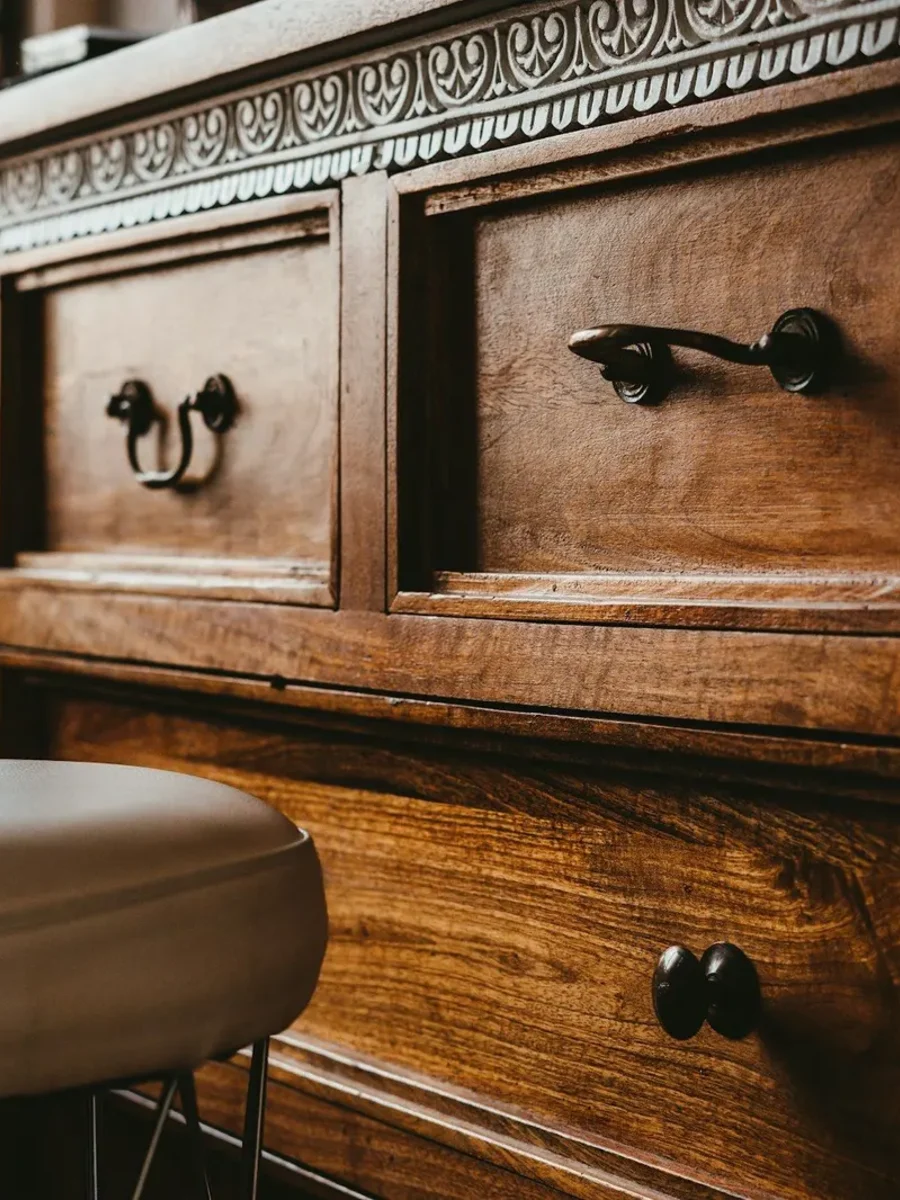
Goa's humidity is the main enemy of old furniture and upholstery. Panjim's morning relative humidity is around 91% in July and August and still averages 71% in the afternoons across the year. The US EPA advises keeping indoor humidity below 60%, ideally 30–50%, to limit mould. An old house in the monsoon is far above that unless something is done.
What helps is steady conditions and moving air. Keep antique pieces a little away from external walls, avoid placing them in full sun beside an open window, and run dehumidifiers in rooms that have to stay closed. Sudden swings — a room chilled hard by an air conditioner, then shut and left — are harder on old timber and glue than steady warmth.
Upholstered antiques need breathable fillings and covers. When a piece is recovered, natural-fibre fabric and a well-made cushion interior tolerate humidity better than foam wrapped in plastic. Cane seats and backs, common on old Goan chairs, want air on both sides and should not be covered with fixed cushions. Our reupholstery work often starts with exactly this: re-making the inside of an old chair so it can live in a Goan house again.
Modernising invisibly
Some modern comforts are worth having in a heritage house, as long as they do not show. Motorised tracks on the heavy curtains of a tall sala mean they are actually drawn, rather than left half-open because they are hard to reach. The motor and track can sit tight to the ceiling or behind a pelmet, and the wiring can be planned during the restoration. Our motorised window treatments are fitted with that kind of discretion in mind.
Blackout belongs in bedrooms, especially where guests or tenants expect a dark room in the morning, and nowhere else. Insect screens can be fitted as sliding or removable frames inside the reveal so that the original windows and shutters stay untouched. The same goes for air conditioning in bedrooms: units placed on internal walls or above doors, and pipework run through ceiling voids, disturb far less than a unit centred on a painted wall. The test for every addition is simple: could it be taken out tomorrow without trace?