 Drapehaus
Drapehaus
Preparing the room
Drapehaus
Preparing the room
Curtains
Linen has a weight and a slub that no synthetic quite copies, and it looks at home against lime plaster and old timber. It also moves with humidity — something to plan for, not a reason to avoid it.
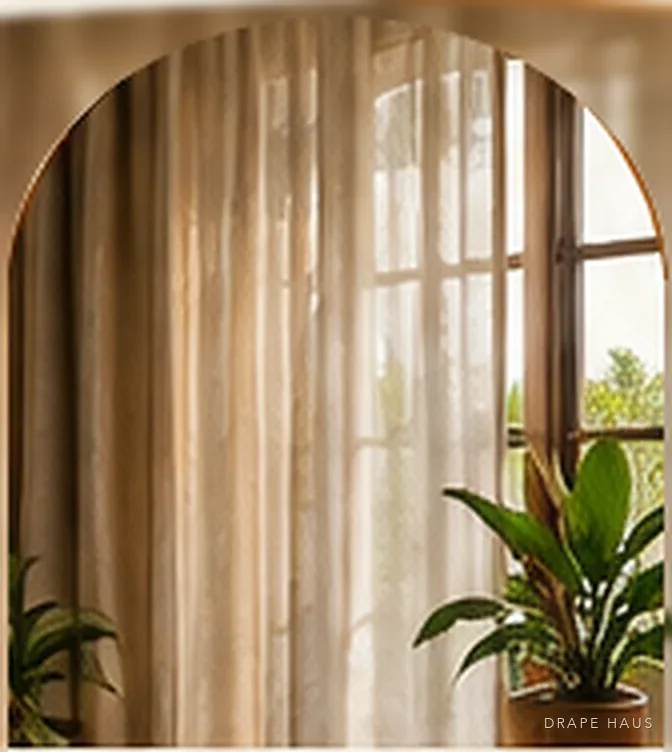
Linen · Midday
Treatment
Time of day
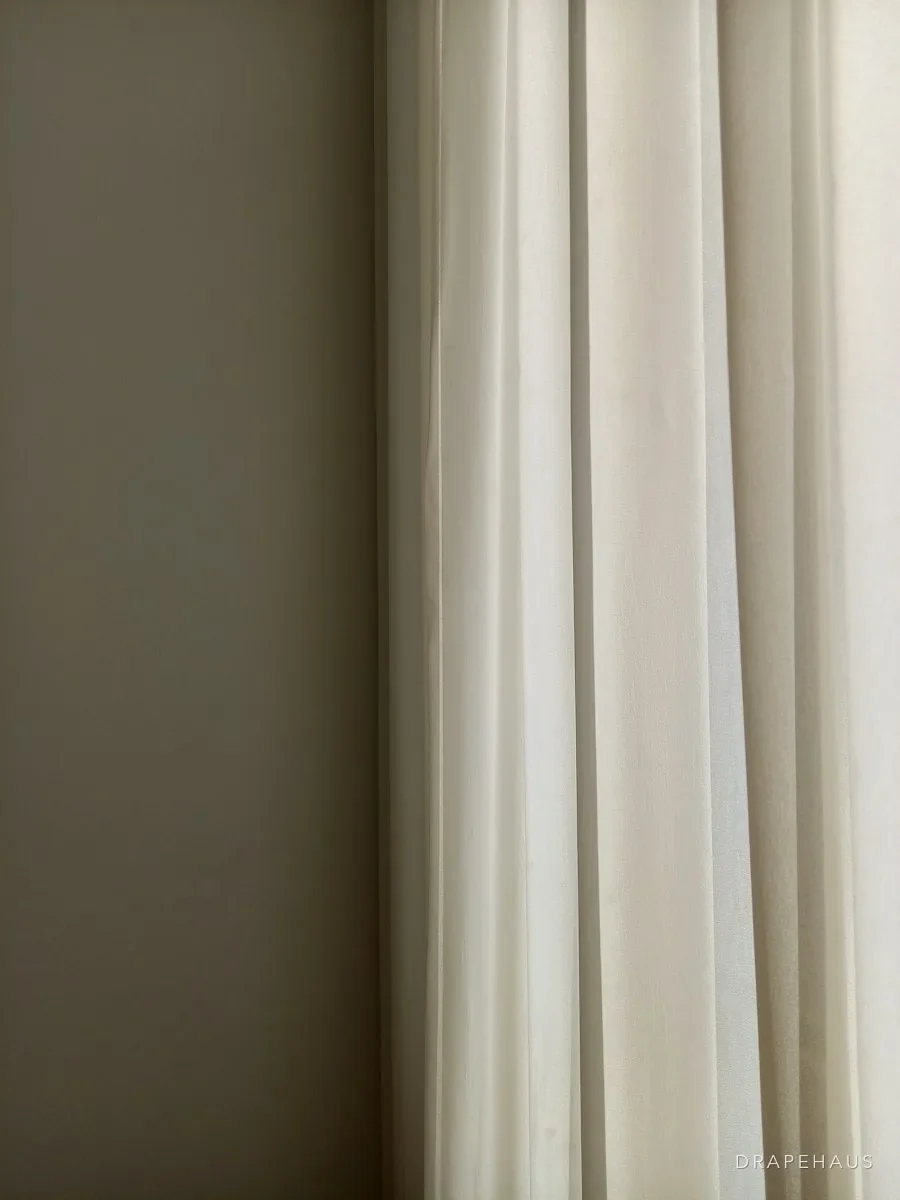
Glows with daylight and gives real daytime privacy. After dark, silhouettes can still show through unlined linen.
In short
By the Drapehaus studio · How we write
Is it right for you?
Linen is woven from flax, one of the oldest textile fibres, and it has a character synthetics can suggest but not reproduce: a dry, cool hand, an irregular slub that catches the light, and a weight that makes a curtain fall in loose, heavy folds rather than neat pleats. In a room of lime plaster, old timber and terracotta, it looks as if it has always been there.
Linen curtains suit owners who like a relaxed, lived-in look and are happy for the fabric to crease, soften and change a little over time. They suit rooms that are occupied and aired, and windows where the curtain is part of the architecture rather than a purely functional screen.
They are not for everyone. If you want a crisp, perfectly regular curtain that looks the same on the last day as the first, or if the room is sealed, left closed for months, or directly exposed to sea wind, a linen blend or a linen-look fabric will serve you better. Choosing between these is most of what this guide is about.
The details
Pure linen drops and lifts a little as the air changes, so a floor-length linen curtain that just kisses the tiles in April can sit a centimetre off them in August. We cut to allow for it, and in exposed or seasonally closed houses we often suggest a linen-blend or linen-look polyester that keeps the texture and holds its length.
Unlined linen filters light beautifully; lined, it gives privacy and a heavier drape. Either way it is washable, softens with age, and suits the relaxed rooms most Goan houses are.
Your options
The word linen covers several quite different fabrics. Choosing the right one for the position is more important than choosing the colour.
Swipe for all 5 →
The honest view
Texture no synthetic matches
The slub, the irregular colour and the dry hand of true linen give a depth that shows especially in raking light. In heritage rooms it is often the fabric that makes a window look right.
Breathes with the room
Linen lets air and moisture pass through readily and dries quickly when it gets the chance. In a room that relies on the breeze, it feels cool and never heavy.
Softens and improves with use
Linen grows softer with each wash and each season. A good linen curtain looks better in its fifth year than its first, provided it has been cared for.
Strong and long-lived fibre
Flax is a strong fibre that resists abrasion well. With a lining to protect it from sun, a pure linen curtain in an aired room can last a long time.
Moves with humidity
Pure linen lengthens a little in the wet months and lifts again in the dry. A curtain cut to kiss the floor will not do so all year, so hems need allowance.
Creases readily
Linen creases where it is handled and where it folds. Many people love this; if you want a perfectly smooth curtain, linen will frustrate you.
Needs a drying cycle
In rooms that stay closed or damp, linen cannot dry and is prone to mildew. It is a fabric for occupied, ventilated rooms, not sealed or shut-up ones.
Side by side
Most people choosing linen are really choosing a look. These are the fabrics that can give it, and how they differ in use.
| Pure linen | Linen-polyester blend | Linen-look polyester | Cotton | |
|---|---|---|---|---|
| Texture up close | Deep, dry, irregular | Close to linen | Convincing at a distance | Smooth, even |
| Creasing | High | Moderate | Low | Moderate |
| Length stability | Moves with humidity | Stable | Very stable | Can shrink when washed |
| Salt and damp tolerance | Low | Good | Very good | Low to fair |
| Drape | Heavy, loose folds | Soft, regular folds | Even folds | Soft folds |
| Suits closed houses | No | Yes | Yes | No |
Swipe to compare →
Where linen is wanted in a testing position, a linen-polyester blend usually keeps most of the look with far fewer compromises.
Rather see it in your own room?
We bring samples to the house, measure every window, and specify for the light and exposure you actually have.
Room by room
The classic linen room. Full-length, lightly lined linen on a pole or ceiling track gives a room a calm, grounded frame, especially where there are timber floors or old plaster.
Lined linen works well where the room is aired daily. For full darkness, pair it with a blackout roller behind rather than a heavy blackout lining, which flattens linen's drape.
Linen suits the long, formal windows of many dining rooms and handles occasional use well, provided the room is opened up regularly between meals and gatherings.
Rain, salt and wind are too much for pure linen. For an outdoor-facing opening, choose an outdoor-grade fabric with a linen texture instead.
Linen creases, marks and moves in length, which guests and housekeeping teams may read as neglect. A linen-look or blend gives the same feel with less upkeep.
Washed linen or a linen-cotton blend is soft, breathable and easy to wash. Line it for sleep, and allow for the fabric to move in length.
In depth — tap a heading to read
Linen rewards careful making more than most fabrics. Because the weave is irregular, cutting straight to the grain rather than to a printed line is essential, or the curtain will twist as it hangs. We cut each width by pulling a thread or following the weave, and match slub and shade between widths so no panel reads lighter than its neighbour.
Hems and sides are where linen shows the quality of the work. A deep, hand-finished hem gives the weight linen needs to settle into straight folds, and mitred corners with a small weight sewn into each keep the leading edge from curling. We allow extra fabric in the hem so the length can be adjusted once the fabric has settled on the track.
Heading choice changes the character. A double or triple pinch pleat gives linen a tailored, traditional line; a wave heading shows off the slub across even, rolling folds; a simple pencil pleat or ring-top on a pole gives the most relaxed look. We choose with the room rather than applying one style to every window.
The lining changes a linen curtain as much as the face fabric does. A light cotton lining keeps the drape soft and lets some light glow through, giving the room a warm, filtered quality while protecting the linen from direct sun. It is our default for living rooms and dining rooms.
A heavy coated blackout lining is a different matter. It stiffens linen, flattens the folds into a more structured shape and adds weight that pulls against the fabric's natural movement. Where a linen bedroom needs full darkness, we usually suggest a softer lining on the curtain and a blackout roller fitted behind it, so each layer does what it does best.
Unlined linen is lovely on windows that face away from the sun, in rooms where softness matters more than privacy. It lets light play through the weave and moves with the breeze. It is also the easiest to wash, but it offers little privacy after dark and less protection for the fibre.
If linen is chosen for its drape, protect that drape: soft lining on the curtain, darkness from a separate blind.
Linen's natural undyed colour — the grey-beige of the flax itself — has become a colour in its own right, and it is one of the most forgiving choices for a coastal house. It sits well against white or ochre plaster and dark timber, and as it lightens slightly with sun and washing, it does so evenly and gracefully.
Dyed linens take colour beautifully but show fading more, particularly in deep indigos, terracottas and greens on a west-facing window. Mid-tones and softer, chalky shades age better. Where a strong colour is wanted, a lining and a position away from the fiercest sun make a real difference.
Bolts of linen vary slightly in shade and slub, which is part of their character. For a large room we order enough from a single batch to make every curtain, and keep any remaining fabric for future repairs or a matching cushion.
Linen's movement with humidity is predictable enough to plan for. We measure the drop, then cut and hem allowing for the fabric to lengthen in the wet months, and many clients choose a hem that sits just above the floor in the dry season so it never drags in the rains. On very tall windows, where the movement is greater in absolute terms, a blend becomes more attractive.
In an occupied house, the monsoon is manageable. Draw linen curtains back on dry days, keep them a little off the wall on returned brackets so air moves behind them, and avoid leaving them closed against damp glass. In a house that will be shut, linen should be cleaned and stored for the season rather than left hanging.
Living with it
Vacuum gently with a soft brush every few weeks. Linen's open slub catches dust and salt easily, and clean fabric resists mildew far better.
Unlined and detachable-lined linen can often be washed cool and gently. Linen with a sewn-in lining is usually better dry-cleaned to avoid uneven shrinkage.
Hanging linen back while just damp lets gravity smooth the worst creases. Press the hems and leading edges if you want a crisper finish.
Before a closed season, clean, dry completely and fold loosely into breathable bags. Linen creased tightly in storage holds the lines for weeks.
Avoid these
Linen cut to kiss the floor in the dry season may drag in the wet. Allow for movement, or choose a blend where exact length matters.
A stiff blackout lining flattens linen's natural fall. Use a soft lining and a separate blackout blind where darkness is needed.
A house shut for the monsoon gives linen no chance to dry. Choose a blend or linen-look fabric, or plan to take the curtains down.
Two bolts of the same linen can differ in shade. Order enough from one batch for the whole room at the outset.
Checklist
More in curtains
Curtains measured on site, cut to the window and specified for what it actually faces — from airy sheers on a veranda door to full blackout in a bedroom that catches the sunrise.
From the Journal
All articlesOur process
One team from the first visit to the last bracket, so nothing is lost between the person who specified it and the person who fits it.
FAQ
Pure linen moves with humidity — it can lengthen in the monsoon and lift again in the dry season. We allow for it when cutting, and suggest a linen blend where an exact length matters.
Unlined linen gives soft, filtered light. Lining adds privacy, body and protection from sun fade. We decide by the room and the direction the window faces.
In the right room, yes. Pure linen gives a texture and fall that no other fabric quite matches, and it softens and improves with age. In a room that stays closed or faces the sea wind, a linen blend or linen-look fabric gives most of the look with far fewer problems.
Flax fibre has little natural elasticity, so it holds a crease wherever it is folded or handled. Washed linen starts relaxed and hides creasing better, and linen-polyester blends crease much less. Rehanging linen while slightly damp lets its weight pull out the worst of it.
Unlined linen, and linen with a detachable lining, can often be washed cool and gently, especially if the fabric was pre-washed. Linen with a sewn-in lining is usually better dry-cleaned, because the two fabrics can shrink differently and pucker the curtain.
Linen is woven from flax; linen-look is usually polyester woven with an irregular yarn to imitate linen's slub. Linen has more depth and a drier hand but creases and moves with humidity. Linen-look holds its length, resists damp and salt, and reads convincingly from a few steps away.
Dyed linen fades noticeably in strong sun, especially deep colours. Natural undyed linen lightens slowly and evenly, which many people find attractive. A lining protects the face and slows both, and mid-tones age more gracefully than saturated colours.
Next step
Linen is best chosen in the room it will hang in. On a home visit we measure each window, look at the light, the walls and the floor, and talk through how the house is used through the year. We bring pure linens, blends and linen-look fabrics so you can compare them in your own light, then specify fabric, lining and heading together. Our workroom cuts and finishes each curtain by hand where it counts. Book a home visit to begin.