 Drape Haus
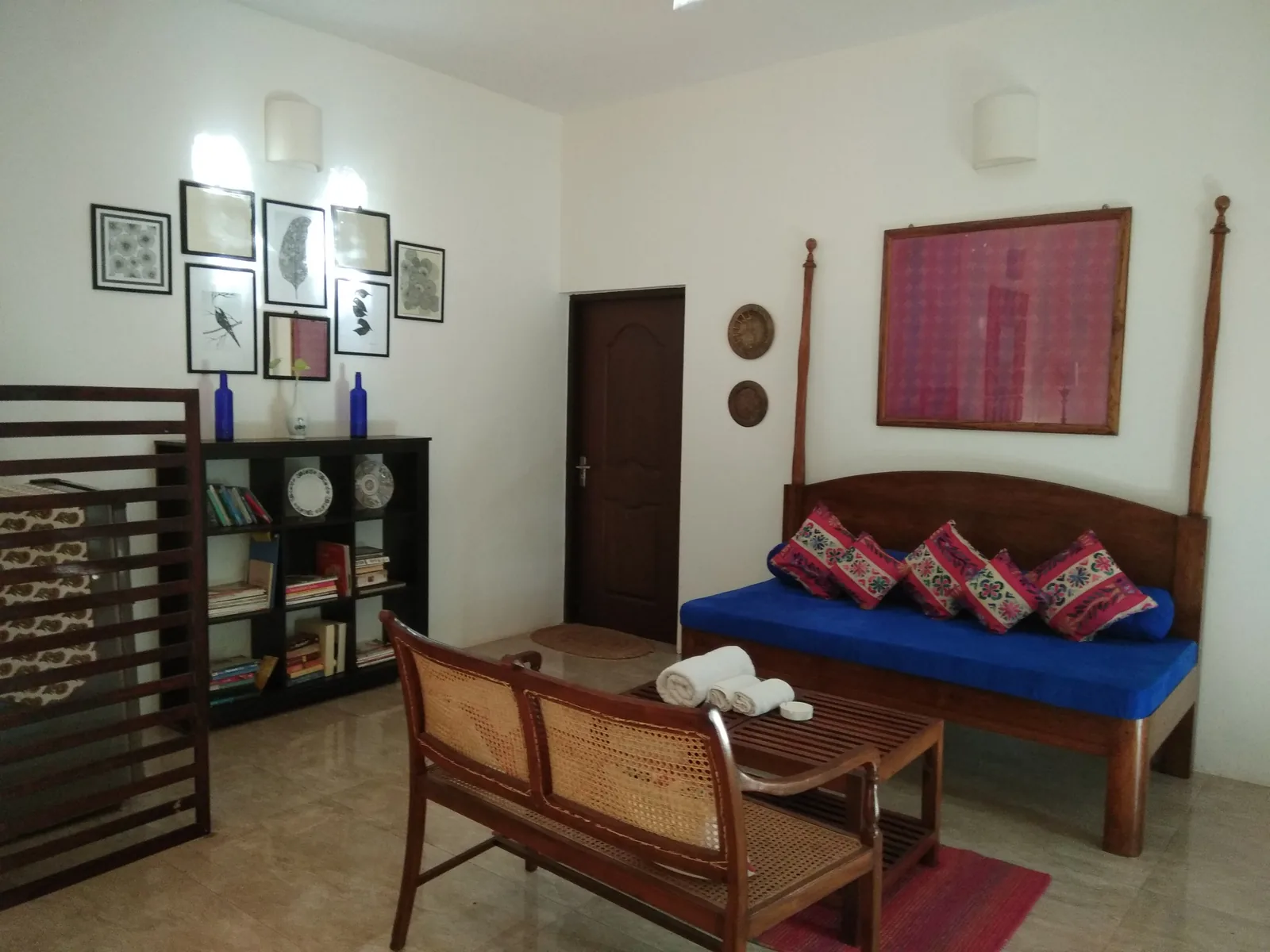
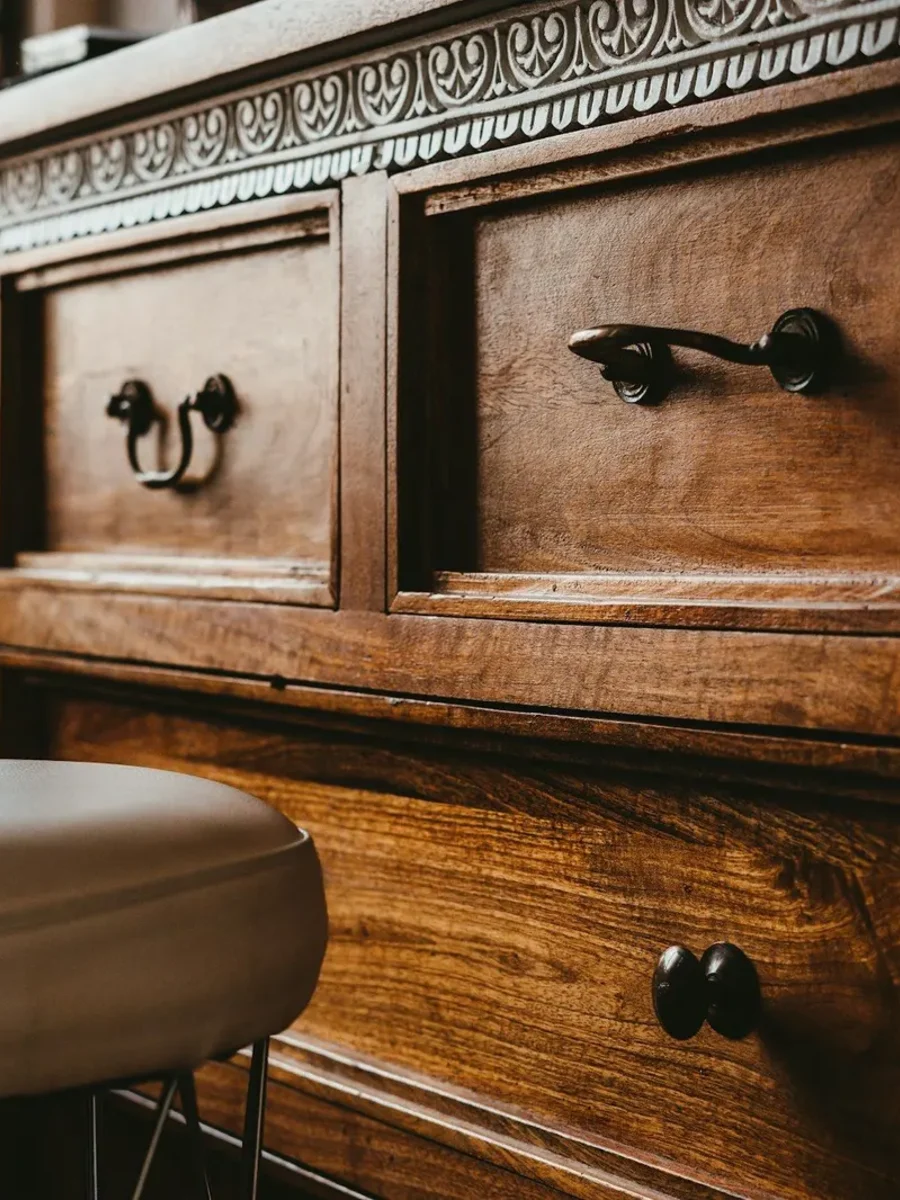
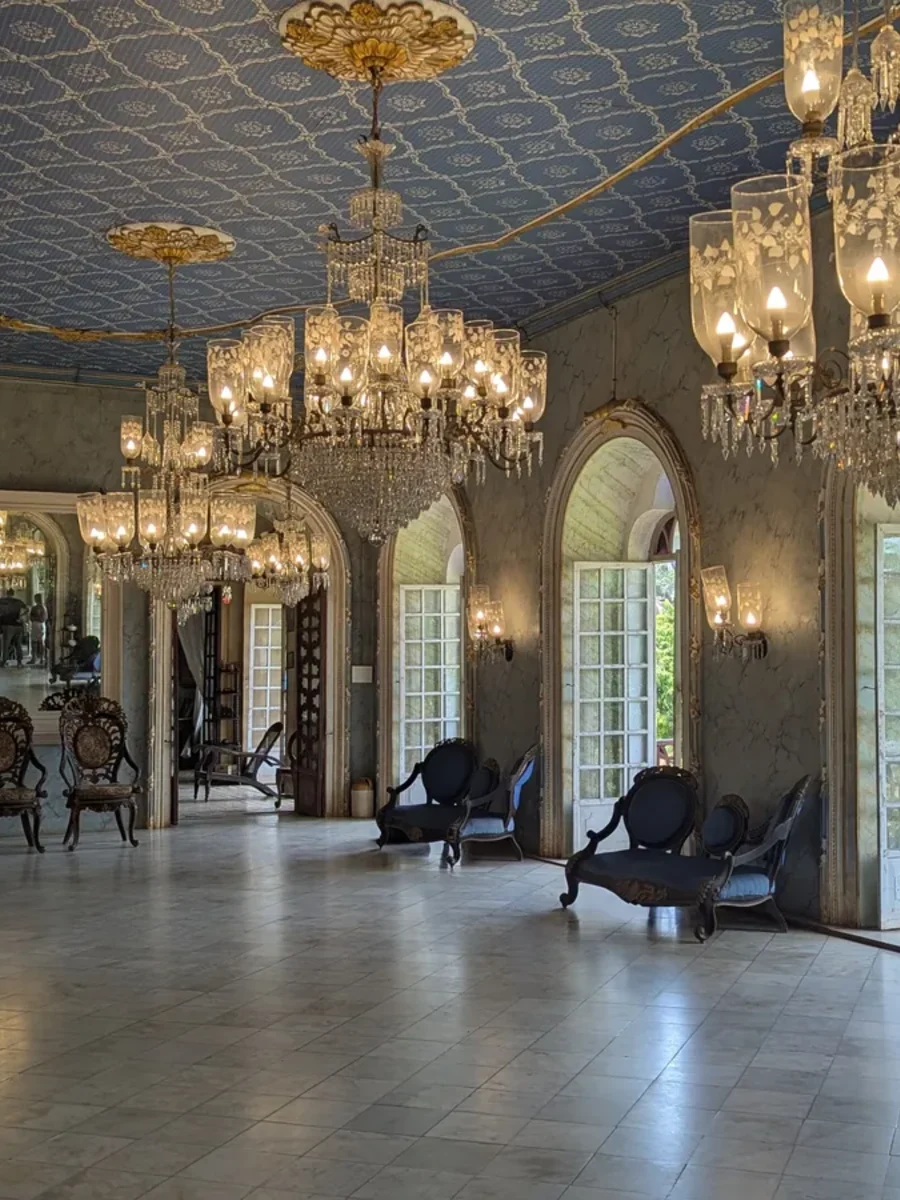
Goan furniture usually means the carved and inlaid hardwood pieces made in Goa during Portuguese rule: cabinets on stands, tables with turned legs, high-backed and armed chairs, sideboards and settees. It was made by local craftsmen, often from local timber, to forms that arrived from Europe, and it was decorated with motifs that mix both worlds. The Government of Goa's own description of the old mansions puts it simply: the furniture was carved from rosewood by local craftsmen, while porcelain, glass and chandeliers came from across the world.
For anyone buying a period piece, inheriting one with a house, or furnishing a heritage home around one, three questions matter more than the labels. What is it? How much of it is original? And how will it cope with a Goan monsoon in the room you have in mind? This guide takes each in turn, drawing on museum records where they exist and saying plainly where they do not.
We make and fit soft furnishings, and we reupholster old chairs and settees, so the last part of this guide is practical: how to seat, cushion and place heavy period furniture so that it anchors a room rather than crowding it.
What "Goan furniture" actually covers
The term covers at least three overlapping things. The first is the Indo-Portuguese furniture of the 16th and 17th centuries: cabinets, tables and chests made in India under Portuguese patronage, many of which now sit in museums in Europe. The Victoria and Albert Museum in London holds several, catalogued as made in Goa or probably in Goa. The second is the furniture of the great Goan houses of the 18th and 19th centuries, which follows European fashions of each period, from heavy carved forms to English-style chairs. The third is everyday village furniture: benches, chests, simple beds and cane-seated chairs that were used hard and rarely recorded.
What ties them together is the making. The V&A notes that although pieces of the cabinet type were produced in quantity, very little can be firmly established about the workshops that made them. Goan houses tell a similar story from the other side. In Braganza House at Chandor, the Government of Goa records that most of the furniture in the east wing dates to the 18th century and is made of local seeso, also called martel wood, lacquered or inlaid with mother-of-pearl by craftsmen from the village of Curtorim.
So a Goan piece is rarely a pure copy of anything. It is a European form, interpreted by Goan hands, in Indian timber, often carrying motifs that no European workshop would have used. That mixture is what makes it worth looking at closely.
The pieces to know
The list below covers the types of Goan furniture you are most likely to meet in a house, a sale or a museum. Names vary from family to family, and many households simply call any tall cupboard an almirah, so treat the terms as a guide rather than a strict taxonomy.
Two examples show how freely Goan makers borrowed. At the Solar dos Colaços in Ribandar, the Government of Goa notes that Nazario Colaço II had the sideboard of his dining room carved with scenes from the Ramayana, while the family kept a private Catholic chapel in the same house. In Loutolim, a writer visiting the Figueiredo house for The National was shown a lounge chair carved with Hindu deities on its headrest, made, the family explained, by craftsmen from the local Hindu community.
- Contador (cabinet on stand): a chest of many small drawers set on a separate stand. The V&A dates its Goan examples to the late 17th century and describes legs carved as supporting figures — sea-serpent bodies once identified as nagas, or male figures in the European atlantes tradition.
- Inlaid tables: rectangular tables with drawers, spirally turned legs and stretchers, inlaid with ebony and ivory in patterns of intersecting circles. The V&A holds one in cedar dated to the mid-17th century.
- Chairs: from high-backed chairs bearing a family crest, as at Braganza House, to rosewood corner chairs in English forms, which the V&A dates to 1760–70 and links to a fashion for English furniture in Goa from the 1750s.
- Sideboards and cupboards: long dining-room pieces and tall cupboards in teak and rosewood, often the most heavily carved furniture in a house.
- Settees and long benches: for the sala and the balcão, sometimes with cane seats and backs, sometimes upholstered.
- Beds and almirahs: the private furniture of a house, usually plainer than the reception pieces and more often altered or replaced over time.
Planning something like this?
We visit homes across North and South Goa, measure on site, and bring samples to see in your own light.
Woods, inlay and carving
Museum records give a clear picture of the materials of the earlier pieces. The V&A's catalogue entries for Goan contadores list teak, cedar, rosewood and ebony as carcass and inlay woods, ivory as inlay, and pierced brass or gilt-copper mounts on the drawer fronts. One table is cedar with marquetry of ivory, ebony and other woods. The museum links the inlay and the intricately pierced mounts to the fitted chests and cabinets in the sacristy of the Basilica of Bom Jesus in Old Goa, installed between 1654 and 1698, which is how it dates the type.
The later house furniture leans on carving more than inlay. The Government of Goa describes the mansion furniture as carved rosewood made by local craftsmen, and records lacquer and mother-of-pearl inlay on the 18th-century seeso pieces at Braganza House. Carving follows the fashion of the period: scrolls and foliage, turned legs and rails, pierced backs, and the occasional Indian motif placed where a European maker would have put something classical.
Cane deserves a note of its own because it is so often misunderstood. A design study of cane furniture in Panaji by the National Institute of Design explains that rattan is a climbing palm; its peeled core is rattan and its skin is cane, while wicker is not a material at all but a weaving technique. On an old Goan chair, the woven seat is usually cane strip on a hardwood frame. It is light, cool and lets air through, which is exactly why it suits the climate, and it can be rewoven when it fails.
Do not varnish or paint cane seats to "protect" them. Cane needs air on both sides, and a sealed surface turns brittle and traps damp beneath.
Why dating is hard, and how to spot a reworked piece
If professionals find attribution difficult, a buyer should be cautious. The V&A's own pair of Goan rosewood chairs is a lesson in humility. When they arrived in 1879, curators thought they were English mahogany chairs of about 1740–60, because of their shape. By the 1980s, research on Chinese export furniture and the pierced ruyi-head ornament on the splats led to them being treated as Chinese. In the 1990s, closer study of construction suggested India, and further research established that they were made in Goa. The same object was English, then Chinese, then Goan.
For an owner, the useful lesson is to look at construction, not just style. Style can be copied in any decade; the way a piece is put together is harder to fake consistently. The checks in the table below are general trade practice rather than proof. A piece can fail one test and still be old, because almost every Goan antique has been repaired at some point, and an honest repair is not a defect.
What you are really trying to judge is how much of the piece is original and how much has been replaced. A chair with new back legs, a cabinet with a new stand, or a table with a new top may still be a good thing to own, but it should be priced and described as such. For a piece of real historic value, ask a furniture conservator before you buy and before any restoration starts. Pieces with ivory inlay need particular care, and specialist advice, before they are bought, sold or repaired.
| Look at | Suggests age | Suggests new work or heavy restoration |
|---|---|---|
| Undersides, backs and drawer insides | Uneven hand-tool marks, darkened and oxidised raw wood | Crisp machine-saw marks, pale fresh timber, a uniform stain applied to hide it |
| Wear | Worn where hands, feet and bodies actually touch: arm ends, stretchers, drawer runners | Even distressing all over, or wear in places nobody would touch |
| Screws, nails and hardware | Irregular old fixings, consistent across the piece | Modern screws, mismatched handles or mounts, filled holes from earlier hardware |
| Timber across the grain | Slight shrinkage, so round tops are no longer quite round | Perfectly true panels and tops on a piece claimed to be centuries old |
| Finish | Layers of old polish or wax, worn back at edges | Thick, glossy modern lacquer over everything, including the carving |
| Inlay and carving | Small losses and old repairs, crisp but slightly worn detail | Over-sharp carving, inlay without any movement or loss |
Living with period furniture in a Goan climate
The climate is the main enemy of old timber here. The India Meteorological Department's climate summary for Goa records morning relative humidity between 87% and 91% from June to September, with afternoons not much lower. Wood takes up moisture and swells, drawers stick, glue joints and veneers are stressed, and the unfinished backs and insides of cupboards grow mould if the air around them is still.
The rules are simple, and the same for a mansion or a flat. Keep pieces a few centimetres off external walls. Avoid full sun from an open west window, which bleaches and dries one side faster than the other. Do not chill a room hard with air conditioning and then shut it, because swings in humidity do more damage than steady conditions. In a house that is closed for the monsoon, keep the best pieces in a room with a dehumidifier. Our guide to fungus on wooden furniture covers cleaning and prevention step by step.
Termites are the other risk, especially for pieces standing on floors that touch the ground. Lift heavy cabinets on small blocks if the floor is damp, check the feet and back panels after the rains, and act at the first sign of mud tubes or hollow-sounding wood. We are not pest-control specialists; our page on termites and timber explains what to look for and when to call one.
Placing heavy period pieces in modern flats and villas
Old Goan furniture was made for tall rooms with thick walls, and it can overwhelm a modern room with an ordinary ceiling. The answer is usually fewer pieces, given more space, rather than a room full of them. One contador or sideboard on the longest wall, with clear floor in front and plain wall above, will carry a room. Three heavy pieces against three walls make it feel like a storeroom.
Give each important piece something to stand against. A plain, light-coloured wall shows carving far better than a patterned one, and a sideboard reads best with a single picture or mirror above it rather than a crowded gallery. Keep lighting low and warm, with a lamp beside the piece rather than downlights over it, which flatten carving and show every scratch in a finish.
In a villa or a heritage house the scale problem reverses. There, period furniture can look lost in a big sala, and it helps to group pieces: a settee, two armchairs and a low table drawn together on a flatweave rug make a room within the room. Our guide to heritage villa interiors goes further on scale and lighting, and dhurries and flatweaves suit old floors because they can be rolled and stored dry through the wettest months.
Mixing old and new works when the new pieces are quiet. A plain modern sofa in linen or a textured cotton sits easily beside a carved rosewood chair; a second carved piece in a different style often fights it. Let the period piece be the one thing in the room with detail, and keep the textiles around it simple.
Upholstery and cushions for old chairs and settees
Many Goan chairs and settees reach their owners with seats that have been redone several times, often in foam wrapped in plastic-backed fabric. In a humid house that combination holds moisture against the frame and starts to smell within a season. When a period seat is redone, a breathable build-up is kinder to the timber: natural-fibre webbing where the frame allows, a well-made interior, and a tightly woven cotton, linen or wool-blend cover that can breathe.
Respect the frame. A careful upholsterer works with the existing tack lines and does not drill new holes or cut away rails to fit a modern seat unit. Where a chair was designed with a cane seat, put a loose cushion on it rather than covering the cane permanently, so the cane can still breathe and the cushion can be lifted and aired. Ties at the back legs keep a cushion in place without fixings.
Colour and pattern are a matter of taste, but dark carved timber usually looks best with plain or quietly textured fabric in a single colour: deep green, indigo, oxblood, ochre or natural linen. Busy prints compete with the carving. Our reupholstery service handles period frames, and our cushions and soft furnishings are made to the exact seat, including the odd shapes and slight asymmetries of old handmade chairs. When you are ready, send us photographs and measurements of the piece.