 Drape Haus
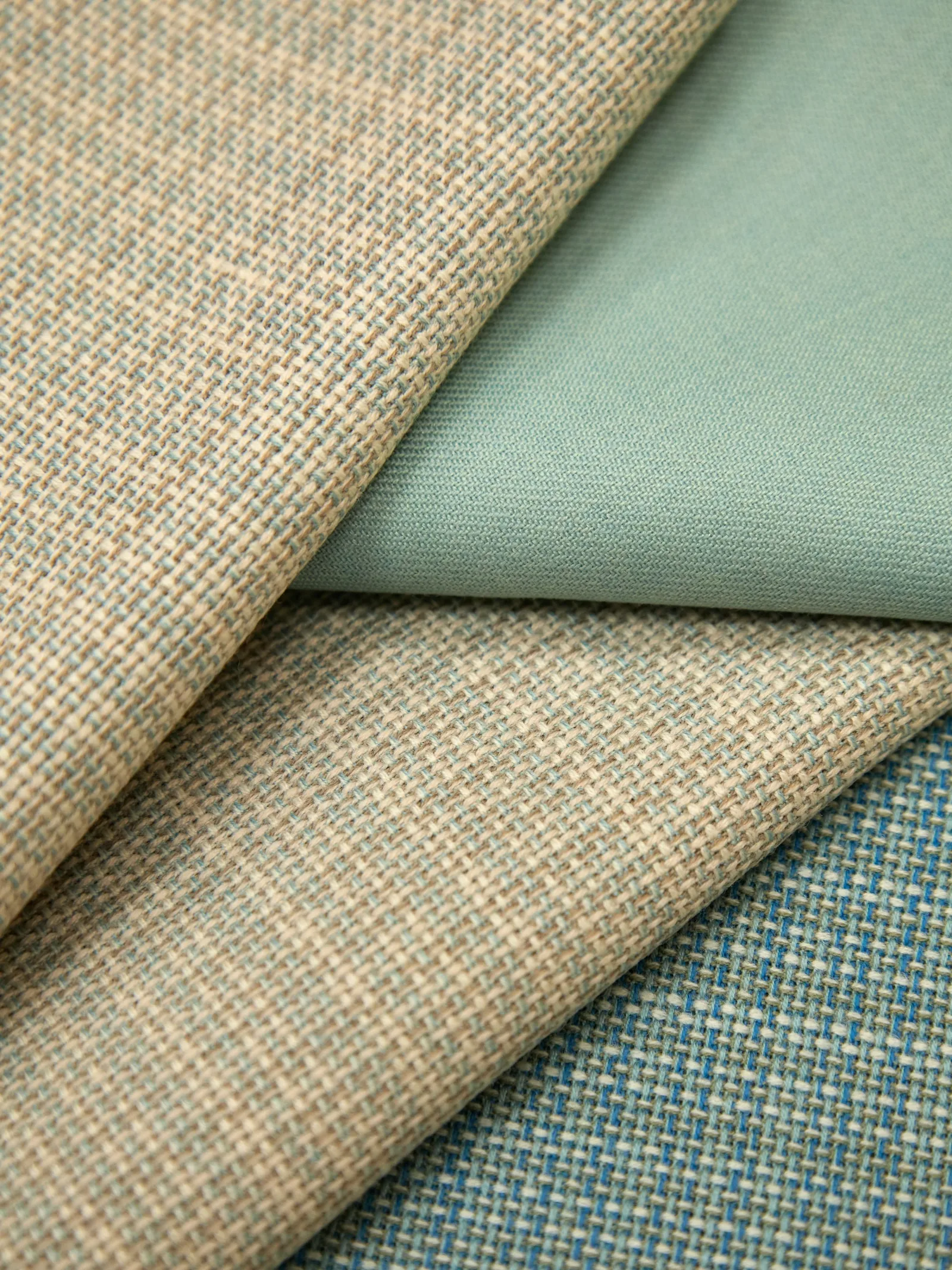
Good reupholstery fabric is cloth made and tested for seating: strong enough not to tear under a knee, tight enough that seams do not pull open, and fast enough in its dye that it will not rub off on clothes. Once you have that, choose the fibre for the room and work out the quantity by counting the pieces of the sofa or chair, not by guessing from its length. A pattern repeat adds to that count, sometimes a great deal.
This guide is about re-covering a piece you already own, which brings its own questions. The frame's shape and wood are fixed, the arms and cushions dictate how the cloth must be cut, and a quantity mistake means a second order from a different dye lot. For the fibre-by-fibre comparison of new sofa fabrics, see the best sofa fabric for a humid home; here we cover what is specific to reupholstery.
If you have not yet decided whether the piece is worth rebuilding, start with sofa reupholstery or a new sofa. Fabric is the second decision, never the first.
Why upholstery cloth is not curtain cloth
A curtain hangs. An upholstered seat is pulled tight over a frame, sat on, knelt on, rubbed by every pair of trousers and pulled at every seam each time someone drops into it. The textile trade tests for those stresses separately, and the voluntary guidelines published by the Association for Contract Textiles, a US trade body, show how different the two jobs are.
For woven upholstery the guidelines ask for a breaking strength of at least 50 lb in both directions of the weave, about 23 kg of pull, and a seam-slippage resistance of at least 25 lb, about 11 kg. Seam slippage is the yarns sliding apart beside a seam until a gap opens, which is exactly what happens on a loosely woven cloth stretched over a sofa arm. Upholstery is also tested for pilling, the small fuzzy balls that form on the surface, and for abrasion, with a high-traffic guideline of 40,000 Martindale cycles. The abrasion and strength guidelines are written for upholstery; drapery is not held to them.
Colour transfer is the other difference. Crocking is dye rubbing off onto another surface, and the guideline for upholstery asks for a dry crocking result of Grade 4, where drapery only needs Grade 3. On a sofa that matters because pale linen trousers and cream cushions sit against the fabric all day. These are US contract figures, not Indian rules, but they are a sensible reference when you compare cloths. A pretty curtain fabric used on a seat is likely to fail in at least one of these ways.
| Test | Upholstery | Drapery |
|---|---|---|
| Breaking strength (grab test) | 50 lb minimum, warp and weft (about 23 kg) | Not covered |
| Seam slippage | 25 lb minimum, warp and weft (about 11 kg) | 25 lb, only for fabrics over 6 oz per square yard |
| Pilling | Class 3 minimum | Not covered |
| Dry crocking | Grade 4 minimum | Grade 3 minimum |
| Wet crocking | Grade 3 minimum | Grade 3 minimum |
| Abrasion, high traffic | 40,000 Martindale cycles | Not covered |
Fibres for re-covering a piece in a humid house
The climate argument is the same as for a new sofa, and the Canadian Conservation Institute puts it plainly: cellulosic fibres such as cotton, linen and rayon are particularly vulnerable to mould, and even polyester will grow it when soiled. In a Goan house that is shut from June to September, a re-covered chair in a polyester or acrylic-led weave is the lower-risk choice. In a lived-in, fan-cooled room, a cotton or linen blend can do well.
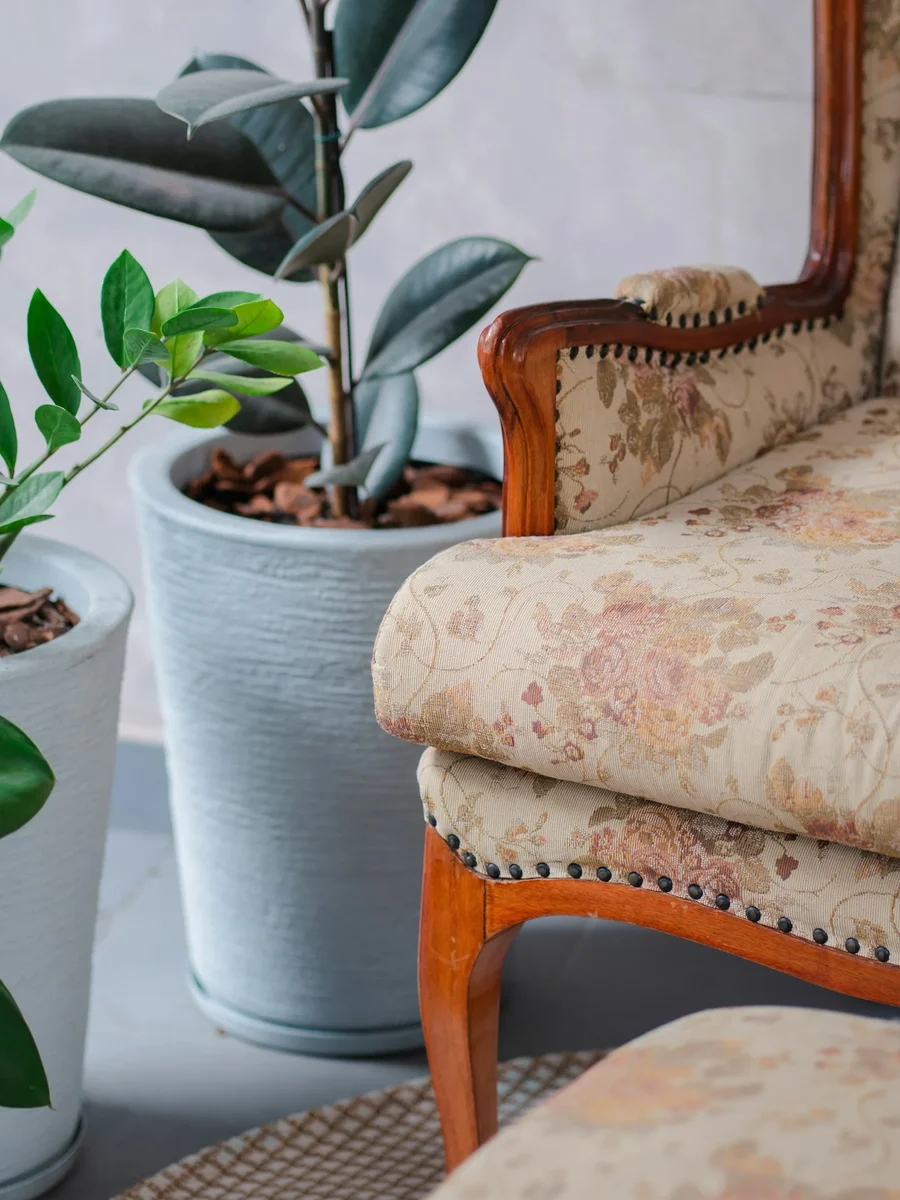
Re-covering adds a consideration that buying new does not: the frame you are covering. A carved or polished show-wood frame usually looks best in a plain, a small geometric or a fine texture that lets the timber lead. A plain modern frame can carry a bold weave or a large print. Dining chairs with drop-in seats are the easiest pieces to re-cover again in future, so they can take a more adventurous cloth. A sofa that faces a west window needs a fabric that holds its colour, or a sheer at the window in the afternoon.
With dogs and cats, choose a flat, tight weave or a short dense pile; loops and slubs catch claws. With small children, choose a mid-tone or a fine pattern and a fabric whose cleaning code allows water-based spot cleaning. Our sofa fabric chooser narrows the options by who uses the piece and where it sits, and our guide to polyester and blends explains why those fibres dominate in humid rooms.
Planning something like this?
We visit homes across North and South Goa, measure on site, and bring samples to see in your own light.
How to estimate the metres: count the panels
Every upholstered piece is a set of flat panels sewn together. A sofa has an inside back, an outside back, two inside arms, two outside arms, arm fronts, a seat deck, a front border, and then each cushion, which itself has a top, a bottom and a boxing strip around the edge. Piping is cut from the same cloth in long strips, and a skirt adds a band around the base. The quantity is the sum of those panels, laid out across the width of the roll.
Width is the next variable. Fabric comes on rolls of different usable widths, and the trade also distinguishes how it is laid on the furniture. The Association for Contract Textiles defines cloth used the way it comes off the loom as up the roll, and cloth turned on its side as railroaded; railroading a suitable plain lets a long sofa back or seat border be cut in one piece, which needs less fabric and fewer seams. A cloth with a one-way pattern or pile cannot always be turned, which changes the count.
A small worked example shows the method. Take a dining chair with a drop-in seat measuring 45 cm by 45 cm and 5 cm thick. Allowing 5 cm on every side to wrap the thickness and another 5 cm to fix underneath, each piece needs about 65 cm by 65 cm. From a cloth with 140 cm of usable width, two pieces fit side by side, so six chairs take three rows of 65 cm, just under 2 metres, before any spare or pattern allowance. The same counting, panel by panel, works for an armchair or a three-seater; it just has many more pieces.
| Piece | Panels to count | What adds most |
|---|---|---|
| Drop-in dining seat | One panel per seat | Thick seats, pattern centring on each seat |
| Armchair | Inside and outside back, two inside and outside arms, arm fronts, deck, border, cushion | Rolled or scrolled arms, a skirt, a loose seat cushion |
| Two-seater sofa | As the armchair, plus a longer back and deck, two seat and two back cushions | Number of cushions, piping, pattern matching across cushions |
| Three-seater sofa | As the two-seater, with three cushions each for seat and back | Long panels that need joins if the cloth cannot be railroaded |
| Chesterfield or buttoned piece | Panels plus the extra cloth taken up by each button pleat | Deep buttoning uses far more cloth than a plain back |
Pattern repeats, stripes and centring
A repeat is a single unit of a pattern that is duplicated over and over to make the design. On upholstery, every panel has to start at a planned point in that repeat: the motif centred on each seat cushion, the same flower in the middle of each inside back, the stripes running unbroken from the top of the back, down the seat and over the front border. That means each panel is rounded up to whole repeats, and the cloth between them is waste.
The effect is easy to underestimate. Suppose a seat cushion top needs 70 cm of length and the fabric has a 64 cm repeat. To centre the motif on every cushion, each cut must begin at the same point in the pattern, so each cushion consumes two full repeats, 128 cm, rather than 70 cm. Across a three-seater with six cushions and a matched back, that rounding can add several metres. Our curtain fabric calculator shows the same rounding logic for curtain widths if you want to see it worked through.
Plains and small all-over textures waste least. Stripes waste a moderate amount, more if they must also line up across cushions. Large florals, damasks and medallions waste most, and are best saved for pieces where they will be seen and centred properly. If you love a large pattern but the quantity is alarming, use it on the cushions or a single chair and put a coordinating plain on the main sofa.
Never order patterned fabric from a plain-fabric estimate. Ask for the quantity with the repeat allowed for.
Samples, cuttings for approval and one dye lot
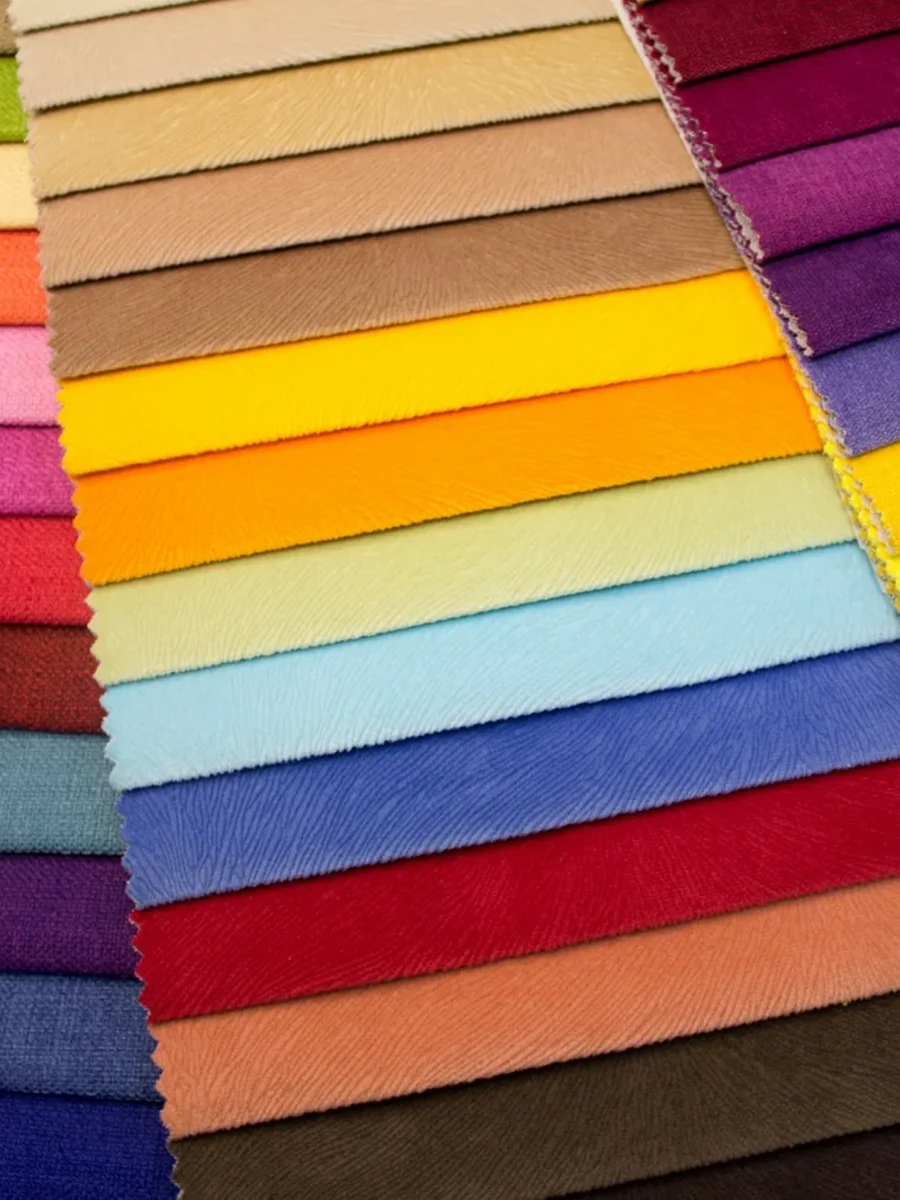
Fabric looks different at home. Strong west light, white walls and an old red oxide floor all change a colour, so look at a sample in the room where the piece will live, at the time of day you use it most, draped over the actual arm or seat rather than held in your hand. A swatch the size of a postcard tells you very little about a large pattern; ask for a piece big enough to show at least one full repeat.
Colour also varies between production runs. The trade calls each run a dye lot, a quantity of fibre, yarn or fabric dyed in one go, and two lots of the same named colour can differ visibly side by side. When the order is placed, the trade's answer is a cutting for approval, a small piece of the actual stock cut before the full quantity is shipped so the colour, pattern and construction can be checked against the sample.
The practical rule follows: buy the whole quantity for a piece, or a set of pieces, in one order from one lot, and add a modest spare for repairs, an arm cap or a future cushion. Keep the offcuts rolled, not folded, in a dry cupboard. Ordering a little more later almost always means a different lot.
Working with a workshop on quantity and cutting
The most reliable estimate comes from the person who will cut the cloth, after they have seen the frame. They know whether the arms need separate fronts, whether the back can be railroaded, how much the buttoning will take up, and how much allowance their own method needs. If you are supplying your own fabric, ask for the quantity in writing with the roll width and the repeat stated, before you buy.
Ask, too, for the cutting plan on patterned work: which way the pattern runs, where the motifs will sit, and whether stripes will be matched across cushions and onto the front border. Agree what happens to the offcuts. A good workshop returns them labelled so you have matching cloth for later repairs.
Above all, keep the order of decisions right. Frame first, then comfort, then fabric. Falling for a cloth and then discovering the frame is not worth saving is an expensive way to learn. Our reupholstery service works in that order: we assess the frame at home, bring large samples to see in the room, calculate the quantity with the repeat allowed for, and keep the spare for you.