 Drape Haus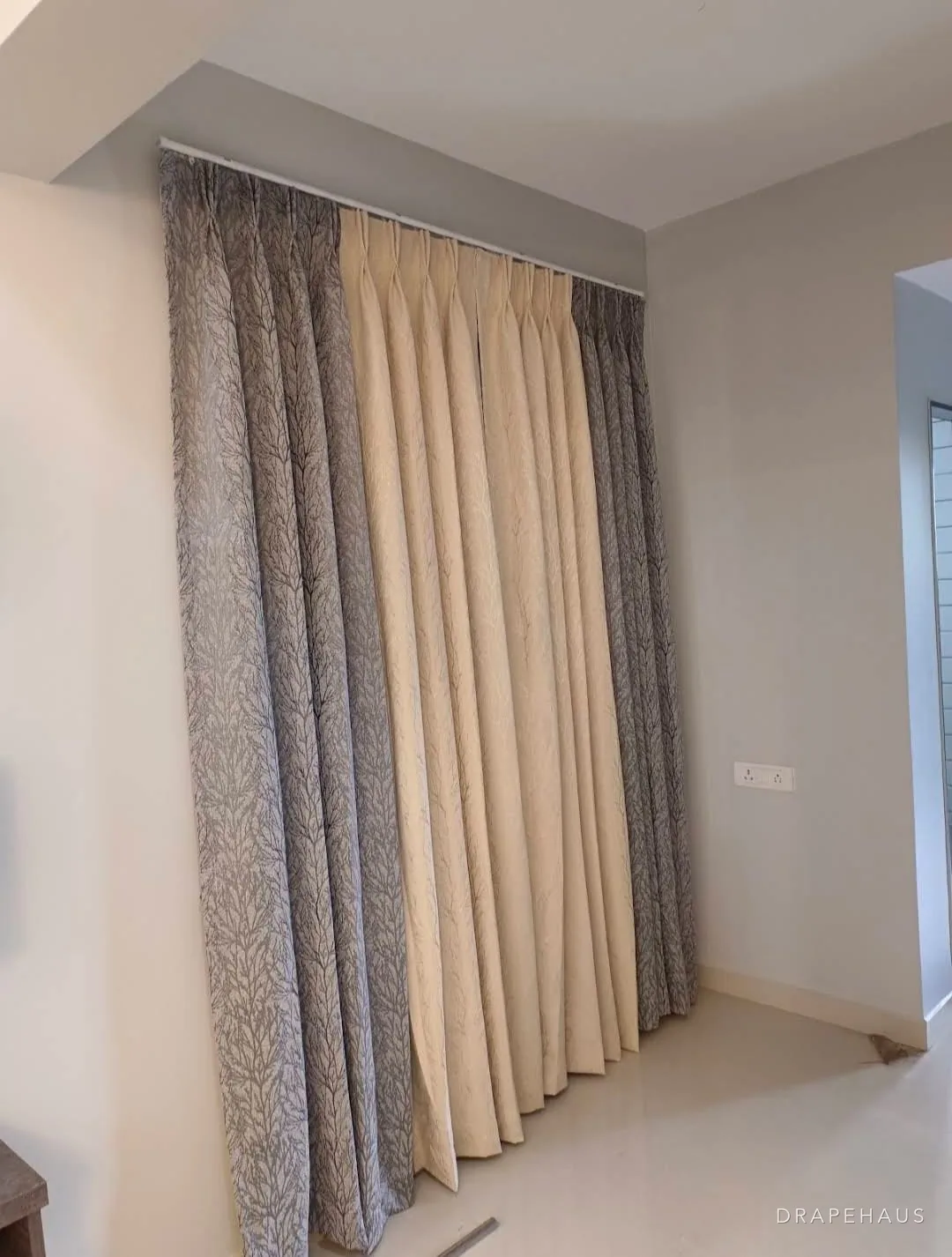
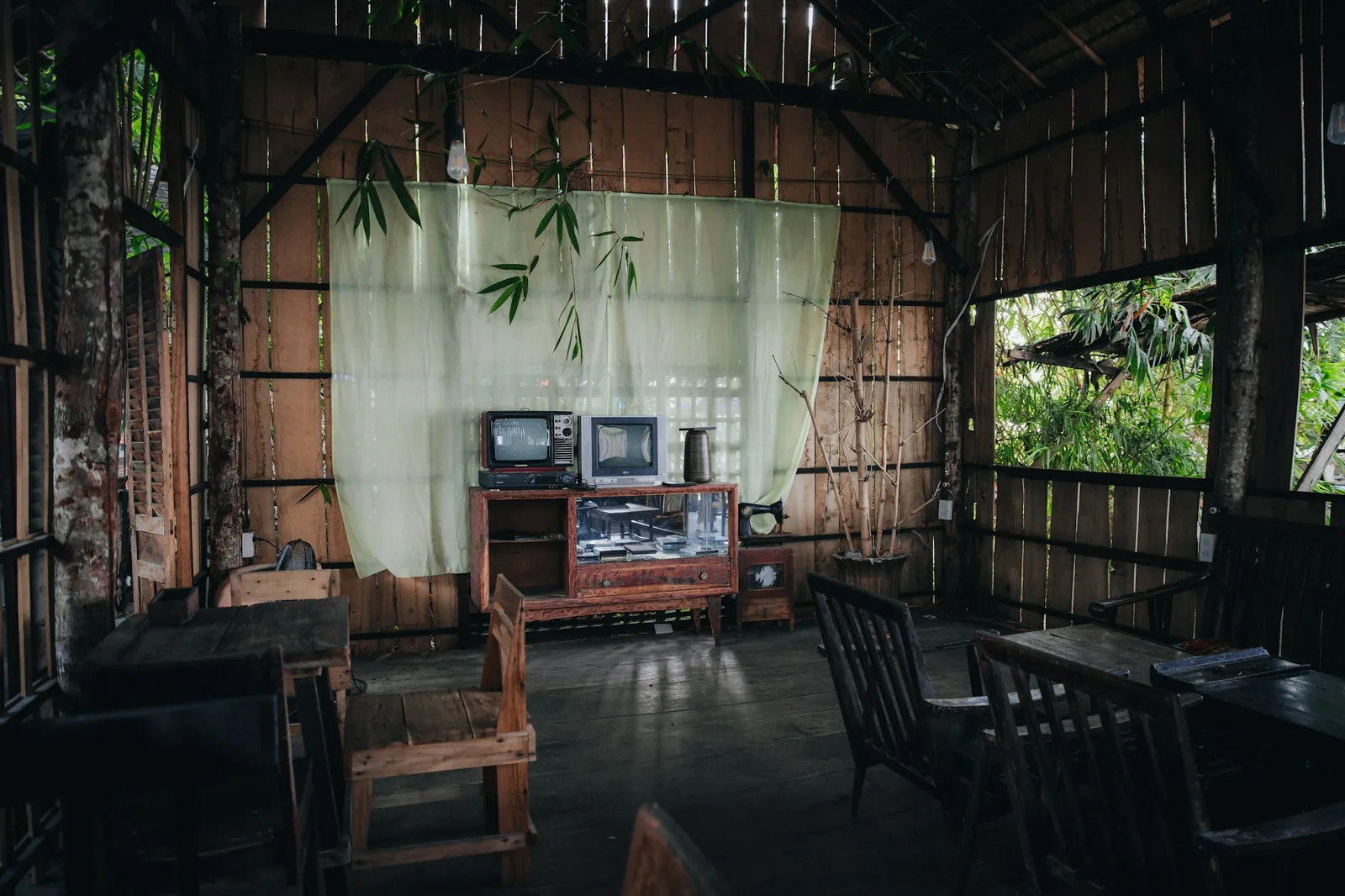
Search for farm house design and most of what comes back is plans: a single-storey house with a deep verandah, perhaps a swimming pool, set in an orchard. This guide is about what happens inside that house once it stands in Goa's hinterland, among plantations and forest edges in talukas such as Sattari, Sanguem or Quepem rather than beside a beach. We are a soft-furnishing studio, so we do not draw house plans; we furnish the houses they become.
A Goan farmhouse interior has its own set of problems. Insects arrive from every direction. Red dust blows in off unpaved roads in the dry months. Storms bring power cuts. And in the monsoon the house is often left empty, sometimes hard to reach. A rustic look suits the setting, and it can be made practical: screened, washable, workable without electricity and easy to close up.
The sections below cover finishes, screens, power cuts, dust, verandahs and pools, closing up for the rains, and what to know if the farmhouse will take paying guests.
What a hinterland farmhouse asks of its interior
A farmhouse in inland Goa is a different proposition from a villa on the coast. Salt air matters less; insects, dust and distance matter more. The house is usually surrounded by orchard, plantation or forest edge, which brings beetles, moths, frogs and geckos to every lit window. The access road may be unpaved, so the dry months send fine red dust through every opening. Shops and tradespeople are further away, so whatever breaks tends to wait.
It is also used differently. Some hinterland farmhouses are weekend or seasonal homes, busy from October to May and quiet, sometimes empty, through the rains. Some are family homes where the land is still worked. Some take paying guests. In every case the interior has to cope with long absences and with whoever is there managing on their own, without a nearby shop for a replacement part.
Four tests are worth applying to every piece that goes into such a house. Can the room it sits in be closed against insects? Can it be cleaned with a brush, a damp cloth or a washing machine? Does it work without electricity? And can it be packed away dry when the house is shut for the monsoon? A rustic interior passes these tests more easily than a polished one, provided the materials are chosen with them in mind.
Screened, washable, manual, storable: if a piece fails two of these tests, it does not belong in a farmhouse.
Rustic finishes that are also easy to keep clean
The natural palette of a Goan farmhouse is lime, laterite, terracotta and dark timber, and each can be kept practical. Limewash and lime plaster suit both old and new walls because they let moisture move through them. The Society for the Protection of Ancient Buildings says breathable materials should let absorbed and surface moisture evaporate in ordinary drying conditions and should not trap it; as a rough guide it suggests a vapour resistance of up to 2.5 MNs/g, against about 1.0 for a 19 mm non-hydraulic lime render. A glossy, impermeable coating on an old wall can hold the monsoon's moisture inside it.
Limewash marks clothes and upholstery that rub against it, so leave a gap between sofas, headboards and the wall, or choose fabric colours that do not mind a chalky trace. Terracotta floors are warm to look at and forgiving of dust, but unglazed tiles are porous and stain, so they are usually sealed, and the seal is renewed as it wears. A floor that can be swept and mopped every day with plain water and a mild cleaner is worth more in a farmhouse than one that needs special products from town.
Timber furniture should stand on legs, off floors that may be damp, and a hand's width from external walls. Anything salvaged from an old house should be checked for small holes and fresh powder before it comes inside. Our guide to rustic interior design covers exposed laterite, reclaimed timber and natural fabrics in more depth; here the focus is what makes a remote house easy to run.
Planning something like this?
We visit homes across North and South Goa, measure on site, and bring samples to see in your own light.
Screens on every door and window
In a house surrounded by vegetation, insect screens are not an optional extra. The World Health Organization notes that the mosquitoes that spread dengue bite during the day and recommends window screens; for malaria it adds nets when sleeping and repellents after dusk. Rural houses also draw moths, beetles and flying ants to their lights after rain, and a screened window is the difference between an evening with the windows open and one spent shut in.
Screen every opening, not only the bedrooms. Windows that are rarely opened can take fixed nets. Windows used daily suit sliding nets that run in their own track. Wide verandah doors, where a sliding net would block half the opening, suit pleated nets that fold into a slim side frame. The kitchen door, used constantly and often with full hands, needs a hinged net door with a closer. Look at the gaps as well: a brush seal along the bottom of a door and a well-fitted frame matter as much as the mesh. Our sliding nets range and the guide to insects and screens cover the options.
Mesh in a farmhouse works hard. Dust clogs it in the dry months, and dogs, cats and children push through it. Wash the mesh with water and a soft brush before the season, and have torn panels re-meshed rather than taped; a net with a hole is little better than no net. If sleeping on the verandah is part of the house's life, a bed net hung from a hook or a frame is still the simplest protection there.
Planning for power cuts
Power cuts are part of rural life, and storms are when lines tend to come down. The India Meteorological Department notes that thunderstorms in Goa are most frequent in May, June, September and October, and that monsoon thunderstorms are sometimes accompanied by squalls. A farmhouse interior should keep working in the dark and the heat without anyone waiting for the supply to return.
Start with the windows. When the fans stop, the house depends on cross-ventilation, so window treatments should open fully and easily by hand. Curtains on a smooth track with a draw rod, roller and roman blinds on a chain, and bamboo blinds that roll right up all work without power. Heavy curtains that need two hands, or blinds that still cover the top of a window when raised, cost air exactly when it is needed. If you want motorised curtains or blinds in the main rooms, choose systems with a manual override or battery operation; our guide to power cuts and motorisation explains the choices.
Light sheers let daylight in without exposing a room, which matters when lamps cannot be used. For evenings, rechargeable lights that switch on automatically when the mains fails are worth placing in each bedroom and on the stairs; UK government guidance for small guest accommodation suggests exactly that for the smallest premises, one in every bedroom. An inverter or battery system for lights, fans and the router is a job for an electrician rather than a furnisher, but plan it before the walls are finished.
Dust from the road, and fabrics that let it go
In the dry months, red dust from unpaved roads and bare earth settles on every surface and works into fabric. The right fabrics release it with a shake or a vacuum; the wrong ones hold it. Tightly woven cottons, linen blends and performance fabrics let dust sit on the surface. Deep pile, velvet, chenille and loose open weaves trap it in the fibres, and pale colours show it within days.
Rugs follow the same rule. Flatweave cotton dhurries can be taken outside, shaken or beaten and washed, which suits a farmhouse floor far better than a thick rug that needs specialist cleaning. Earth tones, ochres, rusts, greens and indigo hide dust and suit the setting. On sofas, removable covers in a mid-tone let the whole piece be refreshed in an afternoon. Curtains can be vacuumed in place with a brush attachment through the dry season and washed before they are stored for the rains.
Stop as much dust as possible at the door. A covered verandah with a coir or washable mat, a place to leave shoes and a net door that closes behind people all cut the amount carried in. Window nets catch coarse dust too, which is one more reason to keep them clean.
| Choice | Does it hold dust? | How it is cleaned |
|---|---|---|
| Tightly woven cotton or linen blend | Little; dust sits on the surface | Vacuum with a brush head; washable covers |
| Performance or solution-dyed fabric | Little | Brush or wipe; zipped covers can be washed |
| Velvet and chenille | Yes, in the pile | Careful vacuuming; specialist cleaning |
| Flatweave cotton dhurrie | Releases it when shaken | Shake or beat outside; wash |
| Deep-pile rug | Yes, deep in the pile | Specialist cleaning |
| Jute or sisal | Holds grit; can mould if damp | Vacuum only; keep dry and lift in the rains |
Verandahs, outdoor rooms and a farmhouse with a pool
In a Goan farmhouse the verandah is often the main living room for eight months of the year. Furnish it as a room the weather can reach: frames in treated hardwood, powder-coated metal or all-weather wicker, and cushions in outdoor fabric over quick-drying foam, with zipped covers. Solution-dyed acrylic and outdoor canvas hold their colour in sun and shrug off a passing shower.
Weather comes sideways. The India Meteorological Department notes that from June to August Goa's winds strengthen and blow mostly from the west and south-west, so a verandah open to the west takes driving rain as well as the strongest afternoon sun. Roll-down outdoor blinds or bamboo chik blinds on that side give shade in the dry months and some shelter in the rains. Bring cushions in at night and before rain, and keep them on a shelf rather than the floor, where damp, frogs and insects find them. Shake any cushion that has been left out before you sit on it.
Many farm house designs include a swimming pool, and it changes the soft-furnishing brief. Wet swimwear and sunscreen reach the loungers, the verandah sofa and often the living room. Loungers need outdoor-rated cushions that drain. Indoor seating near the pool door benefits from removable, washable covers in a mid-tone. A net on the door between the pool terrace and the house keeps insects out on warm evenings when that door is left open.
Closing a remote farmhouse for the monsoon
The monsoon is hard on any closed house and harder on a remote one. The India Meteorological Department's normals give Goa an average of 21.9 rainy days in June and 27.3 in July, with morning humidity of 87–91% from June to September. A caretaker may not visit as often as planned, and a dehumidifier cannot run through a long power cut. The safest plan assumes the house will be alone for weeks at a time.
That means removing what mould likes best. Take curtains down, wash and dry them completely, and store them folded in cotton bags in the driest room, on shelves off the floor. Do the same with cushion covers and throws. Roll rugs and lift them onto racks or furniture. Bring every verandah cushion inside. Leave wardrobe and cupboard doors ajar, pull furniture away from external walls and cover it with cotton sheets rather than plastic, which traps moisture. If windows cannot safely be left open behind their nets, ask the caretaker to open them on dry days.
On return, open up on a dry day and let the house air before rehanging anything, and check each piece for spots before it goes back. The US Environmental Protection Agency advises drying damp materials within 24–48 hours and keeping indoor humidity below 60%. Our monsoon take-down and storage service can close and reopen the house when you cannot be there, and the restored farmhouse guide looks at older buildings in particular.
If the farmhouse will take guests
The Goa Department of Tourism's homestay and bed-and-breakfast policy is written with the hinterland in mind. Its fiscal incentives apply only to homestays and B&Bs in seven talukas: Sattari, Dharbandora, Sanguem, Bicholim, Ponda, Quepem and Canacona. Among the experiences it lists for homestays to offer is agrarian lifestyle, or agro tourism, which a working farmhouse is well placed to provide.
For the first hundred homestays and the first hundred B&Bs that register and complete a year of operation, the policy offers reimbursement of spending on furniture and furnishings up to Rs 2,00,000, for items bought from vendors empanelled with the state's Department of Handicraft, Textiles and Coir. The policy is valid for five years from its notification and the Department can alter the limits, so check whether places remain and what the current terms are before planning around it.
The policy's standards read well as a design brief. Its checklist asks for guest rooms that are clean, airy, pest free and without dampness, with an outside window or ventilation, and its list of facilities includes opaque curtains or screening at all windows. Screened, washable and dry: the same things a farmhouse needs anyway. Registration itself is covered in our guide to registering a rental villa, and our homestay page covers guest rooms in detail.