 Drape Haus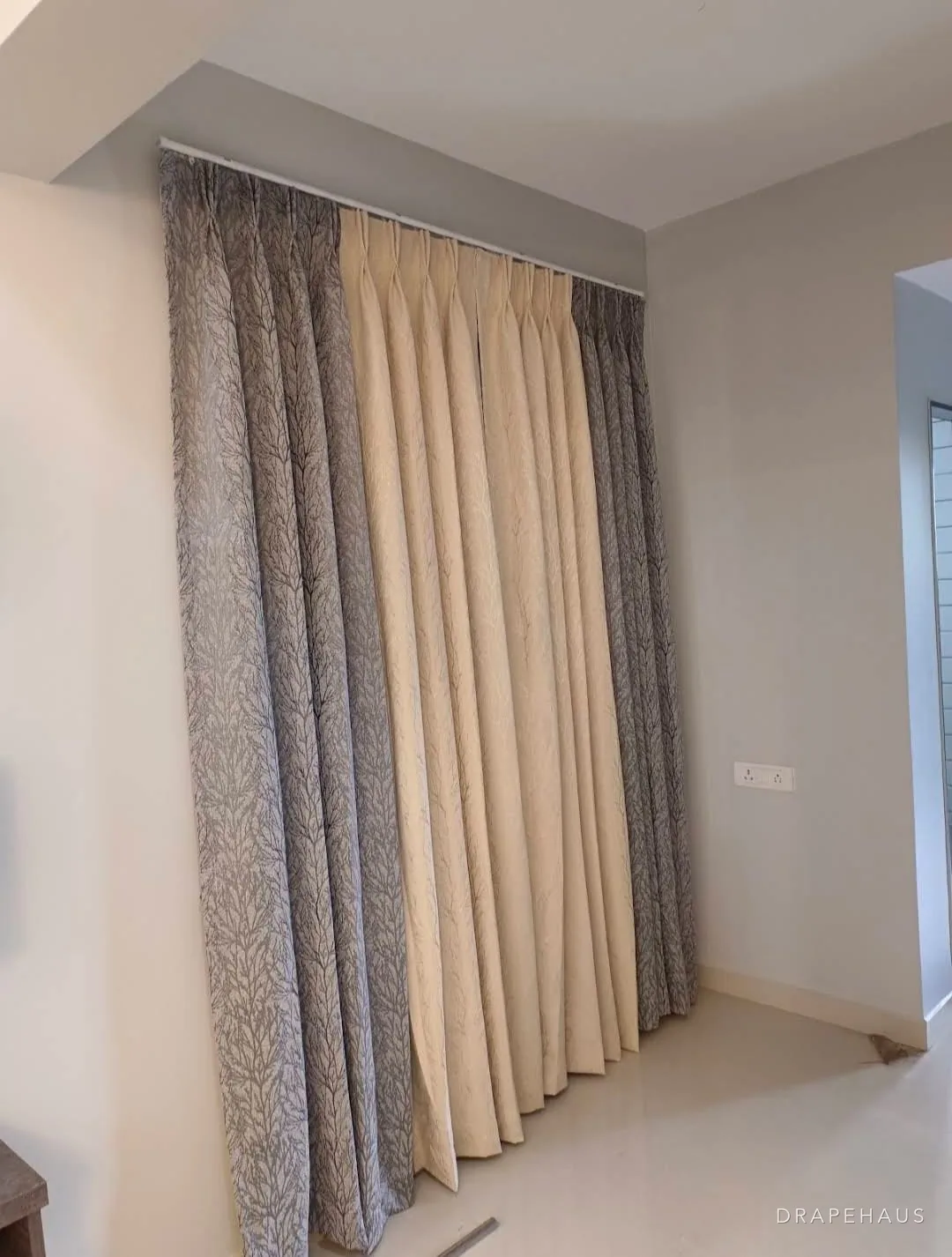
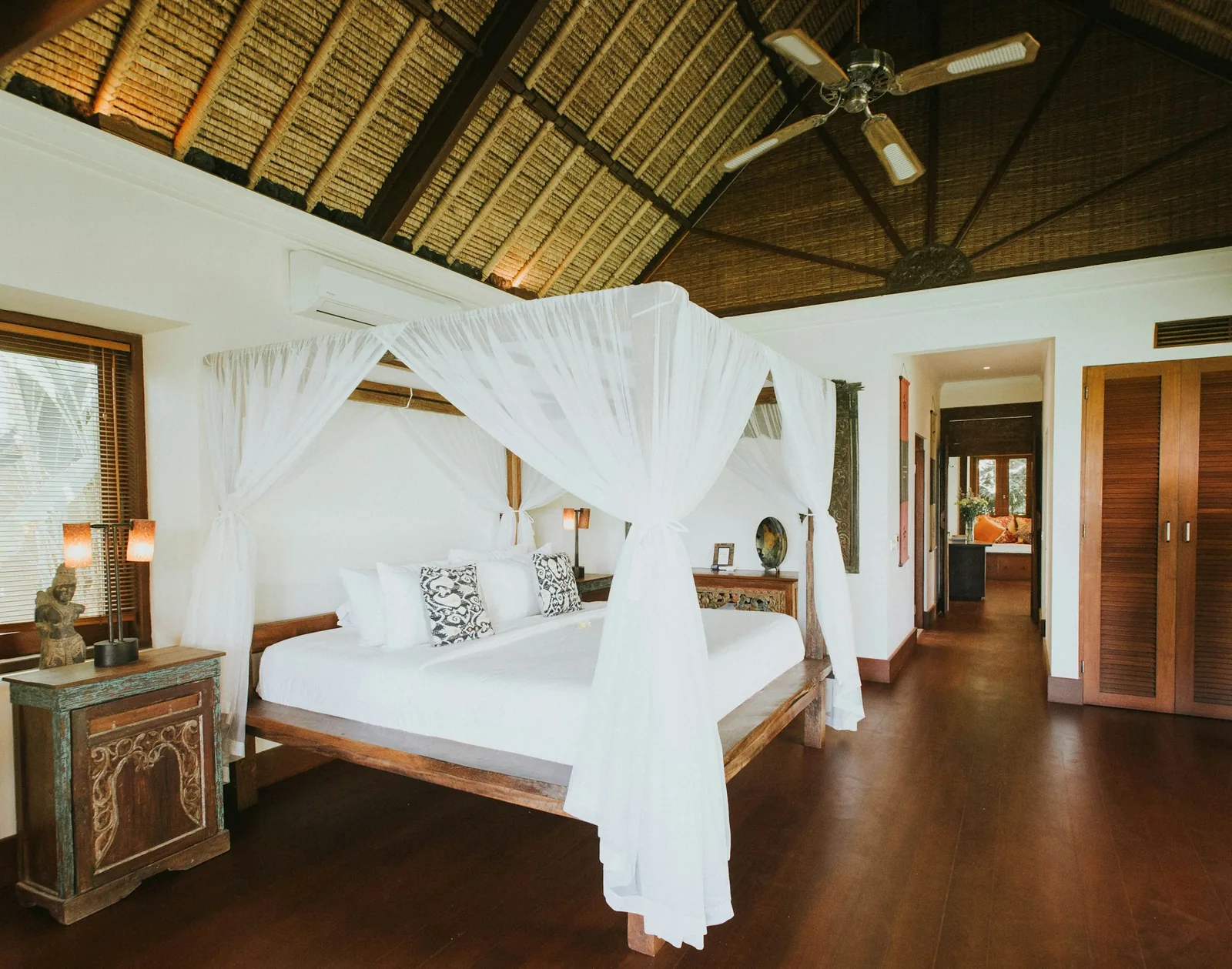
Airbnb interior design is less about a look than about a guest's first twenty-four hours. Someone arrives late with luggage, needs to find a light switch, sleep past sunrise, sit somewhere comfortable with a laptop and spend an evening with the balcony door open without being bitten. If the rooms make all of that easy, the photographs and the reviews tend to look after themselves.
In Goa the brief has two extra conditions. Guests carry sand, sunscreen and wet swimwear into every room, and the property sits through four humid monsoon months, often empty. The furnishing choices that matter most are the ones that survive both: washable covers, nets on the openings people actually use, real darkness in the bedrooms and a cupboard of spares that keeps turnovers from stalling.
This guide works through a flat or villa set up for short stays, room by room. Letting and the business side are covered in our pieces on putting a Goa villa on Airbnb and registering a rental villa; here the subject is the interior itself.
Design for the guest's day, not the owner's
Owners furnish for the way they live. A rental has to work for someone who has never been inside it, and the easiest way to plan one is to walk through a guest's day. The arrival comes first, often after dark: a switch they can find beside the door, a lamp next to each bed, somewhere to open a suitcase that is not the bed itself. Then the night: a dark bedroom with a fan or air conditioning they can work out without a manual. Then a morning that, for someone on holiday, may begin at ten.
The day is mostly spent outside, which is why the return matters. Guests need a place near the door for sandy bags and wet towels, a sofa that does not mind a damp swimsuit, and hooks in the bathroom for clothes that need to dry. Evenings in Goa are lived with the doors open, so the balcony or verandah has to be usable after dusk. Many guests also work for an hour or two a day, and a table at the right height near a socket and a window is now part of what a rental is expected to offer.
Writing the day down, hour by hour, turns a vague brief into a list of fittings. It also shows what not to buy. Ornaments nobody uses, a third armchair in a small living room or a delicate rug in the path from the front door are all things that will be moved, marked or broken without adding anything a guest values.
If a guest has to ask how something works, it needs a simpler version or a one-line note beside it.
A Goa flat is a different brief from a villa
Many Goan rentals are one- and two-bedroom flats in gated complexes rather than standalone villas, and the interior changes with the format. Rooms are smaller, so storage and seating have to work harder. There is usually one big opening, a sliding door to the balcony, that carries most of the light, the view, the breeze and the mosquitoes. And the building has neighbours who did not choose to live beside a rental.
That last point has a regulatory edge worth knowing before any money goes on furnishing. The Goa Department of Tourism's homestay and bed-and-breakfast policy says a homestay or B&B in a cooperative housing society or any other gated complex will not be considered for registration without a no-objection certificate from the board or committee that runs the complex. A whole flat let with nobody living in it more usually falls under Category D of the state's tourism Rules, which covers rented or serviced apartments, bungalows and homestays meant for tourists. Either way, check with the Department and with your society before you list. We are a furnishing studio, not lawyers; treat this as orientation.
Societies often have rules about the outside of a building as well: grilles, awnings, balcony enclosures and external blinds. Inside the line of the window, curtains, blinds and nets rarely raise objections, which is one reason they are the main tools in a rental flat. A villa sets different problems. There are more openings, verandahs and often a pool, and the job becomes keeping several bedrooms consistent rather than fitting everything into one.
Planning something like this?
We visit homes across North and South Goa, measure on site, and bring samples to see in your own light.
Bedrooms: what the Rules ask for, and what guests notice
The Rules under the Goa Registration of Tourist Trade Act list mandatory guest-room facilities for Category D accommodation. They include a clean change of bed and bath linen daily and between check-ins, one lamp per bed, chairs, shelf or drawer space, a mirror at least half-length, and opaque curtains or screening at all windows. In the bathroom, floors and walls are to have non-porous surfaces. These are the minimum, not the design brief, but they make a useful check before an inspection.
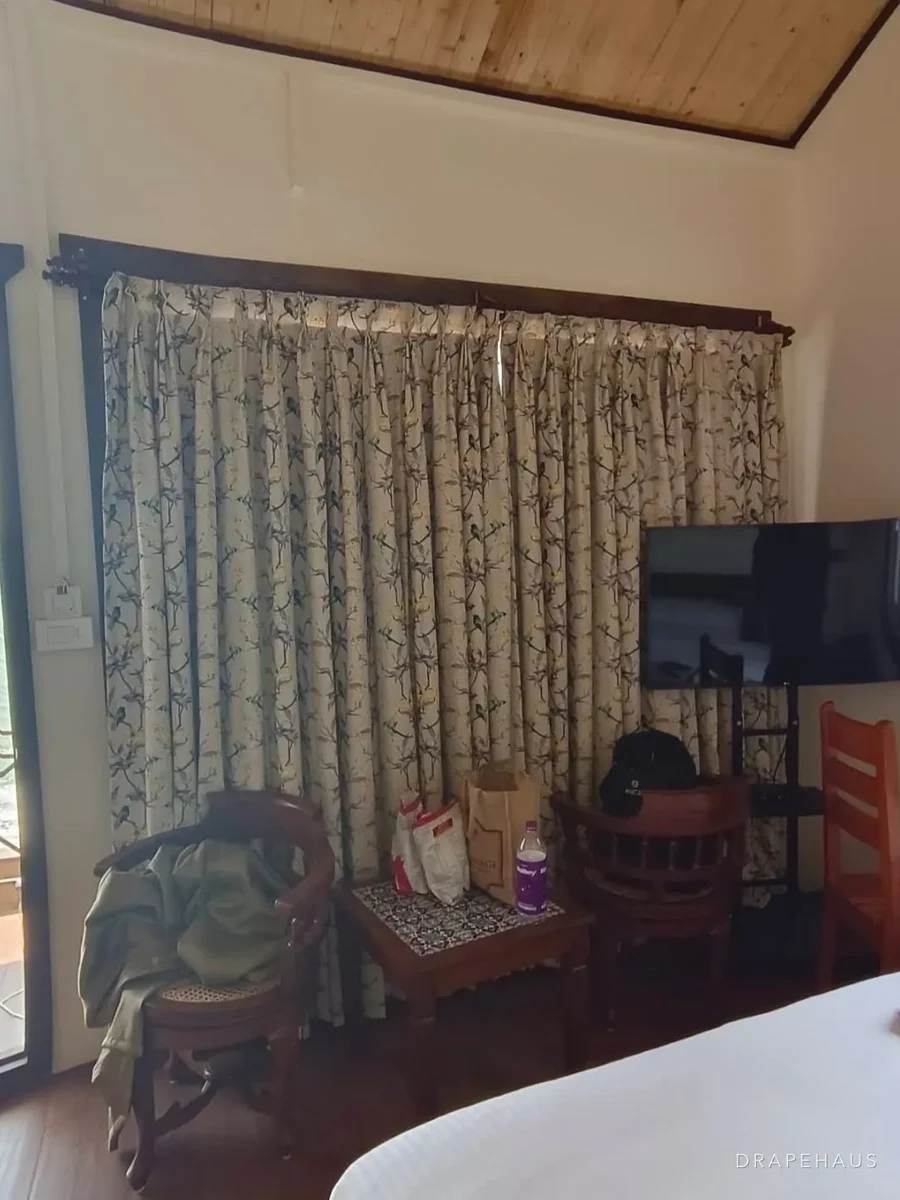
Opaque is not the same as dark. Light comes in around the sides, over the top and through the gap where two curtains meet, and an east-facing bedroom will be bright long before a holidaymaker wants to wake. In a flat with a sliding balcony door, the simplest reliable answer is a blackout curtain on a ceiling-fixed track that runs well past the door on both sides, with a sheer on a second track in front for the day. In a villa bedroom with deep reveals, a blackout roller blind inside the reveal with a curtain over it does the same job.
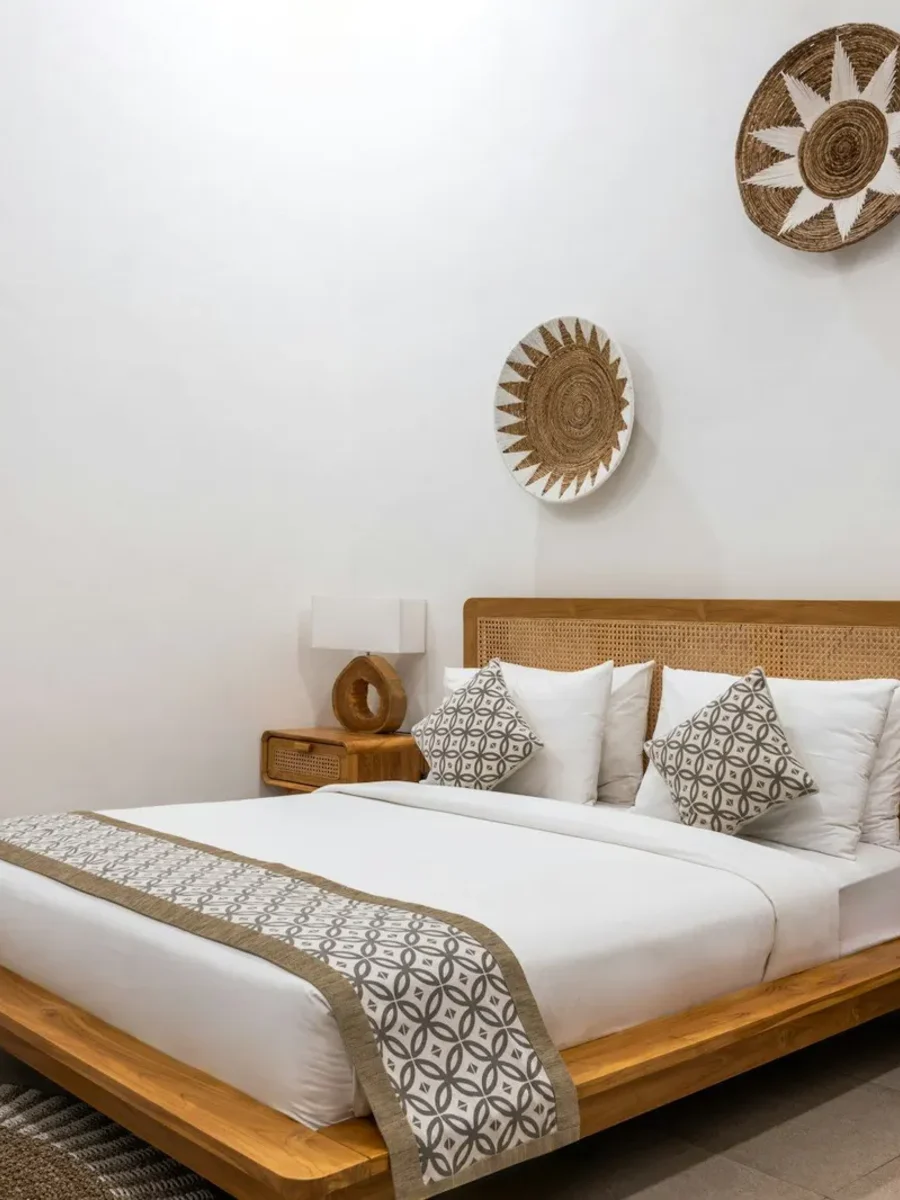
Then the bed corner. A guest arriving at night needs a lamp they can reach without getting up, a socket for a phone that is not hidden behind the headboard, and a surface for a glass of water and a watch. An upholstered headboard photographs well, but in a rental it should have a removable cover or a tightly woven, wipeable fabric, because it collects hair oil and sunscreen at exactly head height.
| Item | What the Rules require (Category D) | What makes it work for guests |
|---|---|---|
| Windows | Opaque curtains or screening at all windows | Blackout that overlaps the opening on every side, plus a sheer for daytime privacy |
| Lighting | Sufficient lighting, one lamp per bed | A lamp and switch within reach of each side of the bed, and a light by the door |
| Linen | Clean change of bed and bath linen daily and between check-ins | A complete spare set for every bed, so laundry never holds up a turnover |
| Seating and storage | Chairs; shelves or drawer space | A chair or rack that takes a suitcase, and hooks for damp clothes |
| Mirror | At least half-length (3 ft) | Full-length, placed where daylight falls on it |
Nets on the openings guests actually use
Goa's mosquitoes are not only an evening problem. The World Health Organization notes that the mosquitoes that spread dengue are active during the day, and lists window screens among the ways to avoid bites; for malaria it adds nets when sleeping and repellents after dusk. A guest who shuts every window to keep insects out will switch the air conditioning on and leave it on, which raises the electricity bill and does nothing for the stale smell of a closed room.
The answer is to screen the openings people really use, so they can stay open. In a flat that usually means the balcony door and the bedroom windows. A sliding door net runs in its own track beside the glass door, so a guest slides one panel or the other without thinking about it. Where there is no space for a second track, a pleated net folds into a slim side frame and can be drawn across a wide opening. Sliding or fixed window nets cover the bedrooms, where guests want a breeze at night.
Guests are harder on nets than owners are. They lean on them, push luggage past them and leave them half-closed. Choose strong mesh and solid frames, show the nets in the listing photographs so guests know they are there, and include a walk-round of every net in the pre-season check, because torn mesh and stiff runners are easy to fix before the first booking and irritating to discover after it. Our homestay and Airbnb page covers nets, curtains and sofas for let properties together.
Seating and a corner to work in
The sofa takes more punishment in a rental than any other piece. Guests sit on it in damp swimwear, nap on it, eat on it and sometimes sleep on it. Two decisions matter most: the fabric, and whether the covers come off. A tightly woven synthetic or solution-dyed fabric shrugs off sunscreen and spills better than a loose natural weave, and mid-tones or textured weaves hide marks that a pale plain shows within a week.
Removable covers are what make a sofa serviceable between guests. Zipped seat and back cushion covers can come off, go through a wash and be back on the same day, and a fitted loose cover over the frame means the whole sofa can be refreshed. For a sofa you already own, made-to-fit sofa covers bring it up to rental standard without replacing it. Ask for a test piece to be washed before you commit, to check for shrinkage and colour loss. Where a flat sleeps one more guest than its bedrooms allow, a sofa-cum-bed with a mechanism one person can work alone is worth more than a second armchair.
The work corner is small but noticed. A table at dining height, a chair you could sit in for an hour, a lamp and a socket within reach is enough, ideally beside a window rather than facing it, so the afternoon glare does not wash out a laptop screen. A light roller or zebra blind on that window lets a guest cut the glare without darkening the whole room. If the router lives in a cupboard, check the signal at the desk before you photograph it as a workspace.
The washable layer: cushions, throws and rugs
Soft furnishings are what make a rental look finished in photographs, and they are also what goes wrong first. The rule is simple: anything a guest's skin or feet touch should either go in the washing machine or be easy to replace in an identical colour. Zipped cushion covers in two or three standard sizes across the whole property mean a stained one is swapped from the cupboard in a minute. Polyester fibre inners cope with humidity better than feather, which holds moisture and can smell after a monsoon.
Throws follow the same logic: cotton or a washable blend, never a dry-clean-only wool or a loose knit that catches on a watch strap. Choose one accent colour and repeat it rather than giving every room its own scheme. A single palette means one set of spares instead of four, and the photographs read as one property rather than a collection of unrelated rooms.
Rugs need the most thought. Flatweave cotton dhurries suit a rental best because they release sand when shaken, can be washed, roll up for storage and lie flat, so nobody trips over a curled edge with a suitcase. Deep pile holds sand and damp, and jute or sisal can grow mould on a tiled floor in the rains. Keep rugs out of the path from the front door to the bathroom, and put a washable mat inside the entrance to catch the worst of the beach.
- Cushion covers: zipped, machine-washable, two or three standard sizes
- Cushion inners: polyester fibre rather than feather
- Throws: cotton or a washable blend, in one repeated accent colour
- Rugs: flatweave cotton dhurries, kept out of the main walkway
- Decorative pillows and bed runners: few, and all washable
- Entrance: a washable mat and a place to leave beach bags
Guest-proof details nobody photographs
Some of the most important choices in a rental never appear in a listing. Window cords are one. The US Consumer Product Safety Commission warns that children have strangled on the cords of blinds, shades and curtains, sometimes with an adult nearby, and says the safest option where young children are present is to go cordless; cord stops and anchors only reduce the hazard. A host never knows who is coming next, so cordless or motorised blinds, wand-drawn curtains and chains tensioned to the wall are the sensible default.
Fire is another. India's standard for the ignition resistance of curtains, IS 15741, is written for public buildings and expressly excludes domestic curtains, so a small rental flat is not automatically held to it; what applies to a particular property is for the fire authorities and the Department of Tourism to say. The homestay policy does ask for establishments to be protected with fire safety equipment. As a reference point rather than Indian law, UK government guidance for small paying-guest accommodation advises against providing candles or tea lights for guests, keeping linen and towels clear of heat sources, and keeping escape routes free of stored combustible material. All three are easy to follow in a Goan flat. Where the choice is open, a flame-retardant curtain fabric whose rating survives washing is a sensible upgrade, and our commercial and hospitality team specifies them routinely.
Power cuts are the third. The same UK guidance suggests that the smallest premises can rely on rechargeable torches that light automatically when the mains fails, one in each bedroom, so a guest can find the way out in the dark. If curtains or blinds are motorised, check they can still be opened by hand or on battery. Locks deserve a thought too: for lodging houses, the fire chapter of the national building standards recommends bathroom locks that can be opened from outside in an emergency without a special key, which also saves a frightening hour with a child locked in.
The monsoon off-season and a cupboard of spares
Many Goan rentals take fewer bookings between June and September, and that is when interiors are most often damaged. The India Meteorological Department records morning humidity of 87–91% across those months, far above the US Environmental Protection Agency's advice to keep indoor humidity below 60%. A flat closed for three months with the curtains drawn and the cushions on the sofa is an ideal place for mould to start.
Before closing, wash and fully dry every cushion cover, throw and spare set of linen, then store them in breathable cotton bags rather than sealed plastic, in a cupboard on an internal wall. Roll the rugs and keep them off the floor. Leave curtains drawn back and loosely tied so air reaches the folds; if the flat will be shut tight for weeks, take light fabrics down altogether. If someone can visit, the most useful thing they can do is open the windows behind the nets on a dry afternoon and run the fans. Our monsoon take-down and storage service does this for owners who are away.
The same cupboard holds the spares in season. A written inventory taped inside the door, listing every curtain, cover, cushion, throw and rug by room and size, lets a caretaker swap a stained cover between guests without calling the owner, and turns the pre-season check into a matter of ticking a list. Where you can, keep spare fabric from the same dye batch as the originals; a colour difference between batches shows most on a sofa where one cushion is new.