 Drape Haus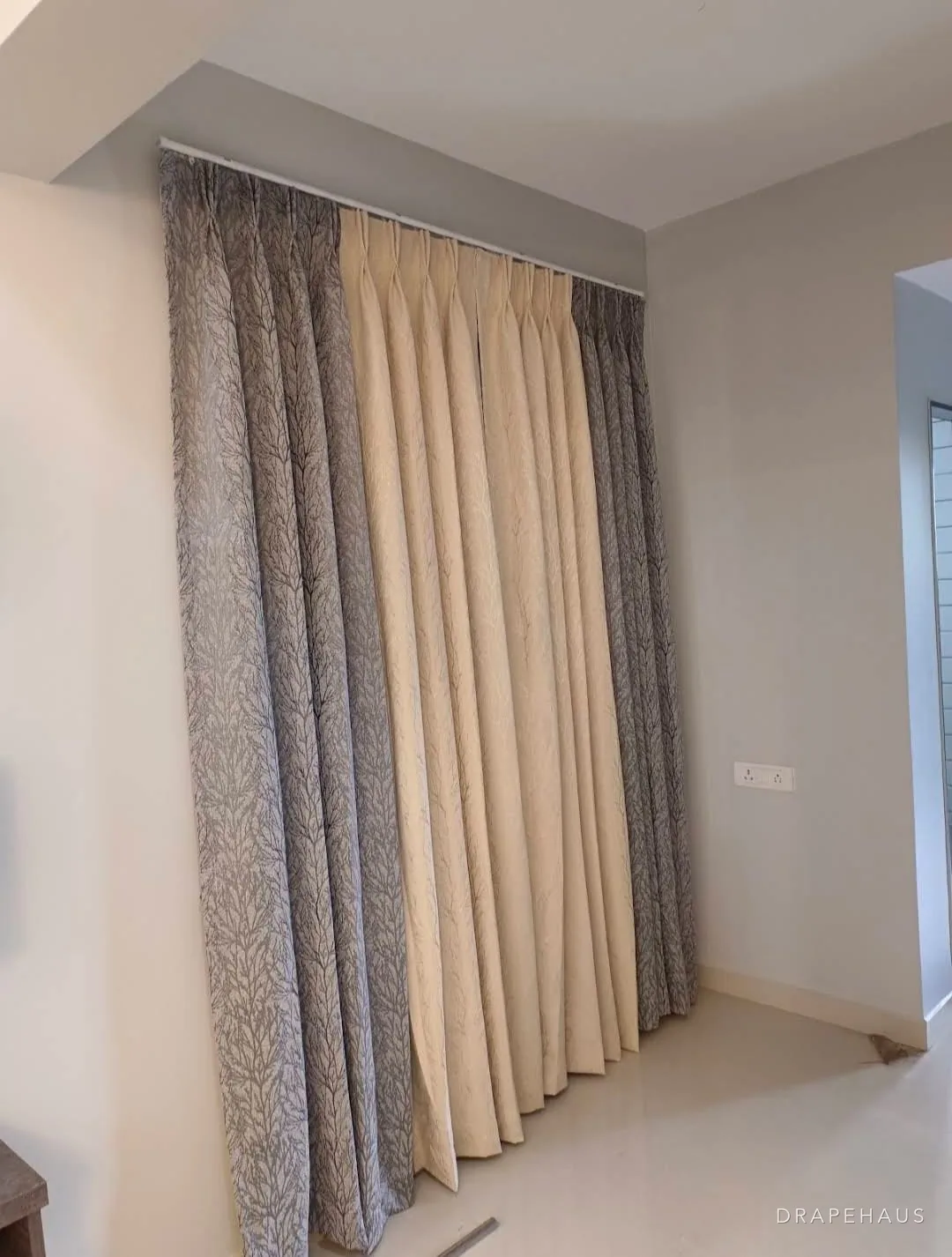
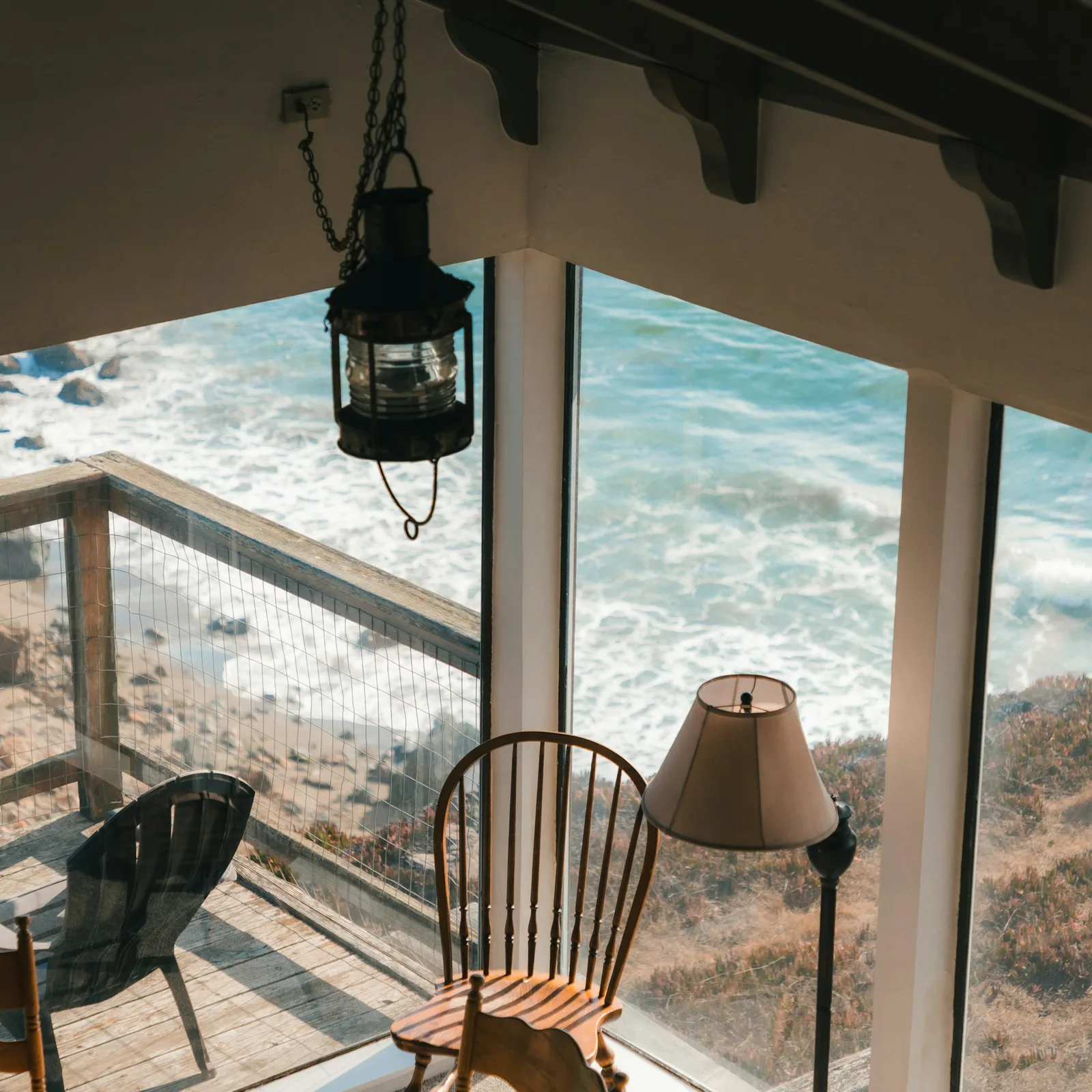
Beach house interior design is mostly a question of what the sea does to things. Sand comes in on feet and towels every day and grinds at floors, rugs and sliding-door tracks. Salt settles on every metal surface and holds moisture there. Sun off the water and the sand fades fabric faster than it would inland, and the breeze off the sea, welcome as it is, carries all of it into the house.
The look is the easy part. Pale walls, natural textures, washed blues and sand colours suit a house by the sea and suit Goa's light. What makes a beach house work for years is choosing the hardware, fabrics and finishes behind that look for the conditions, and planning for the four months when the house may be closed and damp.
Our article on tropical interior design sets out the climate principles. This one is practical: zone by zone, what to put in a Goan beach house so it lasts.
What the sea does to a house
Goa's coast has a daily rhythm of land and sea breezes. The India Meteorological Department describes winds from the west, north-west and south-west in the afternoons outside the monsoon, and from the east and north-east in the mornings; from June to August the winds strengthen and blow mostly from the west and south-west. A sea-facing house therefore takes onshore air every afternoon, and the full force of the monsoon on the same side.
That air carries salt. An article on coastal corrosion in New Steel Construction explains that chlorides from sea spray and airborne salt absorb moisture from the air, which keeps metal surfaces damp for longer and lengthens the time corrosion is active. Deposition falls as you move inland, and sheltered sites can measure lower than exposed ones, so the front row of houses on a beach and a house behind a belt of trees a few lanes back do not face the same conditions.
Sand is the other constant. It is abrasive underfoot, collects in rug pile and in the bottom tracks of sliding doors and nets, and works its way into sofa seams. And the light is intense: sun reflected off water and pale sand reaches deep into rooms that would be shaded inland, which is why the same fabric fades faster here than it would in a house inland.
Entrances and floors that live with sand
The best defence is to stop sand at the door. A beach house needs a real arrival zone: an outdoor tap or foot rinse on the path from the beach, a covered spot with a bench and hooks for towels and bags, and a washable mat on each side of the main door. In a house used by guests or children, draw it on the plan rather than hoping people will brush their feet.
Hard floors suit the coast. Stone, tile and polished cement sweep clean in a minute. Rugs soften them, but choose rugs that let sand go: flatweave cotton dhurries can be taken outside, shaken and washed, and low-pile outdoor rugs rinse clean. Deep pile, shag and wall-to-wall carpet hold sand and salt, and in the monsoon they hold damp too. Keep rugs out of the path from the beach door, and put a pad under each one so it does not creep across a smooth floor.
Sliding doors need attention. Sand in the bottom track wears the rollers and makes doors and their nets stiff. Vacuum the tracks weekly in season, and choose nets with brush seals and runners that can be cleaned and replaced rather than frames that have to be thrown away when the runners wear.
Planning something like this?
We visit homes across North and South Goa, measure on site, and bring samples to see in your own light.
Hardware that survives salt air
Every curtain track, bracket, rod, hinge and blind fitting in a beach house is exposed to salt, and plated or painted steel rusts quickly, staining the fabric that hangs from it. Powder-coated aluminium tracks and rods are the usual answer for curtains near the sea. Where stainless steel is used, the grade matters. The Australian Stainless Steel Development Association ranks grades by a Pitting Resistance Equivalent number and suggests about 24 for marine atmospheres and about 34 for severe marine ones, against around 18 away from the sea. Ask which grade you are being offered.
The same trade body makes a point that surprises many owners: sheltered spots can be the worst. It describes rain-sheltered areas, such as the underside of sloping roofs or places in a building's rain shadow, as very aggressive conditions, because salt collects there and is never washed off. A curtain track under a deep verandah eave can therefore stain and corrode faster than one on an exposed wall. Its advice is a light, regular wash; on the Goan coast, wiping verandah tracks, rods and fittings with fresh water every few weeks in the dry season makes a visible difference.
Motors and electronics need the same thought. Keep motorised curtain and blind systems indoors, behind glass, rather than on open verandahs, and ask how the motor housing and brackets are protected. Our curtain tracks and the guide to salt-air damage go into the hardware in more detail.
Under a verandah roof, rain never rinses the salt away. Wash those fittings by hand.
Fabrics for spray, breeze and sun
Light fades colour, and on the coast there is a great deal of it. The Canadian Conservation Institute notes that colours which fade can disappear within as little as a few hours of direct sunshine, while others last for centuries; most fabrics fall somewhere between. A sea-facing room pushes curtains and upholstery towards the sensitive end. Solution-dyed acrylic, where the colour is in the fibre rather than added to its surface, holds its colour well and resists spray and mildew, which is why it is used for awnings and outdoor cushions. Our guide to solution-dyed acrylic explains how it is made and where it suits indoors.
Colour choice helps as much as fibre. Sand, stone, washed blues, soft greens and natural linen shades fade gently and evenly, so a curtain that has lost some depth after a few seasons still looks intended. Deep, saturated colours and strong prints show fading as a hard line where the folds were shaded. Linings protect face fabrics on sea-facing windows, and a sheer in front of a heavier curtain takes the brunt of the sun.
The breeze needs planning too. Light sheers billow beautifully and then wrap themselves round door handles and lamps. Weighted hems, a track that returns to the wall and a holdback beside doors that stand open keep them in order. In rooms used with the doors open all afternoon, a blind that lowers against the glare is often more practical than a curtain that will not stay where it is put.
Slipcovers for sunscreen, sand and wet swimwear
In a beach house, upholstery meets sunscreen, salt water, sand and damp towels every day. Oily sun creams can leave marks on pale fabric, sand works into seams and wears the weave, and a wet swimsuit leaves a damp patch that dries slowly in humid air. The practical response is to dress seating in washable slipcovers rather than fixed upholstery.
A tailored loose cover is cut and sewn to a sofa's exact shape, looks like upholstery and comes off with zips or ties for washing. Stretch covers fit a range of shapes and change more quickly but look more casual. In a holiday house, two sets per sofa mean one can be in the wash while the other is on. Choose a fabric that has been tested for shrinkage, in a mid-tone or a textured weave that hides marks between washes. Our made-to-measure sofa covers are cut for exactly this.
Seat cushions are worth some thought. Foam wrapped in polyester fibre dries more easily than feather, and an inner with its own removable cover can be aired in the sun if it gets wet. A basket of towels to throw over the seats nearest the pool and beach doors does more than any fabric treatment.
Verandahs, decks and screened doors
A beach house is lived half outside. Verandahs and decks need shade from the afternoon sun off the sea: a fixed or retractable awning, outdoor roller blinds that lower to the railing, or bamboo chik blinds where they are sheltered from driving rain. Outdoor furniture should be in materials that do not rust or rot, such as powder-coated aluminium, treated hardwood and all-weather wicker, with cushions in outdoor fabric over quick-drying foam that come in before rain.
Between the verandah and the house is the most used door in the building, and it usually stands open. The World Health Organization notes that dengue mosquitoes are active during the day and lists window screens among the protections, so a screen on that door matters in daylight as well as at dusk. A sliding door net running beside the glass door lets the house stay open to the breeze without letting insects in.
| Zone | Main threat | What lasts |
|---|---|---|
| Entrance | Sand and wet feet | A tap or foot rinse, washable mats, a bench and hooks |
| Living room | Sun, sunscreen and sand | Washable slipcovers in solution-dyed or performance fabric; flatweave rugs |
| Sea-facing windows | Fading; salt on hardware | Lined curtains behind sheers on powder-coated aluminium tracks |
| Verandah | Afternoon sun, driving rain, salt that rain never rinses | Awning or outdoor blinds; outdoor-fabric cushions brought in; fittings washed by hand |
| Bedrooms | Early light and humidity | Blackout lining with a sheer; bedding that dries quickly |
| Pool or beach door | Insects; sand in the tracks | A sliding net with brush seals; tracks vacuumed weekly |
Closing a beach house for the monsoon
From June to September the India Meteorological Department records morning humidity of 87–91% in Goa, and on the coast that damp air also carries salt. A closed beach house risks mould on its fabrics and rust on its metal, and the two together are worse than either: rust stains on a mildewed curtain rarely come out.
Before closing, wash the salt off every metal fitting with fresh water and dry it. Take down curtains and sheers, wash and dry them thoroughly, and store them in cotton bags in an internal room. Take slipcovers off, wash and store them the same way, and cover the sofas themselves with cotton sheets, never plastic. Bring in every verandah cushion, and roll up or remove outdoor blinds that face the monsoon. Roll rugs and lift them off the floor. Leave internal doors and wardrobes open so air can move.
When the house reopens, dry it out before anything goes back up. The US Environmental Protection Agency advises keeping indoor humidity below 60% and drying damp materials within 24–48 hours to prevent mould. Open the windows behind their nets on a dry day, run fans or a dehumidifier, and check every fitting for rust spots and every fabric for mould before it is rehung. Our monsoon take-down and storage service handles both ends of the season for owners who are away, and the coastal villa guide looks at sea-facing homes in more depth.