 Drapehaus
Drapehaus
Preparing the room
Drapehaus
Preparing the room
Other Services
The most destructive thing that happens to soft furnishings in Goa is a house sitting closed through the monsoon with the curtains still up. We take them down before the rains, store them properly and rehang them in October.
In short
By the Drapehaus studio · How we write
Is it right for you?
A curtain survives the monsoon when it can dry out between damp spells. In an occupied house that happens without anyone noticing: windows open, fans run, the afternoon is a little drier than the morning. In a house locked from June to October it never happens. Morning humidity sits between 87 and 91 per cent through those months, well above the level at which mould begins to grow on surfaces, and a hanging curtain simply stays damp for four months.
Taking curtains down before the rains, cleaning them and storing them where air moves is the only reliable answer for a closed house. It suits second homes, villas whose owners live elsewhere, rental properties that do not let through the monsoon and heritage houses whose thick walls stay cool and damp long after the rain stops.
It is not necessary for every house. If the house is lived in, aired daily and the curtains are synthetic or well lined and hang clear of external walls, they can usually stay up with a simple routine. We would rather tell you that than store curtains that did not need it.
The details
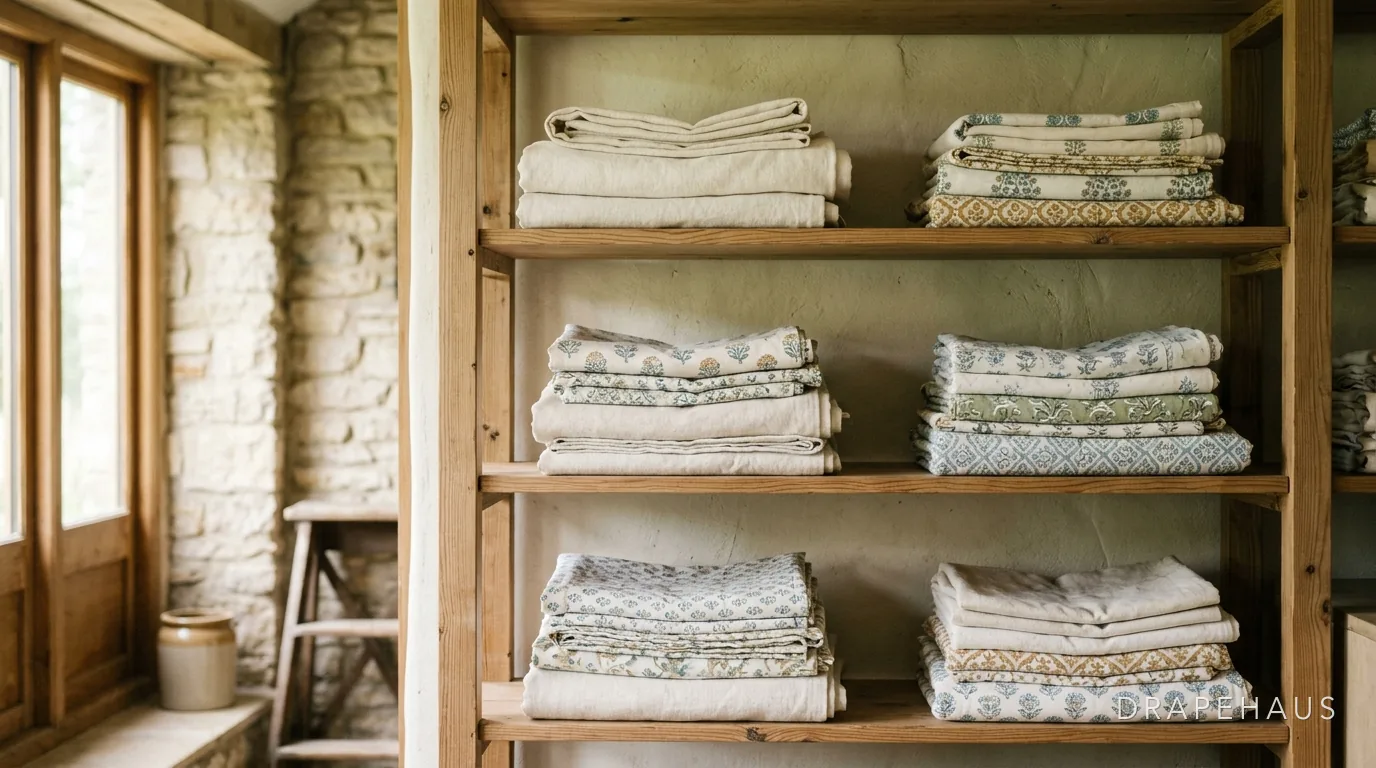
Four months of saturated air with no drying cycle writes off fabric that would otherwise last a decade. We collect before the rains, clean and inspect everything, and store it flat and ventilated in our workshop — never bagged or compressed.
Any repairs are carried out while the curtains are with us, and everything is rehung and dressed in October, before the season starts, with a written condition report each year.
Your options
Most houses take the full cycle, but the parts can be arranged around what the house already has, such as a caretaker who can manage some steps.
Swipe for all 5 →
The honest view
Removes the main cause of loss
Mildew, lining rot and water marks in closed houses come from fabric hanging in saturated air. Removing the fabric removes the exposure, however wet the season turns out to be.
Clean fabric lasts longer
Curtains cleaned once a year before storage carry less salt and grime, which both attract moisture and weaken fibres. The annual clean is part of why stored curtains outlast those left up.
Repairs happen before they spread
A loose stitch or a thinning edge found in May is repaired by October. Left alone, it becomes a torn leading edge by the following season.
The house does not depend on memory
The same steps happen every year, recorded and photographed. A change of caretaker or a late departure does not change what happens to the curtains.
Bare windows for four months
The house has no curtains through the rains. Where privacy or light matters while it is closed, blinds or plain sheers can stay up, raised or tied clear of the glass.
Handling adds some wear
Taking down, cleaning and rehanging every year is gentler than a monsoon in place, but it is not nothing. Headings and hand-sewn details benefit from being made for it.
Dates must be booked
Collection slots before the rains are limited. A request made after the monsoon has set in means taking curtains down damp and drying them first.
Side by side
Anyone can take a curtain down. The difference lies in whether it is clean and dry when stored, where it is kept, and whether it goes back up properly.
| Owner or DIY | Caretaker | Professional service | Left up, tied back | |
|---|---|---|---|---|
| Timing | Depends on travel dates | Often late | Booked before the rains | Not applicable |
| Cleaned before storage | Rarely | Rarely | Always | No |
| Storage conditions | Cupboard or trunk | Whatever is on site | Ventilated, off the floor | Humid room |
| Repairs found and done | Occasionally | Seldom | Recorded and repaired | Found in October |
| Rehang and dressing | Variable | Often uneven | Labelled and dressed | No work needed |
| Written record | None | Rarely | Condition report | None |
| Mildew risk | Moderate | Moderate | Low | High in a closed house |
Swipe to compare →
Tying curtains clear of the glass is a reasonable fallback in an occupied house. In a sealed one it only slows the damage.
Rather see it in your own room?
We bring samples to the house, measure every window, and specify for the light and exposure you actually have.
Room by room
Large, lined curtains hold the most moisture and are the costliest to replace. They are always the first to come down, and the easiest to damage by storing them badly on site.
Coated blackout linings trap moisture against the face fabric, and a closed bedroom is often the dampest room. Storage prevents the spotting that appears between face and lining.
A seasonal clean and inspection keeps several matching rooms consistent, and repairs are made before guests return rather than after a complaint.
Laterite and lime walls stay damp well into October. Curtains hanging close to them suffer most, so they should come down and go back up only once the walls have dried.
Very long drops need scaffolding or tall ladders and two people to handle safely. Worth including, but plan access, and consider motorised tracks with quick-release carriers.
Outdoor curtains take the rain directly and should always come in. Solution-dyed fabrics survive storage well once rinsed of salt and dried.
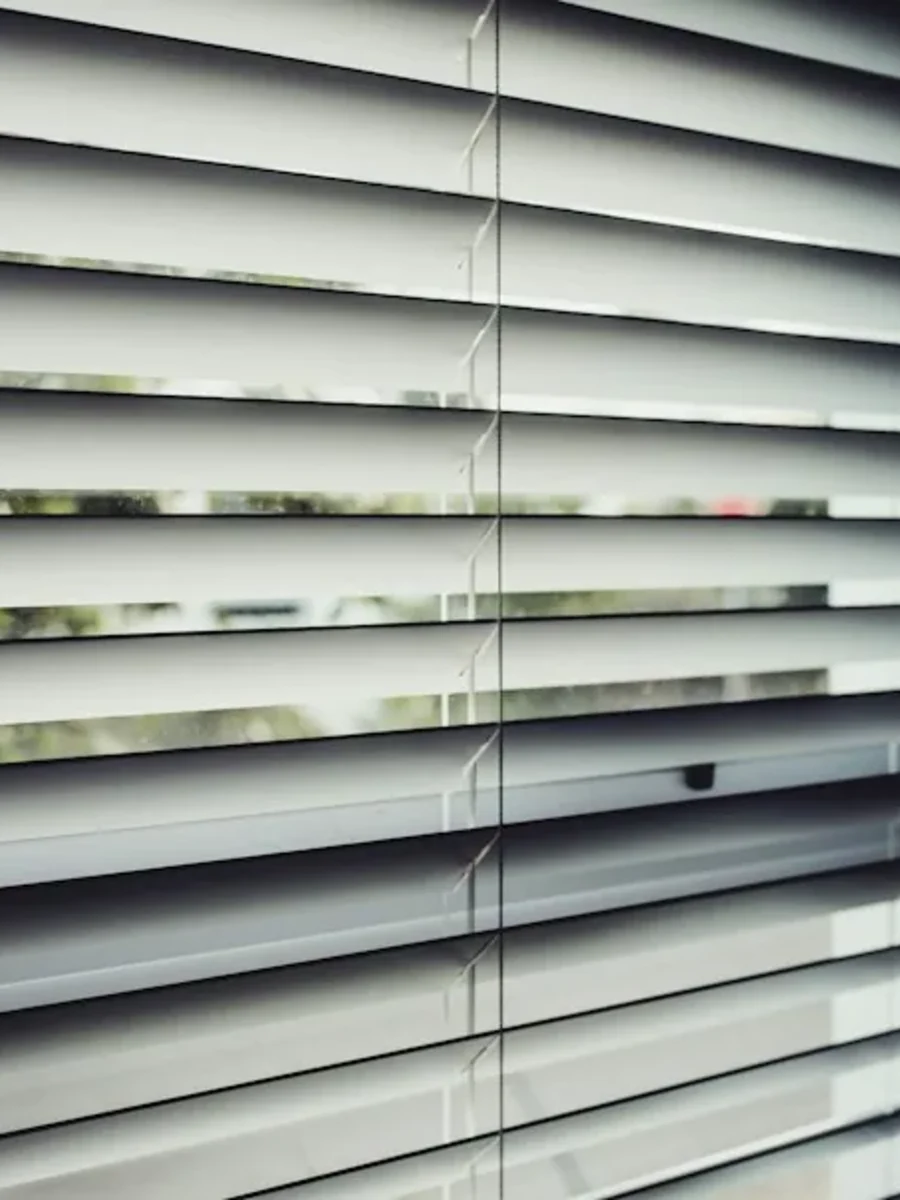
Blinds in reveals present far less fabric to the air and usually stay up, fully raised. Roman blinds in natural fabrics are the exception and may be worth removing.
In depth — tap a heading to read
A curtain presents a great deal of surface to the air: both faces of the fabric, both faces of the lining and, if it is interlined, a thick absorbent layer between them. Near the sea that surface also carries salt, which is hygroscopic and draws moisture from humid air. The result is that a lined curtain in a closed room can be damp through its middle layers while its face looks and feels dry.
Where the curtain hangs matters as much. Against a cool external wall or glass, the air immediately behind it is colder and wetter than the room, and that is where mildew usually starts: on the back of the lining, in the folds and along the hem. Folded loosely in a ventilated store, the same fabric has far less exposed surface, no cold wall behind it and air moving past it.
The normal onset of the monsoon is around 5 June, but pre-monsoon showers and squalls start earlier, and the air grows heavier through May. We aim to collect from April to the end of May, on a dry day, so fabric goes into storage without having absorbed the first rains. Houses closing earlier in the season are simply collected earlier.
If you are leaving before your collection date, the curtains can stay up until we come, provided someone can let us in. What we avoid is taking curtains down in the rain and folding them damp; if it cannot be helped, they are dried fully in the workshop before storage.
Every curtain is examined flat before cleaning. We look at the leading edges, which handle the most wear, the heading, where tape and hand stitching take the weight, the lining at the top of sunny windows, which often rots before the face fabric, and the hem. Measurements are taken so any shrinkage after cleaning is caught before the curtain is rehung short.
Mildew found at this stage is dealt with before it can spread through the store. Light surface spotting on synthetics often cleans out. Staining deep in natural fibres or between face and lining may not, and we will tell you plainly whether a curtain should be relined, remade or retired rather than stored for another year.
A curtain should go into storage clean and completely dry. Anything else takes the problem into the store with it.
The normal withdrawal of the monsoon is about 14 October, and closed houses need a few days of open windows before fabric goes back in. We usually rehang from mid-October into November, after the house has been opened, aired and cleaned. Rehanging into a room that still smells of damp simply starts the cycle again.
Each curtain goes back to its own window using the labels and photographs from May. Tracks are checked, carriers freed and, on motorised tracks, limits reset if needed. Curtains are steamed where the fabric allows and dressed into even folds, which can take a few days to settle on heavier fabrics. The condition report follows, with anything to plan for next year.
If a house will close every year, the curtains should be made with that in mind. Tracks with hook-on carriers are quicker and gentler to use than rings on a pole. Pinch-pleat and wave headings with sewn-in tape hold their shape through handling better than delicate gathered headings. Loose-fitting weights in the hem are replaced by sewn chains or weighted tape that cannot rust against the fabric.
Fibre choice matters too. Polyester and solution-dyed acrylic tolerate cleaning and humidity well; linen and silk need more care in both. None of this rules out natural fabrics, but it changes how they are lined, cleaned and handled.
Living with it
Roller and Venetian blinds usually stay through the monsoon. Raise them fully so the fabric is rolled or stacked, presenting as little surface to the air as possible.
While the curtains are away, cover sofas and chairs with breathable cotton sheeting rather than plastic, and lift cushions off the floor.
Open windows and run fans for a few days after the rains. Rehanging into a closed, damp room undoes the work of storage.
A gentle vacuum with a brush attachment every few weeks while the house is in use keeps dust and salt from building up in the folds.
Avoid these
Plastic bags and vacuum packs trap whatever moisture the fabric holds. Store loosely folded, with air moving around it.
Salt, dust and skin oils attract moisture and feed mould. Clean before storing, every year.
Curtains folded damp in June are mouldy by August. Collect in the dry weeks, or dry fully before storing.
Curtains hung before the walls have dried pick up the damp again. Air the house first.
Similar widths get swapped and hang badly. Label every curtain to its window before it comes down.
Checklist
More in other services
The work that keeps a Goan house in good order through the year: storing curtains through the monsoon, motorising windows nobody can reach, shading verandas, and fitting out hotels and villas to a specification that can be repeated.
From the Journal
All articlesOur process
One team from the first visit to the last bracket, so nothing is lost between the person who specified it and the person who fits it.
FAQ
In a closed house, months of saturated air with no drying cycle cause mildew and rot. Stored dry and ventilated, the same curtains last for many more years.
We agree a collection date in April or May, before the rains, and rehang in October before the season begins.
Not safely in a closed house. A sealed box holds whatever moisture the fabric carries and the humid air trapped inside it, and in a house that stays saturated for months that is enough for mildew. If curtains must be stored on site, fold them loosely and keep them on open shelving off the floor, in a room where air can move.
Yes, or have them cleaned, following the fabric's care label. Dust and salt hold moisture and give mould something to feed on, so dirty curtains fare worse in storage. The essential step is drying: a curtain must be completely dry, through the lining and any interlining, before it is folded away.
Light spotting on synthetic fabric often lifts with proper cleaning. Deep staining in cotton, linen or silk, or mould that has grown between face fabric and lining, is much harder and sometimes permanent. The earlier it is treated the better, which is one reason we inspect every curtain before storage.
Usually blinds stay up, fully raised, because they present much less fabric to the air. Roman blinds in natural fabrics and outdoor blinds that take rain are sometimes worth removing. We look at each during the visit and advise.
Yes. The monsoon is the best time for it, because the curtains are already off the window. Relining, new leading edges, replacing heading tape and adjusting drops can all be done while they are with us, and they come back in October ready to hang.
Next step
It starts with a visit before the rains. We walk the house, count and measure every curtain, note its fabric, lining and condition, and agree the collection and rehang dates with you or your caretaker. If any curtain is worth replacing, we bring samples so you can see alternatives in the room's own light. We then take everything down, clean, repair and store it, and rehang and dress it in October with a written report. Book a home visit, ideally in March or April.