 Drape Haus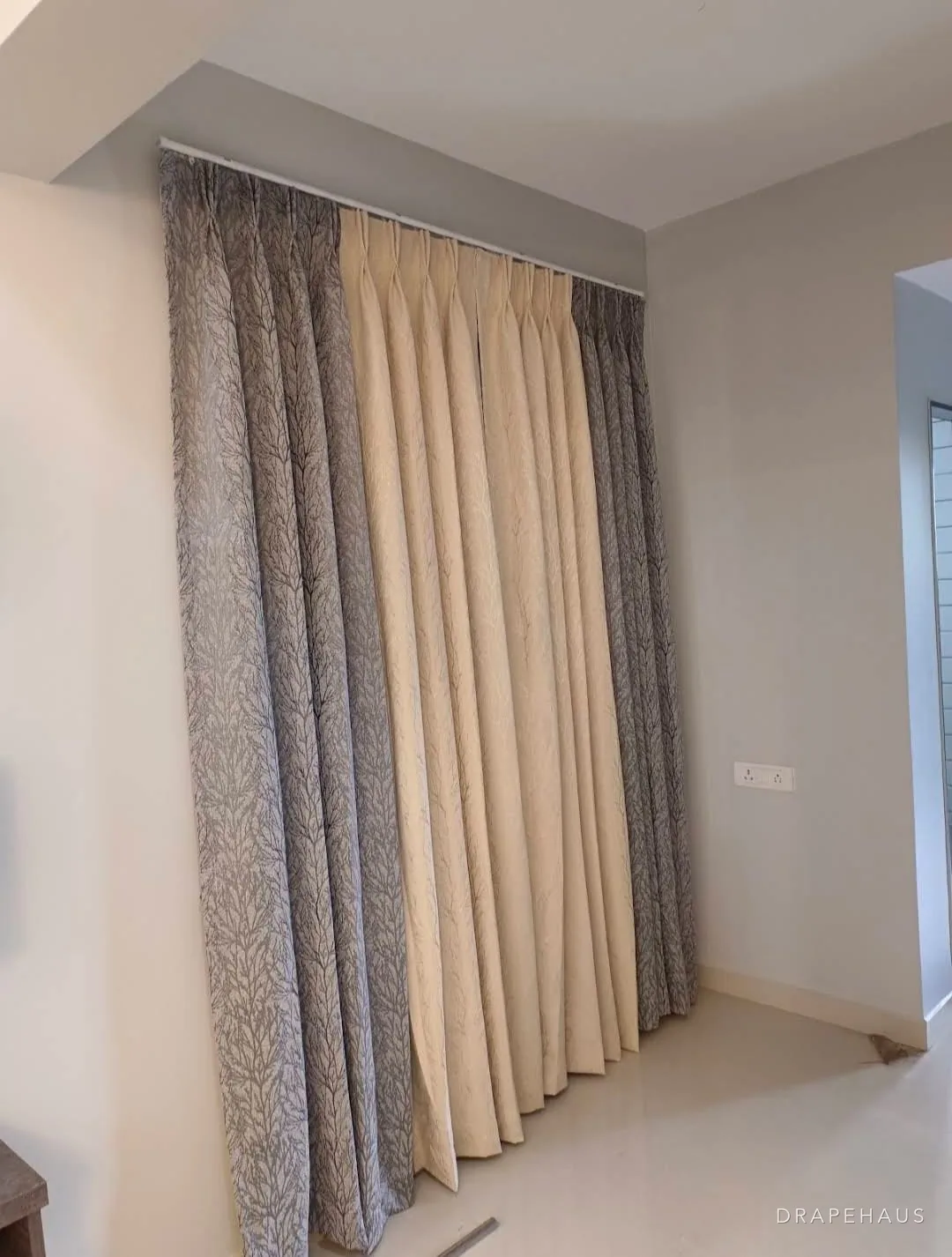
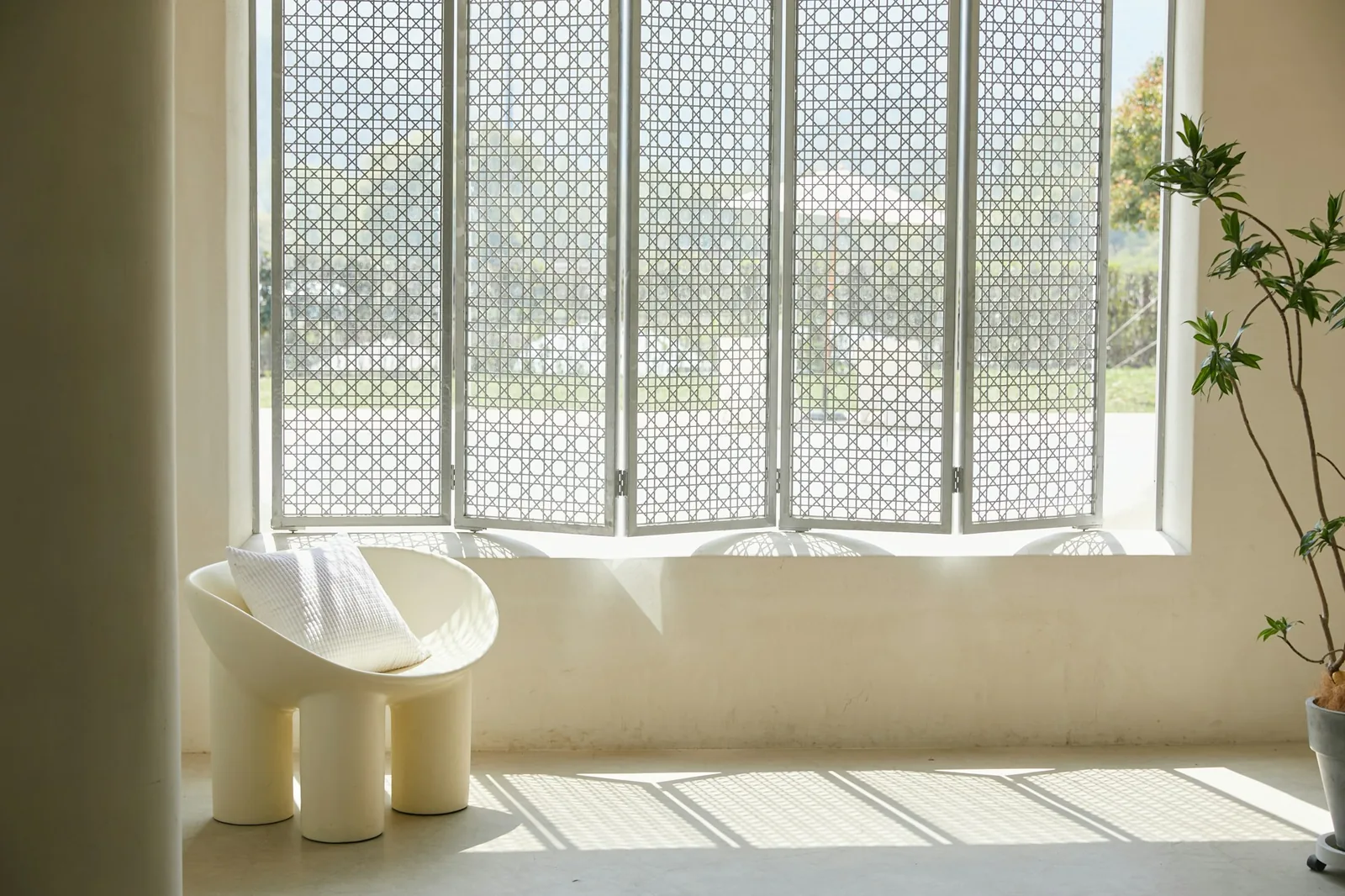
Minimalist interior design asks a room to manage with less: fewer pieces of furniture, a narrow range of colours, plain surfaces and very little on display. In a temperate apartment that is mostly a matter of taste. In a Goan house, where the India Meteorological Department records morning humidity of 87–91% through the monsoon, it is also a practical discipline. Everything you own has to be dried, aired and cleaned, and a room with fewer things in it is easier to keep healthy.
But minimalism here is not the same as emptiness. A bare tiled room with hard walls echoes, shows every speck of dust and can feel cold under a grey July sky. The minimal rooms that work in Goa are built from a small number of good, washable materials, closed storage that still lets air through, window treatments that recede into the architecture, and enough texture and light to stay warm.
This guide covers each of those, the fabrics that suit them, a routine for the extra dust and damp a plain room reveals, and how the style adapts for rentals.
What minimalism means when the air is wet
The minimalist idea is often summed up as fewer, better things. In a humid climate the 'better' matters as much as the 'fewer'. A thin, poorly made cushion cover fades and pills within a season; a good one lasts years. A sofa covered in a fabric that cannot be cleaned becomes a liability by its second monsoon. Fewer pieces means each one carries more of the room and gets more use, so each has to be chosen for how it ages here.
Damp also changes what minimal storage means. Mould needs moisture, something to feed on and still air. The US Environmental Protection Agency advises keeping indoor relative humidity below 60%, ideally 30–50%. Goa's monsoon air sits far above that, so anything shut in a sealed, unventilated cupboard, especially textiles, leather and paper, is at risk from June to September. A minimalist home that hides everything in airtight cupboards simply moves the clutter somewhere it cannot breathe.
The upside is real. A room with less in it has fewer surfaces for mould, fewer hiding places for insects and less to move when the floor is cleaned. Plain walls and open floors show problems early: a damp patch, a line of termite mud, a mildew spot on a curtain lining. In a house that is closed for weeks at a time, that is an advantage, because problems are found while they are still small.
A small palette of fabrics that will last
Choose three or four fabrics for the whole room, or even the whole house, and repeat them. Repetition is what makes a minimalist interior look calm rather than sparse. It also simplifies care: one washing routine, one set of spare covers, one fabric to match when a cushion needs replacing.
Linen is the classic minimalist fabric for good reason. It has texture without pattern, drapes softly and improves with washing. In Goa it suits curtains in rooms with moving air, and loose covers that come off for a wash. It creases, fades in direct sun if unlined, and dislikes being put away damp, so linen curtains with a lining on the sunny side last far longer than unlined ones.
Cotton and cotton blends are the workhorses: washable, breathable and available in heavier weaves for slipcovers and cushions. Polyester blends and solution-dyed fabrics take the hard-wearing jobs: the sofa that is sat on daily, curtains on a west wall, anything in a rental. Their colour holds in sun and they dry quickly. Natural weaves such as cane and rattan add texture in small doses but need air around them.
| Fabric | Best use | Why it suits | Care in the monsoon |
|---|---|---|---|
| Linen or linen blend | Curtains, loose covers, cushions | Texture without pattern; softens hard rooms | Air on dry days; wash covers before storing |
| Heavy cotton or twill | Slipcovers, cushions, bedheads | Washable, breathable, takes colour well | Dry fully before putting away |
| Polyester blend or solution-dyed | Main sofa, west-facing curtains, rentals | Holds colour in sun, dries quickly | Vacuum and spot-clean; fibre does not feed mould |
| Sheer voile | Day curtains on a ceiling track | Diffuses glare without blocking air | Machine-washable; dries in hours |
| Cotton or synthetic flatweave | Rugs on tile | Light, washable, no deep pile to hold damp | Lift off the floor if the house is closed |
If you cannot wash it, wipe it or air it, it does not belong in a minimal room in Goa.
Planning something like this?
We visit homes across North and South Goa, measure on site, and bring samples to see in your own light.
Window treatments that disappear
Curtains are often the largest soft element in a minimal room, so they have to be quiet. The cleanest approach is a track fixed to the ceiling or hidden in a recess, so the fabric seems to fall from above with no rod or bracket on show. Ceiling curtain tracks also let the curtain run the full width of the wall, which makes a window look larger and the room more ordered.
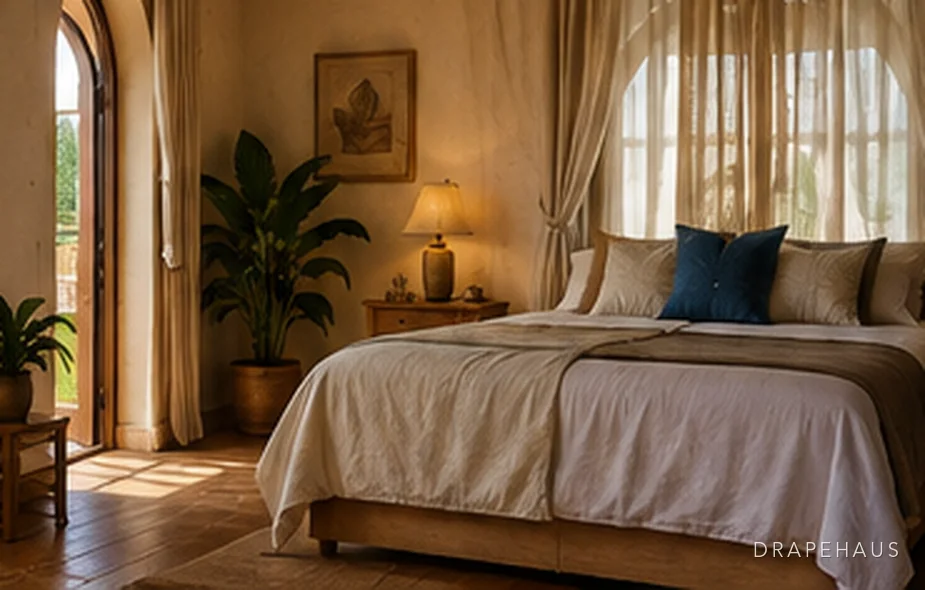
Ripple fold curtains suit minimal rooms best: their soft, even waves have no visible heading and stack neatly at the side. Pinch pleats on a pole read as more traditional. Choose a colour within a shade of the wall so the curtain reads as a soft surface rather than an object. A sheer on the front track with a lined or blackout curtain behind gives day and night in one quiet system.
Where there is no room for curtains, a roller blind fitted inside the window recess is about as invisible as a window treatment gets. In a translucent fabric close to the wall colour, it disappears when raised and becomes a plain lit panel when lowered. Roller blinds also suit humidity: there are no folds for dust and spores to settle in, and the fabric can be wiped.
Leave out swags, tie-backs, decorative finials and patterned linings. They are not wrong, but they belong to another style. In a minimalist room the window treatment is part of the architecture.
Closed storage that still breathes
Minimalism depends on storage: surfaces are clear because everything has a place behind a door. In a humid house those doors need to let air through. A built-in wardrobe on an external laterite wall, shut tight for the monsoon, is the classic place for mould to start on clothes, bags and shoes. Our article on fungus on clothes and wardrobes covers the remedies in detail.
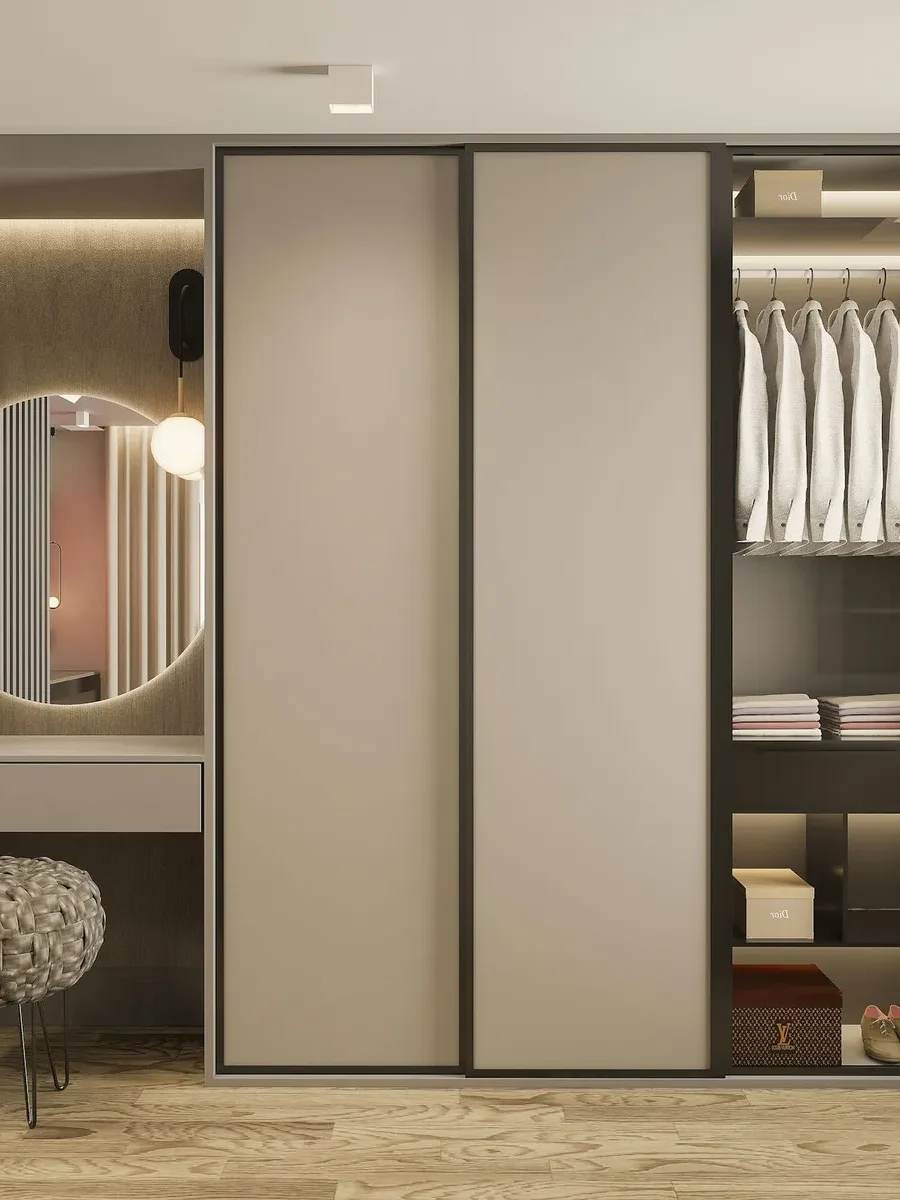
The design answer is ventilated closed storage. Doors with a fine slatted, caned or perforated panel look calm from across the room and let air move. A gap at the top and bottom of a tall unit, a few centimetres of space behind it, and slatted shelves rather than solid ones all help. In a large walk-in cupboard, a small dehumidifier keeps the air drier through the rains.
Inside, fewer things means better airflow. A wardrobe packed tight holds damp air between garments; one with space between hangers dries out. Cotton bags rather than plastic for stored textiles, and a look inside every few weeks in the rains, stop a tidy wardrobe from becoming a hidden problem.
- Slatted, caned or perforated door panels
- A gap at the base and top of tall units
- Units set a few centimetres off external walls
- Cotton storage bags, never sealed plastic
- Fewer items per shelf so air can circulate
Why bare rooms show dust and damp sooner
A room with nothing on its surfaces shows every grain of dust, and a plain pale wall shows every mark. In Goa, dust blows in from lanes and building work in the dry months and is carried in on feet all year; near the coast a fine film of salt joins it. In the monsoon the problem shifts to damp: a faint grey bloom on the back of a cupboard, a musty smell in a sofa cushion, spots on a curtain lining.
Dust and damp also feed each other. The American Lung Association notes that dust mites absorb moisture from the air and live in bedding, mattresses, upholstered furniture, carpets and curtains, and advises keeping indoor humidity below 50%. A minimalist room with fewer soft furnishings is easier to keep mite-free, provided the ones it has are washed and dried properly. The Association also recommends dusting with a damp or microfibre cloth, which traps particles instead of stirring them into the air.
None of this needs much time, but it only works if it is regular. The routine below is written for a house in daily use; a house closed for the season needs its own preparation before it is shut.
- Daily in the monsoon: open windows on dry spells, run the fans, close up before rain blows in
- Weekly: dust with a damp microfibre cloth and vacuum upholstery and rug edges
- Weekly: wash bed linen hot (the American Lung Association suggests at least 49°C) and dry it fully
- Monthly in the rains: open every cupboard, check backs and corners, air the contents
- Before closing the house: wash covers, lift rugs, leave cupboard doors ajar
- After the monsoon: wipe walls and the backs of furniture, and air every curtain
Minimal does not have to mean cold
The risk with minimalism is a room that photographs well and feels like a waiting area. Warmth comes from three things that add almost nothing to the clutter: texture, light and a few natural materials.
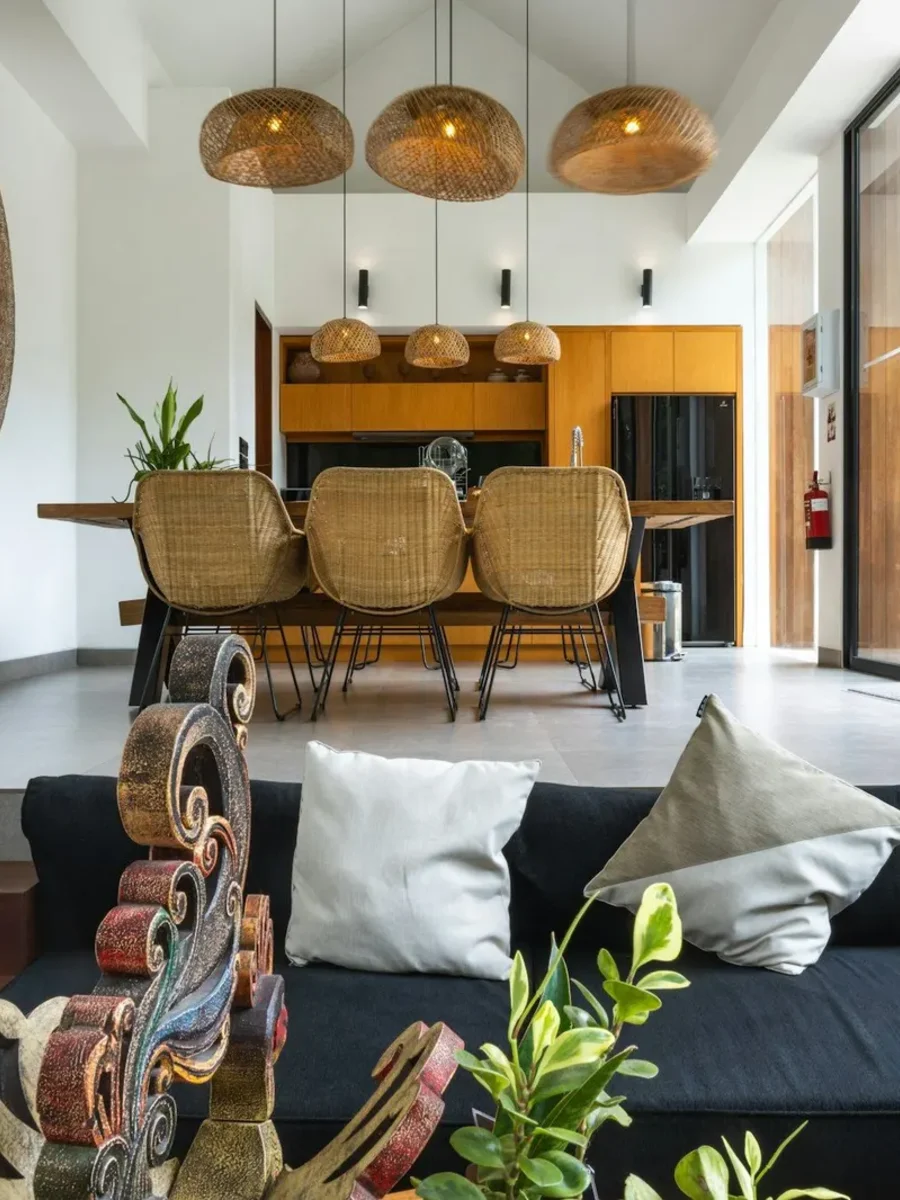
Texture is the minimalist's pattern. A linen curtain, a nubbly cotton cushion, a cane chair back, a flatweave rug with a visible weave and a limewashed wall all catch light differently, so a room in one colour still has depth. A cotton or synthetic dhurrie softens a tiled floor without a thick pile to hold damp. Wool rugs have their place in air-conditioned rooms, but in a room left open to monsoon air a flatweave dries and washes far more easily.
Lighting matters more in a sparse room than a full one, because there are fewer objects to cast shadow and interest. Use several low, warm sources rather than one bright ceiling light: a floor lamp by the sofa, a lamp on a sideboard, a concealed strip washing a textured wall. On a grey monsoon afternoon these stop a pale room from looking flat.
Finally, allow a few things that are not strictly necessary. One good piece of old Goan furniture, a large plant, a single artwork or a bowl of something from the garden tells you someone lives here.
Minimalist Airbnb and rental interiors
Minimalism suits holiday rentals well, which is partly why so many Goan homestays and villas adopt it. Fewer objects means less to break, lose or clean between guests, and calm rooms photograph well for listings. The demands differ from a family home, though. Everything has to survive strangers, sun cream, wet swimwear and a turnaround of a few hours.
Choose upholstery with removable, washable covers, or a performance fabric that can be cleaned on the spot, and keep spare covers in the same fabric so a stained one can be swapped at once. Made-to-fit sofa covers are a sensible way to refresh a rental sofa between seasons without replacing it. Use blackout linings in every bedroom, because guests sleep at all hours and sea-facing light starts early.
Keep the palette consistent across rooms so replacements are easy to match. A rental with four colour schemes needs four sets of spares; one with a single scheme needs one. That is minimalism applied to the store cupboard as well as the room.