 Drape Haus
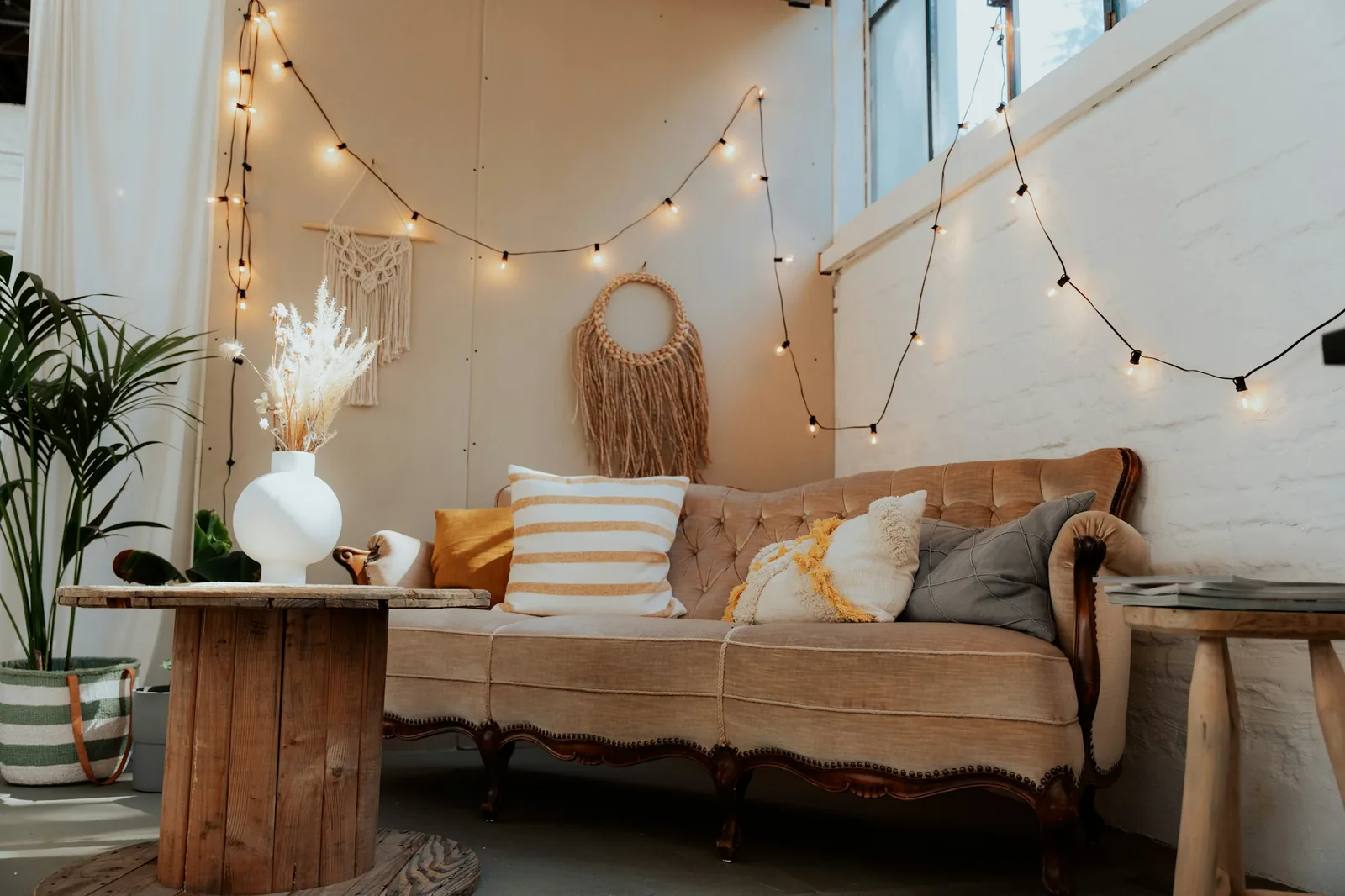
Boho interior design layers pattern, texture and handmade things: printed cottons, woven rugs, rattan chairs, macramé, floor cushions, plants and objects collected over time rather than bought as a set. It is a relaxed, personal style, and in Goa it has local roots. The Goa Tourism Development Corporation describes the Anjuna flea market as having begun as a place where hippies sold their belongings before returning abroad; today it is a major market for everything from garments to interiors.
The style's weak points show quickly in this climate. Natural fibres take up moisture, cushions stuffed with the wrong filling go musty, and a room layered with textiles can feel stifling in May and smell damp in August. A boho room that is never edited also slides into clutter: too many prints, too many objects, nowhere for the eye to rest.
This guide shows how to layer with a controlled palette, which natural materials cope with the monsoon and how to protect them, how to build floor seating that stays fresh, what to check when buying at Goan markets, and a simple rota for what to wash, store or roll up each rainy season.
What boho means, and why it suits Goa
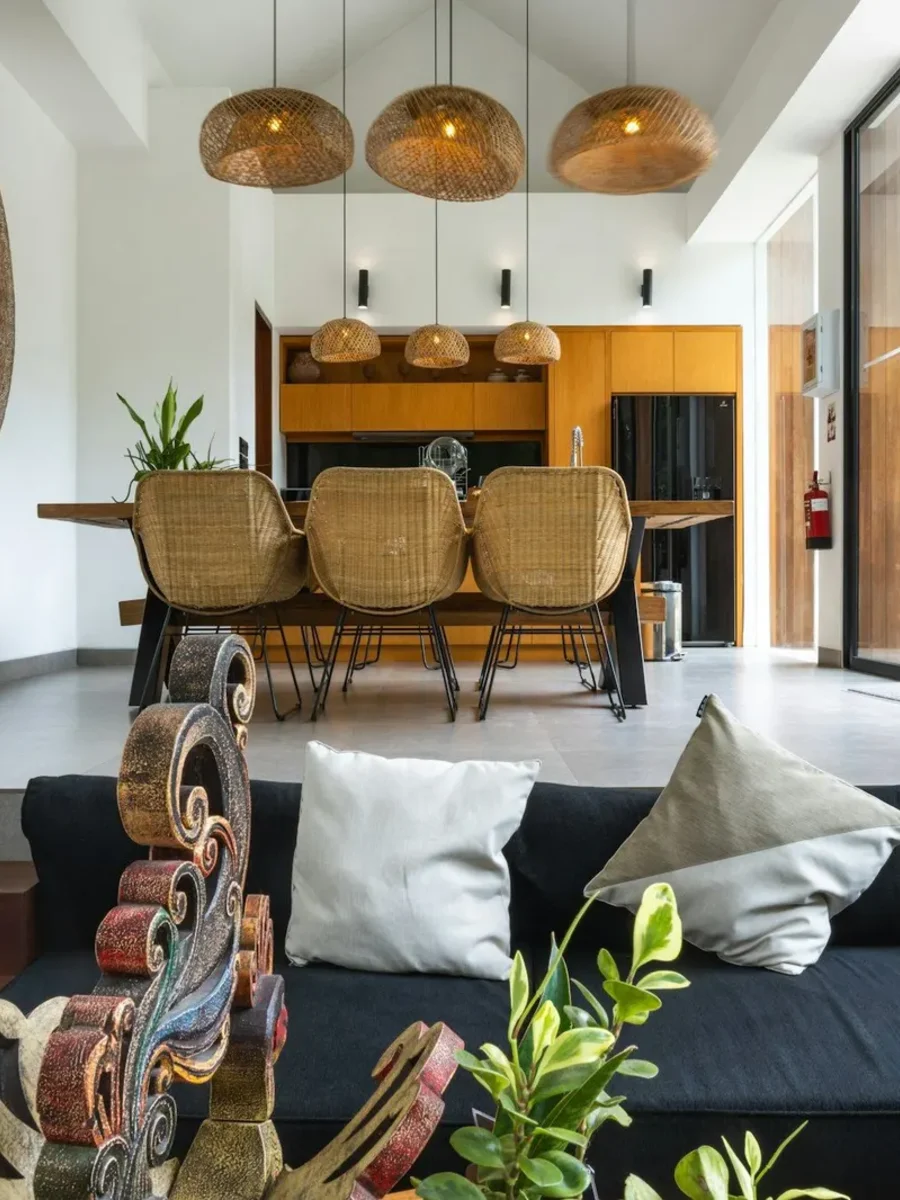
Boho, short for bohemian, describes an interior that looks gathered rather than designed: colour and pattern from different places, natural and handmade materials, low seating and a relaxed attitude to matching. Its signature pieces are block-printed and embroidered textiles, flatweave rugs, rattan and cane furniture, woven lampshades, macramé hangings and plenty of plants.
Goa has much of this close at hand. Block-printed cottons, cane work, coir, brass, terracotta and handloom textiles from across India pass through its markets, and the style suits the way Goan homes are lived in: doors open to the garden, cool tile or oxide floors, rooms where people sit low through the heat of the afternoon. It sits comfortably alongside the climate-first thinking of tropical interior design, provided the materials are chosen with the monsoon in mind.
What separates a good boho room from a cluttered one is editing. The best examples have a clear palette, a few strong pieces and plenty of plain surface between them. The layers look relaxed because someone has decided where each one goes.
Layering prints and textures with a controlled palette
Start with a base of two or three neutrals taken from the room itself: the floor, the walls and the main timber. In many Goan homes that means terracotta or red oxide, white or limewashed walls, and dark wood. Everything else layers onto that base.
Then choose two accent colours and keep to them. Indigo and rust, ochre and deep green, or madder red with natural cream all hold up in Goan light. Every printed textile in the room should carry at least one of the accents, so patterns from different sources still read as a family. A block-print cushion, a striped dhurrie and an embroidered throw sit happily together if they share a colour.
Vary the scale of pattern. One large-scale print, perhaps on a bedspread or a pair of printed curtains, a medium pattern on cushions and a small or textural one on the rug keep the eye moving without a fight. Two large prints side by side compete. Texture counts as pattern in a boho room: a nubbly handloom cushion beside a smooth printed cotton adds interest without adding colour.
Finally, leave somewhere to rest. A plain wall, an empty stretch of floor, a sofa in a solid fabric for the cushions to sit on. Without them, even a well-chosen palette looks busy.
- Two or three neutral base colours taken from floor, walls and timber
- Two accent colours repeated in every printed piece
- One large-scale print per room, the rest smaller
- At least one large piece in a solid colour
- Texture used as a quieter form of pattern
Planning something like this?
We visit homes across North and South Goa, measure on site, and bring samples to see in your own light.
Rattan, cane, bamboo and macramé in a humid house
Rattan and cane are the backbone of a boho room and honest tropical materials. They are also organic fibres that take up moisture from the air. In a well-aired room used every day they last for decades. In a room shut through the monsoon, when the India Meteorological Department records morning humidity of 87–91%, they can grow a grey or white bloom in the weave, and a cane seat can sag as it softens.
Keep them where air moves and a little away from walls, and wipe them over with a dry cloth through the rains. If mould appears, let the piece dry, brush the growth off outdoors, then wipe with a cloth barely damp with mild soap and water and dry it straight away. A sealed finish such as clear lacquer or varnish reduces how much moisture the fibre takes up and makes cleaning easier. The same logic applies to bamboo and chik blinds: handsome where air moves, at risk in a closed, damp room.
Bamboo carries an extra risk: powderpost beetles. An Oregon State University Extension guide notes that bamboo is subject to attack by the true powderpost beetles, and names a separate species found in bamboo baskets, picture frames and furniture. The signs are small round exit holes and a frass as fine as face powder that streams out when the piece is knocked. The guide also notes that most infestations are already in the wood before purchase, and that coating the surface with wax, varnish, shellac or paint stops new beetles laying eggs.
Macramé and other cotton cord hangings are easier: they wash, but they hold dust and take up damp. Shake them out regularly, wash them before the monsoon if they look grey, and dry them fully in sun. Jute and seagrass baskets and rugs absorb water readily and are best kept off damp floors and out of closed rooms in the rains.
Natural fibres need air more than they need polish. Space around them does more good than any product.
Dhurries and flatweaves layered over tile
Flatweave rugs are the natural floor for a boho room in Goa. They layer well, carry pattern and colour, and suit the cool tile and oxide floors of local houses. Unlike a deep pile, a cotton dhurrie dries quickly and can usually be washed, which matters when monsoon feet and pets are involved. Our dhurries and flatweaves range covers cotton, wool and synthetic weaves.
Layering two rugs is a classic boho move: a larger plain or striped dhurrie as the base, with a smaller patterned or vintage piece on top, sometimes set at an angle. Keep the base rug quiet so the top one can carry the pattern, and make sure both lie flat. On polished tile, a thin rubber or felt underlay stops them sliding, which matters on floors that meet wet feet from the garden.
In the monsoon, flatweaves on ground-floor tile can pick up damp from the floor and develop a musty smell underneath. Lift them every few weeks so floor and rug both dry, and turn them to even out wear and fading. In a house closed for the rains, rugs should be cleaned, dried thoroughly, rolled and stored off the floor, ideally in a ventilated room.
Floor seating and cushion fillings that stay fresh
Floor cushions, bolsters, low divans and poufs give a boho room its relaxed, low-slung feel. They also sit closest to the floor, where the air is coolest and dampest, and they are made of the materials that hold moisture longest. Whether they stay fresh depends mostly on the filling and the cover.
Covers should be removable, with zips, and ideally in a cotton or cotton blend that dries quickly. Inner cushions with their own cotton casing let the outer cover be washed without exposing the filling. A spare set of covers means one can be washed and dried properly while the other is in use.
Raise floor seating slightly where you can: a low platform, a slatted base or a rug underneath lets air reach the underside. The American Lung Association notes that dust mites live in upholstered furniture and absorb moisture from the air, and advises keeping indoor humidity below 50%, so airing and washing matter more for low, soft seating than for anything else in the room. Our cushions and soft furnishings service makes covers and inners to the size of your seating.
| Filling | Feel | Monsoon behaviour | Suits |
|---|---|---|---|
| Polyester fibre | Soft, light | Dries relatively quickly; often washable | Scatter cushions, bolsters, floor cushions |
| Solid foam | Firm, holds shape | Slow to dry if it gets wet; keep covered | Divan seats, low sofa bases |
| Quick-dry open-cell foam | Firm, open structure | Water drains through; made for outdoors | Verandah and garden seating |
| Feather and down | Soft, sinks in | Holds moisture and can smell in damp air | Air-conditioned rooms |
| Kapok or cotton | Firm, traditional | Takes up damp and goes lumpy unless aired often | Rooms used and aired daily |
| Beanbag beads | Mouldable | Beads unaffected; the cover needs washing | Floor seating, children's corners |
Buying at Goan markets: what to inspect
Market buying is part of the pleasure of a boho room, and it is how many of the best pieces arrive. The Goa Tourism Development Corporation lists Anjuna's Wednesday flea market and Mapusa's Friday market among the markets of North Goa, and village markets and craft fairs add more. Because these pieces come without a history, a few minutes of inspection saves disappointment later.
When a natural-fibre piece comes home, keep it apart from other furniture for a few weeks and check underneath for fresh powder. The Oregon State guide notes that powder alone does not prove beetles are still active, and that small infested items can be treated by freezing at or below about −18°C for at least 48 hours; a sealed finish then helps prevent reinfestation. Wash new textiles on their own the first time, in case the dye runs.
- Cane, bamboo and wood: look for small round holes and fine powder; tap the piece over a dark cloth
- Rattan joints: check the bindings are tight and nothing shifts under weight
- Printed textiles: rub a damp white cloth on a hidden corner to test colour fastness
- Embroidery and block prints: look for loose threads and uneven dye
- Rugs: turn them over and check the back for damp, mould spots and insect damage
- Old furniture: smell it, since a musty smell means it has been stored damp
- Brass and iron: expect regular care to keep them bright near the sea
A monsoon rota: what to wash, store or roll up
A boho room holds more textiles than most, and all of them have to get through the rains. A simple seasonal rota keeps it manageable. In the first fortnight of June, before the heavy rain, wash everything washable and dry it fully in sun. Through the monsoon, air the room on dry spells, and in a house closed for the season, put the soft layers away. After the rains, bring them back, air them and check for damage.
If you are away for the monsoon, our monsoon take-down and storage service can take down, clean and store curtains and soft furnishings, then put them back once the house is dry.
| When | Wash | Store or lift | Check |
|---|---|---|---|
| Late May to early June | Cushion covers, throws, macramé, cotton dhurries | Feather cushions and anything not needed in the rains | Cane and bamboo for holes and powder |
| June to September, house in use | Cushion covers every few weeks | Lift rugs regularly so the floor dries | Undersides of floor cushions and rugs for a musty smell |
| June to September, house closed | Everything washable before closing | Roll rugs, bag textiles in cotton, move rattan to an aired room | Have someone air the house on dry days |
| October | Anything that smells musty | Bring layers back once rooms are dry | Rattan for mould; wipe and dry before use |