 Drape Haus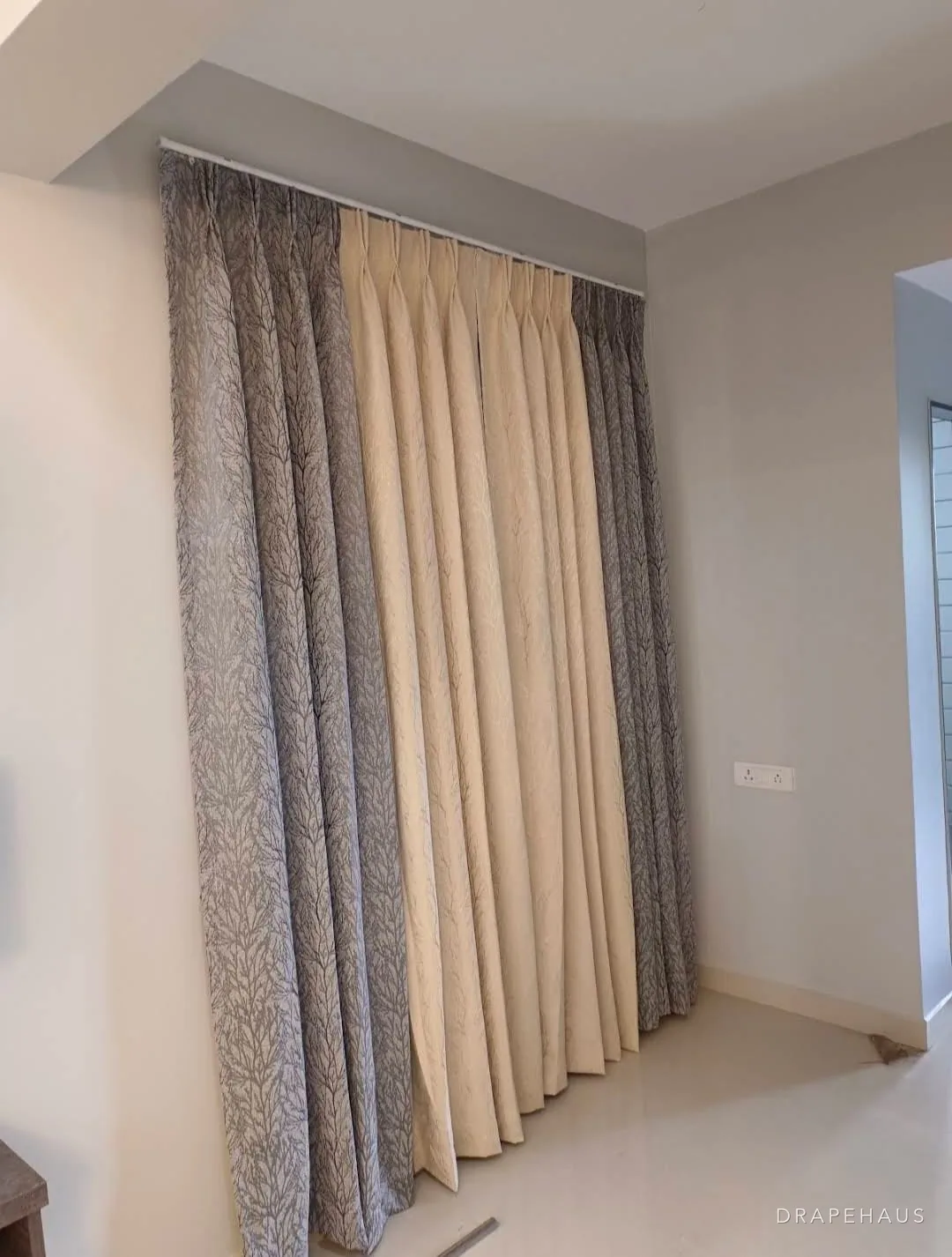
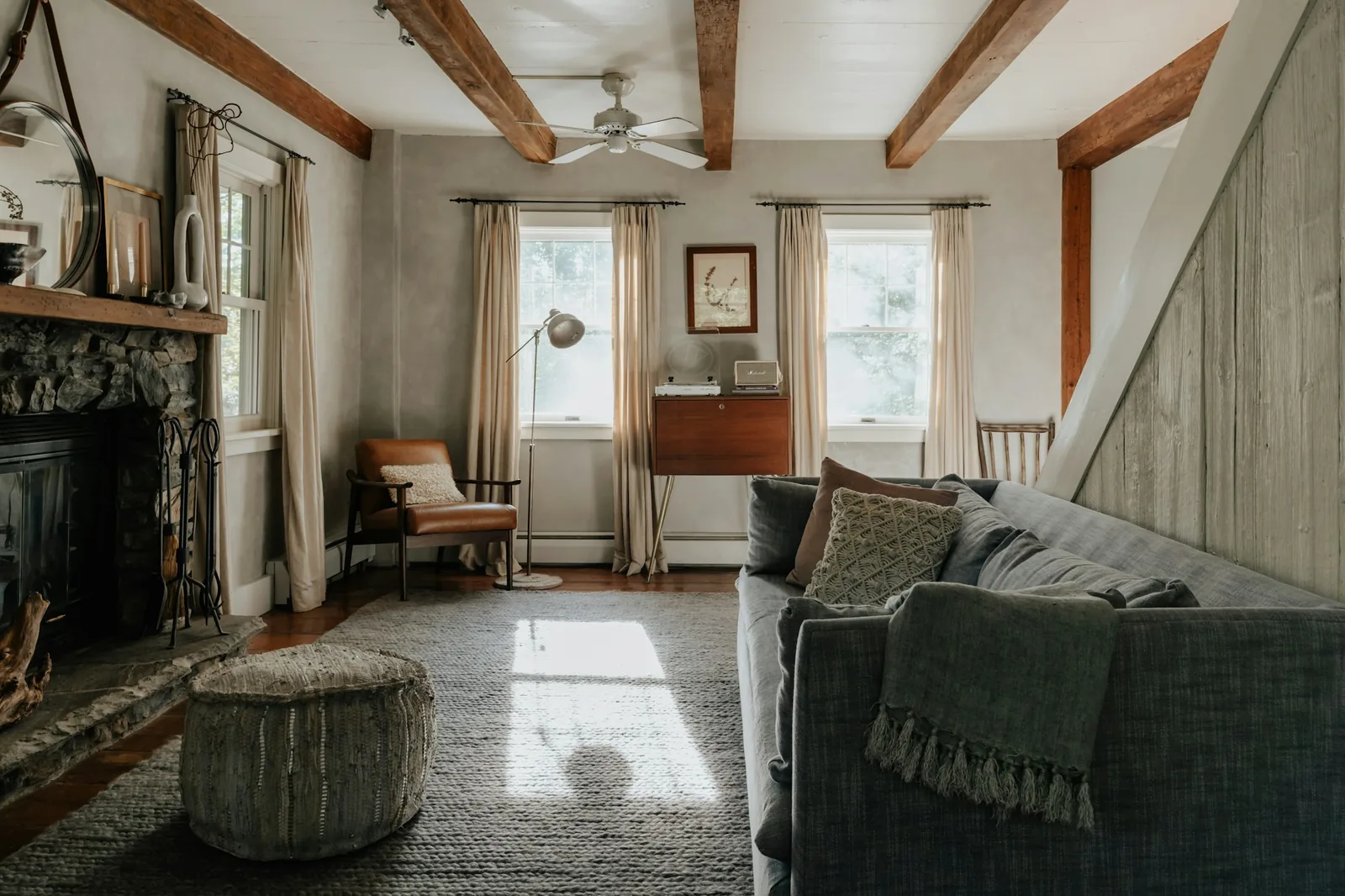
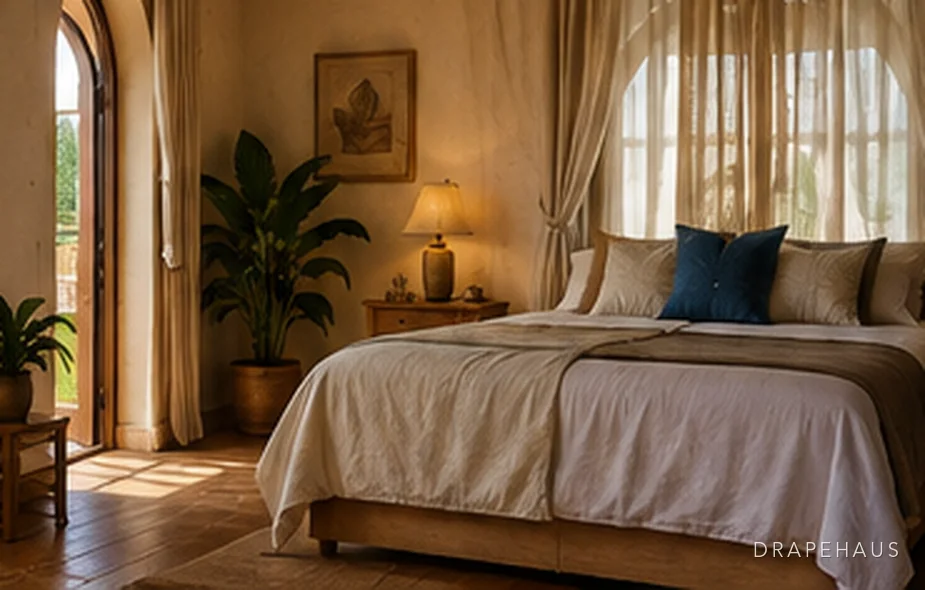
A rustic villa in Goa is built from the place itself: the red laterite the house stands on, old timber from demolished houses, terracotta tiles, lime, cane and handloom cotton and linen. Done well, it is the most local of all interior styles and ages better than almost any other, because its materials are expected to look worn.
The same materials bring problems that a smooth, sealed interior avoids. Exposed laterite sheds dust and takes on damp. Reclaimed timber can carry wood-boring beetles into a new house. Rough surfaces trap dirt, linen creases and shrinks, and iron rusts near the sea. None of these is a reason to avoid the look. Each has a known answer, and most of the answers are easier and less costly to build in at the start than to fix later.
This guide covers what defines a rustic interior here, how to live with exposed laterite, what to check before reclaimed wood comes inside, the curtains, rugs and upholstery that suit rough textures, and the cleaning routine that keeps it all from looking neglected.
What makes a rustic villa Goan rather than imported
Rustic home decor in magazines often means a European farmhouse: pale oak, checked fabric, painted dressers. In Goa, the rustic vocabulary is different and more convincing. Its walls are laterite and lime. Its timber is dark, often teak or other tropical hardwoods salvaged from old houses. Its floors are terracotta, red oxide or stone. Its furniture includes cane-seated chairs, carved chests and simple wooden benches, and its textiles are handloom cotton and linen in natural colours.
The look works because these materials age gracefully. A scratch in old teak, a worn edge on a terracotta tile or a slub in linen adds to the character. That forgiveness is the main practical advantage of a rustic interior in a family house or a rental villa: it does not have to be kept perfect.
Its disadvantage is that natural, unsealed and rough materials interact with the climate more than smooth ones. Each needs a little more thought about dust, damp and pests. The sections below take them one at a time. For how the stone and the old houses work more broadly, see our guide to laterite houses.
Exposed laterite indoors: dust, damp and breathability
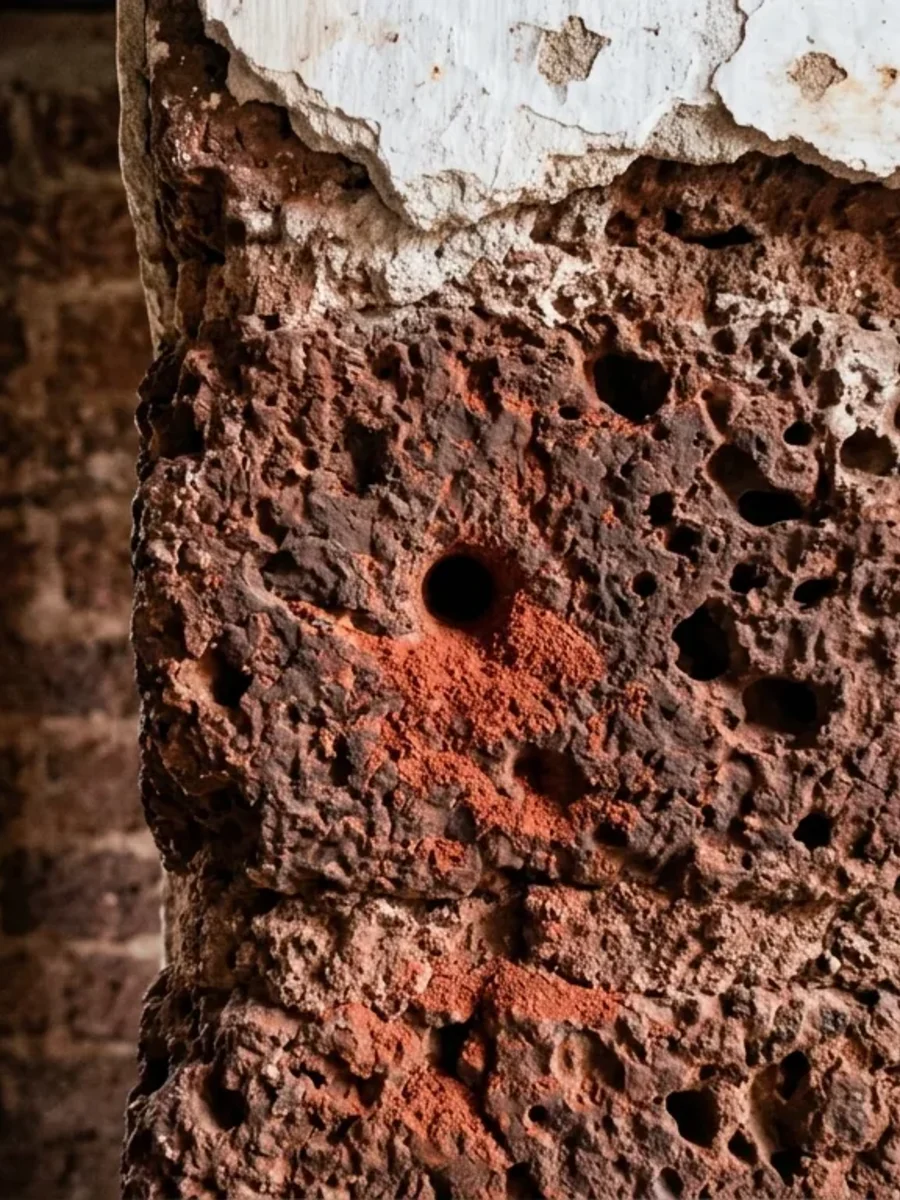
Laterite is a reddish-brown to dark red stone, rich in iron oxides and clay minerals, with cavities often lined in yellow or white. In old Goan houses it was usually plastered and painted rather than left bare, so an exposed laterite wall inside is largely a modern choice. It looks wonderful, but a raw cut surface is slightly powdery, sheds fine red dust and, being porous, takes up moisture in the monsoon.
The temptation is to seal it with a glossy or waterproof coating. That is usually a mistake. The Society for the Protection of Ancient Buildings defines breathable materials as those permeable enough for absorbed and surface moisture to evaporate in ordinary drying conditions, and warns that a breathable material should not trap moisture. A laterite wall sealed with an impermeable coating can no longer dry out after the rains, and the damp moves inward. The better approach is a breathable treatment that binds the surface dust while letting the wall breathe, chosen by a contractor or architect experienced with laterite. We are not builders, so for the wall itself we would always point you to that specialist.
Interior choices can help. Keep upholstered furniture and wardrobes a hand's width off exposed laterite, especially on external walls. Hang curtains from a ceiling track or a rod fixed into the window frame so they hang clear of the stone, as our laterite and old walls guide explains. And choose fabric colours near the wall that do not mind a little red dust: natural, oatmeal, rust and terracotta tones hide it, crisp white does not.
Treat laterite to stop dust, never to stop it breathing. A wall that cannot dry out after the monsoon will push its damp into the room.
Planning something like this?
We visit homes across North and South Goa, measure on site, and bring samples to see in your own light.
Reclaimed timber: check for borers and termites before it comes inside
Old beams, doors and floorboards from demolished houses are at the heart of many rustic villas. They are also a common way for wood-boring insects to enter a new house. University of Kentucky extension entomologists describe powderpost beetles as second only to termites in their ability to damage dry, seasoned wood, and note that many of the most serious infestations come from using old lumber from a barn or woodpile to panel a room or build an addition. They add that tropical hardwoods and bamboo are especially prone to some types, because of poor storage and drying.
Check every piece before it is used. Look for small, round exit holes with fine powder beside or beneath them. The same guidance explains how to judge whether an infestation is active: fresh powder is the colour of freshly sawn wood and new holes look clean rather than weathered, whereas powder that is yellowed, caked or covered in dust usually means old damage. Kiln drying kills all life stages, so timber from a supplier who kiln-dries reclaimed stock is safer. Powderpost beetles lay their eggs only in bare, unfinished wood, so a stain, varnish, wax or paint protects surfaces from new attack, although larvae already inside can still emerge through it.
Damp matters in Goa. The Kentucky guidance notes that one group of these beetles needs wood with a moisture content of around 13–30% to develop, which is why those infestations are worst in damp spaces. Keeping timber dry and ventilated, especially through the monsoon, is protection in itself. Termites are a separate problem: the same extension service lists pencil-width mud tubes and wood hollowed along the grain as signs, and advises removing wood-to-soil contact and fixing moisture problems. Never let reclaimed timber stand directly on soil or a damp floor, and call a pest-control professional if you see mud tubes; our termites and timber guide has more.
Linen and cotton slub curtains, and how to care for them
Rough, slubbed linen and handloom-style cotton are the natural curtain fabrics for a rustic room. They filter light softly, move in the breeze and look better with a few creases than without. Our linen curtains and cotton curtains are both made to measure, and both can be lined or left unlined.
Natural fibres need some care in Goa. Linen and cotton can shrink when first washed, so ask whether the fabric has been pre-shrunk, or have curtains made with allowance in the hem and plan to dry-clean or wash cool. They hold moisture longer than synthetics, so in the monsoon they should hang where air moves and never be bunched against a damp wall or window. Strong sun weakens them over years; a light cotton lining on west-facing windows protects the face fabric without spoiling the look. If you want the rustic texture with less upkeep, linen-look polyester blends reproduce the slub convincingly and dry far faster.
Hardware is part of the look. Black iron-look rods with simple finials suit a rustic room, but near the coast raw iron or plated steel rusts and stains fabric. Powder-coated aluminium or stainless rods in a dark finish give the same effect and last. Our curtain rods are chosen with salt air in mind.
Terracotta, cane and wrought iron accents
Terracotta floors, pots and tiles are a staple of rustic villas. Unglazed terracotta is porous: it absorbs spills and water, and it stains if left untreated. Floors are normally sealed with a product suited to terracotta, and that seal needs renewing over time. Mop with a mild, pH-neutral cleaner rather than bleach or harsh chemicals, which strip the seal. Indoors, terracotta plant pots should stand on saucers raised slightly off the floor, or they leave damp rings and, in the monsoon, mould on the floor below.
Cane and rattan furniture is light, cool to sit on and very Goan. Its weakness is damp: it absorbs moisture and can mould in a closed room. Keep it where air moves, wipe it now and then with a barely damp cloth and dry it, and in a house closed for the rains, move it to a ventilated room or cover it with breathable cotton, never plastic. Seat cushions on cane chairs should have removable covers.
Wrought iron, in railings, candle holders, light fittings and furniture bases, adds weight and contrast. Near the sea it rusts, and rust bleeds onto floors and fabric. Keep iron pieces painted, touch up chips quickly and set them back from open windows and doors where salt air reaches. Indoors, a rustic look can come from dark powder-coated metal that does not rust in the same way.
Rugs and upholstery that suit rough textures
Rustic rooms need rugs that look at home on terracotta and stone. Cotton dhurries and flatweaves are the most practical: they are light, they roll for storage, and they wash. Wool rugs add warmth and wear well but must be kept dry. Jute and sisal look right but absorb moisture and can mould on a damp floor, so keep them for rooms that stay dry, and lift them in the monsoon. Our dhurries and flatweaves suit these rooms best.
For upholstery, choose fabrics that look natural and stand up to rough surfaces. Rough-cut timber, exposed stone and cane can snag delicate weaves, so a tightly woven linen blend, a cotton canvas or a performance fabric with a linen-look texture lasts longer than a loose slub. Leather ages well in a rustic room but needs dry air and conditioning to resist mould; our article on fungus on leather sofas covers the care. Removable covers in natural canvas or linen-look fabric are the most forgiving choice for a villa that is let or closed for months.
Colour helps the materials sit together. Natural, ochre, rust, olive and indigo all suit laterite and dark timber, and they hide the red dust that rough walls shed. Large areas of bright white sit less comfortably beside raw stone, and show its dust within days.
Cleaning routines for textured surfaces
Texture is what makes a rustic villa attractive, and texture is what holds dust. A simple routine keeps it from building up. The key tools are a soft brush, a vacuum with a brush attachment, and dry cloths rather than wet ones. Most rustic surfaces suffer more from too much water than from too little cleaning.
Exposed laterite should be brushed gently or vacuumed with a soft brush, never scrubbed wet. Reclaimed timber should be dusted, with a look for fresh powder and new holes as part of the routine. Linen curtains can be vacuumed in place with a brush head and cleaned before and after the monsoon. Terracotta should be swept daily in dusty weather and mopped weekly with a neutral cleaner. Cane needs dusting and an occasional barely damp wipe followed by drying. The table sets out a simple schedule.
| Surface | Weekly | Before the monsoon | After the monsoon |
|---|---|---|---|
| Exposed laterite | Soft brush or brush-vacuum | Check for cracks and damp patches | Look for dark patches or salt bloom; let it dry before any treatment |
| Reclaimed timber | Dry dust | Move pieces off external walls | Check for fresh powder, new holes and mould |
| Linen and cotton curtains | Shake or brush-vacuum | Clean and rehang, or take down and store | Inspect for mildew; air on a dry day |
| Terracotta floors | Sweep; mop with neutral cleaner | Check the seal is intact | Reseal worn areas once dry |
| Cane and rattan | Dust | Move to a ventilated room or cover in cotton | Wipe, dry and check joints |
| Wrought iron | Dust | Touch up chipped paint | Treat any rust spots |