 Drape Haus
Drape Haus
Preparing the room
Drape Haus
Preparing the room
Sliding Nets
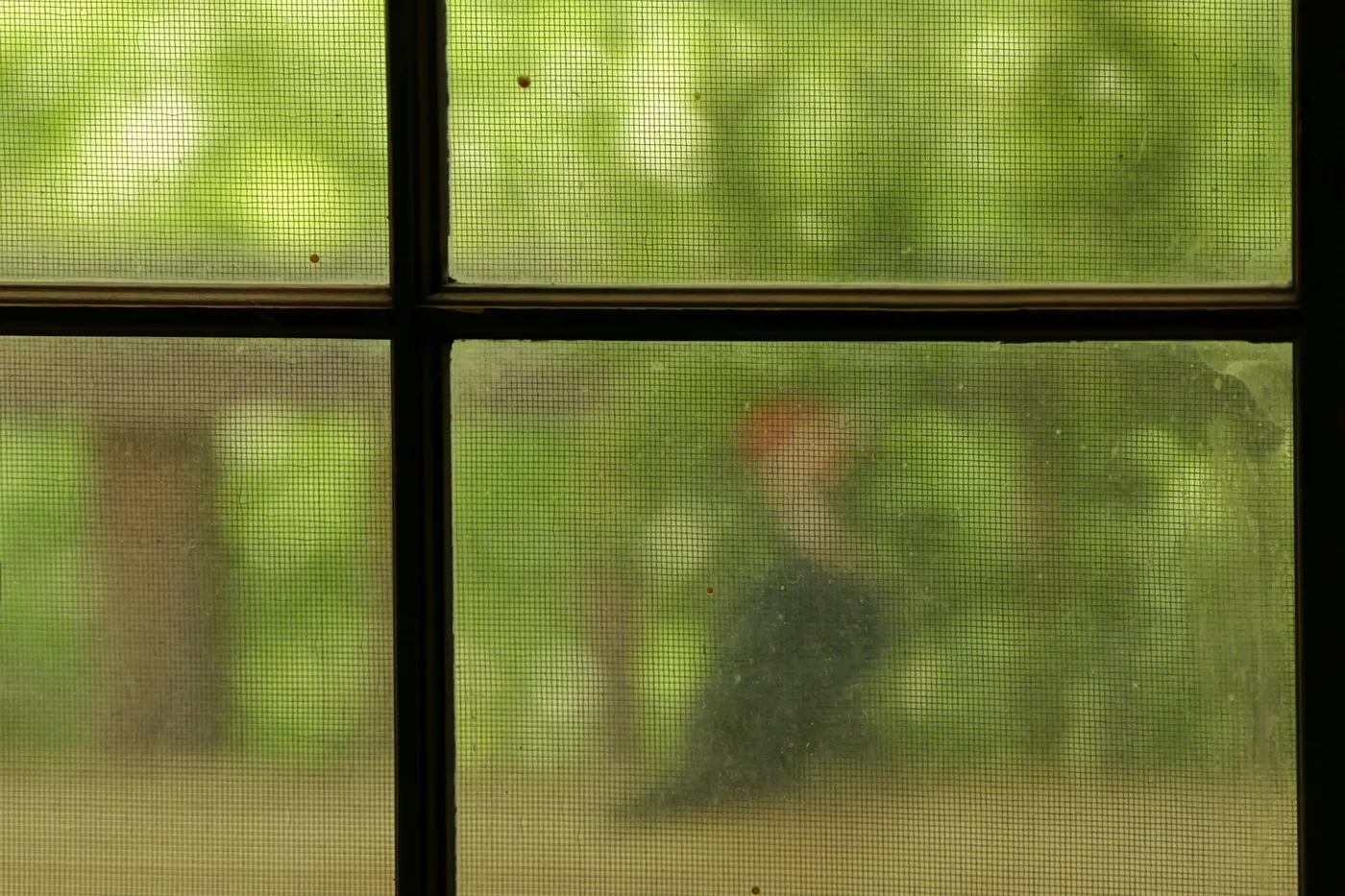
A concertina mesh that folds into a slim side post when you do not need it and draws across the opening when you do — the screen to choose when you want a wide door or a pair of French doors to look clear most of the day.
The opening
What matters most
Setting
System
Pleated screen, side-opening
Mesh
Coated fibreglass or polyester mesh
Frame
Powder-coated aluminium, stainless fixings
Pleated mesh folds into a slim stack, so a wide opening needs no heavy panel and no bottom lip to trip on. Near the sea, plain steel screws and untreated mesh corrode within a season or two. Rinse mesh and track with fresh water after the monsoon.
In short
By the Drape Haus studio · How we write
Is it right for you?
A pleated mosquito net solves one particular problem very well: how to screen a wide or tall opening without seeing the screen for most of the day. When it is open, all the mesh concertinas into a post at the side of the opening, so the doorway looks clear. When it is closed, the mesh draws across like a fan opening, held taut between a guide at the top and one at the bottom.
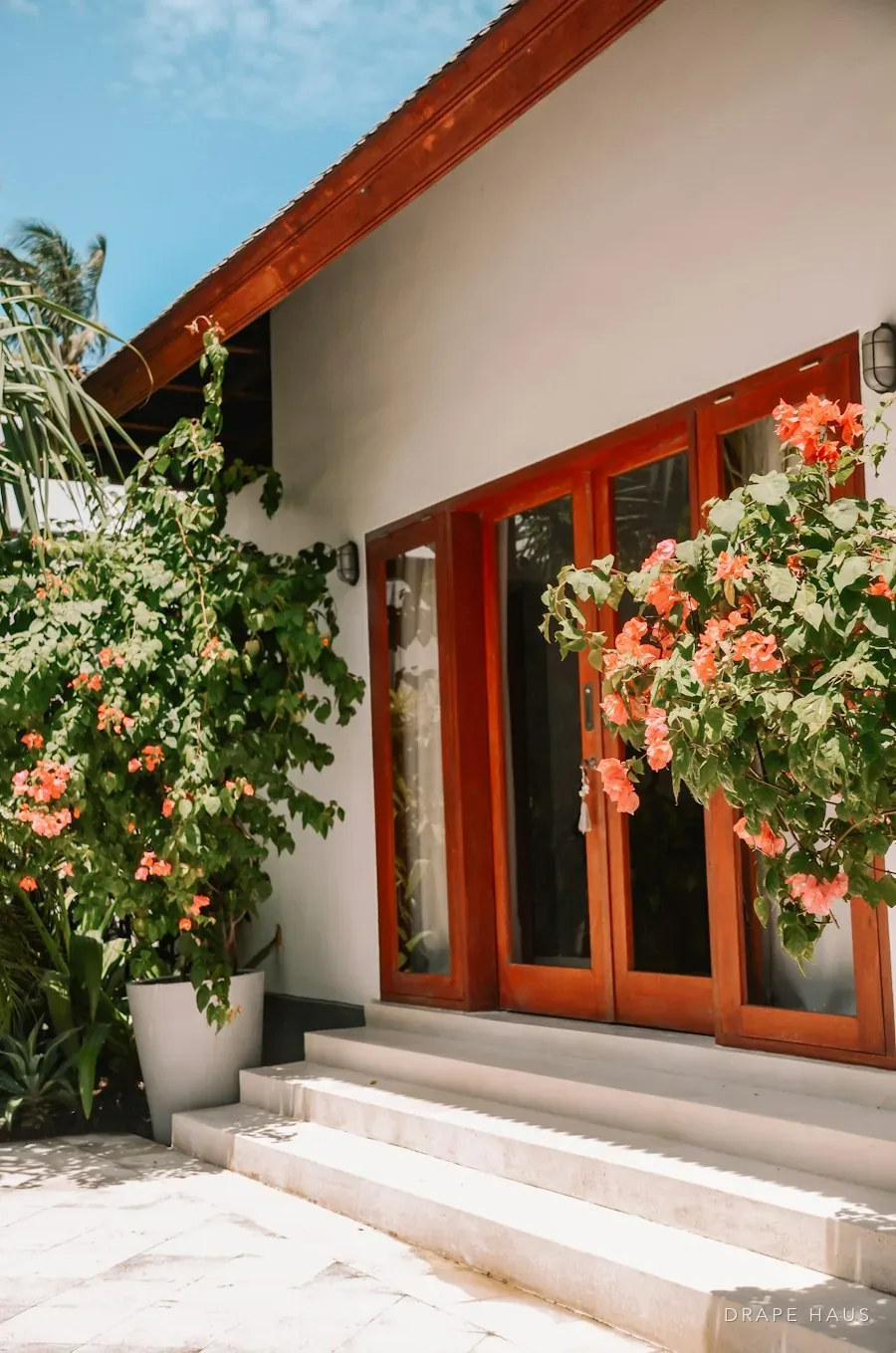
That makes it the natural choice for French doors, double doors in older houses, wide openings between a living room and a verandah, and any door where a sliding panel would cover half the view when parked. It is also the usual answer where there is no room beside the opening for a sliding leaf to park.
It is a lighter system than a framed net, and that is its honest limitation. The pleats and the cords that hold them do not take kindly to dogs pushing through, children swinging on the handle, or the full force of monsoon wind on an unsheltered elevation. Where those are everyday conditions, a sliding net or a hinged screen door is the sturdier choice, and we will say so.
If you want to compare the systems on a typical opening before we visit, the mosquito net chooser on this page shows pleated, sliding and hinged screens opening and closing side by side.
The details
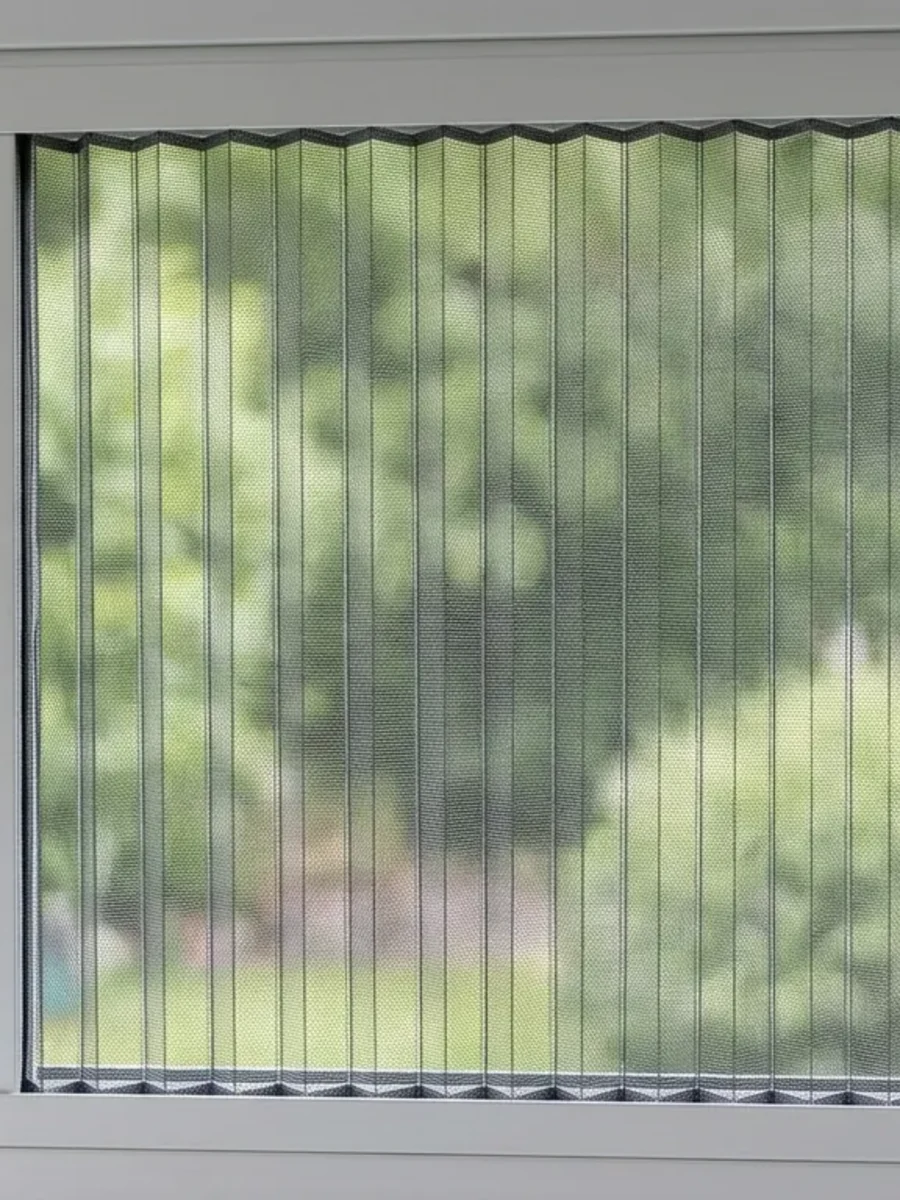
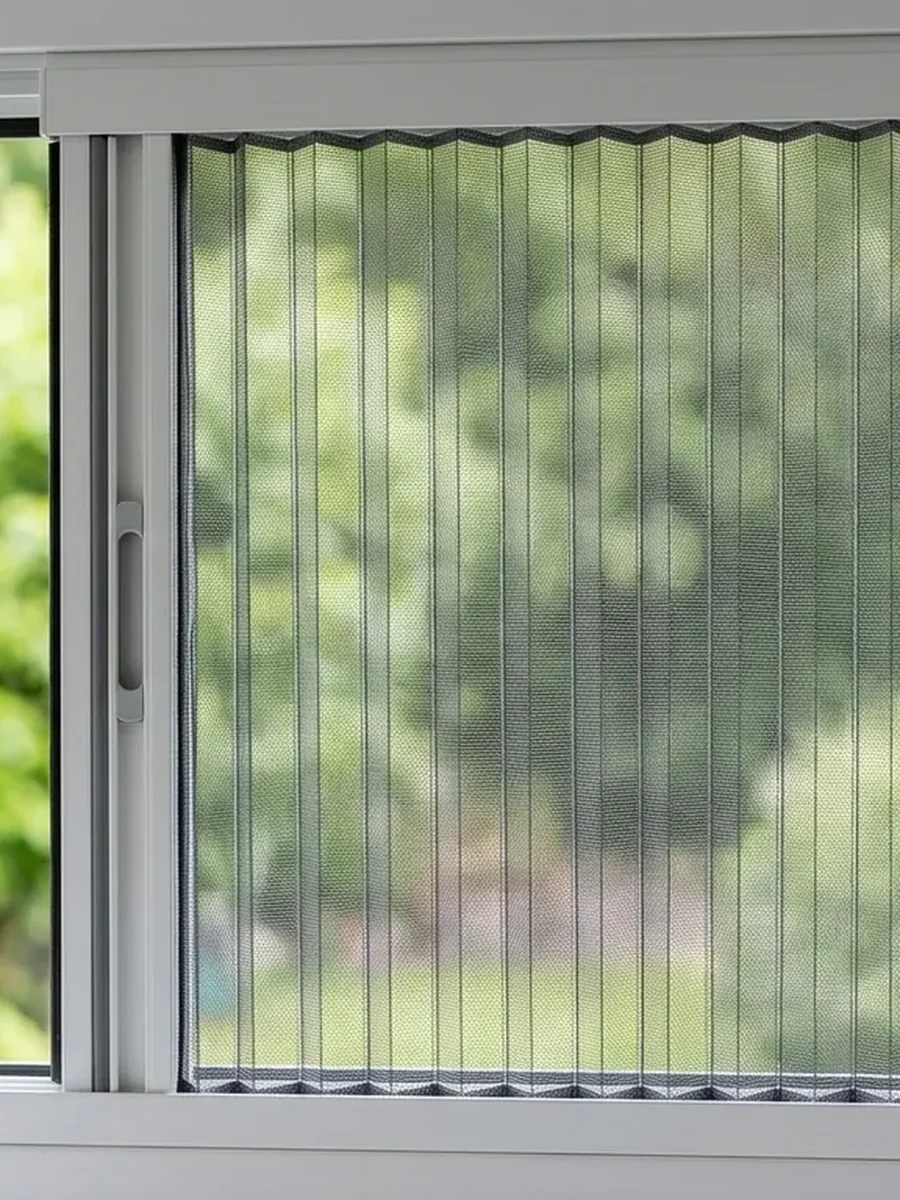
A pleated net is a sheet of mesh folded into narrow pleats, like a paper fan, held between a top guide and a bottom guide. Fine cords run through every pleat to keep them evenly spaced as you pull the net across. Open, the whole screen compresses into a post a few centimetres wide; closed, it covers the full height of the door.
Because there is no rigid leaf, a pleated net can span far wider than a single sliding panel, and pairs of nets can meet in the middle of a broad opening. The bottom guide is very low, often just a few millimetres high, so people and luggage cross it without noticing.
The trade-off is robustness. Pleated mesh is softer than a framed leaf, and the cords and pleats do not like being pushed by pets, children or strong wind. On a sheltered verandah or between a living room and a garden, it is excellent; on a windswept sea-facing door it needs careful specification, or a sturdier alternative.
We size each net to the opening, choose the mesh colour against the view, and set the side posts so they clear the curtains and door handles. To compare a pleated screen with sliding and hinged options on your own opening first, try the mosquito net chooser on this page.
Your options
Pleated nets come in a few arrangements. The width of the opening, the way the doors swing and where you want the parked net to sit decide which one suits.
Swipe for all 4 →
The honest view
Almost invisible when open
Parked, a pleated net is a slim post at each side of the opening. For a doorway framing a garden or a sea view, nothing else disappears as well.
Low, step-over guide
The bottom guide can be very low, which matters on doors used with trays, prams and luggage, and for older family members.
Spans wider than a single leaf
Without a rigid frame across the opening, a pair of pleated nets can cover a broad doorway that a single sliding leaf could not.
No parking space needed
Where there is no wall beside the door for a sliding panel to park, the pleated net still fits.
Softer than a framed net
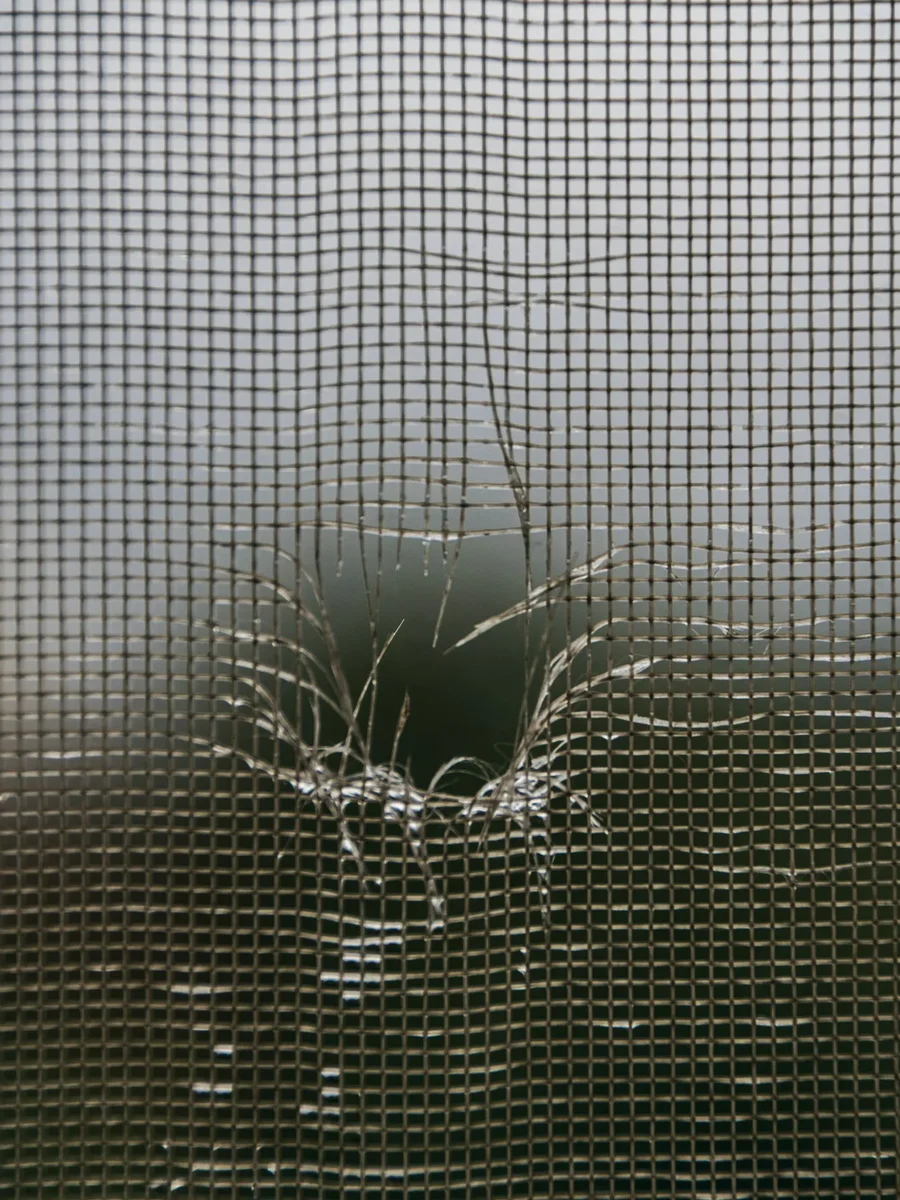
Pleated mesh can be pushed, scratched or torn more easily than mesh held in a rigid frame. Pets and children are the usual cause.
Wind sensitivity
On an exposed elevation, monsoon gusts can push the mesh against its guides. Sheltered openings suit pleated nets far better.
Cords and pleats need care
The cords holding the pleats must be kept free of grit, and the net pulled by its handle, not the mesh, or it goes out of square.
Side by side
Three ways to screen a broad door. All keep insects out; they differ in how they look when parked, how much abuse they take and what they ask of the floor.
| Pleated net | Sliding net | Roller screen | |
|---|---|---|---|
| When open | Slim post at each side | Leaf parked over fixed glass | Rolled into a cassette |
| Bottom track | Very low guide | Low or recessed track | Often none or very low |
| Widest practical span | Wide, using pairs | Very wide, using several leaves | Limited width per roller |
| Pets and children | Fair | Good with pet mesh | Poor to fair |
| Exposed, windy doors | Fair | Good | Fair |
| Best for | French and double doors | Sliding glass doors | Doors used occasionally |
Swipe to compare →
Pleated nets are the elegant choice on sheltered doors; for a dog-run back door or a sea-facing door in full wind, choose the sturdier sliding net.
Rather see it in your own room?
We bring samples to the house, measure every window, and specify for the light and exposure you actually have.
Room by room
Broad doorways under a verandah roof are sheltered from the worst wind, and the folded nets leave the connection to the garden open by day.
A pair of pleated nets meeting in the middle mirrors the doors, closes at night and disappears in the morning.
Tall panelled doors in older houses take pleated nets well, provided the reveal is squared with packing so the guides run straight.
Used constantly, often with full hands and by pets. A hinged screen door with a closer usually serves this door better.
Gusts load a pleated net heavily. Consider it only under a deep overhang; otherwise a sliding net is wiser.
In depth — tap a heading to read
The net itself is a band of mesh — usually polyester, sometimes fibreglass — heat-set into crisp pleats. Thin cords run horizontally through holes near the edge of every pleat, from the fixed post to the moving post, keeping the pleats equally spaced as the net opens and closes. Without the cords the mesh would bunch at one end.
The net runs between a top guide fixed to the head of the opening and a bottom guide on the floor. The parking post is fixed to one jamb; the handle post carries the leading edge and closes against a magnetic strip or a catch on the opposite side. A good system feels light and even to pull, with no sagging in the middle of the run.
Pleated nets are measured in three widths and three heights, because few openings are truly square. In older Goan houses, laterite walls and timber frames that have moved over decades can mean a difference of a centimetre or more between top and bottom. The guides must run parallel, so we pack and shim the frame to true rather than follow the uneven wall.
The way the doors swing decides where the net goes. Inward-opening French doors need the net on the outside face, or inside a deep reveal beyond the door's swing; outward-opening doors take the net on the room side. We check that door handles, bolts and the curtain stack all clear the parked posts.
Measure the opening at the top, middle and bottom. The smallest dimension decides the net.
Salt air attacks aluminium that is poorly finished, and corrodes plain steel fixings within a season or two. We use powder-coated or anodised frames, stainless fixings and polyester mesh, which does not rust. Rinsing the guides and the mesh with fresh water every few weeks near the coast stops salt building up and stiffening the cords.
Wind is the main concern. A closed pleated net acts as a broad, soft sail; on a sheltered verandah it is barely noticed, but on an exposed elevation a strong gust can push the mesh out of its guides. Many owners simply open the net and close the doors during storms. If the house is shut for the rains, leave the nets folded behind closed doors.
Charcoal and black mesh are the least visible from inside, because the eye looks through dark mesh more easily than pale. Grey and white frames can match a painted timber door; dark frames suit modern openings. For a doorway framing a view, we suggest a dark mesh with a frame colour matched to the door.
A fine mesh keeps out the smallest biting insects but reduces airflow slightly; a standard mesh breathes better. In a breezy coastal house, airflow is usually worth more than the last fraction of protection.
French doors often have curtains, and many older houses have timber shutters too. Pleated nets take very little depth, which makes it easier to fit all three in one opening. We plan the order from outside in — shutters, doors, net, curtains — and make sure the curtain track projects far enough that curtains draw freely past the parked posts.
Living with it
Always draw and open the net by its handle post. Pulling the mesh stretches the pleats and twists the cords.
Sand, leaves and grit in the bottom guide make the net drag. Brush or vacuum it weekly near the beach.
Near the coast, rinse the mesh and guides gently with fresh water every few weeks and let them dry before folding.
Open the net and close the doors when strong wind is forecast, rather than leaving the mesh to take the gusts.
If the pleats bunch at one end, the cords need re-tensioning — a small adjustment that stops wear spreading.
Avoid these
Guides fixed to a leaning wall make the net bind. Pack the frame to true first.
A dog that pushes through every day will tear pleated mesh. Use a framed net with pet-resistant mesh.
A net fitted where the door handle hits the parked post stops one or both working.
Light mesh catches sunlight and becomes a veil. Dark mesh disappears.
Without an overhang, monsoon gusts work on the net constantly. Consider a sliding net instead.
Checklist
More in sliding nets
Sliding mosquito nets for windows, doors and balconies, planned alongside your curtains so the two work together — the window opens for air, the net stays closed, and the curtain still draws.
From our guides
Our process
One team from the first visit to the last bracket, so nothing is lost between the person who specified it and the person who fits it.
FAQ
A screen of pleated mesh that runs between a top and bottom guide. It folds into a slim post at the side when open and pulls across the doorway when closed, with cords keeping the pleats even.
Yes, it is one of the neatest answers. Fitted in front of or behind the doors, depending on which way they swing, a pair of pleated nets can meet in the middle and fold away almost completely by day.
They do with a corrosion-resistant frame, a polyester or coated mesh and regular rinsing of the guides. On a very windy sea-facing door, a framed sliding net is usually the sturdier choice.
They can. Pleated mesh is softer than a framed panel, and a determined dog will push through it. For homes with pets, a sliding net with pet-resistant mesh is often more practical.
Wider than a single sliding leaf, and wider still as a pair meeting in the middle. Each system has a maximum per net, and we divide the opening to stay well within it.
They are, particularly on outward-opening casements where a vertical pleated screen keeps clear of the handle. For standard sliding windows, a sliding window net is usually simpler.
It needs a bottom guide to hold the pleats in line, but the guide can be very low — low enough to step over without noticing.
Often the pleated mesh panel can be replaced within the existing frame. Cords that have frayed can be re-strung. Our repair page covers re-meshing in more detail.
Next step
We visit, open every door and measure each opening at several points, check which way the doors swing and where the curtains and shutters sit, and look at how sheltered each door is from the wind. We bring mesh and frame samples to see against the view. You get a clear recommendation for each opening — pleated where it suits, something sturdier where it does not — and we make and fit to the measured opening. Book a home visit to plan your nets.