 Drapehaus
Drapehaus
Preparing the room
Drapehaus
Preparing the room
Curtains
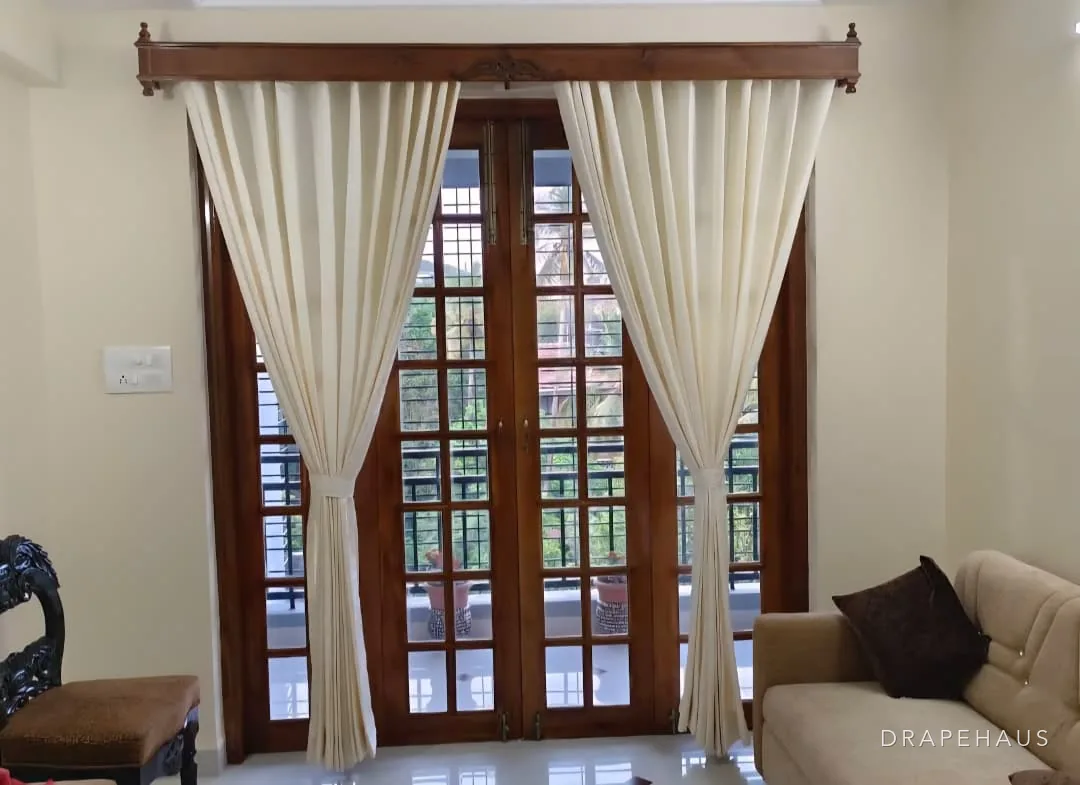
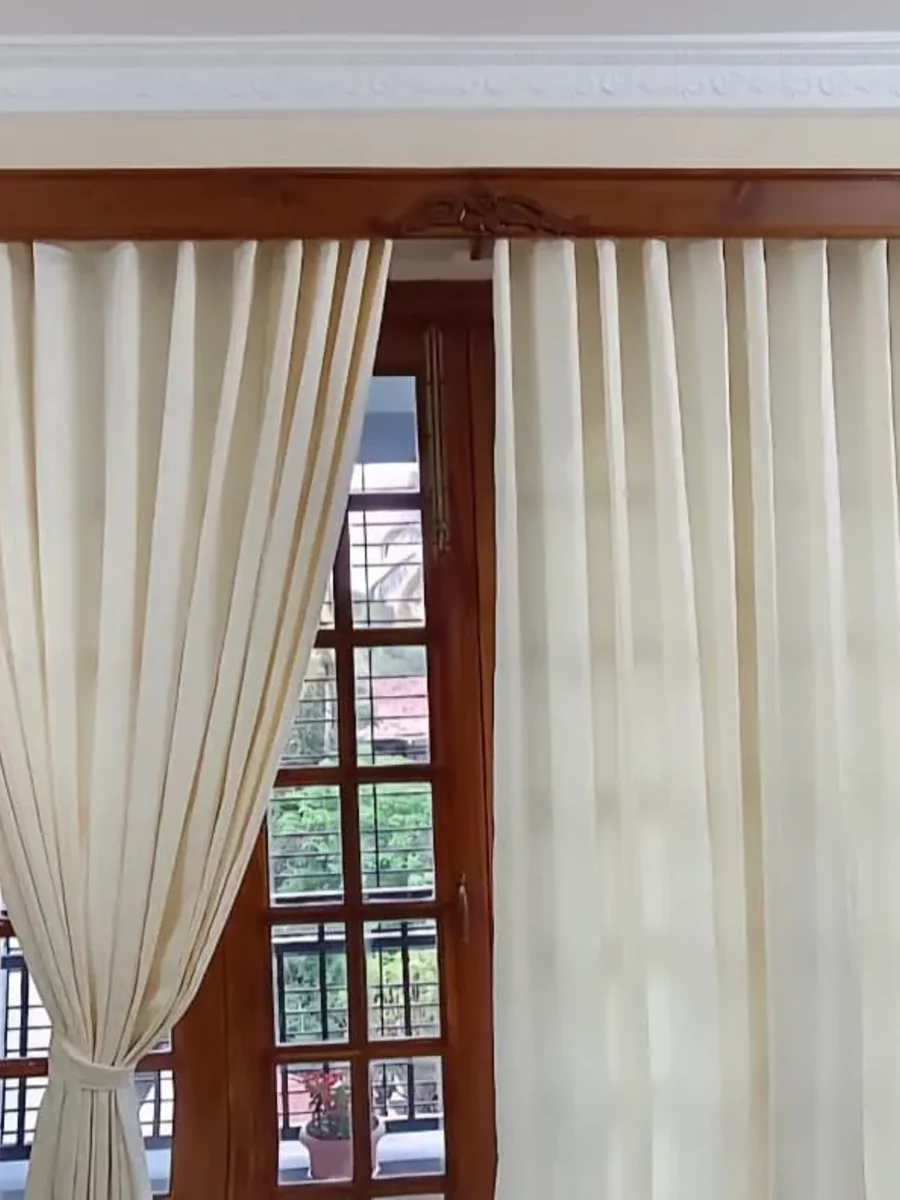
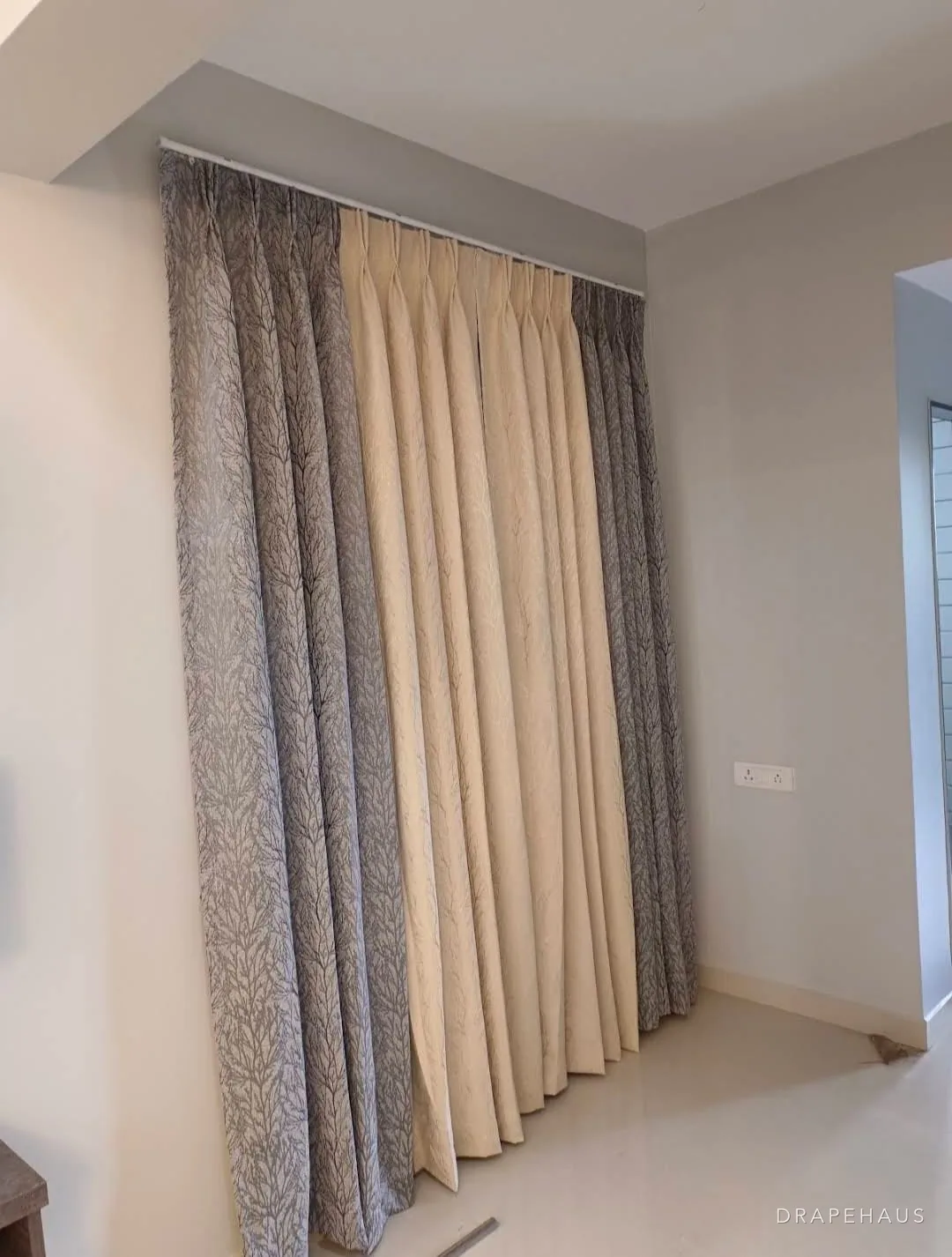
A sheer for the day and a lined curtain for the night, on one double track. It is the arrangement that solves the most problems in a Goan house, because the light and the privacy you need at noon are not the ones you need at nine.
Sheer + blackout · Midday
Treatment
Time of day
Two layers on a double track: the sheer stays drawn for the day, the blackout closes over it at night. The most flexible answer for a bedroom.
In short
By the Drapehaus studio · How we write
Is it right for you?
Layered curtains are two treatments on one window, each running independently, so the window has settings rather than a single state. Most often that means a sheer for the day and a lined curtain for the night, but layering also covers a curtain over a blind, static dress curtains over a sheer, or three layers where a room must do everything from full sun to full darkness.
Layering suits rooms whose needs change through the day: living rooms that are bright and open in the morning and private in the evening, main bedrooms that need softness in the afternoon and darkness at dawn, and wide sliding doors that must be both see-through and screenable. It is the most flexible way to dress a window, and it tends to look the most finished.
It is less suited to small windows with little wall either side, rooms where the curtain is rarely moved, and windows with shallow reveals or ceilings that will not take a double track. In those places a single well-chosen curtain, or a blind with a curtain, may be simpler and better.
The details
The sheer sits closest to the glass and stays drawn through the day for glare and privacy. The lined curtain sits in front and closes at dusk, when the sheer would otherwise show the room to the street. Both run on a single double track, often ceiling-fixed so the whole arrangement reads as one clean line.
We set the track wider than the glass so both layers can stack clear of the window when open, and choose the two fabrics together so they look deliberate side by side.
Your options
The classic sheer-and-curtain pairing is only one arrangement. The right one depends on what the room needs at its brightest and darkest hours.
Swipe for all 5 →
The honest view
Settings for every hour
Sheer only, curtain only, both, or neither: layering gives a window several distinct states. The room can be bright and screened by day and private and warm by night.
Each layer can be specialised
Because each layer does one job, each can be chosen for it — the sheer for light quality, the curtain for colour and privacy — rather than one fabric compromising on both.
Looks finished
A window with two layers reads as considered and complete. The depth of fabric, the play of translucent and opaque, gives a room a quality single curtains rarely achieve.
Layers age independently
The sheer, which takes the sun and is washed most often, can be replaced without touching the main curtain. The more expensive layer lasts longer as a result.
Needs more wall and depth
Two layers need space to stack beside the window and depth in front of it. Narrow walls or shallow ceilings can make layering awkward or impossible.
More hardware and more fabric
A double track and two sets of curtains means more to specify, make and install than a single curtain.
Inner layer is harder to reach
Drawing a sheer behind a closed or partly closed curtain by hand means reaching past the front layer. Wands or motors help.
Side by side
Layering is not always necessary. Here is how it compares with single treatments and blind-based combinations.
| Layered curtains | Single lined curtain | Sheer with a roller blind | Curtain with blackout roller | |
|---|---|---|---|---|
| Daytime light | Soft, screened | Open or closed | Soft, screened | Open or closed |
| Night privacy | Complete | Complete | Good | Complete |
| Darkness | Good to full | Good to full | Moderate | Full |
| Wall space needed | Most | Medium | Less | Medium |
| Softness in the room | Highest | High | Medium | High |
| Suits wide sliding doors | Very well | Well | Several blinds needed | Several blinds needed |
Swipe to compare →
For windows that need soft light by day and complete darkness at night, layered curtains or a curtain with a blackout roller are the most complete solutions.
Rather see it in your own room?
We bring samples to the house, measure every window, and specify for the light and exposure you actually have.
Room by room
The classic layered room. The sheer screens glare and passers-by in the day; the curtain closes for privacy and warmth in the evening.
Layer a sheer with a blackout-lined curtain, or add a blackout roller behind for true darkness. The room can be soft by day and fully dark at dawn.
Guests expect daytime light and night-time darkness. A reversed layout, with blackout hidden behind a sheer, keeps the room looking calm at all hours.
A sheer for screen glare and a lined curtain for evenings or calls works well, provided there is wall space for both stacks.
Layering gives soft day light for play and darkness for sleep. Keep the operation simple, with wands or a motor rather than cords.
Layering is effective on tall glass but heavy on hardware. Motorised double tracks make both layers practical to use every day.
In depth — tap a heading to read
A double track is two runs set side by side, either on a shared bracket or as two separate tracks. The distance between them matters: too close and the front curtain drags on the sheer; too far and the arrangement looks bulky and uses depth the room may not have. We set the spacing to the fullness and heading of each layer so the two can move without catching.
The track has to carry both layers' weight, and the brackets have to take the combined load. With a heavy lined curtain on the front and a sheer behind, the front layer dominates. We space brackets for the heavier curtain and check the ceiling or wall above for sound fixing before committing to the position.
Where the front curtain needs to close tightly for darkness, its track may run slightly wider than the sheer's, with returns to the wall at both ends. The sheer can then sit neatly inside the frame of the front curtain, and the closed curtain seals the edges.
Two layers stack side by side, and the combined stack is wider than either alone. If the wall either side is tight, the layers will cover part of the glass when drawn back, which defeats much of the point. We calculate the stack for both fabrics together and extend the track accordingly, sometimes choosing a slimmer heading such as a wave to keep the stack narrow.
The two layers should also nest visually. Using the same heading type on both, or at least the same fold spacing, lets the folds of the sheer sit behind the folds of the curtain rather than fighting with them. When the curtain is drawn back, the sheer should read as a soft extension of the same stack.
Hem lines matter in a layered window. Both layers usually finish at the same height, just clear of the floor, so the eye reads one continuous line across the window. A sheer that falls short of the curtain, or pools past it, looks accidental.
Plan the stack for both layers together. Two narrow stacks can still add up to a window half covered.
The sheer and the curtain are seen together far more than apart, so they should be chosen side by side. A warm ivory sheer suits a curtain in natural, earthy colours; a cooler white suits blues and greys. A textured sheer behind a smooth curtain, or the reverse, adds depth without adding colour.
In the evening, with the room lit and the curtain closed, the sheer is hidden. By day, with the curtain open, the sheer is the main surface. Think of the curtain as the frame and the sheer as the view, and make sure both look right in the light of the hours they are most seen.
From outside, the sheer is what shows through the glass by day, and the lining of the curtain is what shows at night. Keeping both consistent across the front of the house gives the façade a calm, unified look.
The front layer is easy to reach; the inner layer is not. On a hand-drawn double track, a wand on each leading edge lets the sheer be moved without handling the curtain, and keeps both fabrics cleaner. On tall or wide windows, motorising one or both tracks is often the only practical way to use both layers daily.
Motorised double tracks can be set to scenes: sheer closed in the afternoon, curtain closed at dusk, both open in the morning. In rental villas and guest rooms, a simple labelled switch for each layer avoids the confusion guests often have with two sets of curtains, and prevents damage from pulling the wrong one.
In the monsoon, keep the sheer clear of damp glass by allowing enough space between the track and the window, and draw both layers back on dry days so air can move behind them. Two layers can trap more still air than one if they are left closed for long periods.
Living with it
The sheer sits closest to the glass and takes the dust, salt and sun. Wash it more frequently than the main curtain to keep the window looking fresh.
The front curtain needs cleaning less often — typically before and after the monsoon — according to its fabric and lining.
Over time, layers can start to catch. Checking gliders and brackets once a year keeps both layers running smoothly.
On dry days, draw both layers fully back so air can reach the glass and the fabric. Closed layers trap damp air.
Avoid these
Allowing stacking space for the curtain alone leaves the sheer covering the glass when both are open. Plan for both together.
Layers that rub each other wear out faster and move badly. Set the spacing to the fullness and heading of each layer.
A pinch-pleat curtain over a wave-heading sheer can look disordered. Match headings or fold spacing so the layers nest.
Without a wand or motor, the inner layer is awkward to reach and gets handled through the front curtain. Plan the operation of both layers.
Checklist
More in curtains
Curtains measured on site, cut to the window and specified for what it actually faces — from airy sheers on a veranda door to full blackout in a bedroom that catches the sunrise.
From the Journal
All articlesOur process
One team from the first visit to the last bracket, so nothing is lost between the person who specified it and the person who fits it.
FAQ
Yes — a double track, or a double pole, so each layer runs independently. A ceiling fix keeps it tidy and lets both layers reach the floor.
The sheer. It stays drawn during the day, and the heavier curtain in front closes over it in the evening.
Not so that each layer works independently. On a single rod or track, both layers move together, which removes the point of layering. A double track or double pole lets the sheer and curtain draw separately, which is what gives a layered window its flexibility.
Usually a warm ivory or natural sheer rather than bright white, which can look stark against deep colours. The sheer should echo the warmth of the curtain and the room's walls. We hang both together at the window before deciding.
Only when you close them. By day, the sheer softens light rather than blocking it, and the curtain can stay open. At night, the curtain closes for privacy or darkness. Layering actually gives you more control than a single curtain.
More than a single curtain, both in wall space either side for the two stacks and in depth in front of the glass for the double track. The exact amount depends on the fabrics and headings, which we calculate on site.
Yes. Each layer can have its own motor, or just the inner sheer can be motorised while the curtain is drawn by hand. Motorised layers can be set to open and close at chosen times or with a single switch.
Next step
Layering works best when both layers and their track are planned together. On a home visit we measure the window and the wall around it, check the ceiling and depth for a double track, and bring sheers and curtain fabrics to see side by side in your own light. We then specify the fabrics, headings, track spacing and operation, make both layers to measure and install them as one arrangement. Book a home visit and we will plan the window with you.