 Drape Haus
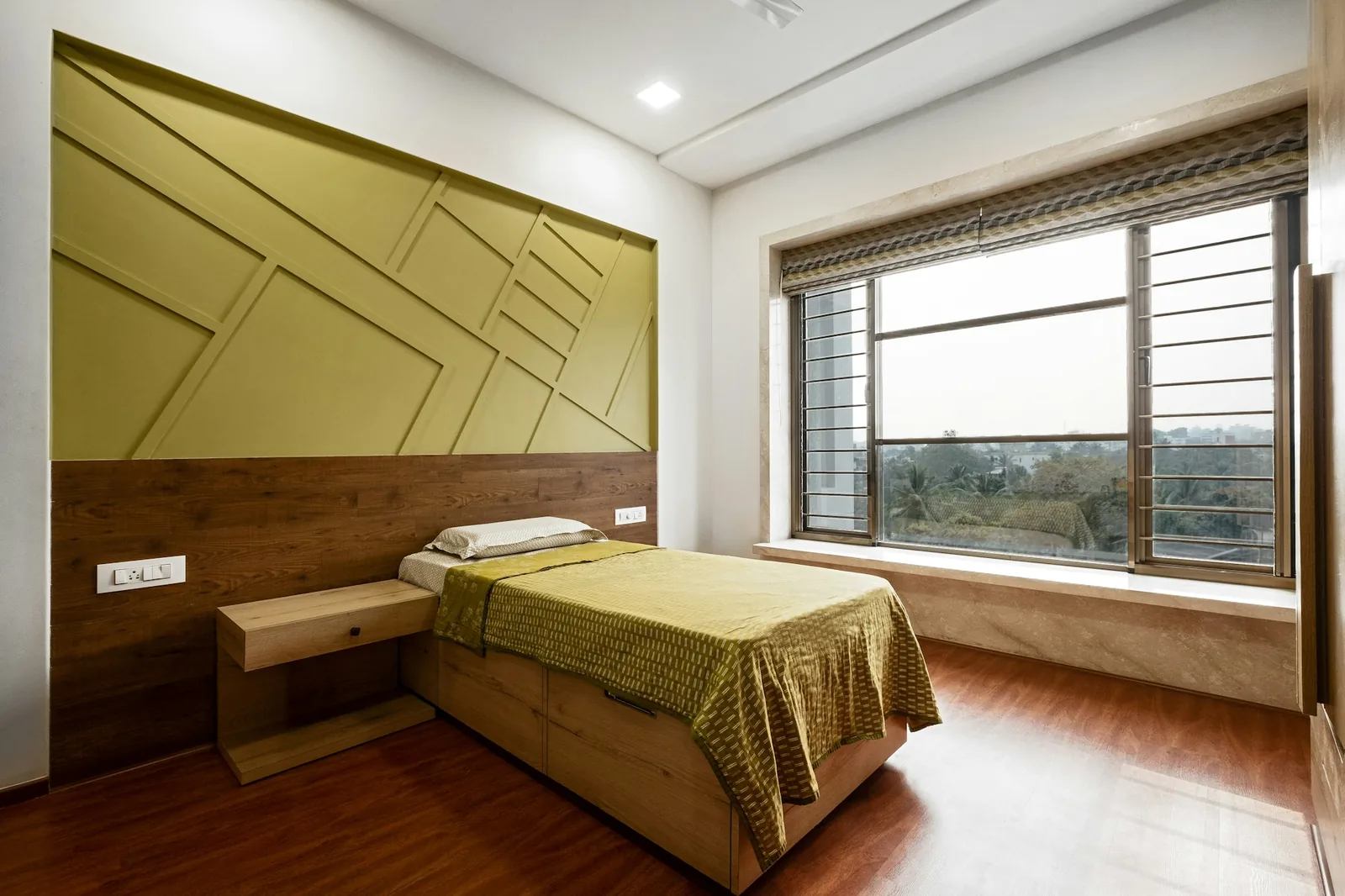
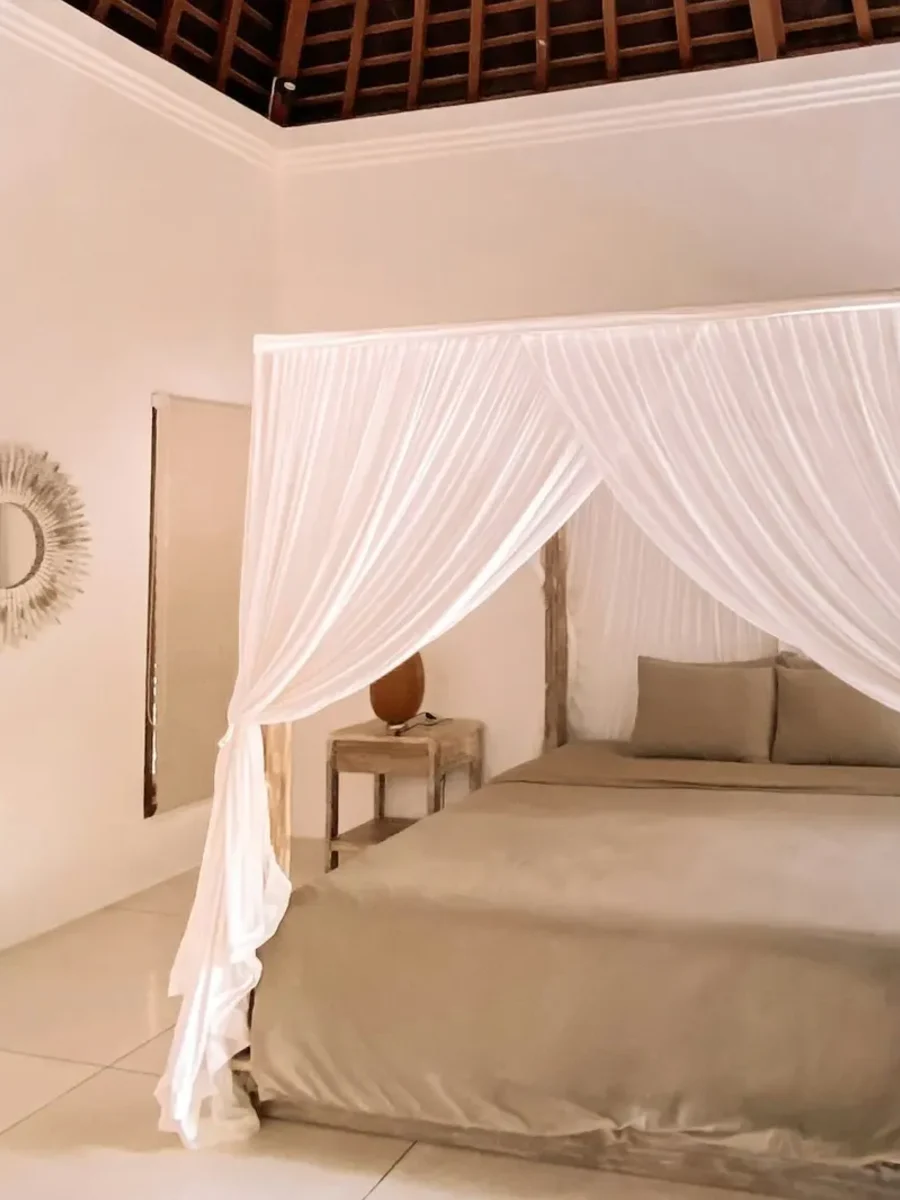
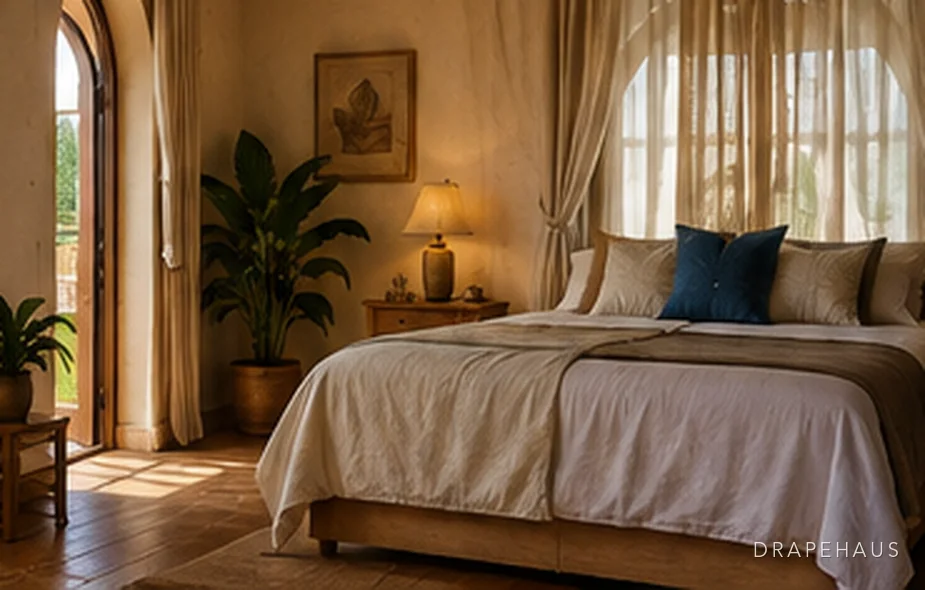
Bedroom wall design usually means the wall behind the bed, and the best ideas there are calm ones: a panelled or upholstered headboard wall, a quiet wallpaper, a painted moulding grid, with reading lights and switches built in. What makes a Goan bedroom different is where that wall usually is. In many houses and flats the bed sits against an outside wall, and the bedroom is the one room where air conditioning runs all night through the monsoon.
That combination, a cool room on the inside and warm, saturated air on the outside, is exactly where moisture condenses inside walls. The India Meteorological Department records 87 to 91% humidity on Goa's monsoon mornings. Put a vapour-proof finish on the inside of that wall and the water has nowhere to go. So this guide starts with the wall and then goes through the ideas, each with the conditions it needs.
For quick product choices, our bedroom wall panels and bedroom wallpaper pages cover materials and fitting. This article is about choosing the design and making it last.
Why the bed wall needs checking first
There are two ways an outside bedroom wall gets wet. The first is rain coming through: a cracked parapet, a failed window sill, a gap around an air-conditioner pipe, or laterite that has soaked up driven rain from the south-west. This shows as damp patches, bubbling paint and tide marks, and it has to be fixed by a builder before any finish goes on.
The second is condensation from the inside of the wall. Building guidance from the US Department of Energy's Pacific Northwest National Laboratory explains that in warm, humid climates a vapour-proof layer on the inside of a wall, and it names vinyl wallpaper among them, causes moisture moving in from outside to condense against it, with mould to follow. A bedroom kept cool overnight in July is a textbook case. The US federal specification for wallcoverings is blunter: it advises against wallcovering the interior face of exterior walls at all, because moisture accumulates behind it.
North Dakota State University Extension makes a related point about closets on exterior walls: the air against a cool outside wall can reach mould-friendly humidity even when the rest of the house is drier. A bed pushed tight against that wall, with a headboard covering it, gives the wall no chance to dry. The practical response is simple: check for damp with a moisture meter, fix any leaks, and on an outside wall choose a finish that either breathes or stands off the wall on battens with an air gap behind it.
On an outside bedroom wall, choose a finish that breathes or one that stands off the wall. Never a vapour-proof layer glued flat.
Panelled headboard walls in PVC, WPC or fluted profiles
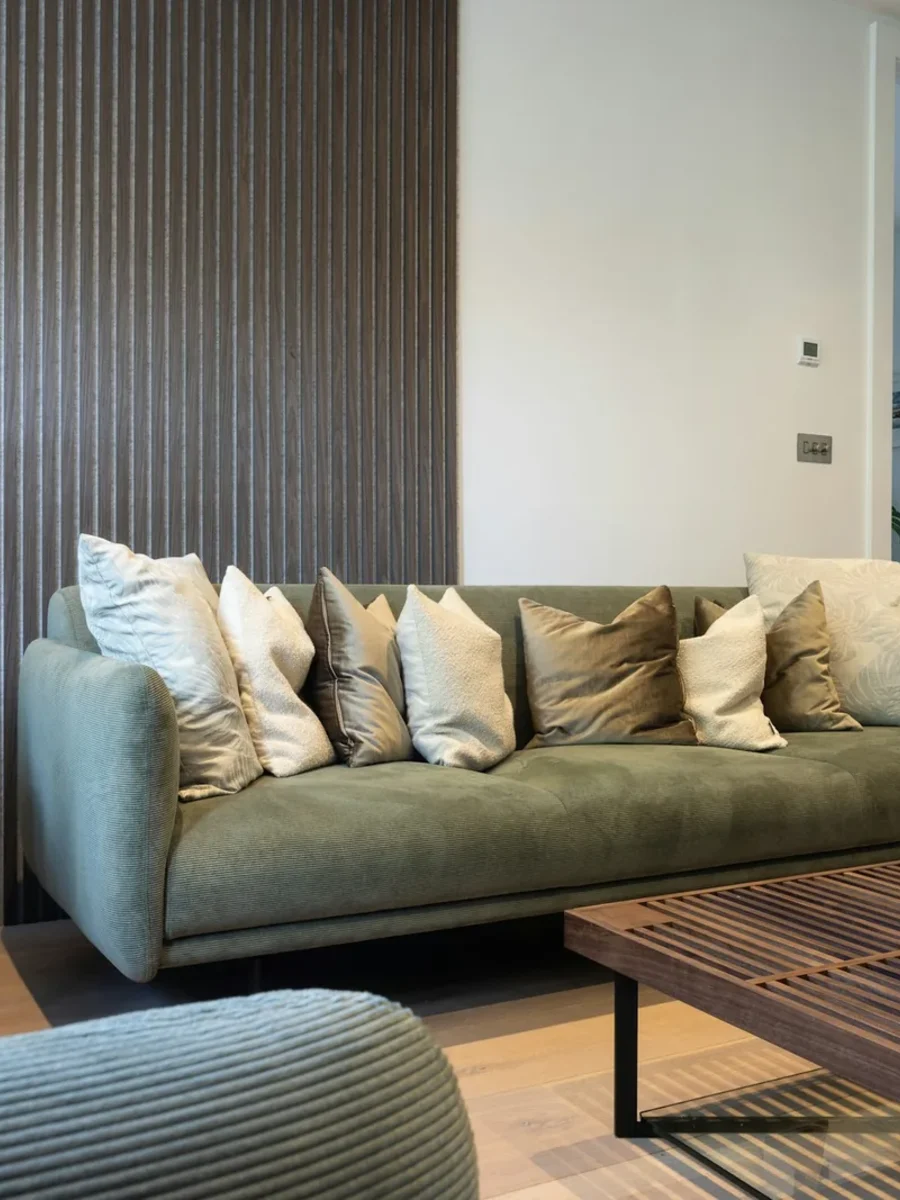
A panelled wall behind the bed is the most robust idea for a Goan bedroom, because PVC and WPC do not mind humidity and can be fixed on battens with an air gap, the arrangement that suits an outside wall. Plain panels give a calm, hotel-like backdrop; fluted profiles add a vertical rhythm that makes a low room feel taller and catches the light from bedside lamps.
Height changes the feel more than material. Panelling from floor to ceiling across the whole wall looks generous in a large master bedroom. Panelling to a little above the headboard, with paint or wallpaper above, suits a smaller room or one with a lower ceiling. A panel that runs only the width of the bed plus the bedside tables acts as an oversized headboard and keeps the rest of the wall plain.
Upkeep is mostly at pillow height, where hair oil and hands leave marks over months. A smooth panel wipes clean with a damp cloth and a little mild soap; fluted grooves need a soft brush now and then. Avoid gloss finishes directly behind the bed, which show every smear in lamp light. The fluted wall panels and WPC wall panels pages show profiles and colours.
Planning something like this?
We visit homes across North and South Goa, measure on site, and bring samples to see in your own light.
Wallpaper behind the bed, and which paper for which wall
A papered wall behind the bed is the quickest way to give a bedroom character, and quiet patterns suit it best. The University of Kentucky's extension guide recommends quiet designs and colours for rooms intended for sleeping, resting and reading, and that matches experience: soft botanicals, textures, gentle stripes and plains in mid-tones look restful under a bedside lamp, where bold, high-contrast prints can feel restless.
The wall decides the paper. On an internal wall that stays dry, almost any good paper will do, including vinyl, which wipes clean at pillow height. On an outside wall in an air-conditioned bedroom, avoid vinyl for the condensation reasons above and choose a breathable non-woven, hung only after a dry moisture reading. If the outside wall shows any damp through the monsoon, put the feature on another wall, or use panels on battens instead.
Plan the paper around the fixtures. Wall lights and switch plates should be positioned before the paper goes up, and a headboard fixed to the wall should be fitted after it, with fixings placed through the paper carefully. Hang in the dry season, October to May, when walls have had time to dry out after the rains. The home wallpaper collection lists the grades we supply.
Fabric-wrapped wall panels for softness and a quieter room
Fabric on the wall behind the bed does something no hard finish can: it softens the sound of the room as well as its look. Bedrooms in Goa often have tiled floors, high ceilings and bare plaster, which together make voices and fans echo. Upholstered panels absorb some of that, and the University of Kentucky guide notes the acoustical qualities of fabric wallcoverings. The result is a bedroom that feels calmer and a headboard you can lean against to read.
The usual form is a set of padded panels, each a board wrapped in foam and fabric, fixed to the wall in a grid behind the bed. They can run the width of the bed or the whole wall, and stop at headboard height or go to the ceiling. Because each panel is separate, one that gets stained can be taken down and recovered without redoing the wall. Our headboards work covers wall-mounted panels as well as freestanding headboards.
Humidity rules still apply. Fabric panels belong on a dry internal wall, or on battens with an air gap on an outside one, and never against a wall that has shown damp. Choose fabrics that cope with humidity: tightly woven synthetics and blends, or solution-dyed acrylic where the colour must hold up to sun from a nearby window. Avoid velvets and natural fibres on an outside wall. For panels whose main job is sound, the acoustic panels page explains the options.
Moulding grids for a classic or heritage-inspired bedroom
A painted moulding grid is the most breathable feature wall of all, because almost the whole surface stays painted plaster. That makes it a good choice for an outside wall in an older house, or a bedroom in a Portuguese-style villa, where a panelled look suits the architecture but heavy cladding would not.
Behind the bed, the grid usually centres on the bed itself: one wide panel framing the headboard with narrower panels either side lined up with the bedside tables, or a row of equal tall panels across the wall. Painting moulding and wall the same soft colour gives a quiet, tailored look; a slightly deeper colour inside the panels gives more depth. It pairs well with a fabric headboard, which supplies the softness the painted wall lacks.
On lime plaster or laterite, use fixings and adhesives that suit an old wall and keep drilling to a minimum. Our guide to laterite and old walls explains why, and the wall moulding page shows profiles.
Bedside lighting and switches planned into the wall
The feature wall is also where the bedroom's controls live, and planning them with the wall is the difference between a finished room and one with cables taped behind the bedside table. Decide first where the bed and tables will stand, then place reading lights, switches and sockets from there, with the bed in position rather than from a drawing.
Wall-mounted reading lights either side of the bed free the tables and put light where it is needed for a book. A switch for the main light on each side, wired as a two-way circuit with the switch by the door, means nobody walks across a dark room. Sockets for phones beside each table, and perhaps one for a fan or a humidifier, finish the list. A warm strip light along the top of a panel or behind a headboard gives a low glow for evenings without a bright overhead light.
All of this is electrician's work, and it has to happen before panels or paper go up, because moving a point afterwards means cutting a finished wall. Tell us where the electrician plans to run cables and we will leave access in the panelling. When the plan is clear, a home visit lets us check the wall, bring samples and measure.
Small bedrooms and rented rooms
In a small bedroom, keep the feature to the bed wall and keep it light. A pale texture, a vertical flute or a fine stripe makes the room feel taller; a dark, large-scale pattern makes it close in. The University of Kentucky guide notes that light colours make a room appear larger and dark colours make it appear smaller, which is worth remembering in a compact flat.
In a rented flat, choose what can come down without damage. An upholstered headboard panel that stands on the floor and leans against the wall, a freestanding headboard, or a strippable non-woven paper on an internal wall all leave little trace. Our guide to no-drill rentals covers fixings landlords accept. Whatever the room, the order holds: check the wall, choose the finish it can carry, plan the lights, then decorate.