 Drape Haus
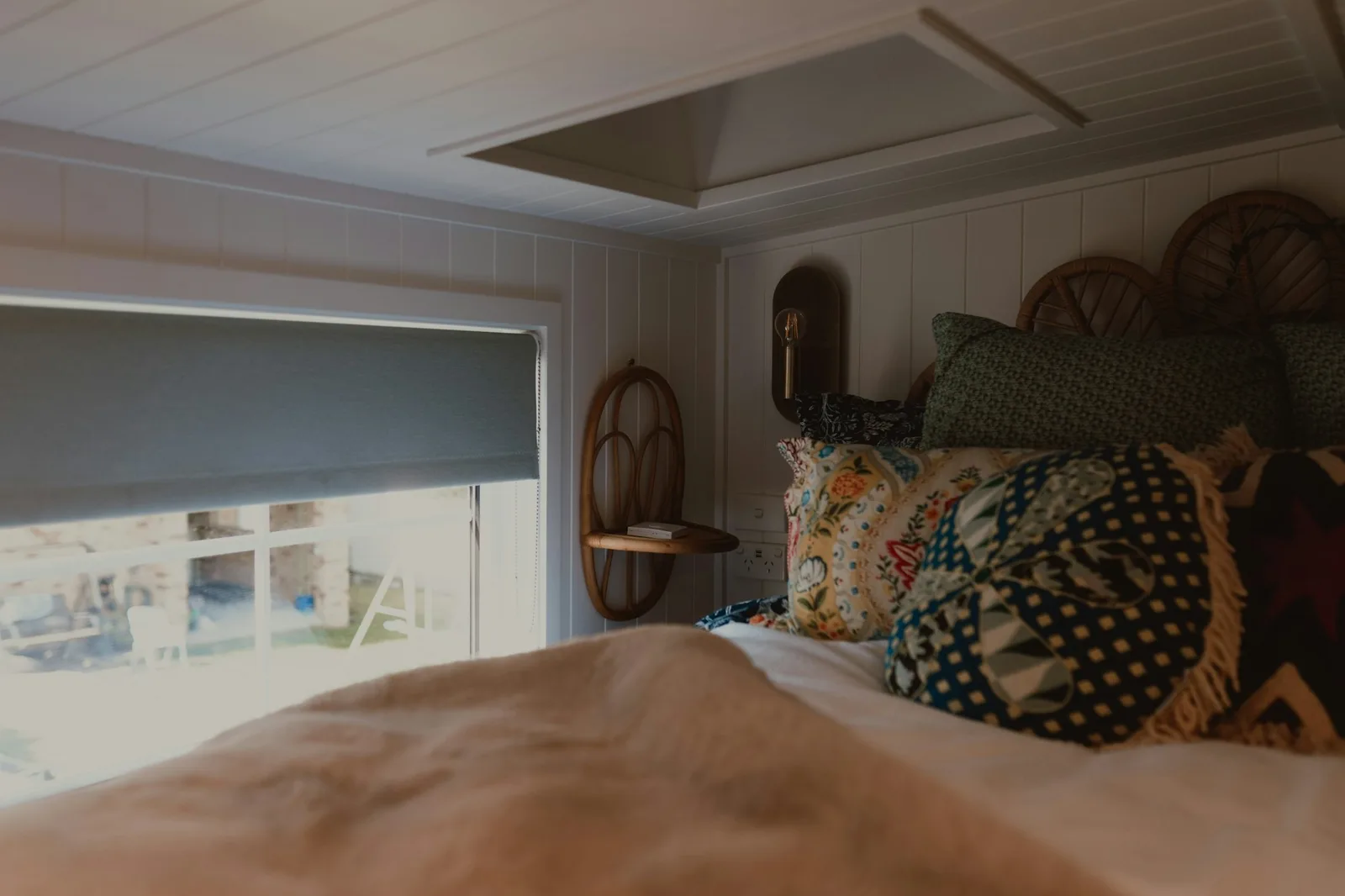
The most useful blind ideas for a bedroom start with the job at night. If the room must be dark at dawn, a blackout roller blind, mounted so light cannot get round its edges, is the simplest answer, and a Roman blind with a blackout lining does the same with a softer look. If you want daylight and privacy rather than darkness, a light-filtering roller or a zebra blind works by day, though a zebra blind on its own is a poor answer for privacy after dark.
Then come the bedroom's particular windows: the one behind the headboard, the small high ventilator, the window shared with an attached bathroom, the aluminium slider in a flat that looks straight into the next block. Each has a blind that suits it better than a curtain would. In Goa, humidity decides the materials: real timber slats suit a dry air-conditioned bedroom and struggle in a room shut up for the monsoon.
Below are the main ideas, each with what it does well and where it falls short, followed by layering with sheers, solutions for small and high windows, and ideas by who sleeps in the room. Try the types on a window in our blinds simulator before asking for samples.
Blackout roller blinds, and how to minimise the side gaps
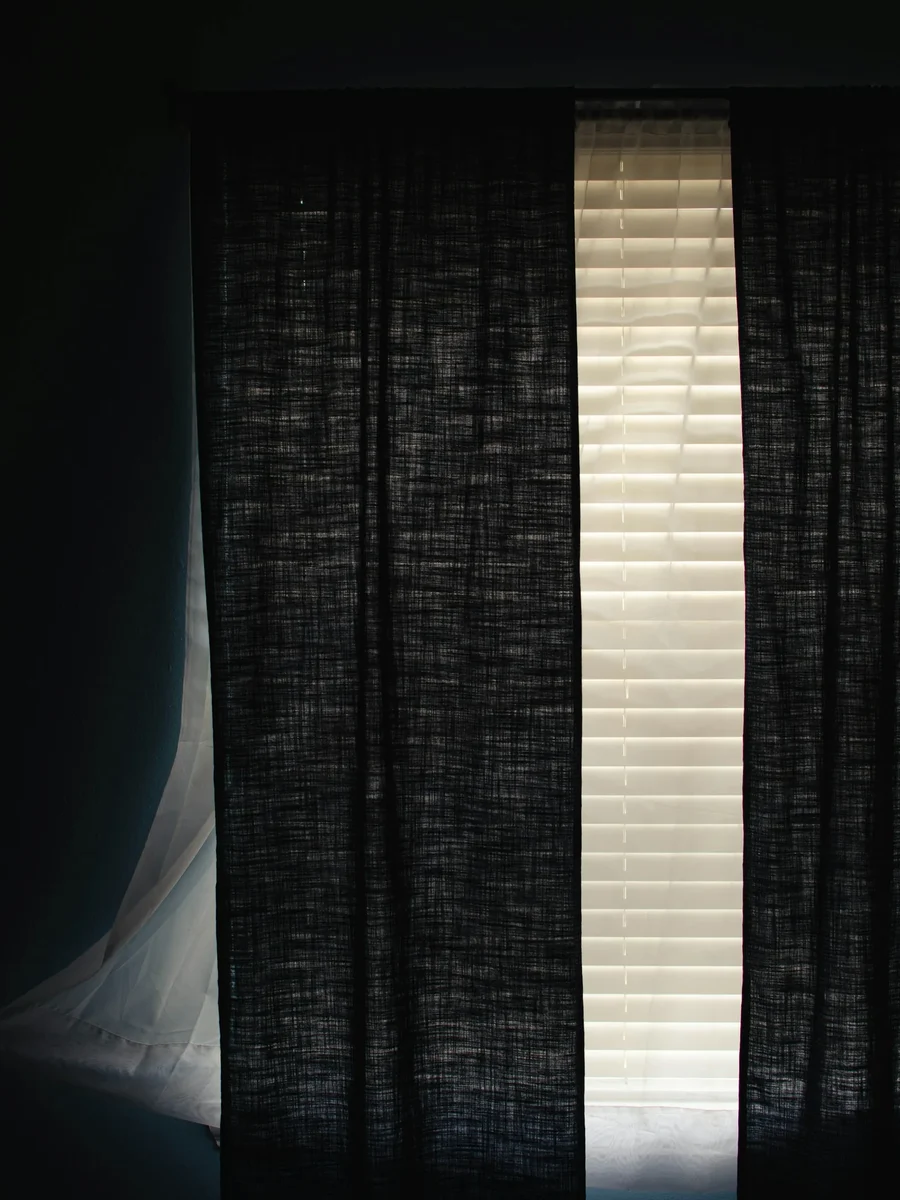
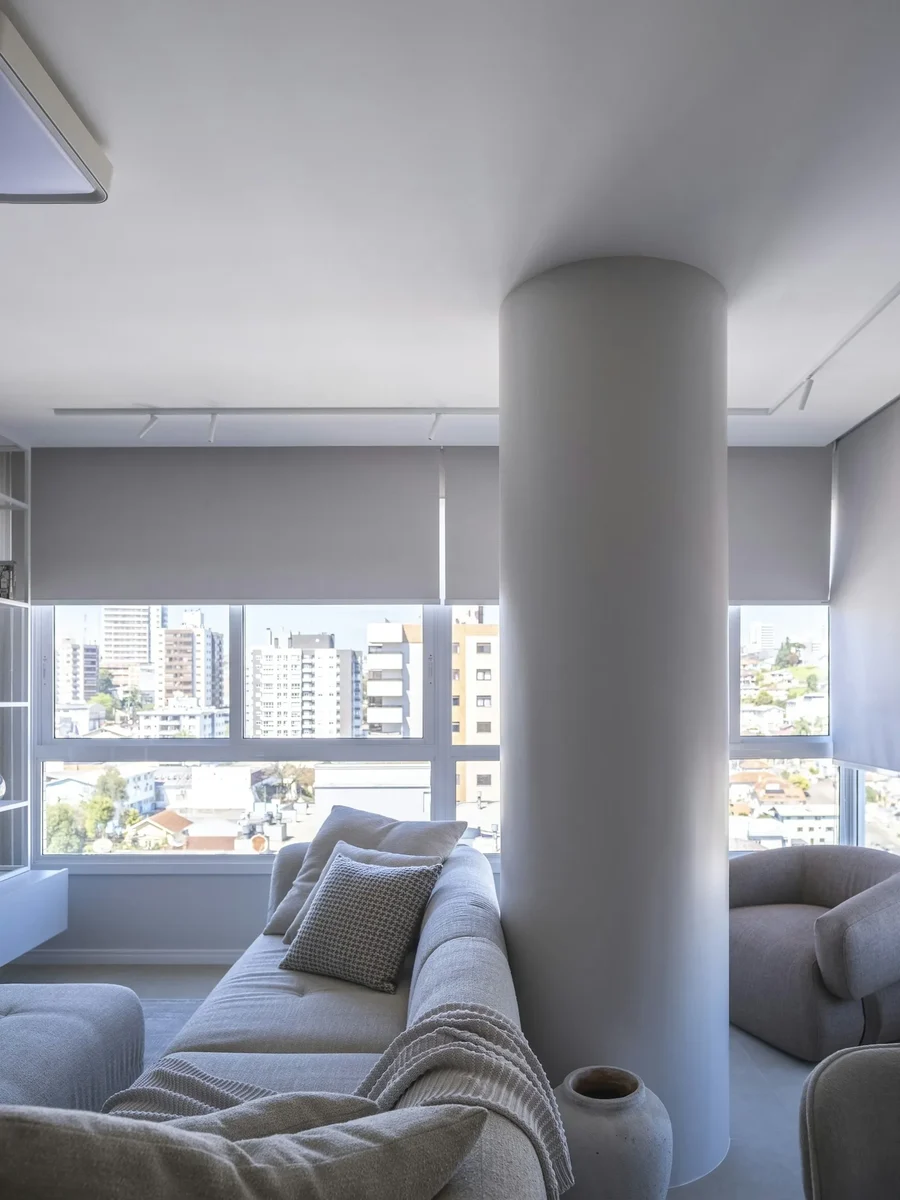
A blackout roller is a coated fabric on a tube, and the fabric itself stops nearly all light. What lets a bedroom stay grey at dawn is the edges: a bright line down each side, a glow over the top of the roll and a strip under the bottom bar. The NHS suggests that people often find it easier to sleep in a room that is quiet, dark and cool, and those edge leaks are what stand between a blackout blind and a dark room.
Mounting decides most of it. Inside the window recess, the blind always needs a small clearance at each side to roll freely, so a thin line of light shows; in a recess that is not quite square, the gap widens at one end. Fixed outside the recess, on the wall or ceiling above, the blind can overlap the opening by several centimetres on each side, which hides those lines. For the darkest result, the fabric runs inside aluminium side channels, with a cassette over the roll and a bottom bar that sits on the sill or in a channel, so there is no straight path for the light.
Choose the fabric colour for both faces. The room side can be any colour you like; the side facing the street is often white or light, so the house looks consistent from outside and the blind reflects some of the afternoon sun. Our blackout blinds page covers side channels and cassettes, and our roller blinds page the full range of fabrics from light-filtering to blackout.
| Mounting | Light leak | Fix |
|---|---|---|
| Inside the recess | Thin lines down both sides | Side channels, or mount outside the recess |
| Inside an out-of-square recess | Gap widening at one end | Mount outside with an overlap |
| Outside, on the wall | Glow over the top of the roll | Cassette or pelmet over the roll, or fix higher |
| Any | Strip under the bottom bar | Blind long enough to sit on the sill, or a bottom channel |
| Any | Line between two blinds on a wide window | One wider blind, or blinds that overlap |
Roman blinds for a softer, tailored bedroom
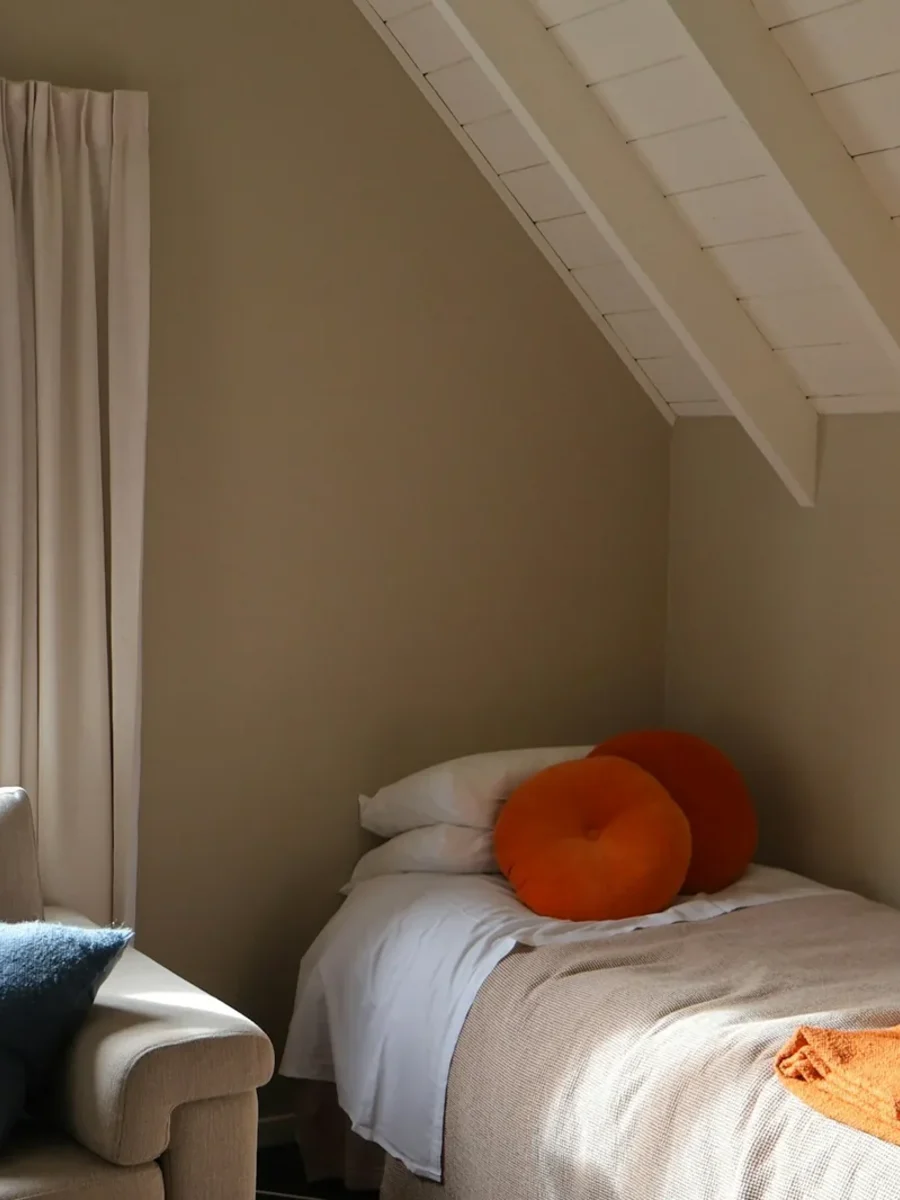
A Roman blind gives a bedroom the texture and colour of a curtain without any fabric stacking beside the window. Lowered, it is a flat panel; raised, it gathers into soft pleats at the top. It suits the window beside a bed where a curtain would be crushed by the bedside table, a dressing-table window, and any bedroom where you want the window to look furnished rather than technical.
For sleep, ask for a blackout lining. The lining is sewn behind the face fabric and shapes every fold, and it makes the blind itself opaque. It will not make the room as dark as a roller in side channels, because a Roman blind hangs free and light passes its edges, but mounted outside the recess with a good overlap it comes close, and it looks much softer. The US Department of Energy notes that roller and Roman shades add only a small amount of insulation and are most effective for privacy, room darkening and blocking sunlight, which is exactly the bedroom brief.
Two cautions. Roman blinds raised by cords need care in a child's room: the US Consumer Product Safety Commission says the safest option where young children are present is to go cordless, and a cordless or motorised mechanism removes the risk. And in the monsoon, raise them fully on dry days so the folds can air. Our Roman blinds can be made in the same fabric as a headboard or bedside cushions, which ties a bedroom together quietly.
Planning something like this?
We visit homes across North and South Goa, measure on site, and bring samples to see in your own light.
Wooden blinds, and how real wood reacts to bedroom humidity
Timber slats give a bedroom warmth and a calm, slightly old-fashioned order, and they let you tilt the light: slats angled up send light to the ceiling and keep the view out of the room; angled down, they keep the glare off the bed. They are not a blackout blind, because light passes between the slats and through the holes the lift cords run through, so in a bedroom they suit people who wake easily with the light, or pair with a curtain for the night.
The question in Goa is humidity. The US Forest Products Laboratory's Wood Handbook explains that wood exchanges moisture with the air around it and that, below a certain moisture level, it swells as it takes up moisture and shrinks as it dries, which can warp and split it. Its table shows the scale of the change: at about 27°C, wood in balance with 50% humidity holds about 9% moisture, but at 85% humidity it holds about 18%. Coatings slow the change, the Handbook notes, but do not stop it. India Meteorological Department figures put Goa's monsoon mornings at 87 to 91% humidity.
So place real wood by the room, not by the catalogue. In an air-conditioned master bedroom that is kept closed and dry, well-finished timber slats are fine. In a bedroom shut up for the monsoon, one beside an attached bathroom, or one on a sea-facing wall, faux-wood or PVC slats are the better choice: from a metre away they look very like timber and they are unaffected by damp. Our PVC and faux-wood blinds are what we usually suggest for those rooms.
Real timber slats belong in a dry, air-conditioned bedroom. In a room closed for the monsoon, choose faux wood.
Zebra blinds and their limits for night privacy
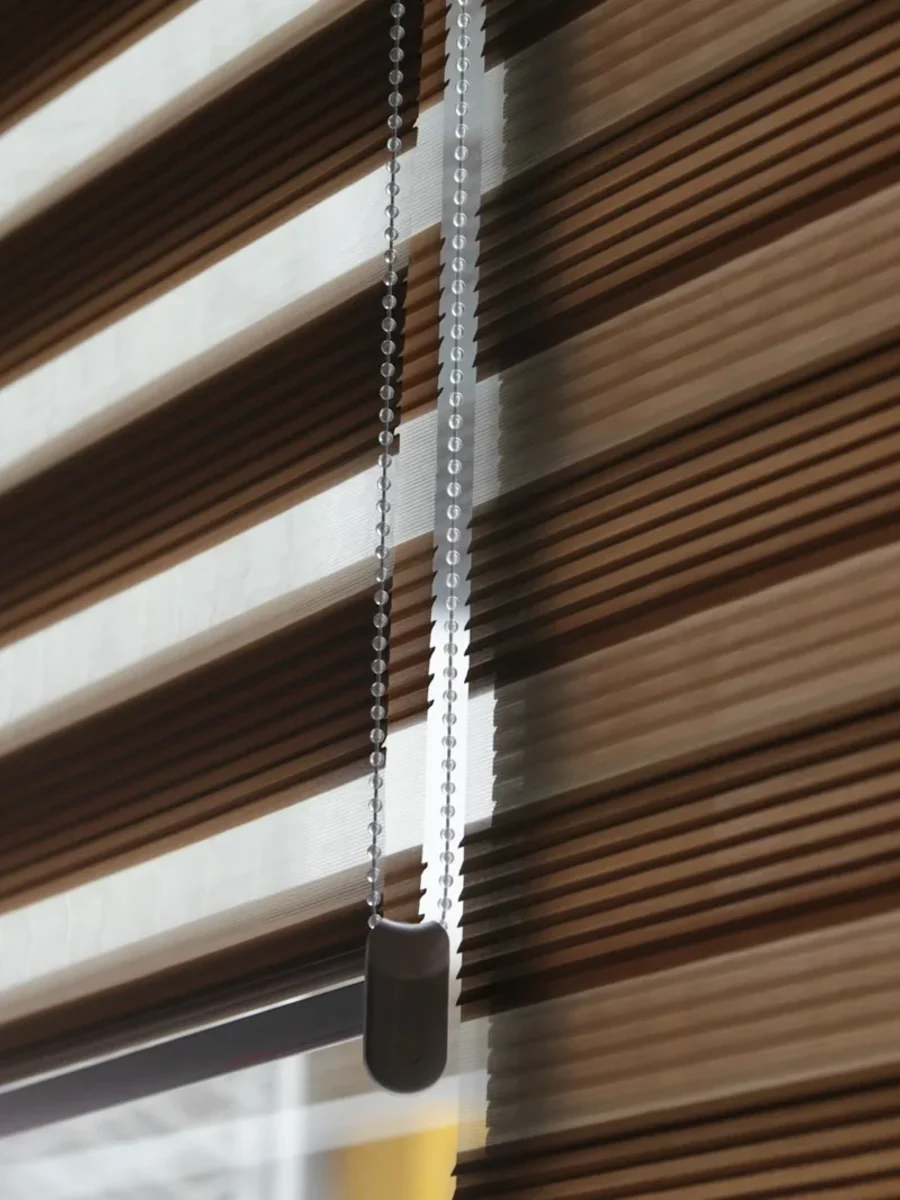
Zebra blinds are popular in bedrooms for good reasons. A loop of fabric with alternating sheer and solid bands lets you move from bright to soft to dim without raising the blind, and polyester zebra fabrics shrug off humidity. For a bedroom used in the daytime, by a child napping after lunch or someone working from home, the soft middle setting is pleasant.
Night is where they fall short. With lamps on inside and darkness outside, a zebra blind in its open position shows the room through the sheer bands, and even closed, the overlapping layers glow and can show shapes. For a bedroom on a lane, at ground level, or facing another block across a narrow gap, that matters. Zebra blinds are also not blackout: light passes faintly through the layers and round the edges, so they will not make the room dark at dawn either.
Use them where they are strong. A dim-out zebra fabric with denser solid bands improves privacy and darkness; a curtain or a blackout roller behind it handles the night. Our zebra blinds page shows the fabrics, including dim-out versions.
Layering blinds with sheers for daytime softness
A blind on its own can make a bedroom feel functional. The answer many Goan bedrooms use is two layers: a blind inside the recess that does the work, and a sheer curtain on a track outside it that softens the window. By day, the blind is up and the sheer is drawn for privacy and gentle light. At night, the blackout blind comes down behind the sheer, so the room is dark but the window still looks soft from the bed.
This often works better than a heavy blackout curtain on a wide window: the blind deals with darkness close to the glass, where it is most effective, and the sheer can be as light and breathable as you like, which suits a room cooled by a fan through the humid months. Plan the curtain track to stand far enough off the wall to clear the blind's headrail and chain, and keep the sheer a centimetre off the floor.
Honeycomb or cellular blinds are another layering option for hot rooms. The US Department of Energy reports that in cooling seasons, tightly fitted cellular shades can cut unwanted solar heat through windows by up to 60%, and that those which open from both the top and the bottom give the most control over daylight. In an air-conditioned bedroom on a west wall, a honeycomb blind behind a sheer keeps the room cooler and the window soft. See our honeycomb blinds.
Small, high and bathroom-adjacent bedroom windows
The window behind the headboard. A curtain there is trapped behind the bed and never draws properly. A roller or Roman blind mounted above the frame lifts clear of the headboard. Choose a chain or motor that you can reach from beside the bed, not one that hangs behind the pillows.
The small, high window or ventilator. Many Goan bedrooms have a narrow window high on the wall for air. It lets in the first light, and nobody can reach it. A top-down, bottom-up blind is one answer for a window you can just reach: the Energy Department notes that cellular shades which open from both the top and the bottom give the most effective control of daylight, and lowering one from the top keeps privacy while letting light in. For a window you cannot reach, a motorised roller on a timer, or a fixed blackout panel if the window is never opened, solves it.
The window by the attached bathroom. A bedroom window next to a shower, or a window in the bathroom wall itself, lives in steam. The US Environmental Protection Agency advises drying condensation on windows quickly when it appears and keeping indoor humidity below 60%, ideally 30 to 50%. Fabric and timber blinds struggle there. PVC, aluminium or faux-wood slats, or a coated roller fabric that can be wiped down, last far longer. Raise the blind fully after a shower so the glass and the frame can dry.
- Behind the headboard: roller or Roman mounted above the frame, control within reach
- High ventilator you can reach: top-down, bottom-up blind
- High window you cannot reach: motorised roller, or a fixed panel if it never opens
- Next to a shower: PVC, aluminium or faux-wood slats, or a wipe-clean roller
- Aluminium slider in a flat: blind fixed above the frame, clear of handles
Blind ideas by who sleeps in the room
The main bedroom. Usually the room for the best combination: a blackout roller in side channels close to the glass, with a Roman blind or curtains in front for softness. If the blinds come down every night and up every morning, a motor on the blackout layer, set to open gently before the alarm, is the upgrade people use most.
A child's room. Cordless or motorised mechanisms first, following the Consumer Product Safety Commission's advice. A blackout roller for afternoon naps and light summer evenings, in a wipe-clean fabric, with a cheerful Roman or curtain for daytime if you want colour.
A guest room, homestay or rental bedroom. Simple and robust wins: a blackout roller that any guest can operate without instructions, in a fabric that wipes clean, fixed outside the recess for darkness. Avoid real timber and delicate fabrics in a room that may be closed for weeks. Roll every blind up before the house is shut for the monsoon, so the fabric stays clean and dry on its tube.
Once you know which idea suits each window, our bedroom blinds page and a home visit will settle the mounting, the fabric and the measurements.