 Drape Haus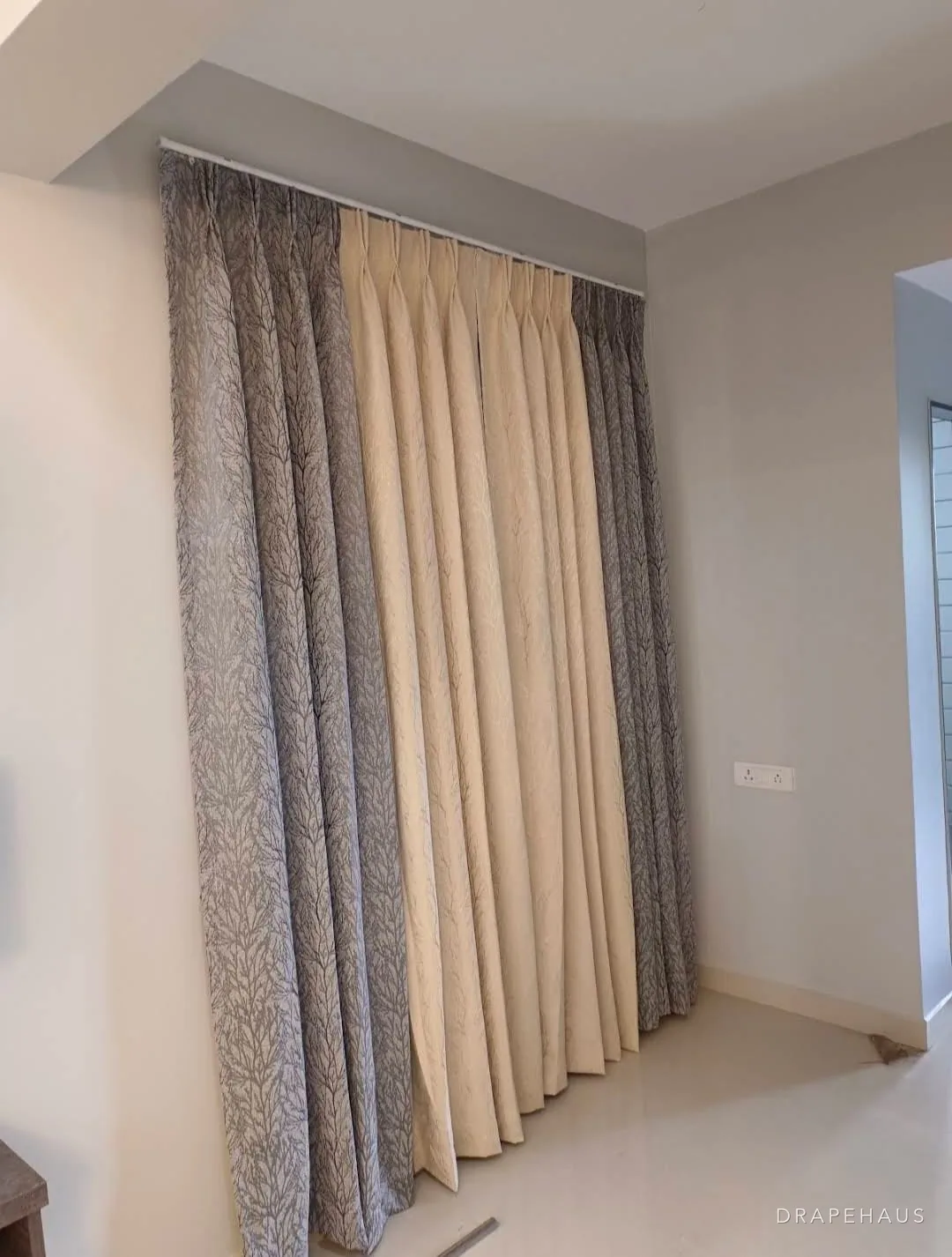
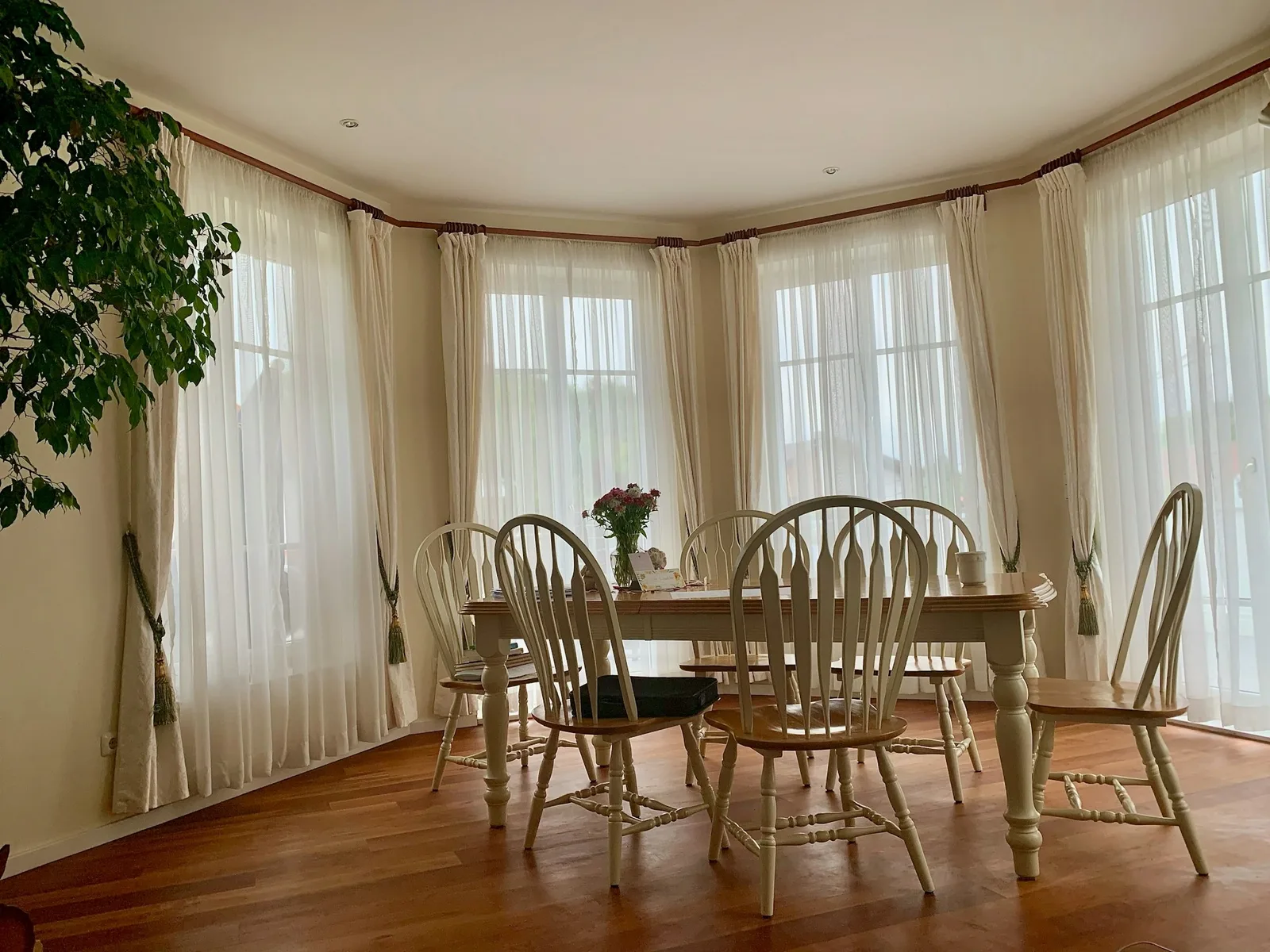
Double curtains are two curtains on one window, each on its own rod or track channel, usually a light sheer near the glass and a heavier curtain in front. The best double curtains ideas pair the layers by job first and looks second: a sheer for daytime light and privacy, and a second curtain for whatever the room needs after dark, whether that is real darkness in a bedroom, privacy and warmth in a living room, or simply colour and softness.
In Goa the arrangement earns its keep. Strong sun from November to May calls for a sheer that stays drawn through the afternoon; evenings call for something that closes properly; the monsoon calls for fabrics that breathe. A single curtain is always a compromise between those. Two layers let each do one thing well.
Below are the pairings that work in Goan living rooms and bedrooms, colour and texture combinations, the choice between double rods and double tracks, the extra wall space two layers need, and an honest list of rooms where double curtains add little. You can try sheer and drape combinations on your own window in our layered curtains simulator.
What double curtains are, and an old name for them
The idea is not new. A 1950 American curtain-making manual calls the sheer next to the window the glass curtain and the heavier fabric in front the overdraperies, and describes double rod sets that let both be operated from one set of cords. It also makes a point that still holds for bedrooms: there, it matters more that the heavier draperies draw open and closed than the glass curtains, because ventilation, light and privacy all depend on them.
Today the term covers two slightly different things. Most people mean two separate curtains on a double rod or double track, which is what this article is about. Some mean a single two-tone curtain, made in two colours joined vertically or horizontally, or a plain curtain with a contrast border; that is one curtain on one rod, and our double curtains page shows both. When the two layers are specifically a sheer by day and a lined or blackout curtain by night, the trade usually calls it layered curtains.
There is a practical bonus. The US Department of Energy notes that two draperies hung together create a tighter air space than one, and that the room-side curtain stays at around the same temperature as the room, which adds to comfort. In an air-conditioned Goan bedroom or a west-facing living room, that second layer is doing real work.
Idea 1: sheer plus blackout for a bedroom that needs daylight and dark sleep
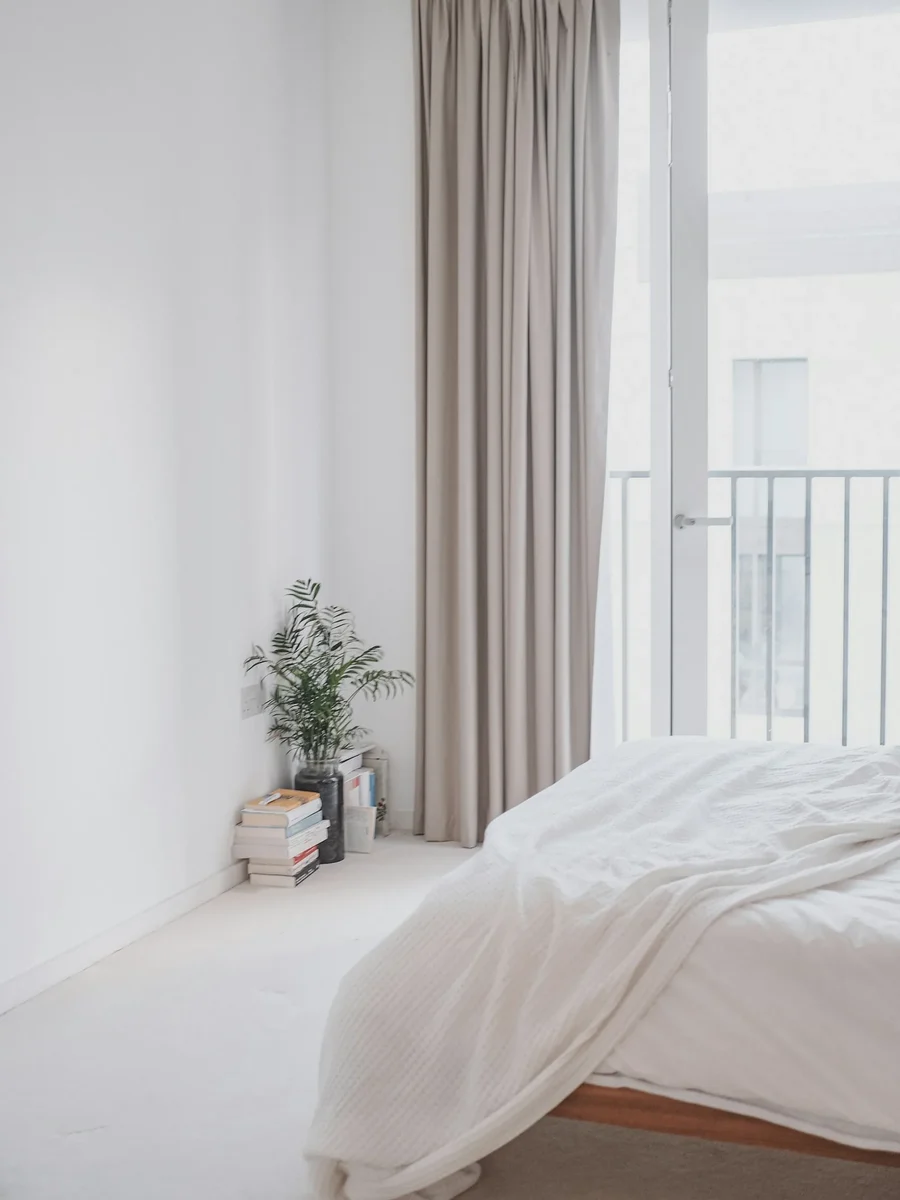
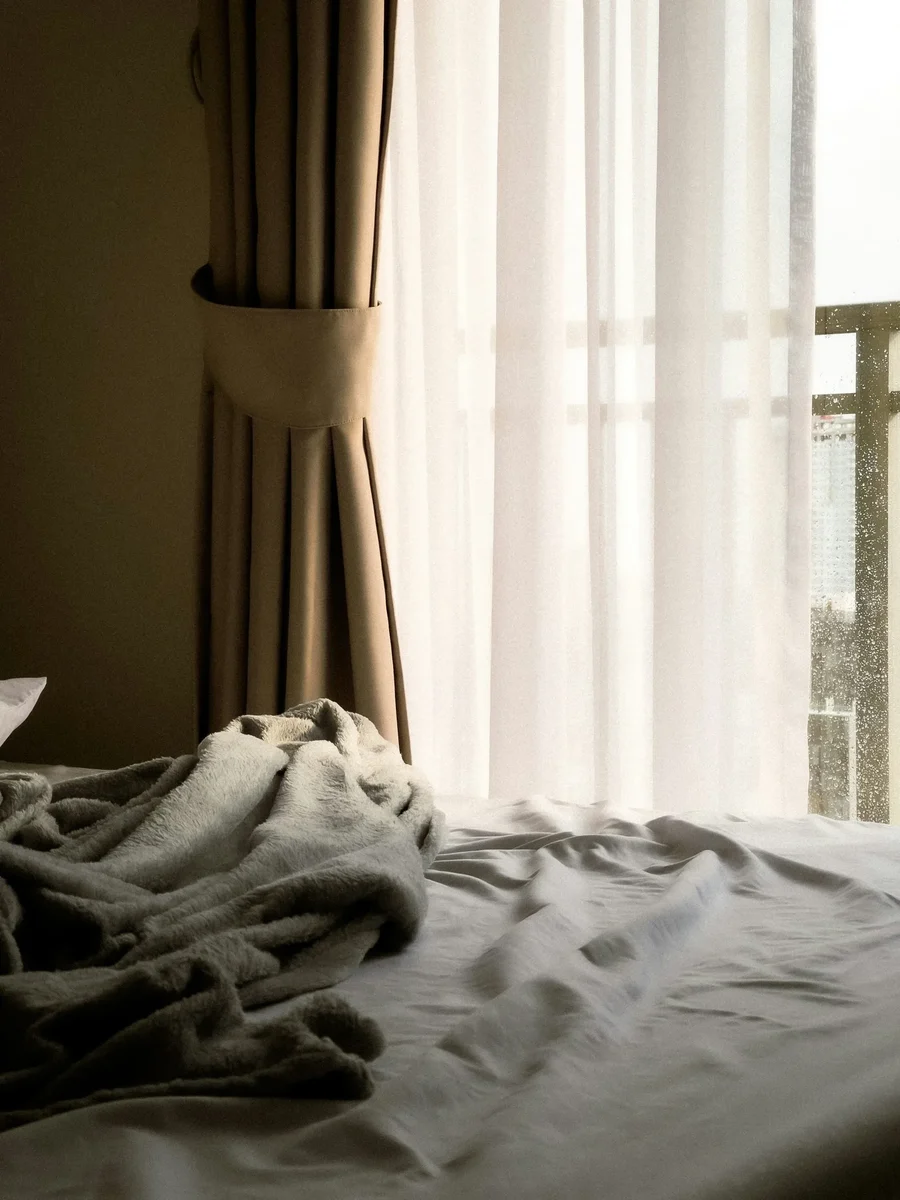
This is the most common double-curtain request in Goan bedrooms. The sheer hangs nearest the glass and stays drawn through the day, giving privacy from the lane or the facing flat while keeping the room bright. The blackout curtain hangs in front, open and stacked at the sides by day, and closes at night. The NHS suggests people often find it easier to sleep in a room that is quiet, dark and cool, and suggests fully closing curtains to keep it dark; the blackout layer is what makes that possible after an early sunrise in May.
To make the pairing work, the blackout curtain needs the things any blackout curtain needs: a track close to or on the ceiling so light cannot spill over the top, ends that return to the wall, an overlap where the two halves meet and a hem just clear of the floor. The Energy Department's advice for draperies runs the same way: hang them close to the window, put a cornice at the top or place the drapery against the ceiling, seal the sides and overlap the centre.
Choose the sheer for the day and the blackout for the night, not the other way round. A fine voile or a linen-look sheer gives the softest daytime light; a slightly denser sheer gives more privacy from close neighbours. The blackout layer can be any face fabric you like with a blackout lining behind it, and its room-side colour is entirely free. Our step-by-step guide to layering sheer and blackout curtains together covers the hardware, clearances and measuring in detail.
Planning something like this?
We visit homes across North and South Goa, measure on site, and bring samples to see in your own light.
Idea 2: sheer plus linen drapes for a living room open to the breeze
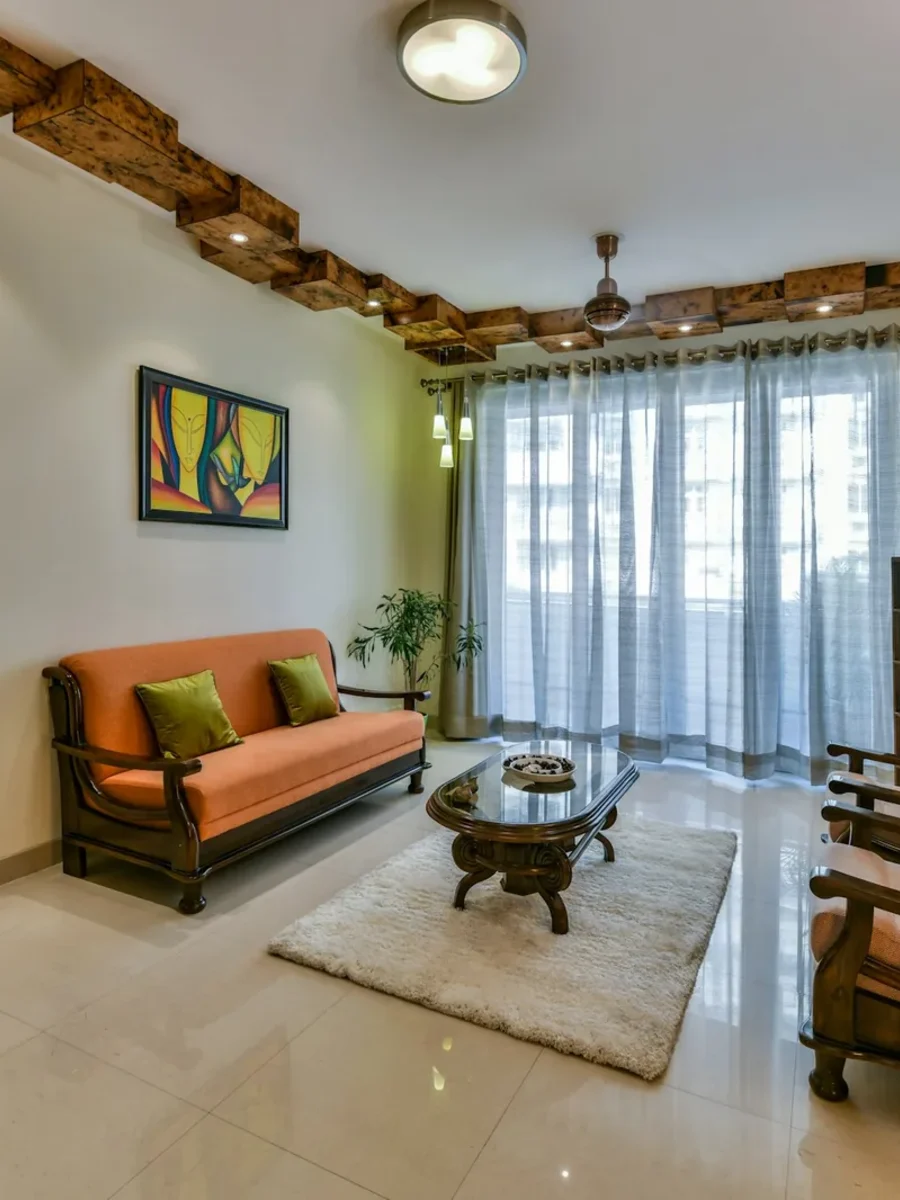
A Goan living room rarely needs to be dark, but it often needs to be private in the evening and shaded in the afternoon, and it needs air through most of the year. The pairing that suits it is a sheer next to the glass and a linen or linen-look curtain in front, lined in cotton if the room faces the road or takes hard afternoon sun.
Through the day the linen stays open, framing the window, and the sheer is drawn or open as the sun moves. In the evening the linen closes for privacy. Because linen breathes and the cotton lining is light, the room-side curtain does not feel heavy in a room cooled by a fan rather than air conditioning, and it dries quickly after a humid night. Hang the sheer a little shorter than the drape so it never peeks below the hem.
In a breezy room, weight matters. A very fine voile billows into the room when a sliding door is open and can flick at side tables or drift towards the ceiling fan; a slightly heavier sheer or a weighted hem steadies it. On the wettest monsoon days, draw both layers back from an open window so driven rain does not soak them. Our sheer curtains range includes the heavier linen-look weaves that behave best near an open door.
A sheer gives privacy only while it is brighter outside than in. Plan the evening layer at the same time as the sheer.
Idea 3: colour and texture pairings for two layers
Two layers mean two fabrics, and they look best chosen together, side by side, against the actual window. The University of Kentucky's extension guide on window treatments lists tone-on-tone solids in textures that mix well with other fabrics, and sheers with a tone-on-tone pattern, among popular choices; both are easy starting points.
Think about weight and texture as much as colour. A crisp voile behind a slubbed linen gives a contrast of surface that looks considered even in two shades of white. A soft, matt sheer behind a velvet or a cotton sateen makes the heavier layer look richer. Two very similar textures in two very similar colours can look like a mistake, as though the wrong fabric arrived; either match them closely on purpose or make the difference clear.
For pattern, let one layer carry it. A block-printed or woven-pattern drape over a plain sheer works; a patterned sheer over a plain drape can work in a quiet room; two patterns on one window almost never do. In a bedroom, keep the night layer calm, because it is what you see when you wake. In a living room, the drape is a frame that is mostly seen open, so it can carry more colour.
| Pairing | Sheer layer | Front layer | Mood | Works well in |
|---|---|---|---|---|
| White on white | Warm white voile | Ivory linen, cotton-lined | Light, airy, coastal | Living rooms with many openings |
| Tone-on-tone | Ecru linen-look sheer | Oat or stone linen | Calm, textured | Heritage salas, master bedrooms |
| Contrast | White voile | Deep indigo, forest green or rust | Framed, graphic | One main window, high ceiling |
| Pattern over plain | Plain ivory sheer | Block-printed or ikat drape | Characterful | Plain rooms needing a focal point |
| Soft over rich | Matt sheer | Velvet or sateen, blackout-lined | Quiet, enclosed | Air-conditioned bedrooms |
Double rods or double tracks, and the space each needs above the window
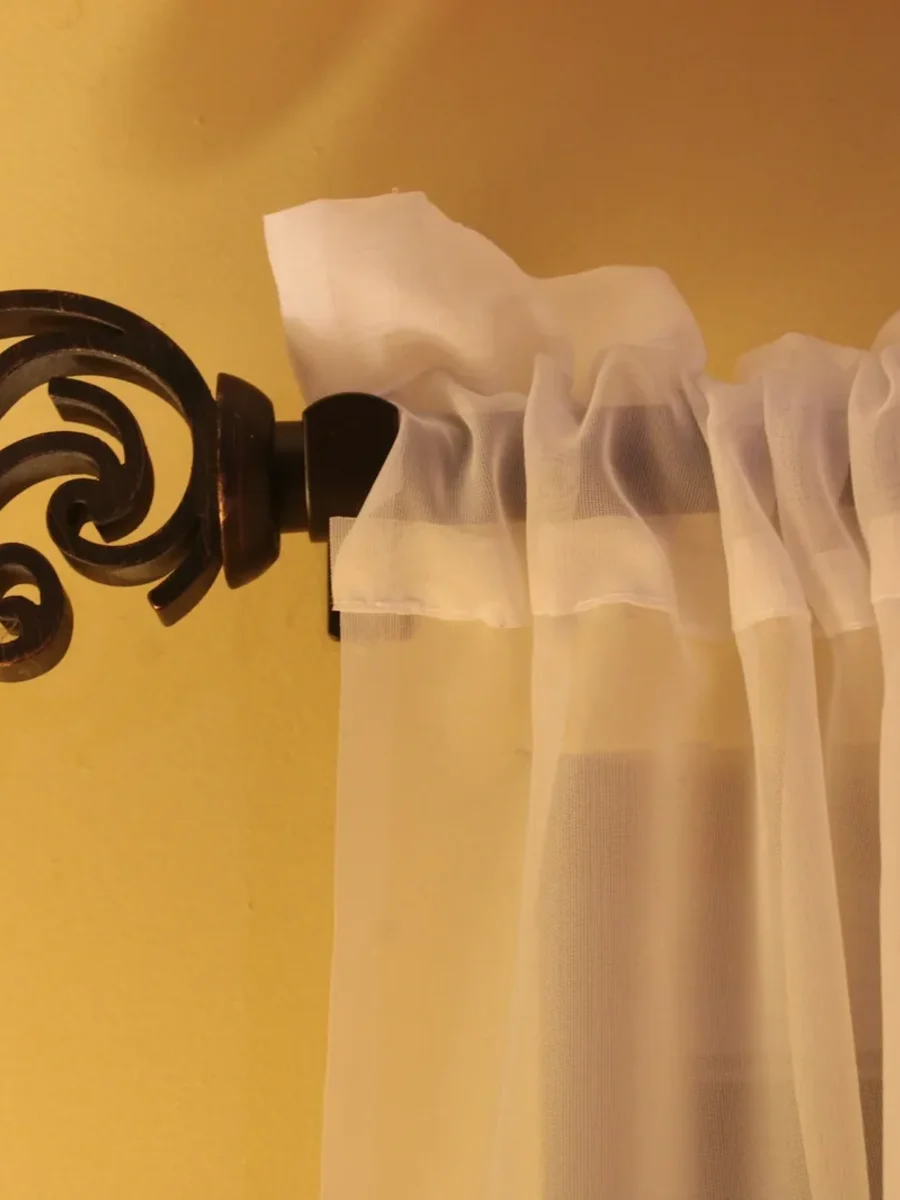
A double rod is two poles on shared brackets, one behind the other. The sheer hangs on the back rod nearest the glass, the drape on the front one, and both rods are on show, finials and all. It suits a traditional room, a heritage house where the hardware is part of the look, or eyelet and ring-top curtains. Its limits are light and space: a curtain hangs below a rod, so light spills over the top of both layers, and the brackets need enough plain wall above the window frame to fix into. Our guide to types of curtain rods covers materials that survive salt air.
A double track is a slim profile with two channels, wall-fixed on brackets or screwed to the ceiling, with the curtains hanging from gliders. It draws more smoothly, carries heavier lined curtains over longer spans, hides the hardware behind the headings and, fixed to the ceiling, closes off the light at the top. Where a window runs right up to the ceiling or a beam with no wall above it, a ceiling-fixed double track is often the only way to hang two layers at all. A false ceiling needs backing above the board to take the load; our ceiling curtain tracks page explains how.
Both need depth. The back layer has to clear the window handles, grilles and sill, and the front layer has to clear the folds of the back one, so a double bracket stands further off the wall than a single one. Measure the deepest thing on the window before choosing, especially on aluminium sliding windows where handles and locks project into the room. A popular compromise in older houses keeps a handsome single rod for the drape and hides a slim track behind it for the working sheer.
| Double rod | Double track (wall) | Double track (ceiling) | |
|---|---|---|---|
| Look | Hardware on show, decorative | Hidden behind headings | Clean line from the ceiling |
| Light over the top | Spills over both layers | Some, depending on height | Very little |
| Space needed | Plain wall above the frame for brackets | Wall above the frame | A ceiling that can take fixings |
| Headings | Eyelet, rings, tab-top | Pinch pleat, pencil, ripple fold | Pinch pleat, pencil, ripple fold |
| Best for | Heritage and traditional rooms | Most retrofits | Bedrooms, tall windows, motorising |
Allow extra stack-back so two layers do not block the light
Curtains do not disappear when they open. They gather into a stack, and with two layers there are two stacks, one behind the other. If the track or rod stops at the window frame, both stacks sit over the glass and the room loses a share of its light and view every day. So the track runs past the window on each side, by about the depth of the larger stack.
Our track planner works this out from the window width, the fabric and the heading, using rules of thumb curtain makers use and that we confirm on site. Take a 240 cm living-room window. A lined pinch-pleat pair needs a track of about 435 cm, running about 97 cm past the window on each side. In a wave heading, which stacks more tightly, the lined pair needs about 385 cm, around 72 cm each side. A sheer in a wave heading on its own needs only about 310 cm, some 35 cm each side, so on a shared track its stack hides behind the lined one. The heavier layer sets the track length.
That is a lot of wall. Before you choose double curtains, check that the wall beside the window can take it: no corner, wardrobe, door frame or switchboard in the way. Where there is not enough wall, a tighter-stacking wave heading, a single curtain that draws to the side with more wall, or a blind in place of one layer are all better than a stack that sits permanently over the glass.
| Window width | Lined, pinch pleat | Lined, wave | Sheer alone, wave |
|---|---|---|---|
| 120 cm | 220 cm (49 cm each side) | 195 cm (36) | 155 cm (17) |
| 180 cm | 330 cm (73) | 290 cm (54) | 235 cm (26) |
| 240 cm | 435 cm (97) | 385 cm (72) | 310 cm (35) |
| 300 cm | 545 cm (122) | 480 cm (89) | 390 cm (43) |
Rooms where a single curtain or a blind is enough
Double curtains are not always the right answer, and they cost more in fabric, hardware, wall space and upkeep than one layer. The US Department of Energy reports that 75% of home window coverings stay in the same position every day. If one of your two layers will never move, ask whether it needs to be there, or whether it can be a fixed dress panel or nothing at all.
In practice, these are the rooms where we usually suggest one layer, or a blind and one curtain, instead of two curtains. When you are ready to plan the windows that do suit two layers, our layered curtains page shows the combinations we make.
- A window onto a private garden, not overlooked by day or night: a sheer alone, or a lined curtain alone
- A small window behind a bed, desk or sofa: a blind, because two curtains have nowhere to fall
- Kitchens and bathrooms: a moisture-tolerant blind rather than any curtain
- Homestay and rental rooms turned over often: one durable lined curtain with a blackout blind behind is easier to clean than two curtains
- Houses closed for the monsoon: every extra layer is another to take down, clean and store
- Narrow walls beside the window: not enough room for two stacks clear of the glass
- High clerestory windows with no motor: a second layer nobody can reach will stay where it is