 Drape Haus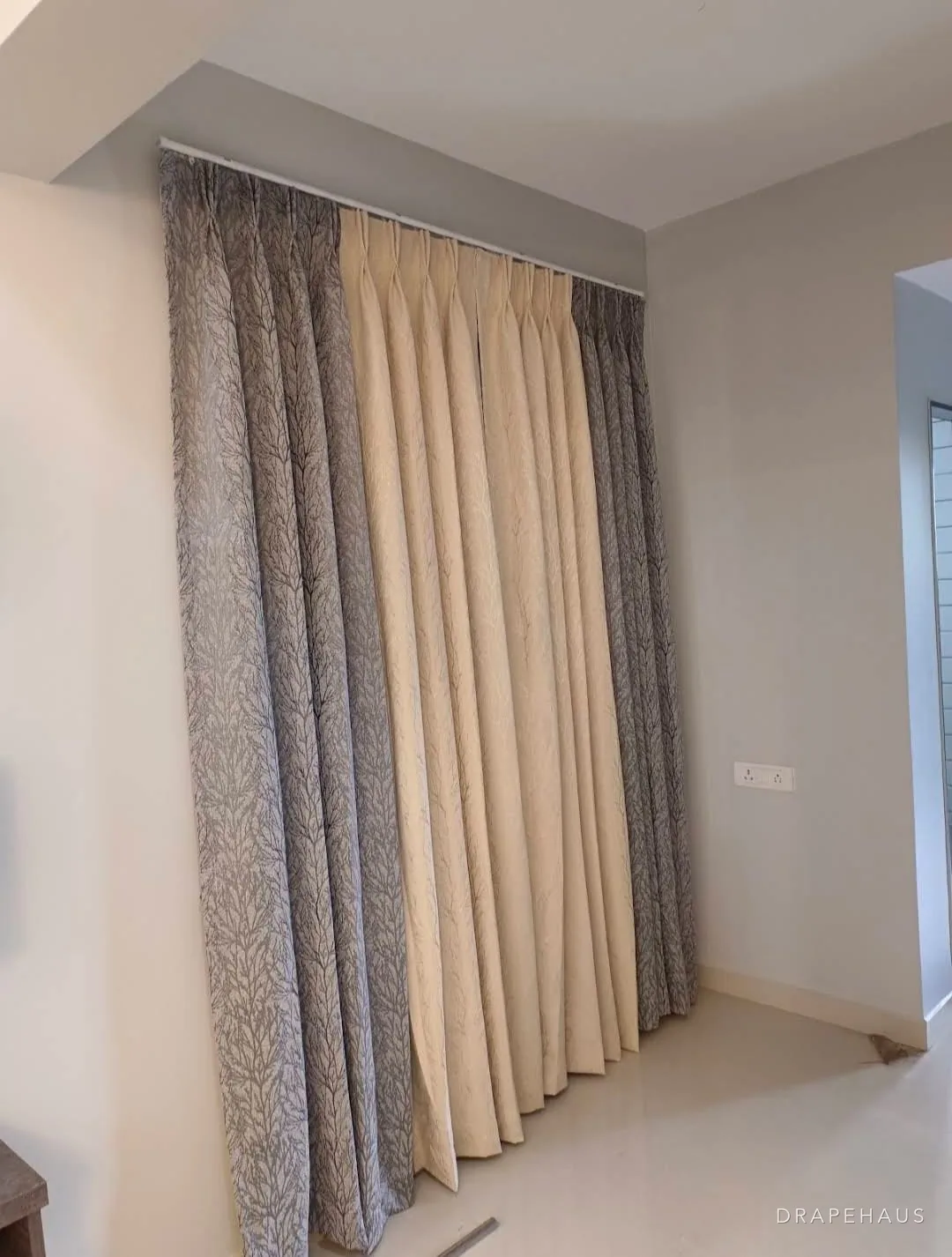

A wardrobe design for a bedroom in Goa has one job that catalogues rarely mention: keeping clothes dry through four months of monsoon. A closed box of cotton, linen and leather, standing against a cool wall in air that the India Meteorological Department records at 87 to 91% humidity on monsoon mornings, is close to ideal for mould. The Canadian Conservation Institute gives the range in which mould grows on textiles as 65 to 100% relative humidity, and says growth is unlikely below 60%.
So the design decisions that matter most are about air: where the wardrobe stands, whether its shutters breathe, what its back panel touches, how tightly it is packed, and whether the room itself is kept dry. Get those right and the internal fittings, the finish and the handles can be whatever you like.
A word on what we do. Drape Haus does not build wardrobes; your carpenter or interior contractor will. We make the fabric side of a bedroom, including wardrobe curtains, linings and storage covers, and fit louvred panels. This guide is the brief we would want any wardrobe maker in Goa to start from. If you already have fungus on clothes, begin with our guide to fungus on clothes and wardrobes.
Where the wardrobe stands matters more than its style
The single biggest choice is the wall. North Dakota State University Extension notes that closets are prone to mould especially when they sit on exterior walls, because the air against a cool outside wall can reach mould-friendly humidity even when the rest of the house is drier. In a Goan house the most exposed walls are the west and south-west faces, which take driven rain from June to September, and any wall shared with a bathroom or a wash area. A built-in almirah on one of those walls is the one most likely to smell musty by August.
Where you can, put the wardrobe on an internal wall, between two rooms that are both lived in. Where you cannot, design for air. Hold a freestanding wardrobe a few centimetres off the wall so air can move behind it, and lift it on legs or a plinth with gaps so the floor-level air can circulate. NDSU's advice for closets is the same: store things away from the outside wall so air can move.
For a wall almirah built into a recess, ask for the back of the recess to be checked for damp before anything is fitted, and for the carcass to stand off the masonry on battens rather than being glued or screwed flat against it. If the wall is already damp, fix the source first; our guide to fungus on walls covers the usual causes. A wardrobe cannot dry a wet wall, but it can hide one until the clothes are spoiled.
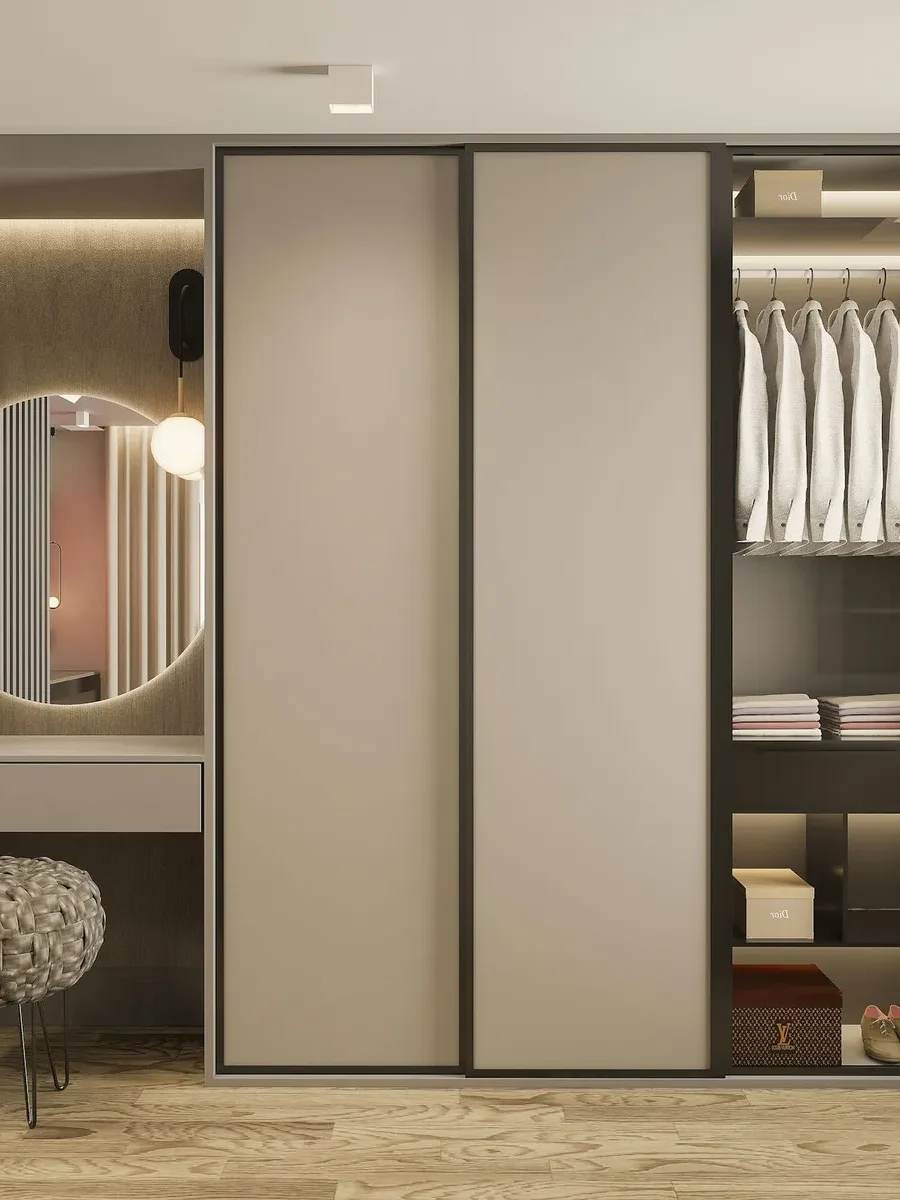
Louvred, slatted or solid shutters
The shutter is where a wardrobe either breathes or does not. A US Department of Agriculture bulletin on mildew, reprinted by Oregon State University Extension, observes that poorly ventilated closets get damp and musty in continued wet weather and recommends improving air circulation by opening the doors or installing a fan. Louvred shutters build that circulation in: air moves through the angled slats all day without the doors standing open.
Louvres have their own trade-offs. Dust gets in through them, so hanging clothes near the door may need a quick shake more often, and they do little good if the room itself is shut and humid. Slatted or perforated panels, or a solid shutter with a vented band at top and bottom, give a calmer look with some of the same airflow. A fully solid, tight-closing shutter is the right choice only in a room with air conditioning or a dehumidifier running through the monsoon, or for a section kept for things that need protecting from dust more than damp.
An open wardrobe with a curtain in front is the most breathable option of all, and an old one in Goan houses. A lined cotton or linen curtain on a ceiling track hides the rail, softens the room and can be taken down and washed. It suits guest rooms, children's rooms and walk-in dressing areas. Our louvers page shows the louvred panels we fit, and our linen curtains suit a wardrobe front well.
| Front | Airflow | Dust | Works best |
|---|---|---|---|
| Louvred shutters | Good | Some gets in | Naturally ventilated rooms, external walls |
| Slatted or perforated panels | Moderate | Some gets in | Modern rooms that want a quieter look |
| Solid shutters with top and bottom vents | Moderate | Little | Rooms with fans and regular airing |
| Solid, tight-closing shutters | Poor | Very little | Air-conditioned or dehumidified rooms only |
| Open rail with a curtain | Very good | More | Guest rooms, dressing areas, older houses |
Planning something like this?
We visit homes across North and South Goa, measure on site, and bring samples to see in your own light.
Board choice for the carcass and back panel
Most built-in wardrobes in Goa are made from plywood or engineered board with a laminate or veneer face, and the board matters because the carcass sits in damp air for months. The Bureau of Indian Standards' IS 303 covers general-purpose plywood in two bond grades: moisture-resistant (MR) and boiling-water-resistant (BWR). The difference is in the adhesive, and the tests show it: BWR specimens are boiled for hours in repeated cycles, while MR specimens are soaked at 60 °C. For a wardrobe on an external wall or near a bathroom, ask your carpenter for the more water-resistant grade and to see its marking.
MDF and the denser moisture-resistant fibreboards sold as HDHMR are smooth, stable and take paint and laminate well, which is why they are popular for shutters. Their weak point is the cut edge, which takes up water and swells if it is left raw. Whatever the board, every cut edge should be edge-banded, both faces laminated or sealed so the panel takes up moisture evenly, and the bottom panel kept off a floor that is mopped daily.
The back panel deserves more thought than it usually gets. A thin back screwed tight to a damp wall is where mould starts on the wardrobe itself. Ask for a back that stands off the wall on battens, finished on both faces, with a small gap at the top and bottom of the carcass so air can rise behind it. We are not carpenters, and the final specification is your wardrobe maker's call, but these are the questions that matter for a humid room.
A wardrobe on an external wall should stand off it: a gap behind the back panel prevents more mould than any product inside.
Wardrobe internal design that keeps air moving
Inside, the aim is to stop pockets of still air. The Oregon State University bulletin advises hanging clothes loosely so air can circulate around them. In practice that means more hanging length than you think you need, so the rail never has to be packed tight; a gap of a finger or two between hangers; and long-hanging and short-hanging sections arranged so the air can rise past the hems.
Shelves are where linen and folded clothes go musty, because the inner layers of a tight stack never see moving air. Keep stacks low, leave a gap between the top of each stack and the shelf above, and consider slatted or perforated shelves in the sections that hold towels and bed linen. Drawers should not be filled to the brim, and a drawer that is never opened in the monsoon is the one to check first.
Separate the materials that suffer most. The Canadian Conservation Institute lists cellulose fibres such as cotton, linen and rayon as the most vulnerable to mould, with wool and silk also affected. Leather shoes, bags and belts are a favourite of mould in Goan wardrobes too. Give leather its own ventilated section, not a sealed box at the bottom of the wardrobe, and keep shoes that come in wet out of the wardrobe until they are completely dry.
- Plenty of hanging length, with gaps between hangers
- Low stacks on shelves, with air above each one
- Slatted or perforated shelves for linen and towels
- Leather in a ventilated section of its own
- Nothing stored on the wardrobe floor against an external wall
Lights, desiccants and dehumidifiers: what actually dries a wardrobe
The traditional trick of a light left on in the cupboard is real, but it depends on heat. The USDA bulletin advises drying air in closets and small spaces by burning an electric light continuously, a 60 to 100 watt bulb, noting that the heat will prevent mildew if the space is not too large, and warns that the bulb must be far enough from clothing and other flammables to avoid fire. That advice was written for incandescent bulbs. A modern LED strip lights the wardrobe well but gives off very little heat, so it is not a drying aid. If you want a warm, dry cupboard, a small low-wattage heater made for the purpose, fitted by an electrician, is the safer route.
Desiccants work only in closed spaces. The same bulletin lists silica gel and similar moisture absorbers for closets whose doors are kept closed and well sealed, and warns that anhydrous calcium chloride liquefies as it absorbs water and can make holes in clothing it touches. In a louvred wardrobe in an open room, a small tub of desiccant saturates quickly and does almost nothing. Our guide to humidity in Goa explains why the room matters more than the cupboard.
The most effective dryer is the one that treats the whole room. The US Environmental Protection Agency advises keeping indoor humidity below 60%, ideally between 30 and 50%. A dehumidifier, or air conditioning on dry mode, running in a closed bedroom through the monsoon protects everything in the wardrobe, the bed linen and the curtains at once.
Linings, covers and storing fabric through the monsoon
What clothes are wrapped in matters as much as the wardrobe. Plastic dry-cleaning covers and sealed plastic boxes trap whatever moisture is already in the fabric; the Canadian Conservation Institute cautions against storing textiles in sealed enclosures without humidity control. Use breathable covers instead: cotton garment bags for jackets and festive clothes, cotton or calico drawer liners rather than plastic sheet, and old cotton bedsheets to wrap bulky items.
Saris, silks and heirloom textiles deserve particular care. Fold them loosely with as few sharp creases as possible, interleave with clean cotton, and refold them along different lines a few times a year. The USDA bulletin's advice to sun and air stored articles on warm, dry days is exactly what Goa's October and November allow, and a mid-monsoon check on a dry morning catches problems while they are still on the surface.
Curtains, bedspreads and cushion covers stored for the rains need the same rules at a larger scale: clean, completely dry, wrapped in cotton, off the floor and away from external walls. If the house will be closed, our monsoon take-down and storage service takes curtains down, cleans and stores them, and rehangs them for the season.