 Drape Haus
Drape Haus
Preparing the room
Drape Haus
Preparing the room
Blinds
A blackout blind is only as dark as its edges. The fabric stops the light; the channels, the headbox and the way it is fitted decide whether the room is truly dark at six in the morning. We make them as rollers, Romans and honeycombs, each sealed to suit the window.
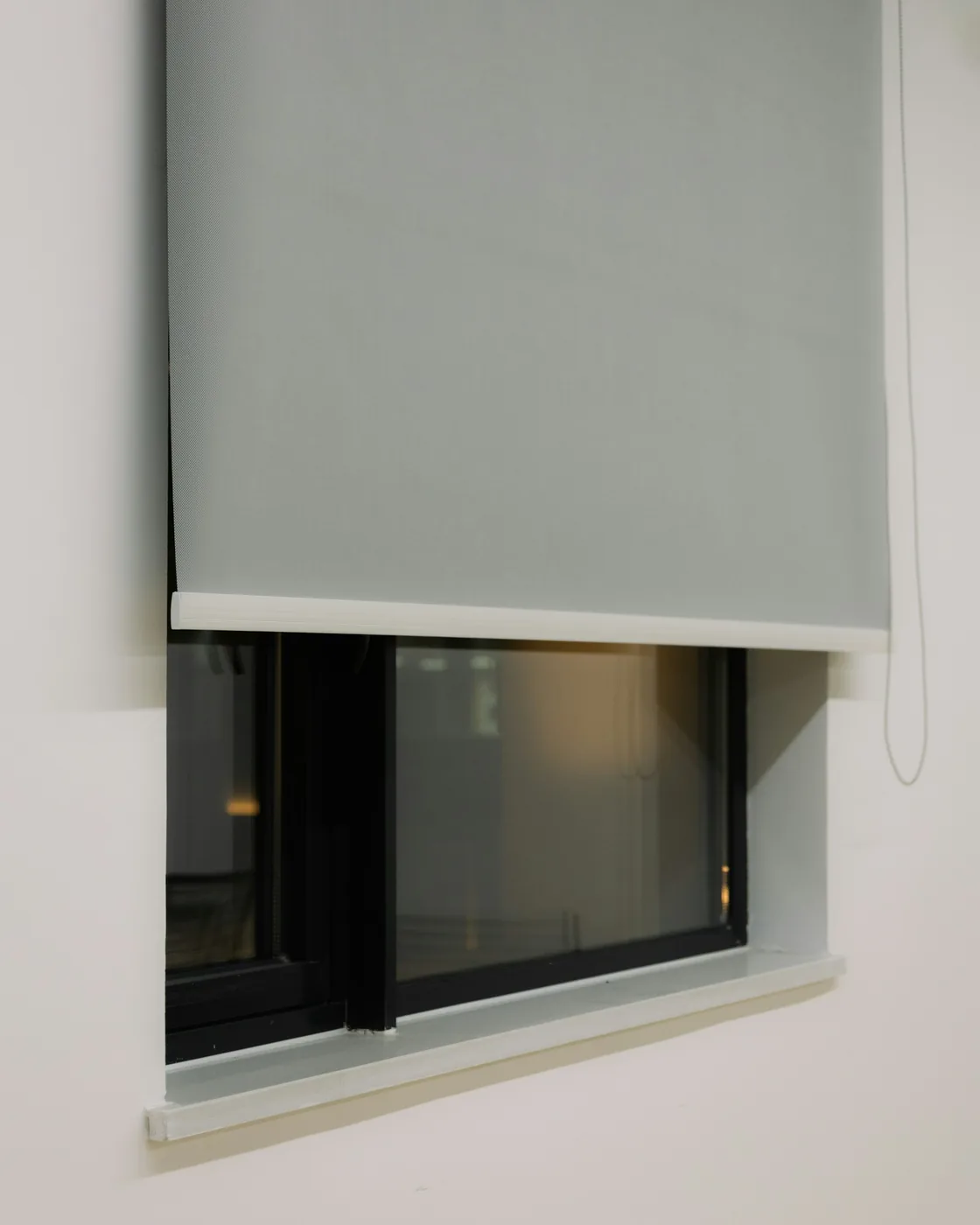
Roller · Midday
Treatment
Time of day
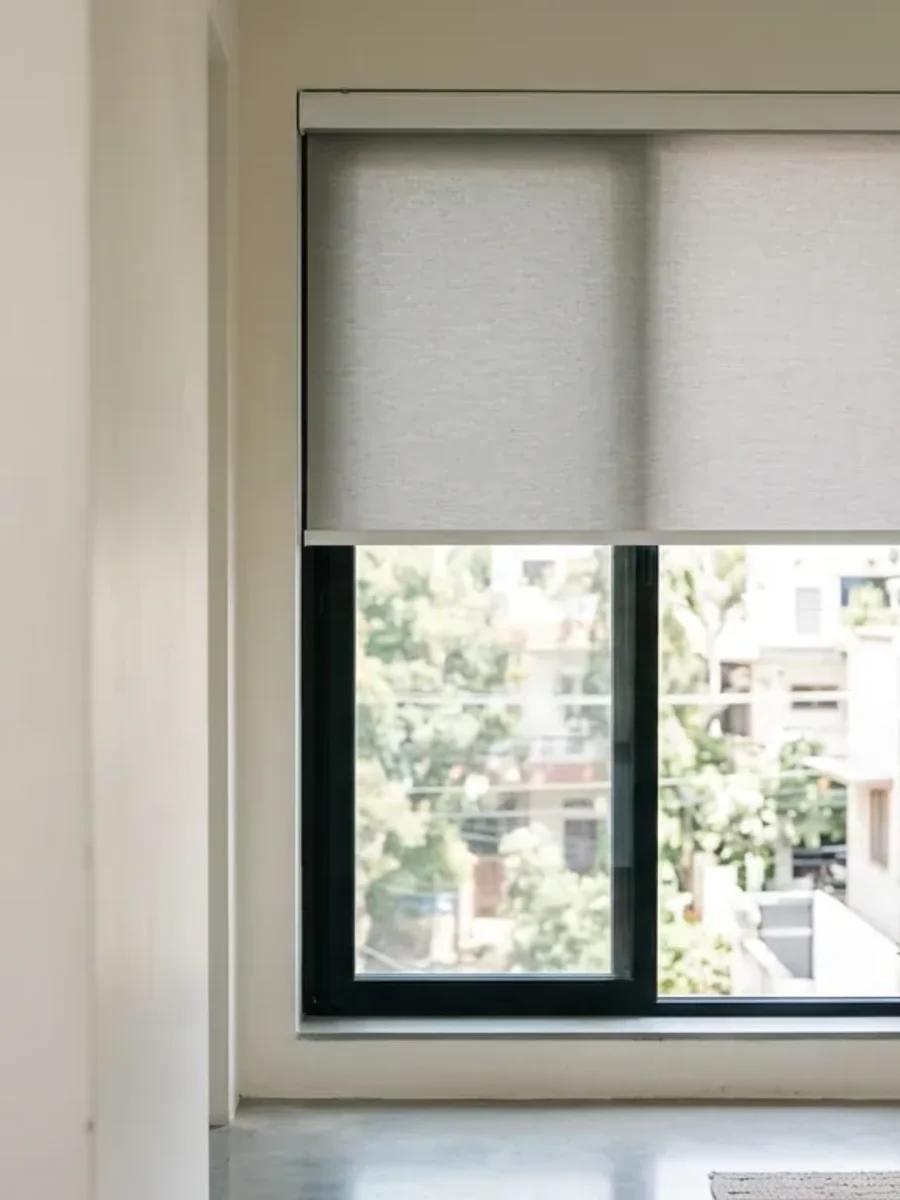
Light-filtering roller fabric: soft, even light and daytime privacy. For a bedroom, choose blackout fabric and side channels.
In short
By the Drape Haus studio · How we write
Is it right for you?
Blackout describes a fabric, not a result. A blackout cloth is coated or densely lined so that no light passes through its face. Fit that cloth in a window recess with a centimetre of clearance each side and the room will still glow, because the light simply goes around it. Room-darkening and true blackout are separated almost entirely by what happens at the edges, the top and the bottom of the blind.
That matters more in Goa than many people expect. Through the hot months the sky is bright before six, and an east-facing bedroom fills with light long before anyone in it wants to wake — and night-shift workers, babies at nap time and homestay guests off a late flight all need darkness while the window is full of sun.
A blackout blind is the right choice when the window sits in a recess, over a bed head, a desk or a sill you use, or when you want darkness without a heavy curtain on the wall. It is not the whole answer for a large glazed wall, where a blackout curtain on a ceiling track is easier, or for a room that also needs to be airy and bright by day, where a blackout layer works best paired with something lighter.
The details
Most people who ask for blackout have already tried a blackout fabric and been disappointed. The cloth was opaque, yet a bright line ran down both sides, a glow leaked over the top and a strip of daylight lay on the sill. Those gaps are where the real work is, and on a Goan summer morning, with the sun up well before most people want to be, they are what wakes you.
For the darkest result we fit a coated roller inside aluminium side channels, with a bottom channel or a weighted rail that lands in a seal, and a cassette over the roll. A blackout Roman blind brings the softness of fabric and a lined, interlined finish, but it cannot be sealed the same way, so we face-fix it with a generous overlap instead. Honeycomb blinds with an opaque inner lining sit between the two and run neatly in channels of their own.
Darkness has a side effect in a humid climate. A blind sealed tight against the glass traps a pocket of still air, and in the monsoon that pocket can run with condensation. We plan for it: a reflective white backing towards the glass to keep heat out, coated fabrics that will not hold water, and a routine of raising the blind on dry days so the frame can breathe.
Your options
Each kind of blind can be made opaque. They differ in how well they can be sealed against the frame, and in what they look like when raised.
Swipe for all 5 →
The honest view
Darkness at the window itself
Sealed at the frame, a channelled blind stops light at the glass rather than across the room, so a recess or a sill stays usable and the room does not need a wall of fabric.
Heat control with the right backing
A white or reflective face towards the glass returns part of the sun before it turns to heat in the room, which helps on west-facing bedrooms through April and May.
Moisture-tolerant coatings
Coated blackout fabrics shed water and resist mildew far better than a cotton curtain lining, which matters in a closed Goan bedroom through the rains.
Edges need hardware
Without channels, every blackout blind leaks light at the sides. Channels add visible aluminium lines to the frame and need a square, true recess.
Condensation risk
A tightly sealed blind traps still air against the glass. In the monsoon that air can condense on the pane and the frame, so the window needs airing on dry days.
Less soft than curtains
A blind does little for echo, and a coated roller looks practical rather than plush. Many bedrooms need curtains as well for comfort and softness.
Side by side
The choices people weigh for a dark bedroom are a channelled roller, a blackout Roman, a blackout honeycomb and the blackout curtains on our Curtains pages. Here is how they stack up.
| Channelled roller | Blackout Roman | Blackout honeycomb | Blackout curtains | |
|---|---|---|---|---|
| Darkness achieved | Near-total | Strong, edge leaks | Very strong with channels | Strong, glow at top |
| Fits a shallow recess | Yes | Needs stack depth | Yes | No, wall-mounted |
| Look | Clean, technical | Soft, tailored | Neat, pleated | Soft, full |
| Heat reflection | Good with white back | Moderate | Good, insulating cells | Moderate |
| Humidity tolerance | High, coated | Lining-dependent | High | Fabric-dependent |
| Sound softening | Minimal | Some | Some | Most |
Swipe to compare →
For a bedroom that must be dark at noon, a channelled blind at the glass with a blackout curtain on a track in front is the arrangement that gets closest to a sealed room.
Rather see it in your own room?
We bring samples to the house, measure every window, and specify for the light and exposure you actually have.
Room by room
The main reason people buy them. A channelled roller behind curtains keeps the early sun out and lets you choose when the room wakes up.
Afternoon naps need a dark room at the brightest time of day. Choose cordless or motorised operation and pale, washable colours on the room side.
Guests sleep late after travel and on holiday. A sealed blind is hard to misuse and gives every guest the same dark room.
A roller in channels kills reflections on the screen.
You rarely need full dark to work. A solar roller or zebra blind gives glare control without turning the lights on at three in the afternoon.
In depth — tap a heading to read
Light enters around a blackout blind at four places. The sides are the worst, because the fabric must be narrower than the recess to run freely. The top glows where the roll sits clear of the head of the frame. The bottom shows a bright line where the base rail stops short of the sill. And lower-grade coated fabrics show pinholes, tiny flaws in the coating that look like stars in a dark room.
Each has its own fix. Side channels — slim aluminium profiles screwed to the reveal — capture the edges of the fabric. A cassette or pelmet closes the top. A bottom channel, a brush seal or a weighted rail that sits into a sill profile closes the base. Pinholes are prevented by choosing a properly coated or multi-pass fabric and inspecting it against a bright light before it is made up.
If the blind cannot have channels, fix it outside the recess and overlap the opening by several centimetres each side.
Inside the recess, a blackout blind looks neat and leaves the wall clear, but it only works with channels; otherwise the side gaps are unavoidable. The recess must also be reasonably square. Old laterite walls and Portuguese-era openings are often out by a centimetre or more from top to bottom, and a channel fixed to a crooked reveal will bind the fabric. We measure the diagonals and at three heights before deciding.
Outside the recess, fixed to the wall or the face of the frame, the blind overlaps the opening and the light it misses is caught by the wall. This is the usual route for Romans and for openings too irregular for channels.
A dark blackout fabric facing the glass absorbs the sun and turns into a radiator. On a west-facing bedroom in May, the back of the blind can be hot to touch by late afternoon, and that heat ends up in the room. A white, pearl or reflective-coated backing returns a share of the sunlight back through the glass before it is absorbed.
Most of our blackout rollers are specified two-faced: reflective or white to the window, the chosen colour to the bed.
A sealed blackout blind creates a narrow, still pocket of air between itself and the glass. In the rains, when the air is saturated and the glass is cooler than the room, that pocket condenses. Water beads on the pane, runs to the frame and wets the bottom of the blind.
Choose coated fabrics rather than lined cotton for bedrooms that stay closed through the monsoon, and keep the air-conditioner drying the room when it is in use. On any dry spell, raise the blinds for an hour and open the window. In a house left shut for months, leave blinds raised rather than lowered so the glass and frames can dry out between storms.
Side channels, cassettes and bottom rails are usually aluminium, which suits the coast well when it is anodised or powder-coated. The weak points are the small parts: the screws that hold the channels, the brackets inside the cassette and the chain or spring in the mechanism. Plated steel corrodes fast in salt air and leaves orange streaks down a white channel.
In sea-facing rooms we specify stainless fixings throughout, a plastic or stainless chain, and a cassette that keeps salt-laden dust off the rolled fabric.
The most complete bedroom answer is two layers. The blind seals the glass; a curtain in front adds softness, absorbs sound, covers the aluminium channels when drawn and catches any remaining glow at the top.
Because the blind is doing the hard work, the curtain can be lighter — a lined linen rather than a heavy blackout drape — which is kinder in the humidity and easier to clean. Plan the curtain track to clear the blind's cassette and channels, and keep the stack of the curtain off the glass so the blind can still be raised.
Living with it
Coated fabrics clean with a damp cloth and a little mild soap. Never soak or machine-wash them; the coating can crack and pinholes will appear.
Run a soft brush or damp cloth down the side and bottom channels every few weeks to clear dust, insects and salt, so the fabric runs freely.
Lift the blind and open the window for an hour whenever the rain stops, so condensation behind it can dry out.
Avoid these
The fabric is opaque but the room still glows. If darkness is the goal, the edges matter more than the cloth.
A navy or charcoal back facing the glass soaks up heat. Specify a white or reflective back and keep the colour on the room side.
Lined cotton holds monsoon damp against the glass and mildews. Choose coated synthetics for rooms shut through the rains.
Old walls are rarely square. Channels on an uneven reveal bind the fabric; check diagonals or face-fix instead.
Checklist
More in blinds
Blinds do what curtains cannot: tight light control in a shallow recess, a clean line on a busy window, and genuine blackout when they run in side channels.
Our work
Our process
One team from the first visit to the last bracket, so nothing is lost between the person who specified it and the person who fits it.
FAQ
A coated roller in side channels with a cassette and bottom seal comes very close — most people describe the room as dark enough to sleep at midday. A blackout Roman or a blind without channels will always let a thin line of light round the edges.
Yes, and daytime naps are where they earn their place. Choose a channelled roller or honeycomb with a cordless or motorised mechanism so there are no cords within reach.
They help, especially with a white or reflective backing facing the glass, which bounces some of the sun back out before it warms the room. External shade does more on a west-facing wall, but a reflective blackout blind is a real improvement over a dark one.
Blinds seal better at the window and suit recesses, sills and furniture beneath the glass. Curtains darken from the wall and add softness and sound absorption. In a bedroom the darkest arrangement is a channelled blind with curtains in front.
Because the fabric must be narrower than the window to roll freely, so light passes the sides, the top and the base rail. Side channels, a cassette and a bottom seal close those gaps; without them, fix the blind outside the recess with a wide overlap.
The fabric can, with a blackout lining, but a Roman cannot run in channels, so a line of light shows at the edges. Fixing it outside the recess and overlapping the opening reduces this a great deal. For complete darkness, pair it with a curtain or choose a channelled roller.
A sealed blind traps still air against the glass, and in humid weather that air can condense. It is manageable: choose a coated fabric, raise the blind on dry days, and keep the room ventilated or air-conditioned during the monsoon.
Yes. Channelled rollers and honeycombs motorise well, with battery or wired motors and a manual fallback for power cuts. It is particularly useful in nurseries and for several blinds that should close together.
Next step
Every window leaks light differently. We visit, look at the room at the hour that bothers you, measure the recess at three points and check whether the reveal is square enough for channels. Then we bring coated, lined and honeycomb blackout samples to hold against your glass, recommend the fit and the backing, make the blinds to measure and fit them. Book a home visit and tell us when you would like the room to stay dark.