 Drape Haus
Drape Haus
Preparing the room
Drape Haus
Preparing the room
Blinds
A honeycomb blind is two or more layers of pleated fabric bonded into a row of hexagonal cells. The air trapped in those cells slows heat moving through the window, which makes them one of the most useful blinds for a hot west-facing room or a roof light in Goa.
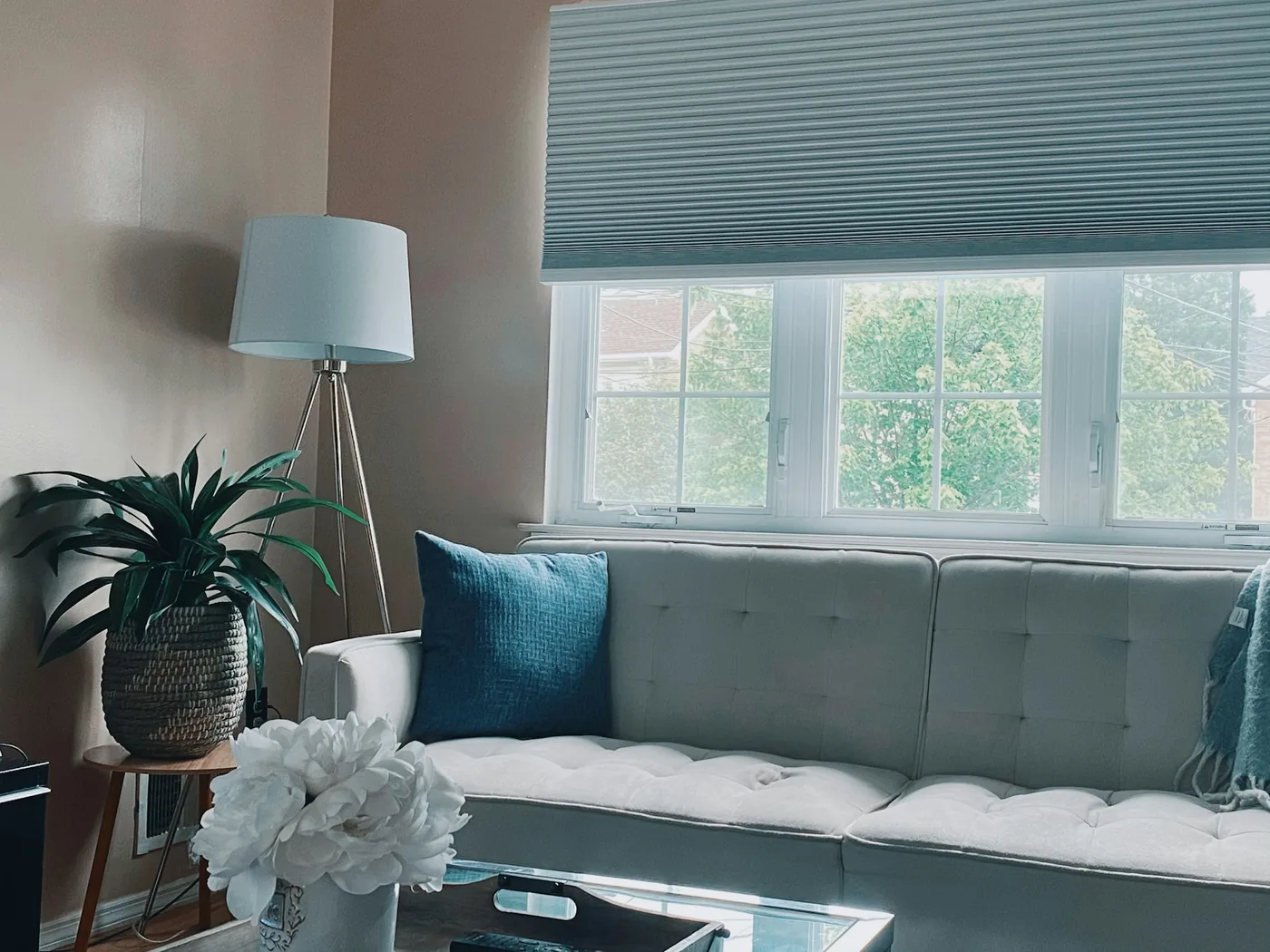
Roller · Midday
Treatment
Time of day
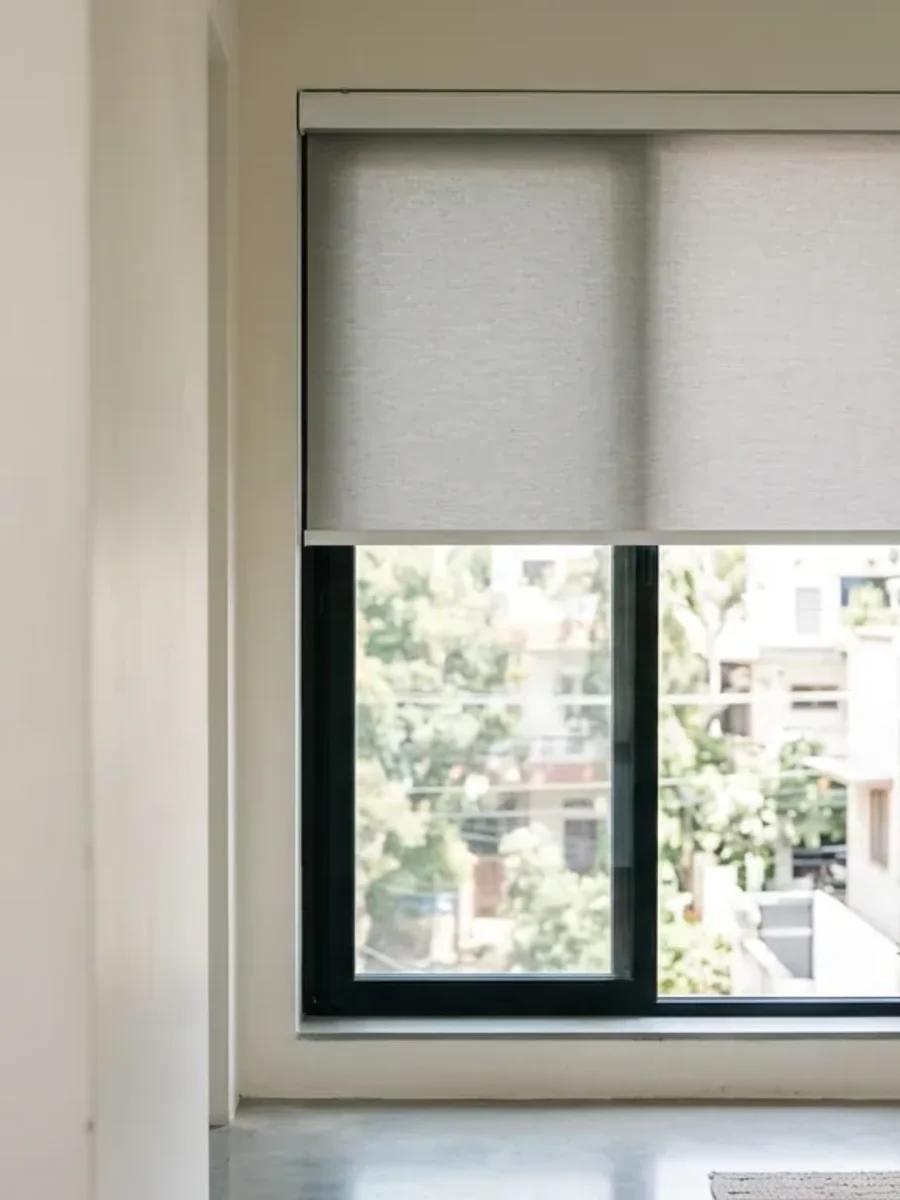
Light-filtering roller fabric: soft, even light and daytime privacy. For a bedroom, choose blackout fabric and side channels.
In short
By the Drape Haus studio · How we write
Is it right for you?
Take two pleated sheets of fabric, bond them at every fold, and you get a row of hollow tubes running the width of the window. That is a honeycomb blind. The tubes hold a thin layer of still air between the glass and the room, and that air is the whole point: it acts as a buffer, so the heat soaking into a sunlit pane has a harder time reaching your sofa, and cooled air inside has a harder time escaping back out through the window.
In Goa that matters most on two kinds of glass. The first is the west-facing window or sliding door that takes the low afternoon sun from about three o'clock until sunset. The second is overhead glazing: a roof light over a stairwell or a glazed section of a sloping roof, which sees the sun for most of the day. A honeycomb blind is one of the few interior blinds that makes a measurable difference on both.
It is not the right choice everywhere. If you want a textile, tailored look that matches the curtains, a Roman blind is warmer. If you want slats to steer the light, a Venetian does that and a honeycomb cannot. And if the window is wet from splashing or steam, a PVC or faux-wood blind will cope better than any fabric. Where a honeycomb earns its place is the hot window you need to tame without losing all the daylight.
The details
Seen end-on, the fabric looks like a slice of honeycomb. Each cell is a small pocket of still air, and still air is a poor conductor, so glass that is baking in the afternoon sun passes less of that heat into the room. A flat roller or a single-layer Roman blind has no such pocket.
The blind folds up into a very shallow stack, often only a few centimetres deep, so it fits a narrow reveal and almost disappears when raised. The pleats stay crisp because the cells hold their shape, rather than relying on rods sewn into the fabric.
Most honeycomb fabrics are spun polyester, which shrugs off humidity far better than cotton or linen. Near the sea we pair them with coated or stainless fittings and enclosed cords, because the fabric usually outlasts any plated metal that is left open to salt air.
A top-down, bottom-up version lets you lower the top edge while the bottom stays closed. You keep the sky and the light, and the lane or the neighbouring balcony sees nothing. For ground-floor bedrooms and bathrooms facing a road, this is often the deciding feature.
Your options
The decisions are the cell structure, the fabric's light rating and how the blind is raised and lowered. Together they decide how warm, how dark and how easy to live with the blind will be.
Swipe for all 6 →
The honest view
Genuine heat reduction
The trapped air layer makes a real difference on hot glass, more than a single sheet of fabric can, and it helps an air conditioner hold the room at temperature.
Tiny stack, clean window
Raised, the blind compresses into a slim band at the top of the frame, so almost the whole glass is clear when you want the view.
Flexible privacy
The top-down, bottom-up option solves the common Goan problem of a window that faces a lane or a close neighbour but also gives the best light.
Humidity-tolerant fabric
Spun polyester cells keep their shape through the monsoon and do not hold damp the way a lined cotton blind can.
Cells collect dust and insects
The open ends of the cells are a natural hiding place for dust and small insects, especially in a house left closed. They need blowing out from time to time.
A modern, plain look
The pleated face is quiet and contemporary. In a heritage room with carved joinery, a Roman blind or timber Venetian usually sits more comfortably.
Cannot be repaired easily
A torn or crushed cell is hard to mend invisibly. In a room with boisterous children or pets, a roller is more forgiving.
Side by side
For a sun-struck window the realistic choices are a honeycomb blind, a solar roller, a lined Roman blind or curtains with a thermal lining. This is how they compare.
| Honeycomb blind | Solar roller | Lined Roman | Thermal-lined curtains | |
|---|---|---|---|---|
| Heat buffering | High, air in cells | Moderate, reflects some | Moderate | Good when fully drawn |
| Keeps the view | No, unless raised | Yes, through the weave | No | No |
| Stack when open | Very small | Small roll | Deep folds | Wide, needs wall space |
| Top-down option | Yes | No | Rarely | No |
| Humidity tolerance | High | High | Depends on lining | Depends on fabric |
| Look | Quiet, pleated | Minimal | Soft, tailored | Soft, full |
Swipe to compare →
If the view matters as much as the heat, a solar roller keeps the outlook; if the heat matters more, the honeycomb wins.
Rather see it in your own room?
We bring samples to the house, measure every window, and specify for the light and exposure you actually have.
Room by room
The window that makes the sofa unbearable at five o'clock is exactly where cells help most. A light-filtering double cell keeps the room bright while cutting the heat off the glass.
Blackout cells in side channels give a dark, cooler room, and the double-cell structure softens early-morning noise from the road a little.
A tensioned honeycomb runs flat on overhead glass. For anything out of reach, specify a motor rather than a pole.
Top-down, bottom-up gives daylight with privacy. Keep it out of the direct shower splash and choose a fabric rated for humid rooms.
Cooking grease settles inside the cells and is hard to remove. A PVC or faux-wood blind is easier to keep clean beside a hob.
The pleated face can feel out of place against old timber shutters and lime plaster. A fabric Roman blind often suits the architecture better.
In depth — tap a heading to read
A honeycomb gives its best insulation when it sits close to the glass inside the recess, because the air between blind and pane stays still. We measure the reveal width at the top, middle and bottom, take the smallest figure, and check the depth at the handle. Because the stack is so small, honeycombs fit reveals that are too shallow for a Roman blind or a cassette roller.
Where the reveal is out of square, which is common in older Goan houses with plastered laterite openings, a small gap appears on one side. On a light-filtering blind that hardly matters. On a blackout blind it lets in a bright line, so we either fit side channels or move the blind onto the face of the frame with a generous overlap.
Inside the recess and close to the glass insulates best. Outside the recess gives better coverage but lets air circulate behind the blind.
In the hot months before the monsoon, the late-afternoon sun strikes west-facing glass at a low angle and heats the pane well into the evening. A flat blind behind that glass warms up and passes heat into the room. A cellular blind adds a buffer: the outer face gets hot, but the trapped air slows that heat before it reaches the room side.
For the largest effect, choose a pale or reflective outer face, a double cell and an inside-recess fit. It will not equal an external awning or a chik outside the window, which stop the sun before it reaches the glass, but among blinds hung indoors it is one of the strongest choices, and it helps an air-conditioned bedroom stay cool for longer once the unit is switched off.
The fabric is rarely the weak point in Goa; the hardware is. The headrail, the lift cords and any metal end caps sit in still, damp air through the monsoon, and close to the sea that air carries salt. We specify coated aluminium headrails, stainless or polymer fittings and enclosed cord paths, so nothing plated is left to rust and stain the pleats.
Houses closed for months are the other risk. Dust and the occasional insect find their way into the cells, and in a sealed humid room that dust holds moisture. Leaving a blind fully lowered over a shut window for the whole monsoon is a recipe for marks along the folds. Raise it, or ask a caretaker to open the room on dry days.
Many Goan homes have a window that faces the lane, the neighbour's balcony or a shared compound, yet is also the room's main source of light. Lowering any ordinary blind solves the privacy problem by making the room dim. A top-down, bottom-up honeycomb lets you drop the top rail to bring sky light in over head height while the lower half stays covered.
At night the picture changes. Light-filtering cells become a glowing panel from outside, and silhouettes can show through when lamps are on. In rooms used after dark, choose a denser fabric or blackout cells for the lower part of the window.
Because the cells are light and hold their own shape, a honeycomb can be guided along wires or side tracks and stay flat across sloping or horizontal glass, where a roller would sag. That makes it a common fabric choice for roof lights over stairs and bathrooms.
Overhead blinds bring their own questions about tensioning, motors and monsoon leaks, so we cover those separately on our skylight blinds page. The short version: specify the cell fabric for heat, and specify the system for the slope and the reach.
Living with it
Use a feather duster or a vacuum on low suction with a soft brush, working along the pleats rather than across them so the folds are not crushed.
Every few months, lower the blind fully and use a hairdryer on cool or a gentle air blower at one end of each cell to clear dust and insects.
Dab marks with a barely damp cloth and mild soap, then let the blind dry fully lowered. Never soak it, which can unbond the cells.
Avoid these
Blackout cells stop light through the fabric but not round the sides. Without side channels or a good overlap, a bedroom will still have bright edges at dawn.
A blind mounted well outside the recess lets air circulate behind it, and much of the insulating benefit is lost.
Grease drifts into the cells and stays there. Use a wipe-clean blind in a working kitchen.
Bright-plated brackets and cords look fine in the showroom and rust in the first monsoon near the coast.
Checklist
More in blinds
Blinds do what curtains cannot: tight light control in a shallow recess, a clean line on a busy window, and genuine blackout when they run in side channels.
Our work
Our process
One team from the first visit to the last bracket, so nothing is lost between the person who specified it and the person who fits it.
FAQ
None. Cellular blinds and honeycomb blinds are two names for the same product: pleated fabric bonded into hexagonal air pockets. Some catalogues also call them cell shades.
They reduce heat passing through the glass, especially when fitted close inside the recess. They cannot match shading outside the window, but among interior blinds they are among the most effective for a hot west-facing or roof window.
Single cell suits most rooms and gives a lighter look. Double cell adds a second row of air pockets for more insulation and better sound softening, and is worth it on the hottest windows and in bedrooms.
Yes. Because the fabric is light and the pleats are held by guide wires or side tracks, a honeycomb blind can run flat across sloping or horizontal glass. Our skylight blinds page covers the tensioned systems in detail.
Yes, provided the fabric is a synthetic such as spun polyester and the fittings resist corrosion. The cells hold their shape through the monsoon. The care needed is mostly about dust in the cells, which can hold moisture in a closed room.
Only if you choose blackout cells, and even then light passes at the edges unless the blind runs in side channels. Light-filtering and sheer honeycombs are designed to let a soft glow through.
A little. The air pockets soften high-pitched sound such as voices or a scooter in the lane, and a double cell does more than a single. They will not make a room quiet beside a busy road.
The blind has a moving rail at both the top and the bottom. Pull the top rail down to open the upper part of the window for light, or lift the bottom rail as usual. Both can be set at once.
Next step
The value of a honeycomb blind shows up on a specific window at a specific time of day, so we start there. We visit, measure each recess at several points, check the depth and the condition of the reveal, and bring single and double cell samples in filtering and blackout fabrics to hold up against the glass. We then recommend the cell, the fabric, the fitting position and the operating system, make the blinds to measure and fit them. Book a home visit and tell us which room gets too hot.