 Drapehaus
Drapehaus
Preparing the room
Drapehaus
Preparing the room
Material
Faux wood divides opinion until you have seen what a Goan monsoon does to a real timber blind in a bathroom. In wet rooms, kitchens and coastal properties, composite and PVC are not a compromise — they are the correct specification.
By the Drapehaus studio · 19 September 2026 · How we write
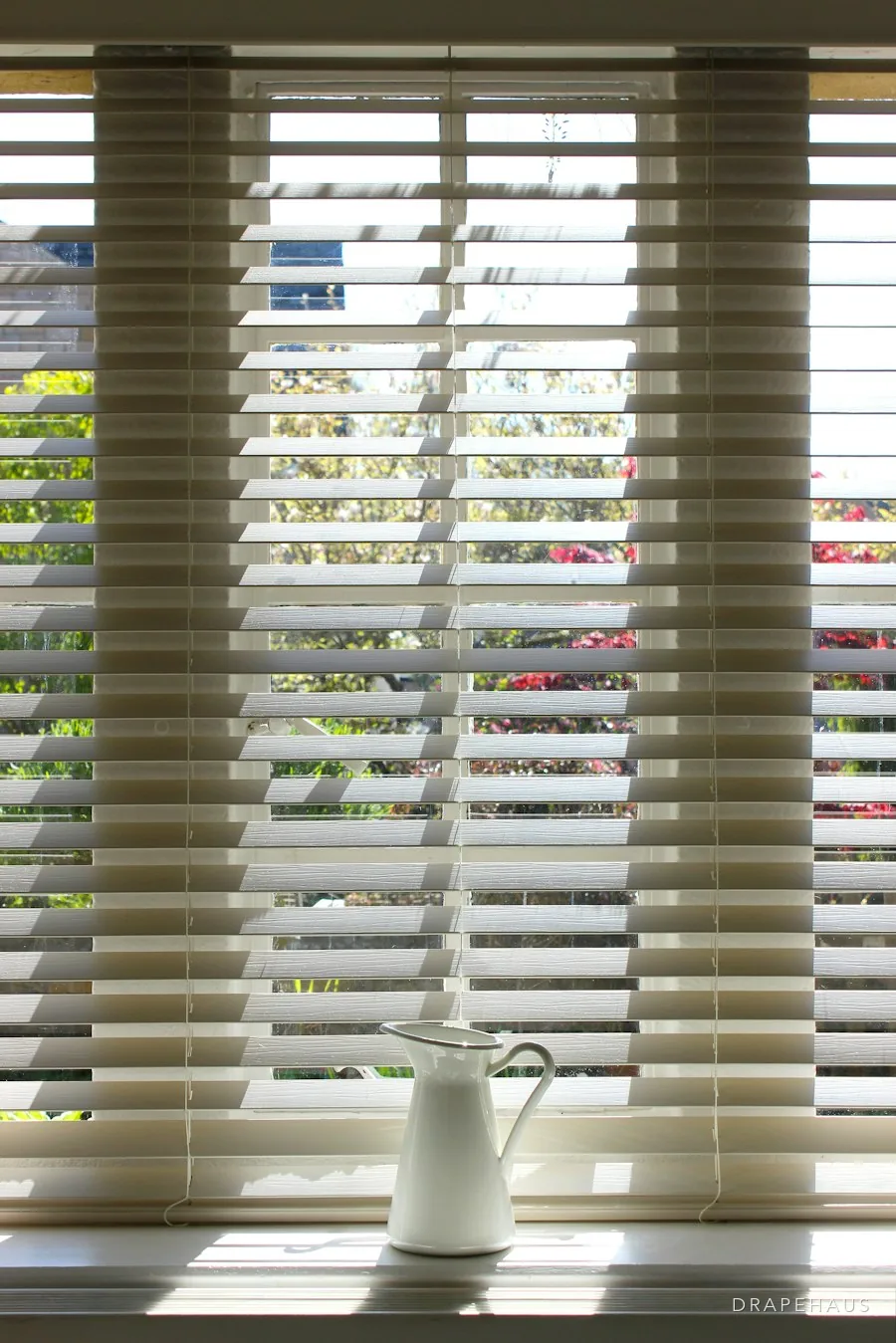
The materials have improved considerably. At normal viewing distance a decent composite is difficult to distinguish from painted timber, and it will not warp, will not feed termites and can be wiped clean rather than dusted carefully.
Bathrooms and kitchens first. Real timber in a room with sustained humidity and direct splashing will swell, stiffen and eventually seize, and no finish fully prevents it. Composite is dimensionally stable and wipes down.
Coastal properties second. Salt and humidity together are hard on timber even in dry rooms, and a composite slat is indifferent to both.
Let properties third, because faux wood tolerates handling by people who do not know the mechanism, and individual slats can be replaced without remaking the blind.
Weight is the main one. Composite slats are meaningfully heavier than timber, so a wide blind deflects in the middle and the lift mechanism works harder. Past about 1.8 metres it is usually better to split into two blinds than to accept the sag.
Heat is the second. A dark composite slat in direct sun can get hot enough to soften slightly over years, which shows as a gentle wave along the slat. Lighter colours and a reflective backing reduce it.
And close up, it is not timber. The grain is printed or embossed rather than real, and in a room where someone will stand next to it and look, that difference registers. In a bathroom nobody does; in a study they might.
Rather see it in your own room?
We bring samples to the house, measure every window, and specify for the light and exposure you actually have.
More on this — tap a heading to read
Faux wood covers several different materials sold under one name. Most slats are PVC, often with a foamed core to save weight and a harder printed or coated surface. Composite slats mix PVC with wood fibre, which gives a more timber-like feel and a slightly warmer look. Some lower grades are polystyrene, which is lighter and more brittle.
The difference that matters most in Goan sun is UV stabilisation. PVC without adequate stabilisers yellows and becomes brittle with prolonged sunlight, and white slats show it first. Good-quality slats contain stabilisers that slow this considerably. It is worth asking the supplier directly, because two white slats that look identical in the showroom can age very differently on a west-facing window.
Ask, too, about the finish. A printed grain on a smooth surface wipes clean easily; a deeply embossed texture looks more convincing but holds dust and kitchen grease in its grooves.
Aluminium venetians are the other wet-room option, and in several situations they beat faux wood. They are much lighter, so a wide blind does not sag and the mechanism lasts longer. The slats are thin, so the stack at the top is small when the blind is raised. And they cannot swell, warp or absorb water at all.
Their weaknesses are different. Near the sea, aluminium with a poor or damaged coating can pit and whiten with salt, so a good baked or powder-coated finish matters. Thin slats dent if knocked. And on a window that is often open, aluminium slats tap and clatter against each other and the frame in a breeze, which in a bedroom can be genuinely irritating.
A reasonable rule is aluminium for wide windows, high-traffic bathrooms and anywhere weight is a concern; faux wood where warmth of appearance matters and the width is modest.
The slat material gets the attention, but in a humid coastal house the mechanism is often what fails. Headrails made of plated steel can corrode from the inside in salt air, and a corroded headrail jams the tilt and lift. In coastal properties it is worth asking for aluminium or well-coated headrails and non-corroding internal parts.
Ladder tapes and cords matter as well. Cotton tapes look attractive but absorb moisture, mark and can mildew in a bathroom; polyester tapes and cords resist all of this. For wet rooms, polyester is the sensible choice even where a decorative tape is wanted.
Child safety is non-negotiable. Looped cords are a strangulation hazard for small children, and current safety practice requires cord tensioners, breakaway connectors or cleats set high enough to keep cords out of reach. Wand-operated tilt and cordless lift systems remove the problem entirely and are also easier for guests to use correctly.
In a bathroom, fit the blind inside the reveal where possible, with clearance from taps, shower screens and anything that splashes. Sills that collect water should drain away from the blind, so the bottom rail is not sitting in a puddle. Wipe condensation off the slats after a shower during the monsoon rather than leaving them to drip-dry in saturated air.
In a kitchen, the important point is distance from the hob. PVC and composite slats soften and distort with heat, and if they catch fire they give off harmful smoke. A blind should never hang where a gas flame or hot pan can reach it; where the only window is close to the hob, aluminium or a fixed obscured glazing solution is safer.
For night-time privacy, tilt the slats so the room-side edges point upwards, which directs any line of sight from outside towards the ceiling rather than into the room. Remember that some light and silhouette will always show through the slat gaps and cord holes when the lights are on.
In a rental, blinds are handled by many people who do not know how the mechanism works, and the typical damage is a lift cord pulled at an angle until the blind hangs crooked, or slats bent by someone looking through them. Faux wood tolerates this better than real timber, and cordless or wand systems reduce it further.
Keep spare slats from the same production batch when the blinds are made. Colour and finish vary slightly between batches, and a replacement slat from a later order can stand out. With spares on hand, a damaged slat can be swapped between bookings without remaking the blind.
Blinds for wet rooms are best measured and fitted in the dry months. Window frames and reveals in older houses can move slightly with the seasons, and a blind measured for a tight inside fit in dry weather should be given a little tolerance so it does not bind when timber frames swell in the monsoon. Measuring each window at three points across the width catches reveals that are out of square.
It is also worth thinking about the house as a whole. A bathroom with faux wood next to a bedroom with linen curtains is perfectly consistent if the colours and slat finishes relate to the timber and textiles nearby. Choosing a slat tone that matches the doors or window frames, rather than an arbitrary wood colour, makes the composite read as part of the house rather than as a substitute for something better.
Finally, look at what the blind does when raised. A faux wood stack is deeper than an aluminium or timber one, and on a short window it can block a noticeable part of the glass. Mounting the headrail above the opening lets the stack sit clear of the view.
Diagnosis
WhySustained humidity and splashing swell the slats and the mechanism binds.
FixFaux wood or aluminium. In a Goan bathroom this is a correct answer rather than a preference.
WhyComposite slats are heavier than timber and deflect over a long span.
FixSplit into two blinds past about 1.8 metres, or use aluminium, which is lighter and stiffer.
WhyDark composite in strong direct sun softening slightly over years.
FixLighter slat colours and reflective backing on sun-exposed windows.
WhyPrinted or embossed grain rather than real timber figure.
FixAccept it in wet rooms where nobody inspects closely, and use real sealed hardwood in dry rooms where they will.
WhyPVC without adequate UV stabilisers breaks down in prolonged sunlight, and white shows it first.
FixReplace with UV-stabilised slats, and ask about stabilisation before ordering for any sunny window.
WhyPlated steel parts in the headrail have corroded in salt air and seized the tilt or lift.
FixSpecify aluminium or well-coated headrails and non-corroding internal parts near the sea.
WhyLight, thin slats move and tap against each other and the frame in any breeze.
FixUse faux wood on windows that stay open, or fit hold-down brackets to steady the bottom rail.
Checklist
Always use in bathrooms and kitchens here
Prefer in coastal and let properties
Split blinds wider than about 1.8 metres
Choose lighter colours on sun-exposed windows
Consider aluminium where weight is a problem
Save real timber for dry rooms viewed close up
Confirm the slats are UV-stabilised before ordering
Ask for aluminium or coated headrails near the sea
Fit cord safety devices, or choose wand and cordless systems
Keep blinds well clear of gas hobs and cooking heat
FAQ
In bathrooms, kitchens, coastal properties and rentals, clearly yes — they do not warp, do not attract termites and wipe clean. In a dry inland room where someone will stand next to them, real sealed hardwood still looks better close up.
Not in the way timber does, but a dark composite slat in strong direct sun can soften slightly over years and develop a gentle wave. Lighter slat colours and a reflective backing largely prevent it.
About 1.8 metres before deflection in the middle becomes visible and the lift mechanism starts to struggle, because composite is heavier than timber. Past that, split into two blinds or move to aluminium, which is lighter and stiffer.
Faux wood, PVC or aluminium. Real timber in a room with sustained humidity and splashing will swell, stiffen and eventually seize regardless of the finish applied to it. This is one of the few genuinely clear-cut material decisions.
Both work. Aluminium is lighter and stiffer, so it suits wide windows and busy bathrooms, but it can clatter when the window is open and needs a good coating near the sea. Faux wood looks warmer and is quieter, but it is heavier, so keep it to modest widths or split wide windows into two blinds.
Poorly stabilised PVC can, especially white slats on sunny windows, and it also becomes more brittle as it degrades. Good-quality slats contain UV stabilisers that slow this considerably. Ask the supplier directly before ordering, and on west-facing windows consider aluminium, which does not yellow.
Close the slats flat and wipe them with a damp cloth and a little mild detergent, then turn them the other way and repeat. In a kitchen, a warm detergent solution lifts grease that plain water leaves behind. Avoid abrasive pads and strong solvents, which can dull or strip the printed grain finish.
Tilt the slats so the room-side edges point upwards, which sends any view from outside towards the ceiling rather than into the room. Some light and silhouette will still show through slat gaps and cord holes. Where full night privacy matters, pair the blind with a curtain or choose a roller instead.
Yes, provided they are kept well away from the hob. They handle steam and splashes easily and wipe clean of grease, but PVC and composite slats soften with heat and give off harmful smoke if they burn. Where a window sits right beside a gas hob, aluminium or obscured glazing is the safer choice.
Keep reading