 Drapehaus
Drapehaus
Preparing the room
Drapehaus
Preparing the room
Blinds
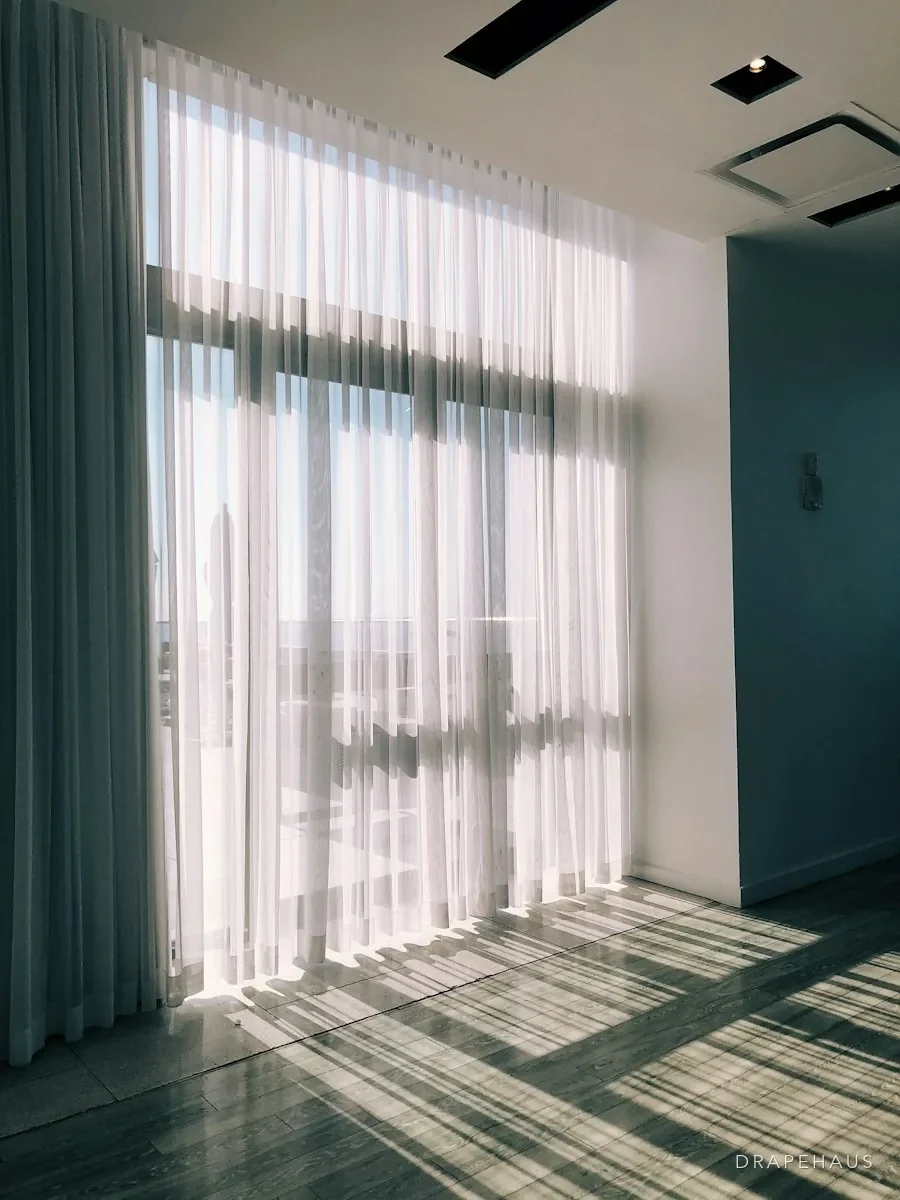
The softness of a curtain with the neatness of a blind. A Roman blind folds up into crisp horizontal pleats and lets down flat, which makes it ideal where there is no room for curtains to stack.
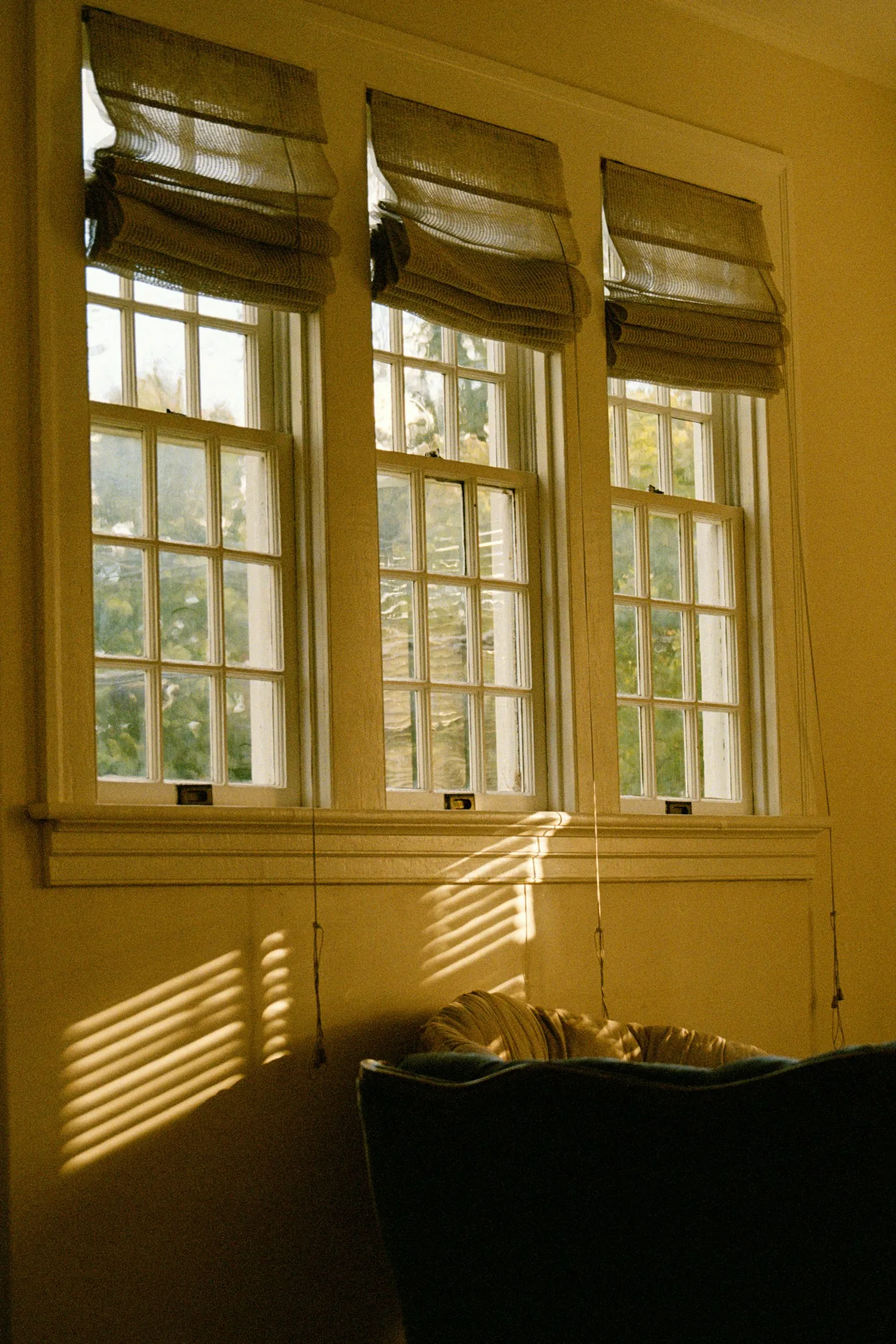
Roman · Midday
Treatment
Time of day
Fabric that folds up in soft pleats — the look of a curtain in the footprint of a blind. Lined, it is fully private at night.
In short
By the Drapehaus studio · How we write
Is it right for you?
A Roman blind is a flat panel of fabric with horizontal rods sewn into pockets on the back. Cords run up through rings on those pockets to a headrail; as the cords are drawn, the lowest rod rises to meet the next, and the fabric gathers into even folds that stack at the top of the window. Let down, it hangs flat and shows the whole width of the fabric.
Because it is made like a curtain - face fabric, lining, sometimes interlining, all hand-finished - it brings colour, pattern and softness to windows where curtains do not fit: over a kitchen sink, above a desk, on a window seat, or in a narrow bay. It is the most decorative blind we make and the one that most rewards careful fabric choice.
It is less suited to wet rooms, where fabric and lining will mark and spot, to very wide windows, where a single Roman becomes heavy and folds unevenly, and to rooms that need total darkness, where a blackout roller in side channels closes the edges more completely. In a house closed for the monsoon, the fabric and lining must be chosen to tolerate the damp.
The details
Because they are made in fabric, Roman blinds can match the curtains or cushions elsewhere in the room, and they suit windows over a desk, a sink or a window seat where a full-length curtain would get in the way.
They can be unlined for a soft filtered light, lined for privacy or made in blackout for a bedroom — and in Goa we keep the linings breathable so they do not hold monsoon damp.
Your options
The style sets how the folds look; the lining decides how much light passes and how the fabric behaves in humidity.
Swipe for all 6 →
The honest view
Softness without stack-back
A Roman gives the texture and colour of a curtain but needs no wall space beside the window. It suits corners, bays and windows between cupboards.
Coordinates with the room
Made in any suitable curtain or upholstery fabric, it can match cushions, bedheads or curtains elsewhere, which pulls a room together.
Blackout with a soft look
With a blackout lining and a face-fixed position, a Roman darkens a bedroom well while looking far warmer than a roller.
Hand-finished detail
Borders, contrast banding, pattern centred on each fold and hand-stitched edges make it the most individual of blinds.
Folds take space at the top
Raised fully, the folded fabric sits in a stack at the head of the window that can cover part of the glass. On a short window, fix it above the opening.
Fabric and lining feel the damp
Natural fibres and heavy interlinings hold monsoon moisture and can spot. The fabric and lining must be chosen for the climate.
Edge gaps in a recess
An inside-mounted Roman leaves a strip of light at each side. True blackout needs a face fix with a generous overlap.
Heavy on wide windows
Past a certain width the blind is heavy to lift and the folds lose their line. Split it into two or three.
Side by side
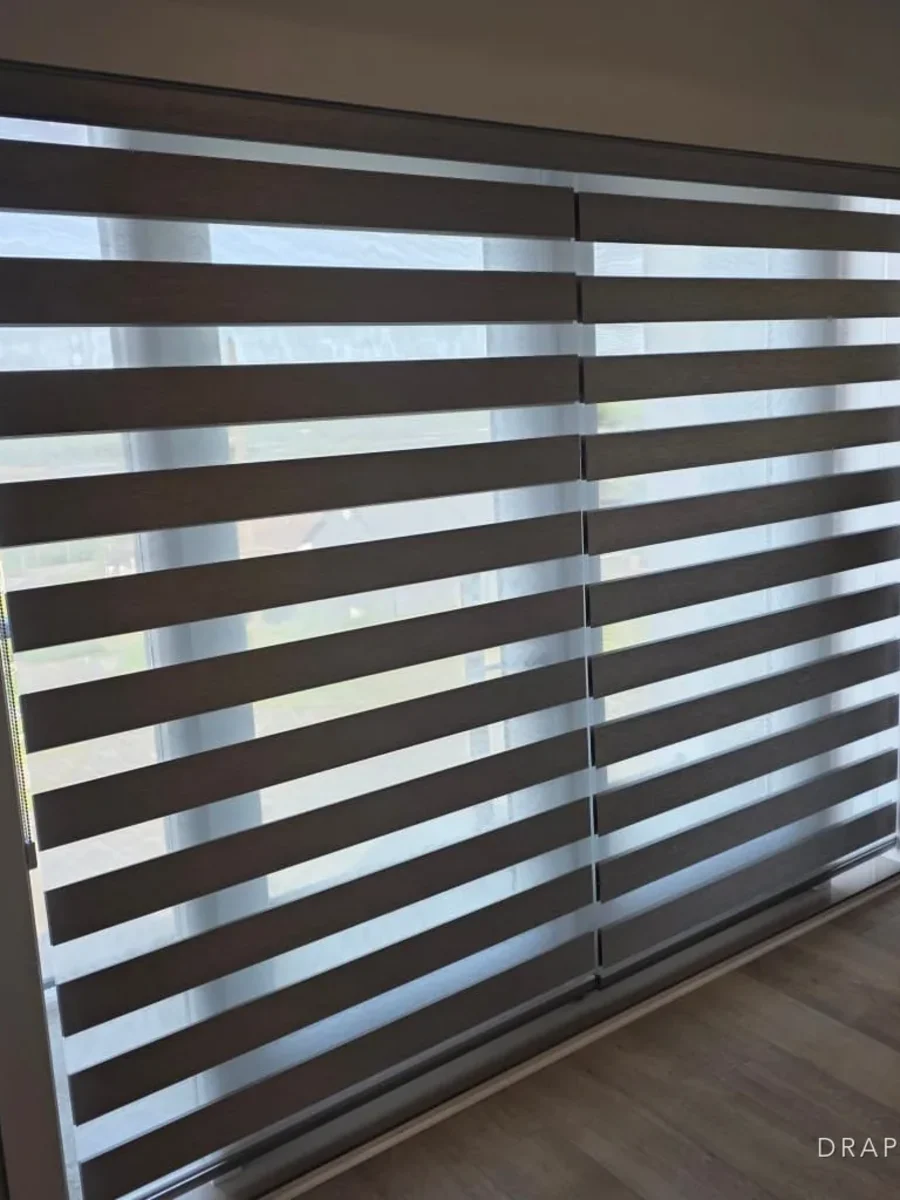
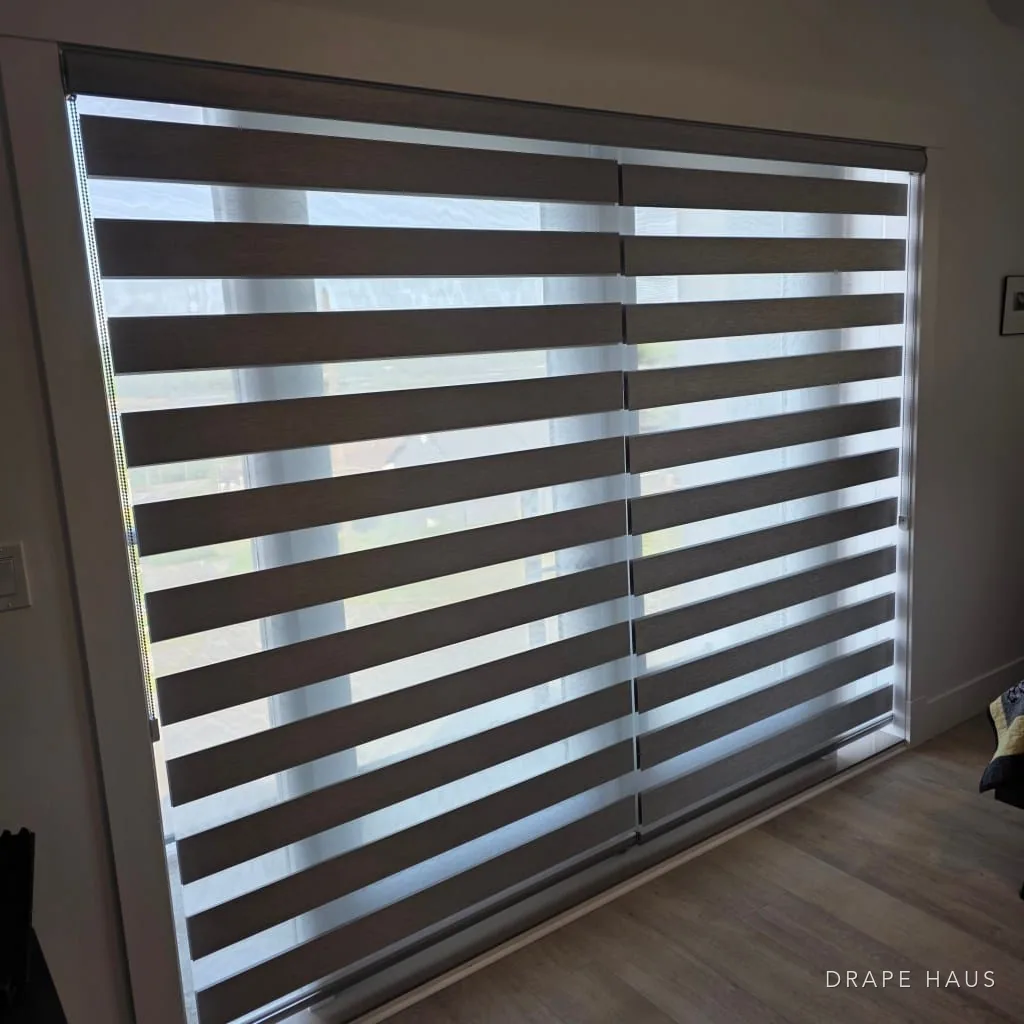
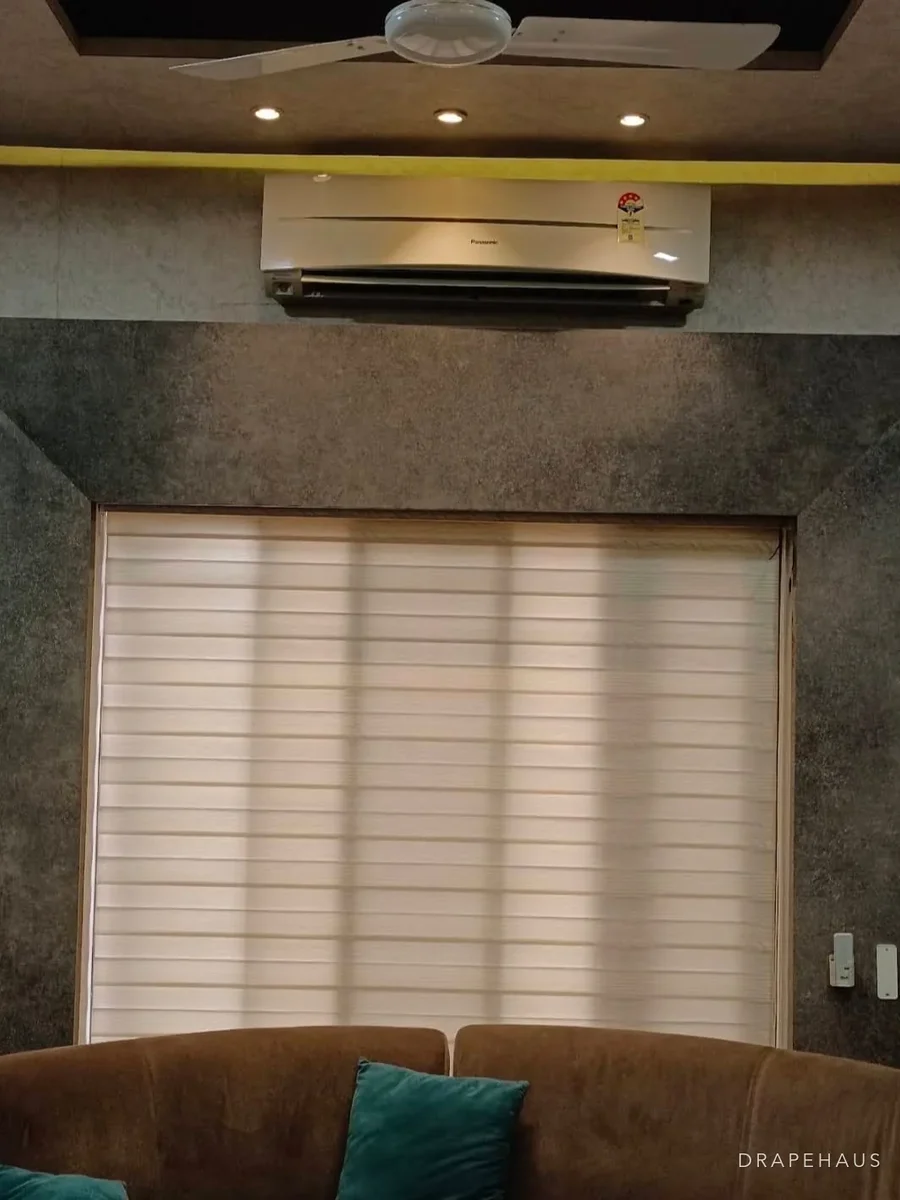
On a bedroom or dining room window, the realistic choices are a Roman blind, a blackout roller, curtains and a zebra blind.
| Roman blind | Blackout roller | Lined curtains | Zebra blind | |
|---|---|---|---|---|
| Softness and texture | High | Low | Highest | Low |
| Darkness | Near-blackout with lining | Full in channels | Good with overlap | Room-darkening |
| Wall space needed | None | None | Stack-back each side | None |
| Humidity tolerance | Moderate, fabric-led | Very high | Fabric-led | High |
| Space at top when open | Folded stack | Slim roll | None | Slim roll |
| Cleaning | Vacuum, dry-clean | Wipe | Vacuum, clean off-site | Wipe |
Swipe to compare →
Rather see it in your own room?
We bring samples to the house, measure every window, and specify for the light and exposure you actually have.
Room by room
A blackout-lined Roman, face-fixed with an overlap, darkens well and looks soft. Layer dress curtains in front for the fullest result.
A cheerful fabric and blackout lining suit nap time. Use a chain with a tensioner or a motor, never loose cord loops.
Coordinates with upholstered chairs and lets the table sit close to the window without curtains brushing it.
An unlined, synthetic Roman over a sink gives softness and dries quickly. Keep it away from the hob and splashing.
The classic use. The blind stays within the window, leaving the seat and cushions clear.
Steam marks fabric and spots linings. Use only in a large, well-ventilated bathroom, away from the bath and basin.
Choose synthetic fabrics and a breathable lining, and raise the blinds before leaving so folds are not held damp for months.
In depth — tap a heading to read
The fabric makes a Roman blind, and in coastal Goa it has two jobs: to look right and to come through a monsoon without spotting. Fine linen and cotton are beautiful folded, but they take up moisture readily and will mark in a room that stays humid. Polyester and linen-look blends fold just as crisply and hold far less water.
Weight matters for the folds. A medium-weight fabric forms a clean, sharp pleat; a very thin one looks limp, and a very heavy one bulks up into a deep stack. Pattern placement matters too: on a patterned fabric we centre the motif on the blind and plan the folds so the design sits well when raised, not only when lowered.
A lining protects the face fabric from sun, gives the blind body and blocks some light. An interlining - a soft layer between face and lining - adds a fuller, more luxurious fold and some insulation. In a cooler climate it is a mark of quality. Here it needs judgement, because a thick interlining holds monsoon damp for weeks.
We usually use a breathable cotton-polyester lining, and blackout lining only where darkness is needed. Where interlining is wanted for the look, we choose a synthetic one that dries quickly. The rods in the pockets are fibreglass or aluminium rather than timber, which could bow in humidity and distort the folds.
Condensation on the glass wicks into the bottom fold of a Roman blind. Leave a small gap between the blind and the glass, and raise it on dry mornings in the monsoon.
A blackout lining stops light passing through the fabric, but light still finds the edges and the stitching lines where rods are sewn in. To keep those lines dark, we either sew the rod pockets to the lining only, so there are no stitch holes through the face, or add a separate blackout layer that hangs free behind the blind.
Position matters more than lining. Face-fixed above the window with an overlap of a few centimetres each side, a blackout Roman makes a bedroom dark enough for most people. For someone who wants complete darkness, the best answer is a blackout roller in side channels behind a decorative Roman, with the Roman doing the styling and the roller doing the work.
A raised Roman gathers its folds into a stack at the top of the window. On a tall window the stack is a small share of the glass; on a short one, fixed inside the recess, it can block the upper view. Fixing the blind above the opening lets the stack sit over the wall and keeps the full window clear.
Inward-opening French windows and casements with handles need the blind to clear them. Here we fix the headrail high enough that the raised stack sits above the opening sash, or use a separate blind for each leaf. On a very wide window, two or three Romans side by side keep each one light and its folds true.
Living with it
Lower the blind and vacuum the face and back with a soft upholstery brush every few weeks. Dust in the folds holds moisture.
Blot marks with a barely damp cloth. Do not rub or soak; face fabric and lining can shrink at different rates and pucker.
When a full clean is needed, have the blind taken down and dry-cleaned or cleaned by a specialist, with the rods removed first.
Raise the blind on dry mornings so air reaches the glass, and do not leave it lowered against a wet window for days.
Leave Romans raised when closing the house, and have them lowered and aired on a dry day during a mid-season check.
Avoid these
It holds damp for weeks and can spot the face. Choose a breathable lining, or a quick-drying synthetic interlining.
The stack covers the top of the glass. Fix above the opening so the stack sits over the wall.
Traditional cords at the back of a Roman are a hazard for children. Use a chain with tensioner, breakaway cords or a motor.
Folds cut a pattern into strips. Plan the fold spacing so the motif sits well when the blind is raised.
It becomes heavy and the folds wander. Split it into two or three matched blinds.
Checklist
More in blinds
Blinds do what curtains cannot: tight light control in a shallow recess, a clean line on a busy window, and genuine blackout when they run in side channels.
Our work
Our process
One team from the first visit to the last bracket, so nothing is lost between the person who specified it and the person who fits it.
FAQ
Over desks, sinks, window seats and anywhere a curtain would be in the way, and on windows where there is no wall space for curtains to stack back.
Yes, with a blackout lining. Because they sit inside or just over the frame, a little light can pass the edges, so for complete darkness a roller in side channels is better.
Yes, with the right fabric and lining. Polyester and linen-look blends, a breathable lining and fibreglass or aluminium rods keep a Roman stable through the monsoon. Heavy natural fabrics and thick interlinings are better saved for dry, well-aired rooms.
Inside the recess looks neater and shows the architrave, but leaves light gaps at the sides and a stack over the top of the glass. Outside, above the opening, darkens better and keeps the window clear when raised. Bedrooms usually benefit from an outside fix.
They are the same thing. 'Roman shade' is the American term; 'Roman blind' is the British and Indian one. Both describe a fabric blind that folds into horizontal pleats as it is raised.
Yes. A motor in the headrail lifts all the cords evenly, which keeps the folds true and suits high or hard-to-reach windows. The headrail needs slightly more depth, which we check when measuring.
Yes, and it is a lovely arrangement in bedrooms. The Roman sits in or tight to the window for light control; the curtains hang wider on a separate track as dress curtains or for extra darkness and softness.
Next step
A Roman blind is tailored, and it begins with fabric seen at your own window. We visit, measure each opening, work out the stack and clearances, and bring face fabrics and linings to hold against the glass in your room's light. We then specify style, lining, fold spacing and mechanism, and our workroom makes each blind by hand before our team fits it. Book a home visit, and we will bring the fabrics with us.