 Drapehaus
Fungus on walls is one of the most common things a Goan house shows after the monsoon: grey-black speckling in a corner, a dark bloom behind a wardrobe, a greenish stain low down on an old wall. What people call fungus is mould, fungi that grow on damp surfaces and feed on the organic matter in paint, dust, plaster additives and wallpaper paste.
Cleaning it off is straightforward. Keeping it away is harder, because mould is a moisture problem. The US Environmental Protection Agency's guidance is blunt about this: the key to mould control is moisture control. So before anything is scrubbed or painted, the job is to work out where the water is coming from.
Below: how to tell the usual sources apart, clean safely, and treat the wall so the fungus does not return next monsoon.
Fungus on walls due to rain: three different problems
Almost all fungus on walls in Goa comes from one of three sources, and each needs a different fix. Seepage is liquid water coming through the wall or roof from outside: driven rain entering through cracks, failed joints around windows, a leaking terrace or gutter, or a downpipe discharging against the wall. It produces damp patches that grow after heavy rain, often with a tide-mark edge, blistering paint and white, powdery salt deposits.
Condensation is water from the air inside the house, forming on surfaces cooler than the air. It is typical on external walls, in corners, behind furniture, on ceilings under a roof slab, and in bathrooms. It tends to produce diffuse black speckling across a surface rather than a stain with a defined edge, and it is worst in still, closed rooms. When indoor humidity follows the monsoon's 83–91%, condensation on cool masonry is routine.
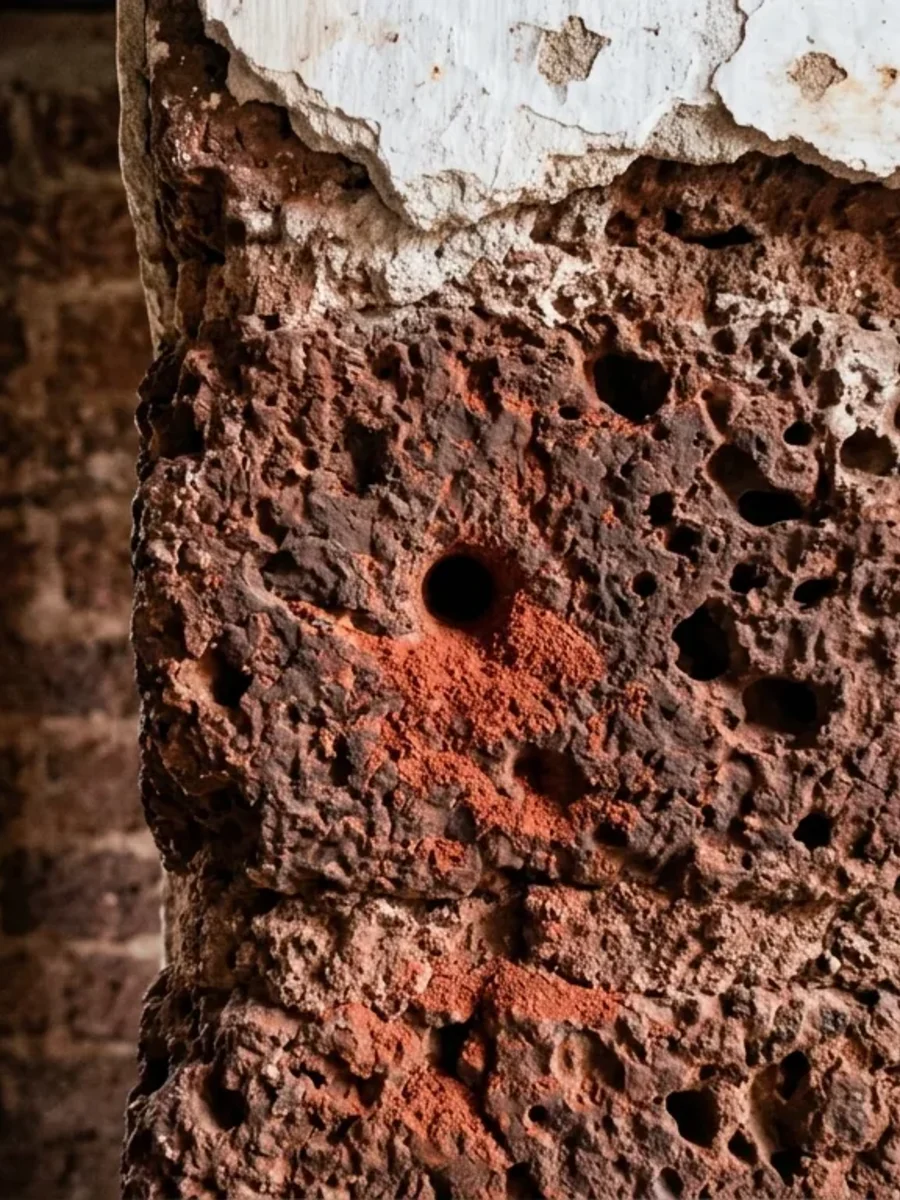
Rising damp is ground moisture drawn up through masonry without an effective damp barrier at its base. It shows as a band of damp, staining and salts from the floor up to a fairly consistent height, and it changes little with the weather. It is most common in older houses built directly on the ground; our guide to laterite and old walls explains why.
- Tide-mark edge, worse after heavy rain, on a west or south-west wall or under a terrace: seepage
- Speckled black spots in corners and behind furniture, worst in closed rooms: condensation
- A band of damp and white salts rising from the floor, present in dry weather too: rising damp
- Test: tape a square of kitchen foil tightly to the wall for two days. Moisture on the room side points to condensation; moisture underneath points to water coming through the wall.
Before you clean: protection and scale
Mould releases spores and fragments when disturbed, and some people react badly to them. The EPA recommends an N-95 respirator, gloves that reach the middle of the forearm, and goggles without ventilation holes. Keep anyone with asthma or allergies out of the room and open the windows.
Scale decides whether this is a household job. The EPA's guideline is that an area smaller than about 10 square feet, roughly a patch one metre square, can in most cases be cleaned by the occupant. Larger areas, mould inside wall cavities or false ceilings, growth that follows a significant leak, and mould that returns within weeks of cleaning are for a specialist, and all of them need the moisture source fixed first.
One rule is absolute: never mix bleach with ammonia, or with any cleaner that contains it. The combination gives off toxic fumes, and many glass cleaners and multipurpose sprays contain ammonia. The EPA's own method for hard surfaces is detergent and water, which is what the steps below use.
Never mix bleach with ammonia or any cleaner containing it. The fumes are toxic.
Planning something like this?
We visit homes across North and South Goa, measure on site, and bring samples to see in your own light.
Fix the moisture source first
Seepage is a building repair, and a job for a builder or waterproofing contractor rather than a paint shop: sealing cracks, re-making joints around window frames, repairing terrace waterproofing, clearing gutters and redirecting downpipes, adding drips under sills. Timing matters. External repairs need dry weather to cure and must be finished before the pre-monsoon storms, which in practice means between November and mid-May.
Condensation is fixed by lowering indoor humidity and raising air movement: ventilating at the right time of day, running a dehumidifier or air conditioner in closed rooms, fitting exhaust fans in bathrooms and kitchens, and pulling furniture off external walls. Our guide to humidity in Goa covers each of these, including what a dehumidifier costs to run.
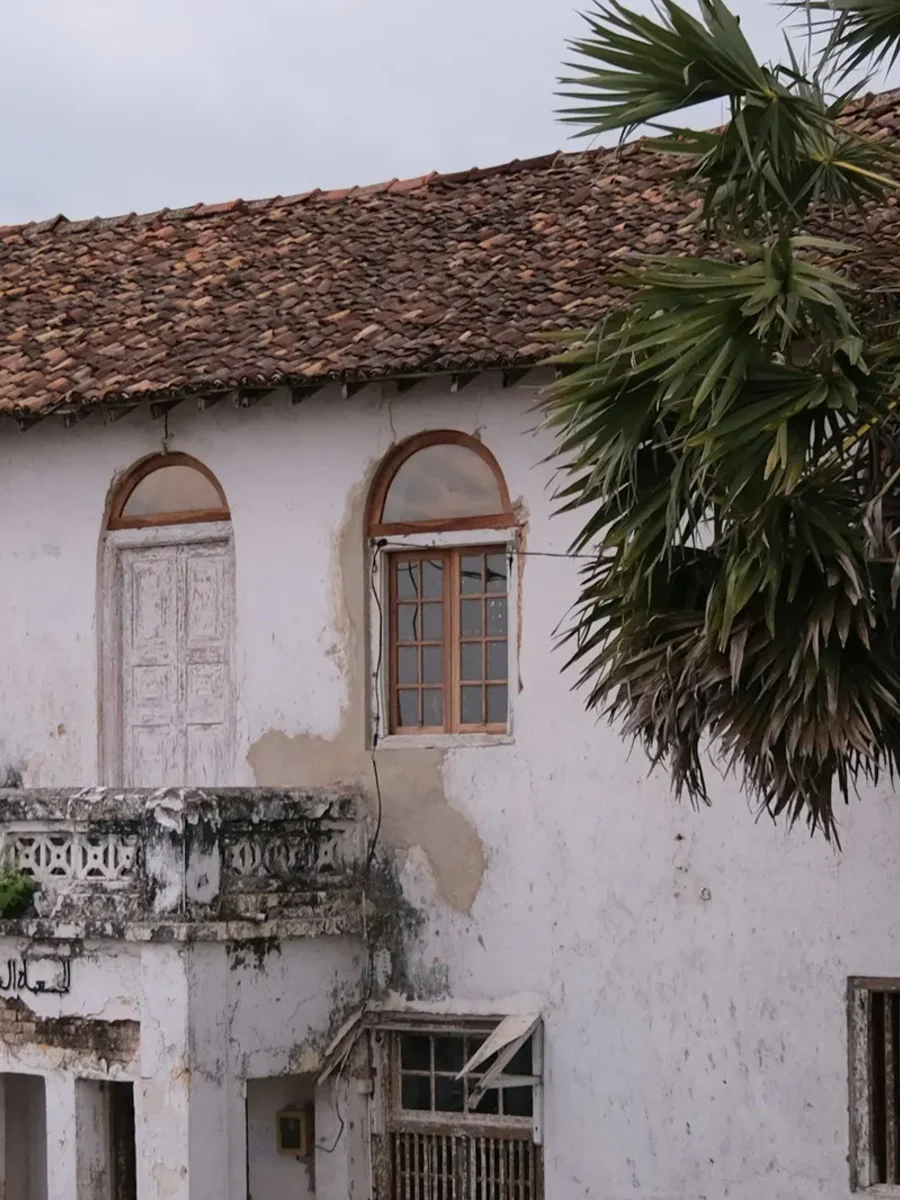
Rising damp is the most specialised of the three. In old lime and laterite houses, the instinct to seal the base of the wall with cement plaster and plastic paint usually makes things worse, because it traps moisture that previously evaporated through the face and pushes it higher up the wall. Take advice from someone experienced with traditional construction; our piece on laterite houses is a useful starting point.
Fungus on wall treatment: primers and paint
The EPA is explicit that mouldy surfaces should not simply be painted or caulked over: clean the mould, dry the surface, then paint. Painting over growth seals it in, and it comes through the new film, often within one season. Anti-fungal primers and paints contain biocides that slow regrowth on the paint film, and they are worth using on walls that have had mould, particularly in bathrooms and on external walls prone to condensation. They are not a cure. A biocide on the surface does nothing about water in the wall, and if the source is still active the mould returns, sometimes behind the new paint.
On older lime-plastered and laterite walls, choose breathable finishes such as limewash or mineral paints over plastic emulsions, so moisture in the wall can still leave through the face. A vapour-tight paint on a damp wall moves the problem to the back of the film, where it shows as blistering and flaking.
What black fungus on walls means for wallpaper
Wallpaper is where fungus on walls becomes expensive. A wall that grows mould under paint will grow it under paper faster: the paste is food, the paper holds moisture against the plaster, and the damage is hidden until it stains through. Vinyl-faced papers, which let no moisture out, are the least forgiving.
So wallpaper follows the same order as paint, with a stricter test: the wall must be dry, the source fixed, and ideally the wall should have come through a monsoon without the mould returning. Which papers and constructions suit Goan houses, and how walls are prepared for them, is covered in our piece on wallpaper for humid homes; for the papers we hang, see home wallpaper.
If mould has already come through an existing wallpaper, the paper generally has to come off. Paper, lining and paste are porous materials of the kind the EPA says may need to be discarded once mouldy. Clean and treat the wall beneath as described above, let it dry out through the dry season, and rehang then.
How to clean fungus on walls
For patches smaller than about a metre square, on a wall whose moisture source you have identified.
Protect yourself and the room
Wear an N-95 respirator, long gloves and unvented goggles. Move furniture away, cover the floor with a dust sheet, open the windows, and keep children and anyone with asthma or allergies out of the room while you work.
Stop the water
Cleaning over active seepage is wasted effort. At minimum, stop the immediate source, such as a blocked gutter or leaking pipe, and plan the permanent repair. For condensation, start running a dehumidifier or air conditioner in the room.
Don't dry-brush
Brushing dry mould off a wall throws spores into the air and across the room, where they settle on furniture and fabric. Work with a damp cloth or sponge instead, so the growth is lifted and held rather than scattered.
Scrub with detergent and water
Use ordinary detergent in warm water and a cloth or soft brush, working from the edge of the patch inwards. Rinse the cloth often and change the water when it discolours. Textured or porous plaster may need several passes.
Dry the wall completely
Run fans and a dehumidifier until the surface is dry to the touch and the room is below about 60% humidity. The EPA notes that drying wet materials within 24 to 48 hours usually prevents mould taking hold again.
Deal with damaged finishes
If paint is blistering, plaster is soft or powdery, or wallpaper is stained through, remove the damaged material rather than cleaning its surface. Bag it before carrying it through the house.
Wait and watch
Leave the cleaned wall unpainted for a few weeks where you can, and look at it in the mornings, when condensation is worst. If speckling returns, the moisture source has not been solved, and painting now would only hide it.
Prime and repaint
Once the wall is dry and has stayed clear, apply an anti-fungal primer and a finish suited to the wall: breathable limewash or mineral paint on old lime and laterite, a good-quality paint system on modern plaster.