 Drapehaus
Drapehaus
Preparing the room
Drapehaus
Preparing the room
Upholstery
A headboard is one of the few pieces where making to size costs little more than buying standard — and transforms the room. We build to the bed, the ceiling and the wall behind.

Durability scale (Martindale rubs, BS 2543)
15k
20k
25k
30k
40k
Who uses it
Where it lives
How it is used
Durability to ask for
30,000+ rubs
Severe domestic / general contract
Removable covers
Yes
zipped, washable, and a spare set
Fibres that suit
Avoid: Anything you cannot clean in place, on a piece used every day. Rub count is one number among several — weave, colour-fastness and how a fabric handles humidity matter as much. We bring samples to see in your room.
In short
By the Drapehaus studio · How we write
Is it right for you?
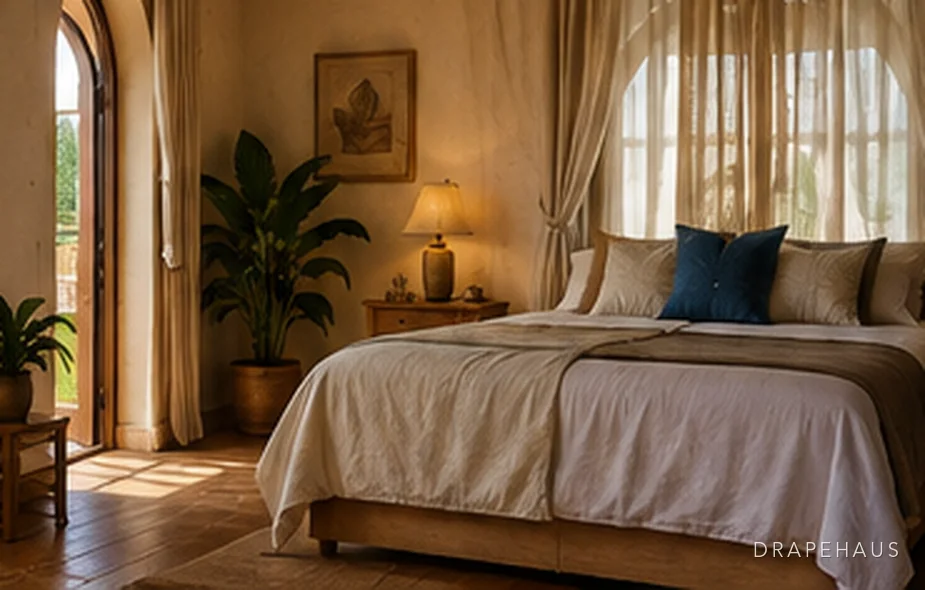
A headboard is the backdrop to the most-used piece of furniture in the house. It gives the bed a presence in the room, softens the wall you lean against to read, stops pillows slipping into the gap, and frames the view of the bed from the door. Made to measure, it can also correct a room's proportions: a tall headboard gives a low bed weight in a high-ceilinged room, and a wide one can make a modest bed read as the centre of a large space.
An upholstered headboard is a timber or board frame, padded with foam and wadding, and covered in fabric, leather or faux leather. The upholstery can be plain and tight, divided into panels, deep-buttoned, channelled into vertical flutes, or shaped with wings that wrap around the pillows. Each changes the character of the room.
Made-to-measure headboards suit almost any bedroom, and they are particularly useful in older houses with high ceilings, deep window reveals or irregular walls where a standard headboard looks lost or will not fit. They also suit rental suites, where a strong headboard gives each room an identity in photographs.
They are less suitable against a damp external wall, where a padded panel can trap moisture behind it. In that case we either leave an air gap, fix the headboard to the bed frame, or suggest a different wall for the bed.
The details
In a heritage room with a high ceiling, a taller headboard sets the scale; in an apartment, a low panelled one keeps it calm. Buttoned, tufted, panelled or plain, in fabric matched to the curtains or cushions.
Headboards can be wall-mounted or fixed to the bed, and covers can be made removable for cleaning.
Your options
The style sets the tone of the room. These are the main ones we make, each with its own practical strengths.
Swipe for all 6 →
The honest view
Sized exactly to the room
Height, width and outline are made for your bed and your wall, including sloping ceilings, window positions and awkward alcoves where a standard headboard would not fit.
Comfortable to lean on
Padding makes reading and breakfast in bed comfortable, and protects the wall from marks. A timber or metal headboard cannot offer the same comfort.
Coordinates with the room
A headboard can be made in the curtain fabric, a toning plain or a contrast, so the bed ties the scheme together. It is one of the best places for a fabric you love.
Softens sound
Upholstery absorbs some sound, which helps in rooms with hard floors, high ceilings and lime-plastered walls where voices can echo.
Changeable later
A removable cover or a new cover on the same frame lets the room change without replacing the bed.
Collects dust
Fabric headboards, particularly buttoned ones, collect dust and hair and need regular vacuuming. Allergy sufferers may prefer leather, faux leather or a tight plain panel.
Marks from hair and hands
The area where heads rest can darken with oils over time. Darker or patterned fabrics, performance finishes or a removable cover reduce the problem.
Needs the right wall
Against a damp external wall, padding can trap moisture. It needs an air gap, a bed-fixing or a better position, especially in closed houses.
Side by side
How a made-to-measure upholstered headboard compares with other ways to finish the wall behind a bed.
| Upholstered headboard | Timber headboard | Wallpaper or paint panel | |
|---|---|---|---|
| Comfort to lean on | Soft | Hard | None |
| Sound absorption | Good | Low | Low |
| Humidity | Needs air gap | Can warp or grow mould | Depends on wall |
| Cleaning | Vacuum or remove cover | Wipe | Wipe or repaint |
| Changeability | New cover | Refinish | Repaint or repaper |
| Suits heritage rooms | Yes | Yes | Yes |
| Hides poor walls | Yes | Partly | No |
Swipe to compare →
Rather see it in your own room?
We bring samples to the house, measure every window, and specify for the light and exposure you actually have.
Room by room
The natural place for a statement headboard: taller, wider and in the richest fabric. Consider extending it to take in the bedside tables and reading lights.
A simple, well-proportioned headboard makes a guest room feel finished. A removable cover keeps it fresh between visits.
A padded headboard is safer than a hard one. Choose a slip cover or a wipeable faux leather that copes with sticky hands.
Headboards give each suite a distinct character in photographs. Specify removable covers and performance fabrics, with a spare set for quick turnarounds.
High ceilings need a taller headboard to hold the scale. Arched or buttoned styles in velvet or linen suit the architecture.
Do not fix padding flush to a damp external wall. Fix to the bed, leave an air gap, or treat the wall first.
In depth — tap a heading to read
The height of a headboard should be judged from the mattress top, not the floor, because that is the part you see. Enough needs to show above the pillows to read as a headboard rather than a strip, and in a room with a high ceiling it should rise considerably further so the bed does not look dwarfed. In a low-ceilinged or attic room, a lower, wider headboard keeps the room calm.
Width is usually the bed width plus a small margin on each side, so the headboard frames the mattress and covers the gap where pillows fall. Extending it to take in the bedside tables makes the wall behind the bed a single composition and suits large rooms. We measure the bed, the mattress height, the ceiling and the position of windows, sockets and switches on site, and can mark out the proposed size on the wall so you can see it before it is made.
Wall-mounted headboards hang on a concealed cleat or bracket, so the bed can be moved for cleaning and the headboard stays put. They suit most walls and give the cleanest look. Floor-standing headboards rest on legs or a plinth behind the bed and are fixed lightly to the wall for stability, which is useful where the wall cannot take much load.
Bed-fixed headboards bolt to the bed frame with struts. They are the answer for damp walls, rented rooms where drilling is limited, or walls of laterite and lime plaster that cannot take a heavy fixing. Old walls in heritage houses need assessing: lime plaster can crumble around a standard plug, so we use fixings suited to the wall or choose a bed-fixed design. We check this at the visit.
A padded headboard is a layer of foam and fabric against a wall. If that wall is an external one, particularly in a house shut through the monsoon, moisture can collect behind it and mildew can grow on the back of the panel and the wall. The problem is not the headboard itself but the still air trapped between it and a cool, damp surface.
The remedies are straightforward. Mount the headboard with a small air gap behind it, choose a synthetic or blended fabric that does not hold moisture, and use a frame and board that tolerate humidity without swelling. For houses that close for the rains, a removable cover can be taken off, washed and stored dry, leaving the padded frame to air. We look at the wall and the room's ventilation before recommending a fixing.
A small air gap behind a headboard on an external wall prevents most monsoon mildew.
Headboards see less abrasion than seats, so fabrics that would be too delicate for a sofa can often be used, including velvets, silks in air-conditioned rooms and fine linens. The part that wears is the band where heads and shoulders rest, which picks up hair oils and can darken. Mid-tones, patterns and textured weaves show this least; pale plain linens show it most.
Matching the headboard to the curtains ties the room together, but a toning plain with curtains in a pattern, or the reverse, often looks more considered. Velvet catches light on channels and buttoning; leather and faux leather give a tailored look and wipe clean. Seen at full size in the room, a fabric can look very different from a swatch, so we bring large samples.
In a rental villa or boutique hotel, headboards do a lot of work in photographs and a lot of work in use. Each suite can have its own colour or style while sharing a construction, which keeps the rooms distinct but easy to maintain. Removable covers let housekeeping swap a marked cover in minutes rather than cleaning it in place.
Specify performance fabrics with a stain-resistant finish, or faux leather in rooms where children or heavy use are expected. Keep a spare cover for each style. Wall-mounted designs make cleaning under and behind beds easier, and a consistent fixing means headboards can be moved between rooms if the layout changes.
Living with it
Use a soft brush attachment every week or two, working into buttons and channels where dust collects.
Blot marks with a damp cloth and mild detergent, testing first. A regular light clean prevents a band of darkening building up.
Follow the fabric's instructions, and refit covers while slightly damp so they ease back into shape.
Look behind the headboard once or twice during the monsoon for mildew or damp, especially on external walls.
If you close the house, remove washable covers, dry them fully and store them in breathable bags in a ventilated place.
Avoid these
A headboard that barely clears the pillows looks lost in a high-ceilinged room. Scale it to the ceiling and the wall.
A wide headboard can cover sockets and light switches. Plan positions before making, or move the electrics.
Padding against a damp external wall traps moisture. Leave an air gap or fix the headboard to the bed.
Plain pale linen darkens where heads lean. Choose a mid-tone, a pattern, a performance finish or a removable cover.
A tall mattress or a new bed can hide much of a headboard. Measure from the mattress top of the bed you will actually use.
Checklist
More in upholstery
Reupholstering a well-built frame costs less than replacing it and keeps a piece you already love.
From the Journal
All articlesOur process
One team from the first visit to the last bracket, so nothing is lost between the person who specified it and the person who fits it.
FAQ
Usually, with the right fixings for laterite or lime plaster. Where the wall cannot take it, we fix the headboard to the bed instead.
Yes, if you want it to be — useful for homestays and rentals.
It depends on the ceiling and the bed. Enough should show above the pillows to read clearly as a headboard, and in a high-ceilinged room it should rise further to balance the space. We measure from the mattress top and can mark the proposed height on the wall so you can judge it before it is made.
Most upholstery fabrics work, since headboards see little abrasion. Velvets suit buttoned and channelled styles; linens and cotton blends suit plain panels; faux leather suits children's rooms and rentals. In humid rooms, choose synthetics or blends, and for the area where heads rest, mid-tones or patterns hide marks best.
Yes. Extending it to take in the bedside tables creates a single composition behind the bed and suits large rooms and suites. It needs planning around reading lights, sockets and switches, which we mark out on site.
They can if fixed flush against a damp external wall in a closed room. A small air gap behind, a synthetic fabric, and ventilation through the monsoon prevent it. Removable covers can be washed and stored dry if the house is closed.
Often, yes. If the frame and board are sound, we can replace the padding and cover it in new fabric, or change its shape slightly. If the frame has warped in damp, a new one is usually the better option.
Next step
We visit, measure the bed, the ceiling and the wall, and check the wall's construction and dampness to choose the right fixing. We bring fabric and leather samples to see in the room's own light, and can mark out the proposed size so you see the proportions before anything is made. Then we make the headboard in our workroom and fit it in place. Book a home visit and we will arrange a time that suits you.