 Drapehaus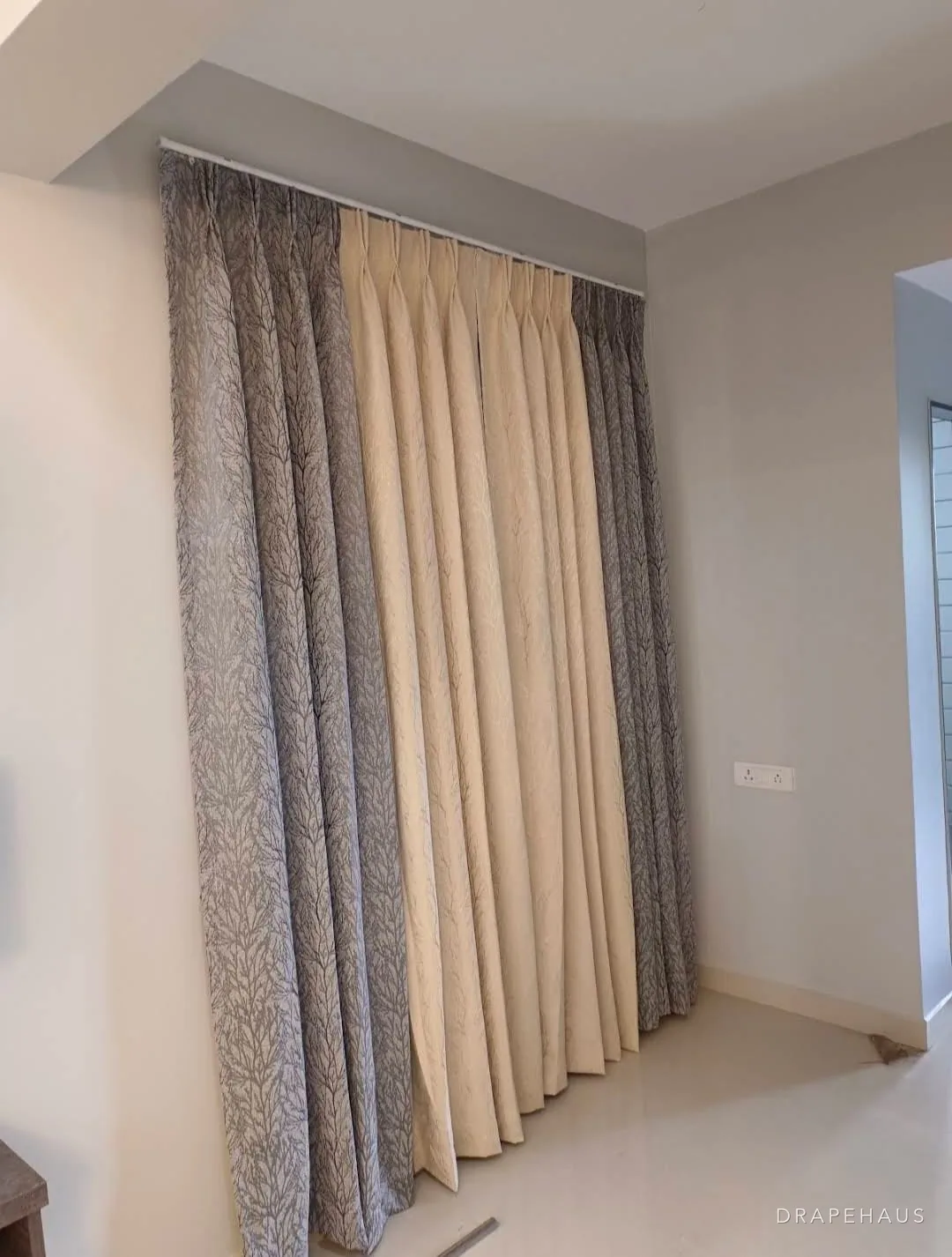
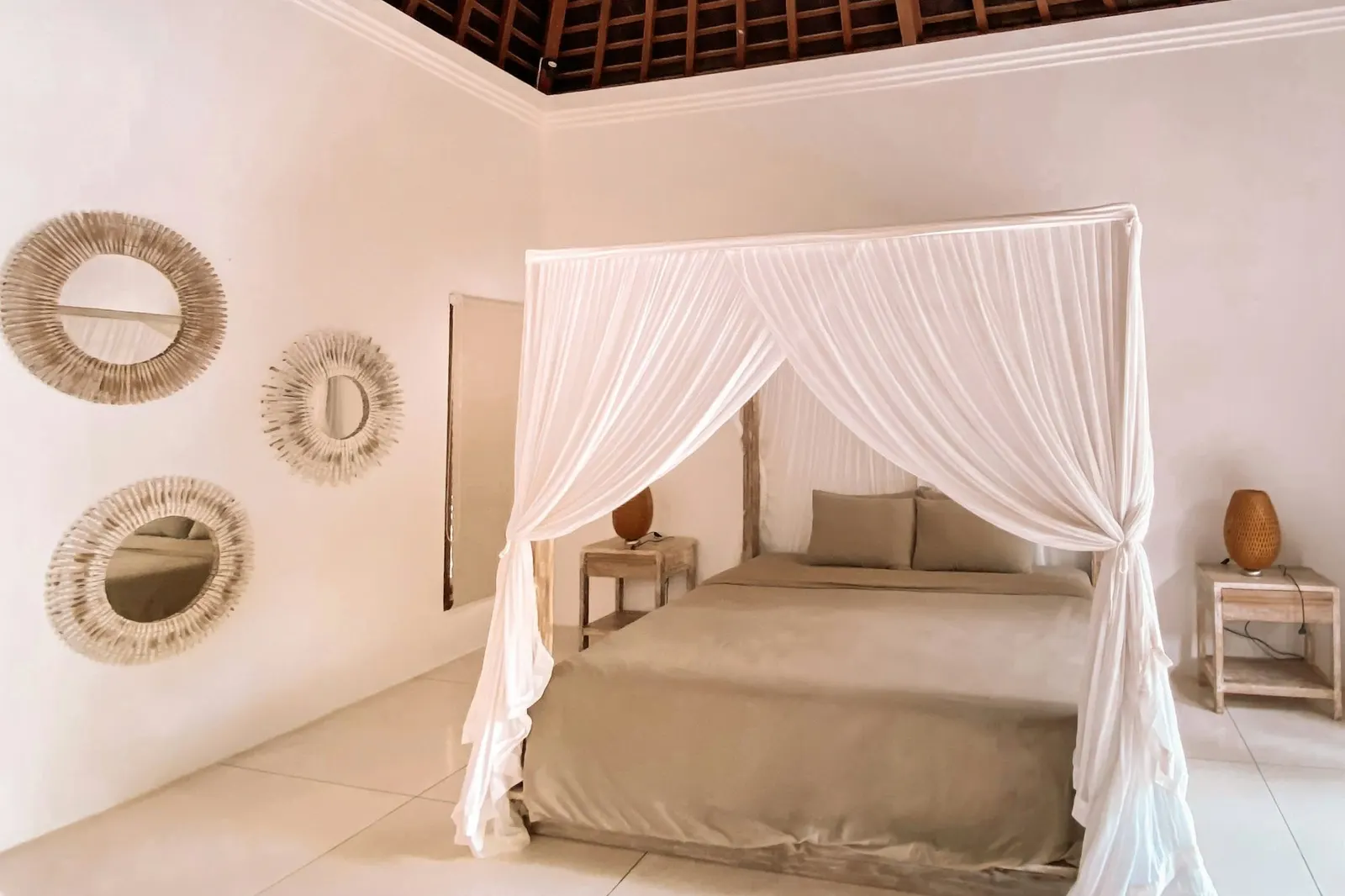
Luxury bedroom interior design is usually illustrated with a bed: a tall upholstered headboard, layered linen, a bench at the foot. In a Goan villa the bed is the easy part. What makes a master bedroom genuinely comfortable here is less visible — a room that can be made completely dark at six in the morning, cooled quietly without a draught across the pillow, and kept dry enough through the monsoon that the headboard, the curtains and the clothes in the wardrobe come through it unmarked.
Those are the priorities this piece works through: darkness, cooling and air, sound, upholstery, textiles and storage. The aesthetic can be anything from spare and modern to richly layered. The function underneath is the same, and it is what distinguishes a master bedroom that is pleasant to sleep in from one that is merely pleasant to look at.
Darkness is geometry, not just fabric
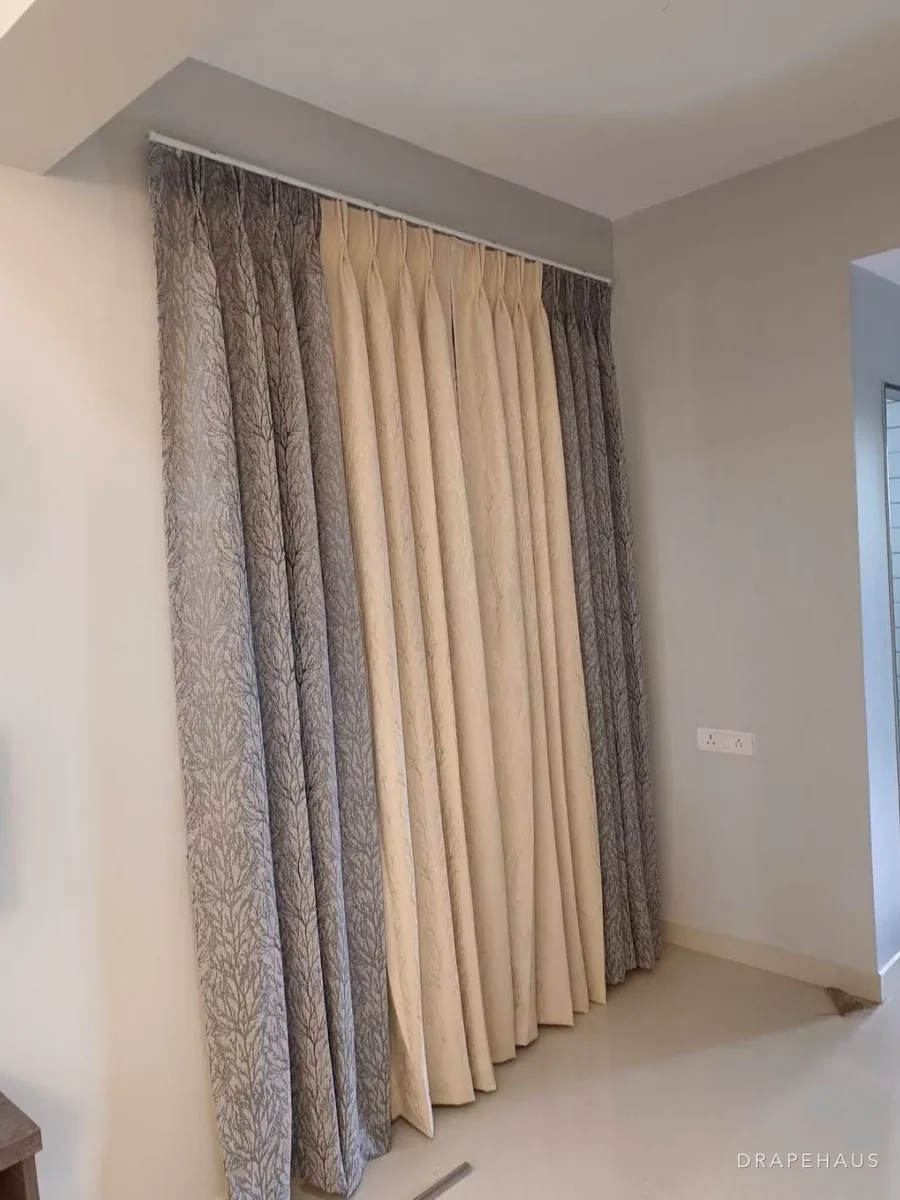
A blackout curtain does not make a dark room on its own. Light gets round it — over the top, down the sides where it stands off the wall, through the gap in the middle and under the hem. In a Goan bedroom with sunrise around six in early summer, those thin bright lines are what wake people. The fabric is necessary; the geometry is what does the work.
That means a track mounted to the ceiling or well above the window head, or better still recessed into a ceiling pocket so light cannot spill over; curtains that extend well past the frame on both sides and return to the wall; an overlap arm where the pair meet in the middle; and a hem that just clears the floor. Where a blind is used, it should be face-fixed with side channels or combined with a curtain. Our pages on blackout curtains and blackout linings cover the fabric side. Design for darkness before the room is plastered. The ceiling pocket and the clear wall either side of the window are the two things that cannot easily be added later, and they make more difference than any choice of fabric.
Blackout fabric stops light passing through; only the fitting stops it passing round.
Cooling, air and humidity in the master bedroom
Bedroom air-conditioning in Goa does two jobs: it cools, and it dries. In the monsoon the second matters as much as the first. IMD records morning relative humidity at Panjim of 88–91% from June to September, while the US EPA advises keeping indoor humidity below 60% and ideally between 30% and 50%. A bedroom that is cooled only at night and left sealed through the day swings between those two worlds, and textiles in it spend long hours in damp air.
The layout should keep the air handling away from the bed. A unit blowing across the pillow is a common complaint and an easy one to design out: position it on the wall the bed faces or along its side, never above the headboard. A quiet, low-speed ceiling fan is often a better companion to the AC than running the AC harder. Heat also comes through the glass. On a west or south-west bedroom, lined curtains help; DOE figures show medium drapes with white backings reducing heat gain by about a third. Closing them in the afternoon, not just at bedtime, keeps the room from storing heat it then has to shed at night.
Planning something like this?
We visit homes across North and South Goa, measure on site, and bring samples to see in your own light.
Sound: the quiet that makes a room restful
A villa bedroom is rarely noisy in the city sense, but hard finishes make it loud in small ways: the AC compressor on the wall outside, a ceiling fan's hum reflected off tile, rain on a roof, voices from a verandah, dogs at night. Stone floors and plastered walls give sound nowhere to go. Even a quiet room can feel restless when every small sound carries.
Soft surfaces are the remedy. A large rug either side of and under the lower two-thirds of the bed, full-length lined curtains, an upholstered headboard and a bench or chair in fabric all absorb sound. In a room with a lot of glass, the curtains are the largest soft surface available, and their acoustic contribution is often underestimated. Place the outdoor AC units away from the bedroom walls where possible and ask for the indoor unit's rated noise level when choosing it. These are architect's and contractor's decisions, but they shape the bedroom as much as anything the interior adds.
Headboards and upholstery in luxury bedroom interior design
The upholstered headboard is the centrepiece of most luxury bedroom design, and in a humid climate it is also the piece most at risk. It sits against an external wall more often than not, it absorbs moisture from breath and skin, and it is rarely cleaned. Mould on the back of a headboard, where it meets a cool wall, is one of the commonest finds when a closed house is reopened after the monsoon.
Three details prevent it. Mount the headboard with a gap behind it so air can circulate, rather than fixing it flat to the wall. Use a fabric that can be cleaned — a performance velvet, a tightly woven polyester blend or a removable slipcover over a linen look. And specify a frame and padding that will not hold water: a well-sealed board and closed-cell foam rather than untreated plywood and loose fibre. Our headboards page shows the options.
For the bed itself, modern luxury bed design tends toward low platforms and wide upholstered surrounds. They look calm, but in Goa a bed base with a ventilated slatted platform and a little clearance underneath is kinder to the mattress through the monsoon than a solid box on the floor. Upholstery on beds and benches used daily should carry a Martindale rating of at least 20,000 rubs, the BS 2543 general domestic class.
Textiles that do not hold damp
Bed linen, curtains, cushions and rugs are the bedroom's largest reservoir of moisture. Natural fibres feel best — cotton sheets, linen covers — and they are fine where they are washed often and the room is dried by air-conditioning. What causes trouble is the decorative layer that is rarely washed: heavy throws, piles of cushions, deep-pile rugs, lined curtains that are never taken down.
Choose that decorative layer with the monsoon in mind. Cushion covers should be removable. Throws should be washable. Curtain linings should be a synthetic or blended blackout that does not wick moisture, and the curtains themselves should hang on gliders that unhook for cleaning or storage. A flatweave or low-pile rug is easier to dry and store than a shag. If the house is closed for the monsoon, strip the bed, bag the linen with desiccant and store it off the floor, and cover the headboard with a breathable dust cover. Leaving a fully dressed bedroom sealed for four months is the surest way to reopen it to a smell.
Wardrobes that breathe
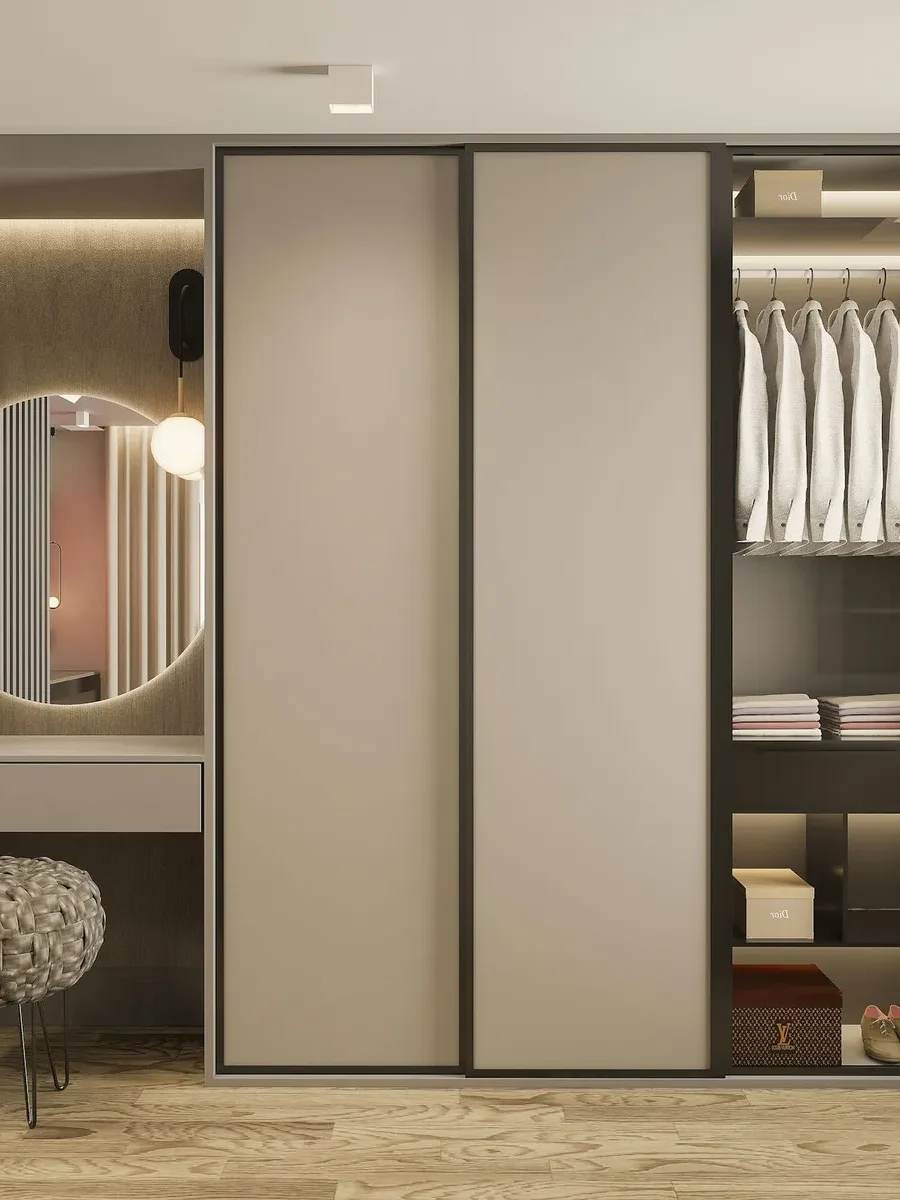
The fitted wardrobe is the most likely place in the bedroom for mould. It is usually built against an external or shared wall, closed on all sides, packed with fabric and leather, and opened only occasionally in a holiday home. Air inside it barely moves, and every monsoon it reaches the humidity of the room — or worse, if the wall behind is damp.
Design the wardrobe to breathe: louvred or perforated doors, a gap and ventilation behind the carcass, no solid back against an external wall, and a small power point inside for a low-wattage dehumidifier or heater rod. Keep leather goods and delicate fabrics in breathable cotton bags rather than plastic. Our article on fungus on clothes and wardrobes explains the mechanism and the cleaning.