 Drape Haus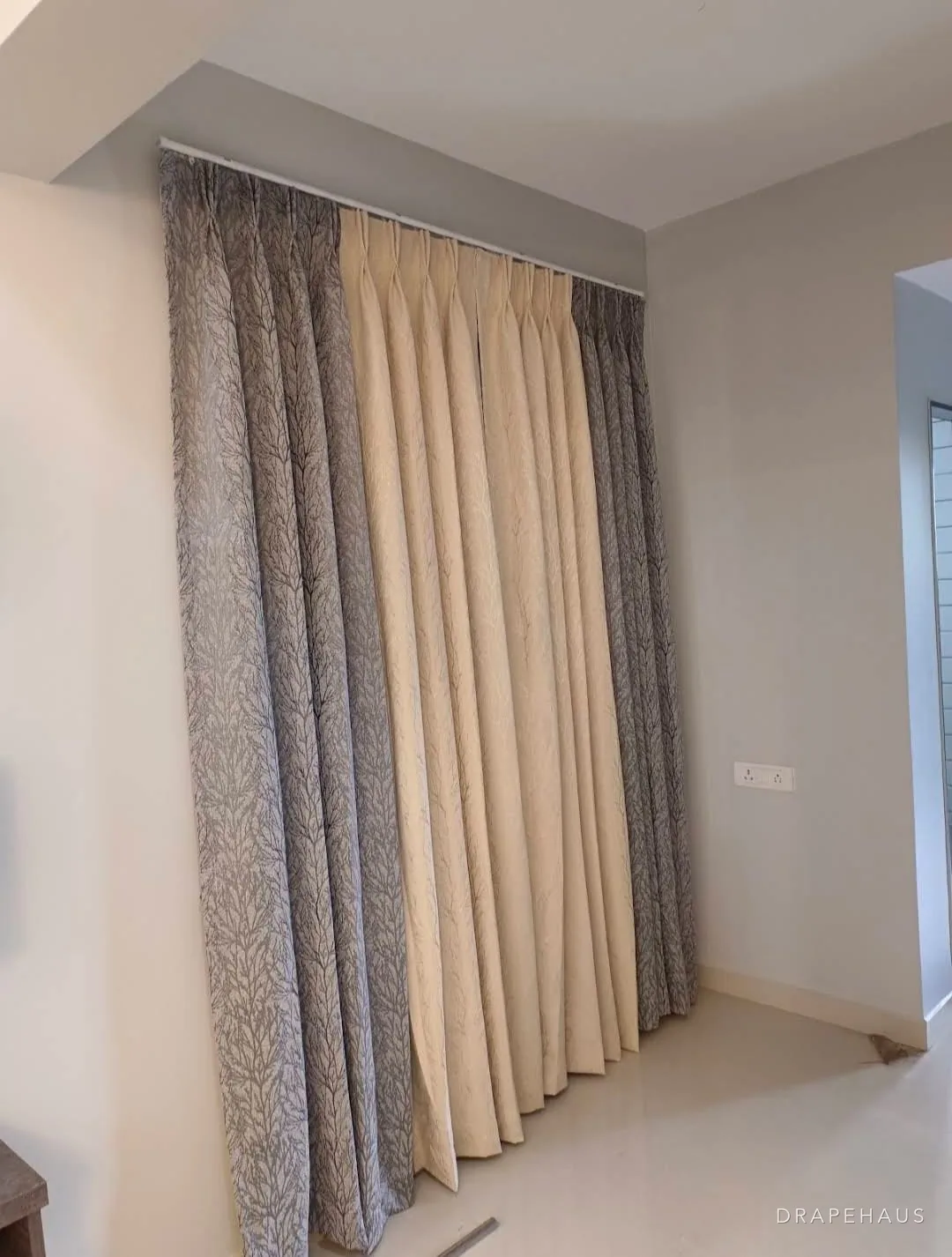
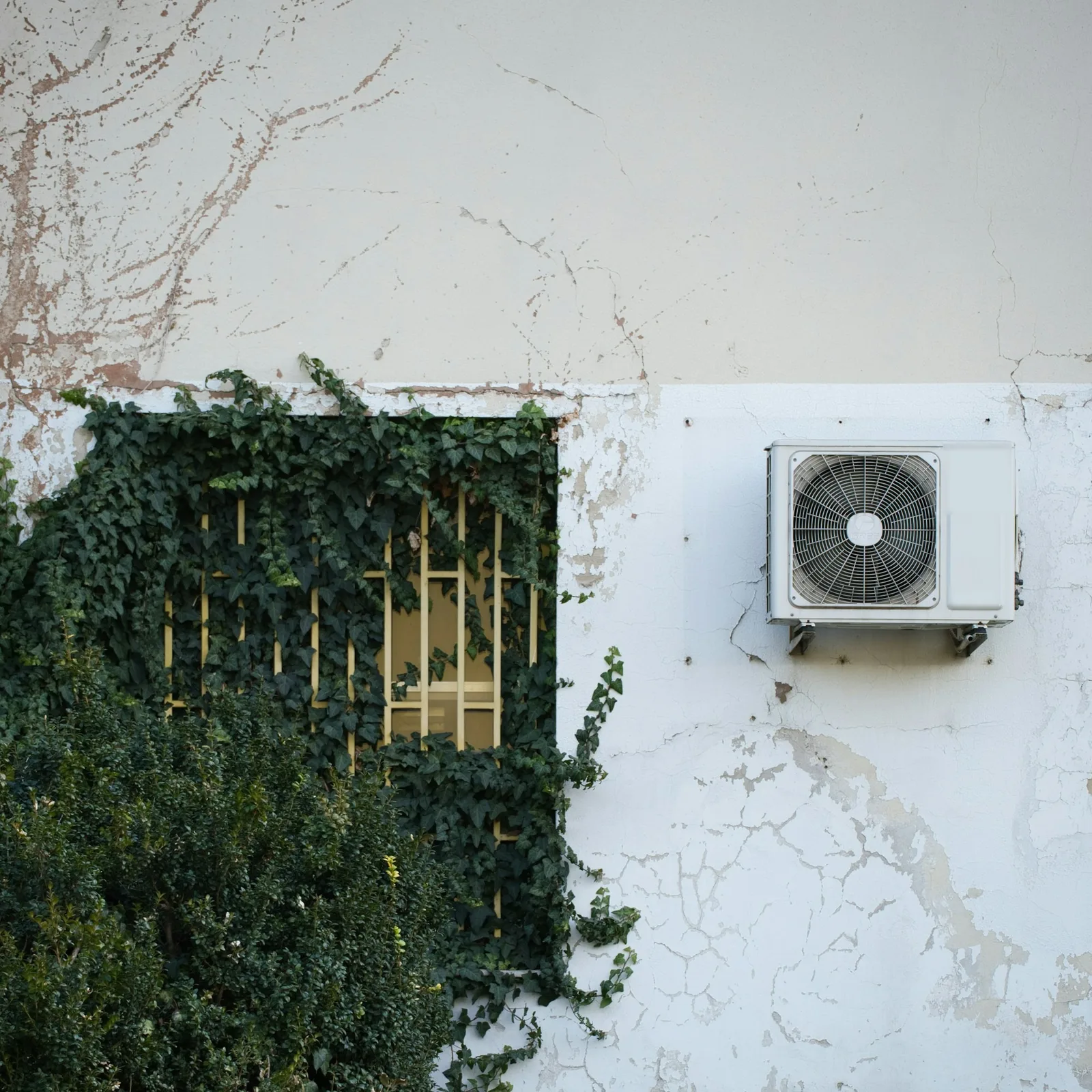
Putting AC in an old house is now normal in Goa. Owners want cool bedrooms in April and May, guests expect them, and in the monsoon an air conditioner is one of the few ways to pull a closed room's humidity down. None of that is wrong. The trouble comes from treating an old laterite house as if it were a concrete flat: cutting into carved ceilings, chasing pipes through lime walls, letting condensate run down the façade, and chilling rooms so hard that old furniture splits.
The US National Park Service, whose Preservation Brief 24 is one of the most useful documents on cooling historic buildings, puts the core risk simply: the greater the difference between interior and exterior temperature and humidity, the greater the potential for damage. In Goa's climate, cooled rooms draw moisture from the warm, humid air outside towards cool surfaces inside, and that is where condensation and mould begin.
This guide covers the decisions that protect the house: which kind of unit and where, how pipes and cables reach it, where the water goes, how hard to run it, and how curtains and the house's own shutters can do part of the work. We are not air-conditioning or electrical contractors; we make the curtains and blinds that reduce the load, and we have seen what careless installations leave behind.
Why an old house reacts badly to sudden cold
Old Goan houses were built to manage heat with mass, height, shade and moving air. Their walls are thick, porous laterite and lime that take up moisture in the rains and release it in the dry months. That works because the inside and outside are never very different. An air conditioner creates a large difference on purpose, and moisture follows it. Preservation Brief 24 explains that vapour moves from a warm area towards a colder, drier one and condenses on or in materials on the cold side.
In a hot, humid place that means moisture moving inwards. A companion Park Service brief on controlling moisture notes that this condensation usually takes place on a surface or film where permeability changes, such as paint. In practice that is the plastic emulsion on the inside of an external wall, the back of a wardrobe pushed against it, or the underside of a fixed headboard. Black speckling there in an air-conditioned bedroom is a sign that the room is being run too cold for the wall, or that the wall finish is trapping moisture.
Humidity is the other half. The US EPA advises keeping indoor relative humidity below 60%, ideally 30–50%, and recommends using air conditioners or dehumidifiers when needed. Goa's mean morning humidity is 87–91% from June to September, according to the India Meteorological Department, so an air conditioner run sensibly is genuinely useful in the monsoon. The aim is to bring a room down steadily into a moderate range, not to make it as cold and dry as possible.
Moderate and steady beats cold and sudden: for the walls, for the furniture and for the electricity bill.
Choosing the unit and where the indoor head goes
Preservation Brief 24's list of don'ts reads like a catalogue of what goes wrong in Goan houses. Don't cut historic exterior walls for through-wall units, because they disfigure the building, destroy original material and their condensation runoff damages it further. Don't damage historic finishes or alter historic spaces to install a system. Don't drop ceilings or bulkheads across window openings. The positive advice is equally direct: size the system to the building, use smaller zoned units, and use space in existing chases, closets and shafts for distribution.
For most old houses that points to wall-mounted split units in the rooms that really need cooling, usually bedrooms, a study and perhaps one room that holds the best furniture or books. Place the indoor unit on an internal wall or above an internal door rather than on the painted end wall of a sala or over a carved window head. Avoid the timber false ceilings altogether; cassette units and ceiling grilles mean cutting into boards that are hard to match and often original. Keep the outdoor unit off the street front and the balcão, at the back of the house or in a service yard.
Before choosing, ask the installer to show you the full route for each unit: indoor head, pipe run, wall penetration, drain and outdoor unit. A unit that looks neat on the wall but needs four metres of trunking across a painted frieze is not a good position.
| Type | Fit in an old house | Main cautions |
|---|---|---|
| Wall-mounted split | Usually the best fit for individual rooms | Indoor unit on an internal wall; plan the pipe and drain route first |
| Floor-standing or console split | Useful where walls are decorated or too soft | Needs floor space and a short, tidy route to the wall |
| Ceiling cassette or ducted | Rarely suits timber false ceilings | Means cutting ceilings; needs a void most old houses lack |
| Window or through-wall unit | Avoid | Cuts the facade and wall; condensate runs down the masonry |
Planning something like this?
We visit homes across North and South Goa, measure on site, and bring samples to see in your own light.
Pipes and cables through lime and laterite
Every split unit needs refrigerant pipes, a power supply, a control cable and a condensate drain to pass from the indoor unit to the outside. The least harmful route is usually one short, neat hole through the wall directly behind or beside the indoor unit, sleeved and sealed, with the pipes running outside to the outdoor unit. Long horizontal chases cut into laterite walls weaken them and break up the plaster, and they are almost impossible to undo.
Where pipes must run inside, surface trunking painted to match the wall is usually the better conservation choice, because it can be removed later without trace. Insulate refrigerant pipes along their whole length. The EPA notes that condensation forms on uninsulated cold ducts and pipes and recommends insulating them; in an old house that drip ends up in the plaster or the floor below. When the hole is made good, use a soft, compatible filler rather than a hard cement plug in a lime wall.
Power is the other question. Old houses often have tired wiring and no spare capacity for several air conditioners. Each unit should be on a circuit that a licensed electrician has checked and sized for it, with cables run through floor voids, ceiling spaces or neat surface conduit rather than chased into the walls. If you plan motorised curtains as well, tell the electrician now so that power reaches the window heads in the same work.
Condensate: the water an air conditioner makes
An air conditioner in a Goan monsoon removes a great deal of water from the air, and all of it has to go somewhere. The best-planned drain runs with a steady fall to a gully, a downpipe or a soakaway away from the wall. The worst ends in a short pipe that dribbles down the face of the laterite, keeping one patch permanently wet, growing algae outside and pushing damp into the plaster inside.
Preservation Brief 24 notes that mould in condensate pans can block drainage lines and cause an overflow onto finished surfaces, and the EPA advises keeping drip pans clean and drain lines unobstructed and flowing. In practice that means having units serviced before the monsoon, checking that water actually leaves the drain outlet when the unit runs, and watching the wall below every indoor unit for staining. A drip from the indoor unit or a damp line beneath it is the early warning.
Outside, discharge the water where it will not splash back onto the base of the wall. The Park Service's moisture brief lists reducing splash-back onto foundation walls among the main ways to keep old buildings dry. A drain that empties onto paving against the plinth wets the wall from below just as a broken downpipe would. Our guide to green algae on exterior walls shows what that leads to after a season.
Old furniture, wooden floors and the humidity swing
Wood moves with humidity, and old furniture has spent its life moving within Goa's range. The Canadian Conservation Institute makes a useful point about this: an object known to have been through a given extreme of humidity at least once is not susceptible to further mechanical damage from one more event of the same magnitude, because the fractures and lifting it can cause have already taken place. A rosewood chair that has lived through a hundred Goan monsoons and dry seasons is, in that sense, proofed against them.
What it has not been through is a room chilled and dried far below anything it knew, then shut, then flooded with monsoon air again. That is a new extreme, and it is the kind of change that opens joints, splits panels and lifts veneer. The Institute lists wood assemblies with inlays spanning more than about 1 cm across the grain among the most sensitive. Wooden floors behave in a similar way; boards that shrink under hard air conditioning open gaps that close again, unevenly, when the rains return.
So run air conditioning in rooms with old furniture at a moderate setting, keep it steady rather than switching between blasting and off, and do not point the airflow at the best pieces. In India, star-labelled room air conditioners have had a mandatory default setting of 24°C since 1 January 2020, according to the Ministry of Power, which is a sensible starting point. A small hygrometer in the room, which the EPA describes as an inexpensive instrument, will tell you whether you are holding a moderate humidity or over-drying. Our guide to restoring Goan antique furniture covers the pieces themselves.
Point the airflow at the people, not at the antique cabinet. Moving the louvres costs nothing.
Curtains and blinds that cut the cooling load
A tall room with several tall windows gains a great deal of heat through glass, and much of the work of cooling it can be done before the air conditioner starts. Preservation Brief 24 advises using shutters, operable windows, porches, curtains, awnings and shade trees to reduce heating and cooling loads. The US Department of Energy advises closing draperies on windows that receive direct sun in summer, and reports studies in which medium-coloured draperies with white-plastic backings reduced heat gains by 33%.
How the curtain is hung matters as much as the fabric. The Department of Energy recommends hanging draperies as close to the window as possible, letting them fall onto the sill or floor, placing them against the ceiling or under a cornice, and overlapping them in the centre. In an old house that usually means a ceiling-fixed track or a rod set high above the fanlight, with full-length, lined curtains. Our piece on heat blocking curtains explains why the side facing the glass matters most.
For air-conditioned bedrooms, blackout curtains with a light-coloured backing do two jobs at once: darkness for sleep and less heat through west-facing glass in the afternoon. Keep them hung clear of the wall so air can move behind them, and close the internal shutters too on the hottest afternoons; they are the original solar control and still one of the best.
Running AC alongside the breeze the house was built for
The worst outcome is a heritage house sealed shut and cooled all year. Preservation Brief 24 advises against sealing operable windows, except in museums controlling dust and pollutants, and against adding air conditioning that is not absolutely necessary. Most old Goan houses work best in a mixed way: air-conditioned bedrooms and perhaps one study or library, with the sala, verandah and passages left to fans, shutters and cross-ventilation.
That mixed approach has one known side effect. The Park Service notes that when one area of a building is air-conditioned and another is not, condensation can occur between the two, while adding that most periodic condensation does not create a long-term problem. Keep the doors of air-conditioned rooms closed while units run, so they are not pulling humid air from the rest of the house, and open them up and run fans once the unit is off and the room has warmed a little.
Through the rains, a few hours of air conditioning or a dehumidifier in closed rooms does more for fabric, books and furniture than leaving the house sealed. Our guides to humidity in Goa and keeping a house cool without AC cover the rest of the house. When you are planning cooling for a heritage home, we can visit to measure for thermal and blackout curtains at the same time, so the windows and the machines are planned together.