 Drape Haus
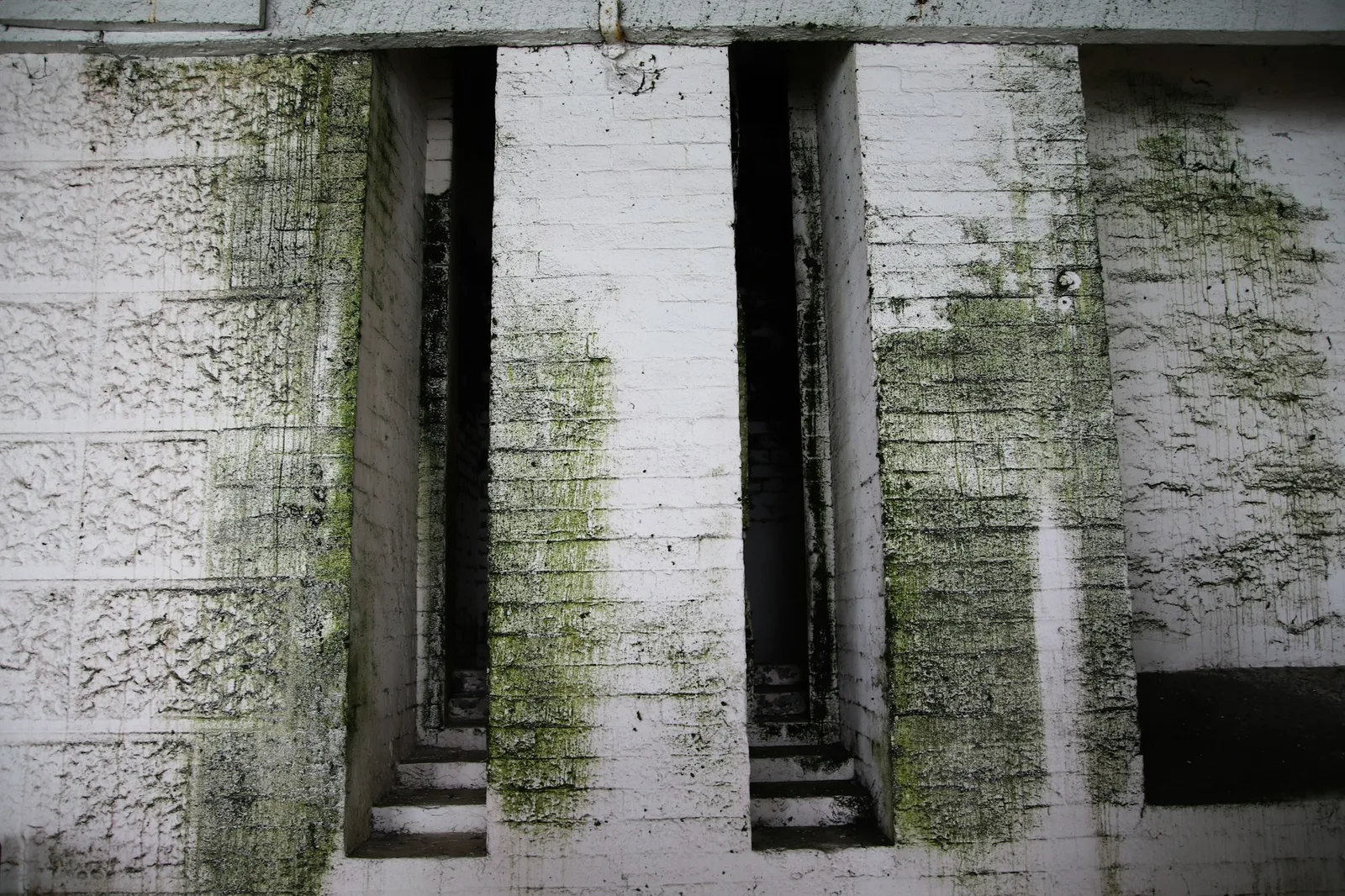
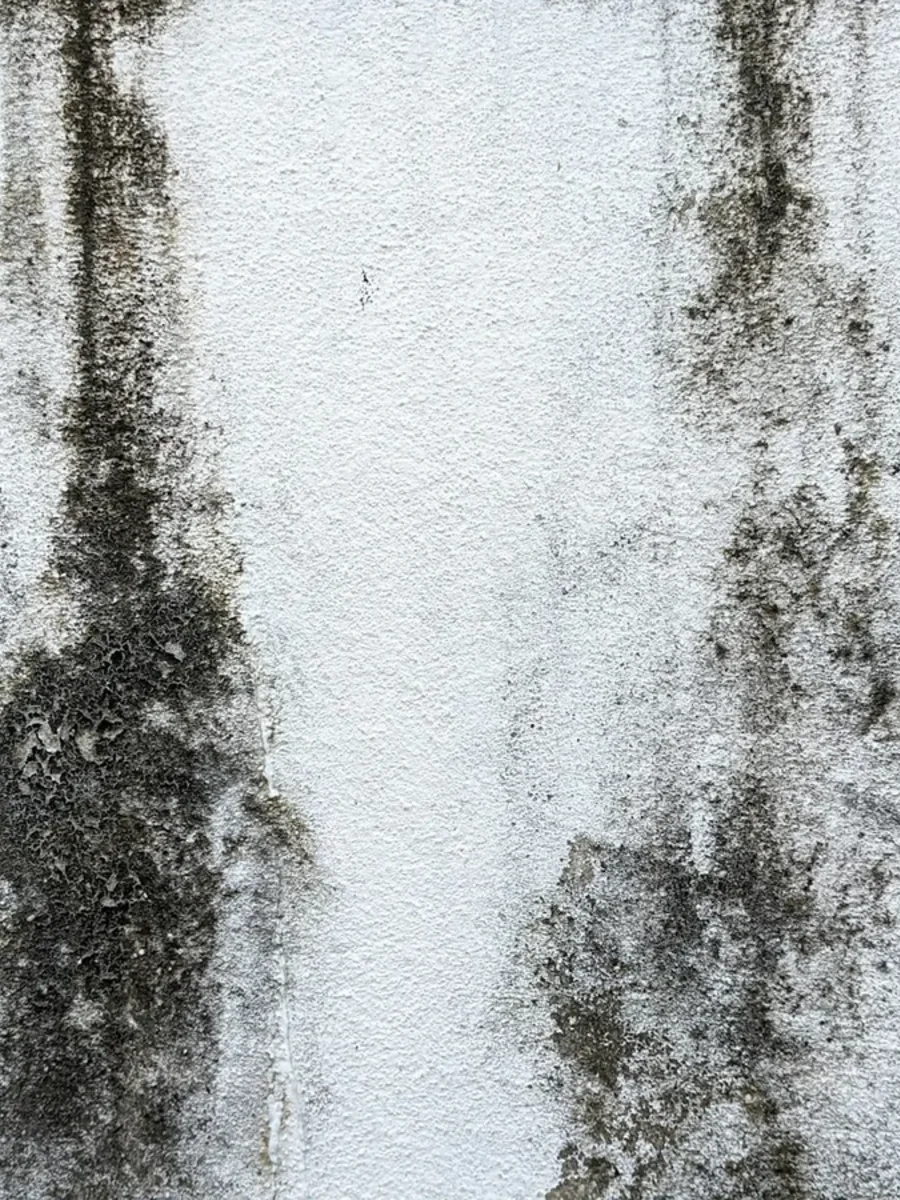
What most people call green fungus on walls is usually algae. It arrives with the rains, spreads across shaded façades, parapets and compound walls, and by October a wall painted white in March can be streaked green and black. Darker patches may be algae mixed with dirt, mould on the paint film, or a dense film of microbial growth where water keeps a wall saturated. On older walls there may be lichens and moss as well.
On a sound wall this growth is mostly a cosmetic problem, but it is also a signal. The Royal Horticultural Society notes that algae thrive in wet conditions and grow faster in shady areas with poor air circulation. A wall that greens in one place every year is a wall that stays wet in that place, and the reason is usually visible: a sill without a drip, a leaking downpipe, a splashing drain, a shrub pressed against it.
This guide covers identification, cleaning methods that will not damage paint or old plaster, biocides and their safety, what anti-algal paints can do, and when to do the work. For laterite compound walls specifically, our guide to Goan compound walls and gates adds detail on lime pointing and planting.
Algae, mould, lichen or moss: telling them apart
Algae form a thin layer on the surface without roots, stems or leaves. The Royal Horticultural Society describes a green film or powdery deposit as typical on stone, concrete and other hard surfaces. On a painted façade it often appears as a green wash or streaks running down from sills, ledges and the tops of walls, wherever water runs and lingers.
Lichens are a partnership between a fungus and algae or cyanobacteria. They form thin, flat crusts or leafy lobes in grey, grey-green, yellow or orange, and they grow slowly. Mosses are small green plants that form cushions and tufts, usually in joints, on ledges and at the base of damp walls. A conservation article in The Building Conservation Directory notes that large moss growths can restrict moisture evaporation from a wall and block gutters.
Black growth is harder to name by eye. It may be mould on the paint, which the US National Park Service describes as fungi feeding on nutrients in the paint film or on dirt; it may be algal growth darkened with dirt; or it may be a microbial film where water saturates the wall. The Park Service's simple test for paint is to put a drop of household bleach on the mark: mildew turns white, dirt does not. The treatment is similar in each case, so the more useful question is why that patch is wet.
| Growth | Looks like | Usually means |
|---|---|---|
| Green algae | Green film, powdery or slimy when wet; streaks below sills and ledges | Surface stays wet and shaded; poor air movement |
| Black or grey staining | Dark streaks or patches on paint or render | Mould on the paint film, dirty algae, or persistent wetting |
| Lichen | Flat crusts or leafy lobes, grey, yellow or orange | Long-established surface, slow growth |
| Moss | Green cushions or tufts in joints, ledges and wall bases | Water lying in joints or at the base; holds moisture against the wall |
Reading where the green grows
Growth is a map of where water lingers. The National Park Service lists the places mildew thrives on buildings: window sills, under eaves, around gutters and downpipes, on the shaded side and near shrubbery. Algae follow the same map. Look at the shape of the growth and it usually tells you the source.
Vertical streaks beneath a window usually mean the sill throws water onto the wall instead of clear of it, often because there is no drip groove or projection. A fan of growth around a downpipe joint means it leaks. A band of green along the base of the wall, up to knee height, is splash-back from rain hitting paving or ground and bouncing onto the wall; the Park Service's guidance on controlling moisture lists reducing splash-back onto foundation walls as one of the main ways to keep buildings dry. Green on the tops of parapets and compound walls means water sits on a flat top. A patch under an air-conditioner drain is exactly what it looks like.
Orientation matters in Goa. The India Meteorological Department notes that monsoon winds over the state are mainly south-westerly or westerly, so west and south-west walls take the most driven rain. North-facing and shaded walls dry slowest after it. A study for the Danish Environmental Protection Agency adds that façades are wetted not only by rain but, more importantly, by dew, which is why growth also appears on walls that seem sheltered.
Planning something like this?
We visit homes across North and South Goa, measure on site, and bring samples to see in your own light.
Fix the water first: drainage, splash-back and drips
Cleaning without changing the wetting just resets the clock. The National Park Service's moisture guidance sets out the order for keeping the base of a building dry: slope the ground away from the walls, capture downpipe water and take it well away from the building, provide a ground gutter or effective drainage where there are no gutters, and reduce splash-back. It adds that most above-ground moisture problems can be eased by keeping vegetation off buildings, repairing damaged materials, rehanging gutters, repairing downpipes and repointing.
In a Goan house that translates into practical jobs. Clear gutters and downpipes before June, extend downpipe outlets to a drain or a channel away from the wall, and fix leaking joints. Replace hard paving that runs right up to the wall with a gravel strip that rain soaks into instead of bouncing off. Lead air-conditioner condensate to a drain. Cut back shrubs and climbers so air and sun reach the wall; the Park Service's paint guidance recommends pruning trees that shade a building so sunlight can strike it. Our guide to AC in heritage houses covers condensate drains in more detail.
Detailing changes need a builder: drip grooves or projecting sills, cappings on parapets and compound walls, and cracks repaired. These are dry-season jobs, and we are not builders, but they are usually small repairs compared with repainting a whole façade every year.
If the same patch greens every year, find the water before you buy any chemical or paint.
Cleaning without damaging paint or plaster
Start gently. The National Park Service's guidance on cleaning masonry recommends beginning with very low pressure, 100 psi (about 7 bar) or below, even a garden hose, and rising only as needed, generally no higher than 300 to 400 psi (about 20 to 28 bar), scrubbing with natural or synthetic bristle brushes and never metal ones, which abrade the surface and leave particles that stain. A US General Services Administration procedure for historic masonry notes that most commercial pressure-washing systems operate at significantly higher pressures than those recommended.
That warning matters for ordinary houses too. A domestic pressure washer held close to painted plaster strips paint in patches, drives water deep into cracks and joints, and on soft lime plaster or laterite cuts into the surface itself. A roughened, wetter wall then grows algae faster than before. For most painted façades, a soft brush, water and patience do better.
Clean from the top down, so dirty water runs over areas not yet cleaned, and test any method on a small, inconspicuous patch first. The General Services Administration procedure specifies test patches no larger than about 15 cm square. Work from a stable platform on anything above head height, and keep water away from electrical fittings and switchboards on the wall.
Biocides: what they do, and using them safely
A biocide kills the growth so that it can be removed more completely and returns more slowly. The General Services Administration procedure for historic masonry says living growth must be killed and allowed to dry before removal, and that after applying a biocide such as a quaternary ammonium product, at least 24 hours should pass before colonies of moss and loose growth are scraped off with wooden scrapers, followed by gentle brushing and a low-pressure rinse.
Biocides are not harmless, to people or to what is around the wall. Research for the Danish Environmental Protection Agency found that biocides used on and in building façades end up in storm water and soil, sometimes at levels exceeding water quality standards. Use the least product that does the job, apply it with a brush or low-pressure sprayer rather than a mist, keep it off plants, ponds, wells and soakaways, and wear the gloves and eye protection the label specifies. Follow the label for dilution and dwell time; do not improvise stronger mixtures.
Bleach is commonly used on painted surfaces, and the National Park Service describes a bleach and non-ammoniated detergent wash for mildew on exterior paint. Rinse it off thoroughly, protect plants, and never combine bleach with any cleaner containing ammonia; the US EPA warns that the fumes are toxic. On lichens on old walls, The Building Conservation Directory notes there may be a presumption in favour of leaving established lichen alone and that chemical control should generally be reserved for exceptional circumstances.
Anti-algal paint, and why it is not permanent
Exterior paints and renders can carry algicides and fungicides in the dry film. The Danish EPA report explains that triazines and phenylureas are used as algicides and carbamates as fungicides, and that the same research found the leaching of these compounds from walls was driven by the amount of driving rain reaching the wall. In a climate where about 91% of the year's rain falls between June and September, according to India Meteorological Department normals, an exposed wall's protection can be expected to diminish over time rather than last indefinitely.
That makes anti-algal paint a way of slowing growth, not stopping it. It works best on a clean, dry wall whose wetting has been reduced, and it buys time between cleans. On old laterite and lime walls, the National Park Service advises that water-repellent coatings are generally not recommended as a way to prevent biological growth on historic masonry, notes that some may even encourage it, and says growth has traditionally been kept down by regular, gentle cleaning. Our article on fungus on wall paint explains paint systems in more detail.
Where a modern wall in deep shade greens however well it is maintained, some owners choose to clad it. Exterior-grade WPC wall panels on a frame with a drainage and ventilation gap behind, fixed with stainless fixings, change the surface without sealing the wall. Cladding is only for sound, dry walls; it hides a wet one rather than curing it.
When to clean and treat: the dry window
Timing follows the rain. India Meteorological Department normals show rain falling away through October and November and almost none from December to April, before pre-monsoon showers in May. Clean once the rains have clearly ended and the wall has had a chance to dry, because biocides and paint both need a dry surface, and growth removed while the wall is still saturated returns quickly.
A sensible annual rhythm is to inspect and clean in November or December, carry out drainage and detailing repairs through the dry season, repaint or recoat exposed walls in the driest months if they need it, and clear gutters and drains again in May. Our after the monsoon guide covers the rest of the post-rains list for the house.
Light, regular cleaning beats heavy, occasional cleaning. A wall brushed down gently each year keeps a sound surface; one left for five years and then blasted loses paint and plaster with the growth. If you are considering cladding a persistently green wall, message us with photographs of the wall and its surroundings, and we will tell you whether it looks suitable.
How to clean algae off an exterior wall
For painted or rendered walls in sound condition. Test every step on a small hidden patch first.
Wait for the dry season
Start after the rains have ended and the wall has begun to dry, typically from November. Check the forecast for a dry spell of several days.
Protect surroundings and yourself
Cover plants, close windows, keep water off electrical fittings and wear gloves and eye protection. Work from a stable platform above head height.
Brush off loose growth
Use a soft or medium natural or synthetic bristle brush, never a wire brush, working from the top down.
Apply a biocide if needed
Apply a suitable product by brush or low-pressure sprayer as the label directs, keeping it off plants and drains, and leave it for its full dwell time, often 24 hours or more.
Scrub and rinse gently
Scrape heavier growth with a wooden or plastic scraper, scrub with a soft brush, and rinse from the top down with low-pressure water, such as a hose, not a close-held pressure washer.
Let it dry and fix the cause
Allow the wall to dry fully, then deal with the sill, downpipe, splash-back or vegetation that kept it wet before deciding on any repaint or coating.