 Drape Haus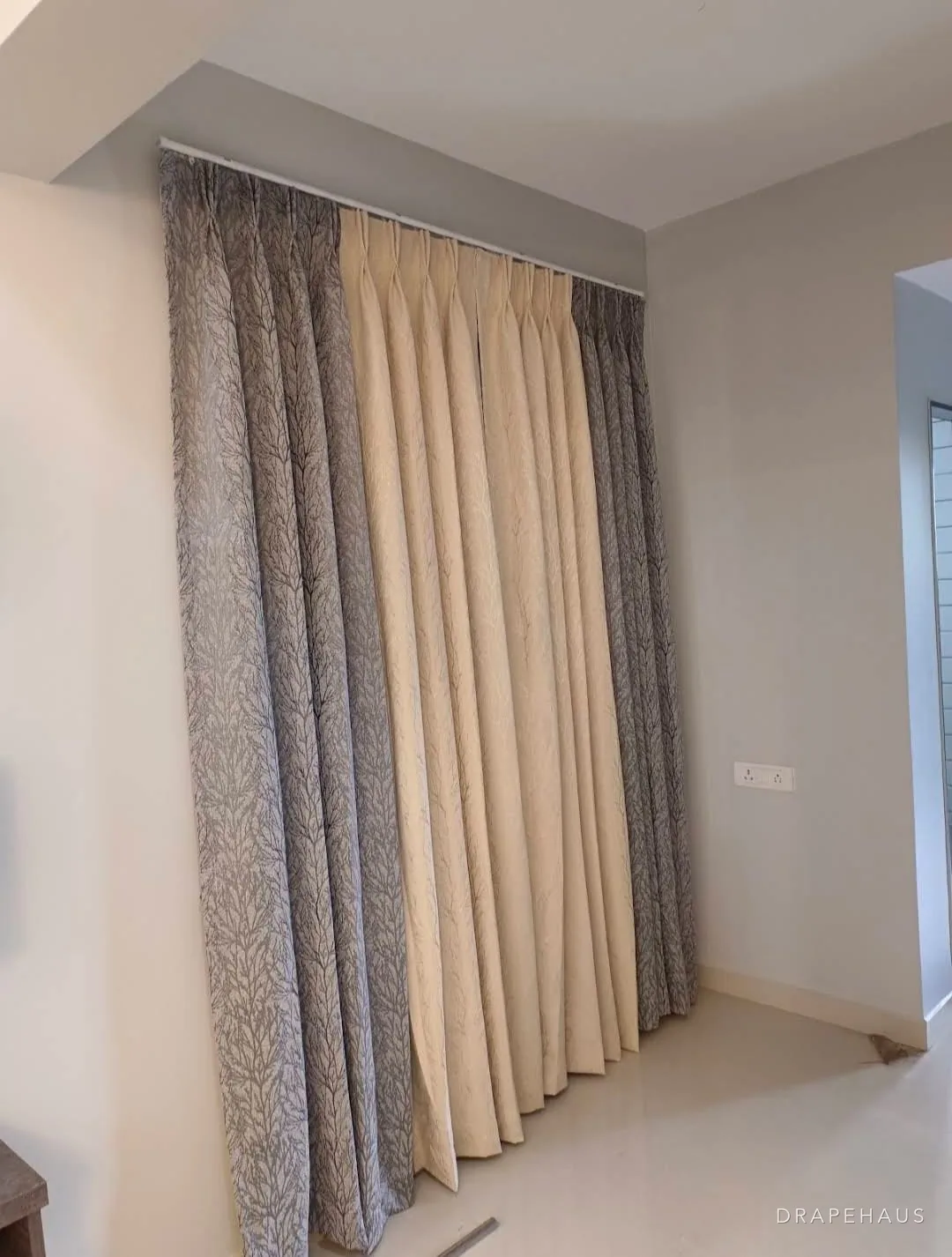
Drape Haus
Preparing the room
Drape Haus
Preparing the room
Curtains
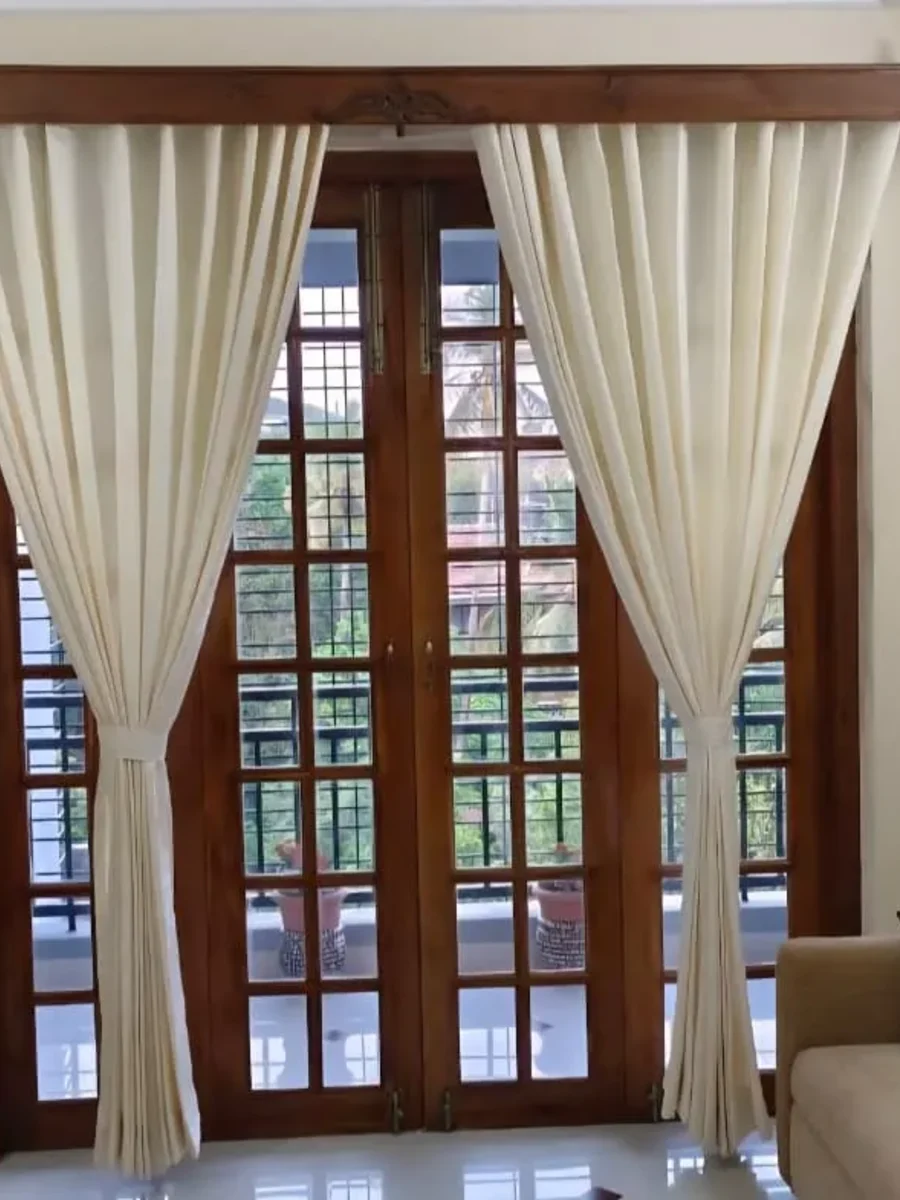
Curtains that open with a remote, a wall switch, a phone or a timer — made to run on a motor from the first stitch. The motor is only half of it: the heading, fabric weight and overlap decide whether a motorised curtain glides or struggles.
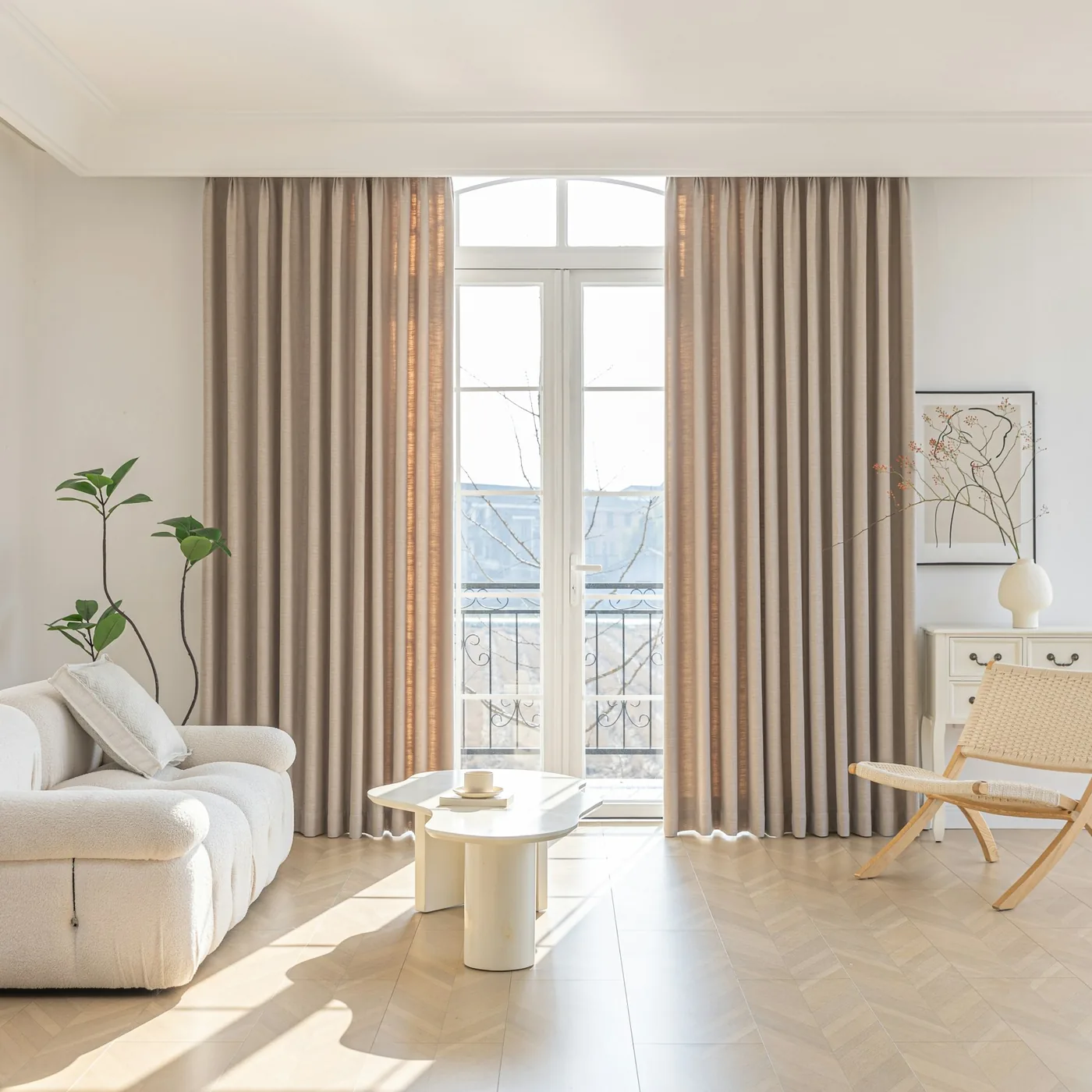
Sheer + blackout · Midday
Treatment
Time of day
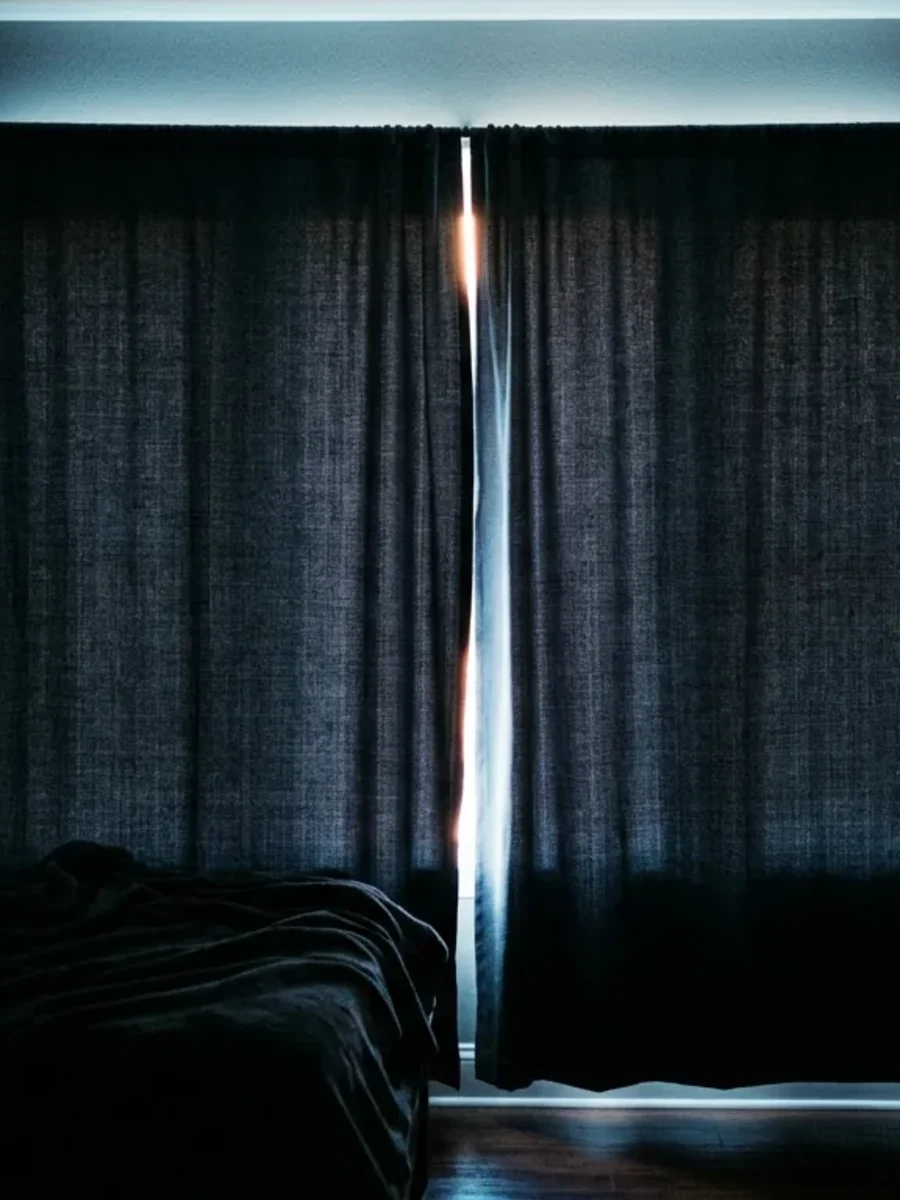
Two layers on a double track: the sheer stays drawn for the day, the blackout closes over it at night. The most flexible answer for a bedroom.
In short
By the Drape Haus studio · How we write
Is it right for you?
Motorising a curtain is not about novelty. It solves specific problems: a curtain too tall or too wide to draw comfortably, a window behind a bed or a sofa that is awkward to reach, a pair of heavy blackout curtains that a child or an older parent struggles with, or a holiday home where nobody is there to open and close anything for months at a time.
It also changes how carefully a room is used. When closing the west-facing curtains takes a button rather than a walk across the room, people actually do it, and the sofa fabric fades more slowly. When guests in a rental villa have a single switch for every curtain in a suite, the curtains are not dragged by their hems or left half-closed.
Motorised curtains are less worthwhile on a small window that is easy to reach, on a curtain that is rarely drawn, or where the window has a decorative pole you want to keep — poles cannot be motorised. And a motor will not rescue a badly made curtain: if the heading is uneven or the fabric too heavy, it will drag on a motor just as it does by hand.
The details
A motorised curtain is a curtain made for a moving track. The heading has to sit evenly on the carriers, the fabric has to be light enough for the motor to start smoothly and heavy enough to hang straight, and the two halves must overlap at the centre so a closed pair shows no line of light. We make the curtain and specify the motorised track as one job, so neither is a compromise for the other.
Control is where motorised curtains change daily life. A bedside remote, a switch by the door, a phone app, a voice assistant or a schedule that closes the west-facing living room before the afternoon sun arrives. In a house that stands empty for months, a schedule can open the curtains on dry mornings to let the room air and make the house look lived in.
Power cuts are part of life in Goa, so every curtain we motorise can still be moved without power. Many motors let you start the curtain with a gentle tug on the leading edge; wired motors can sit on an inverter or backup circuit; battery motors carry on regardless.
For the wider picture — blinds as well as curtains, and stairwell or skylight glazing — see our motorised window treatments page. For planning wiring before the plaster in a new villa, our journal piece on motorised curtains for villas goes step by step.
Your options
Most of the choices are about how you will use the curtains each day. These are the combinations we specify most.
Swipe for all 6 →
The honest view
Effortless with big curtains
Wide, tall and heavy blackout curtains open with a press. Nobody has to tug the fabric or climb to reach it.
Fabric lasts longer
A motor pulls the carriers, not the cloth, so leading edges and headings do not wear from daily handling.
Rooms protected from sun
Schedules close sun-facing curtains before the heat arrives, protecting upholstery, floors and art.
Safer for children
No loose cords or chains, and nothing for small hands to swing on.
Planning needed for wired motors
A power point must be in the right place. In a finished room that can mean chasing plaster or choosing a battery motor.
Limits on hardware
Motors need a track. Decorative poles and eyelet headings are ruled out.
Another thing to maintain
Motors, batteries and hubs need occasional attention — recharging, a firmware update, a clean track.
Side by side
For a wide or tall window, the realistic options are a hand-drawn curtain, a cord-drawn track and a motorised curtain.
| Hand-drawn | Cord-drawn track | Motorised | |
|---|---|---|---|
| Effort on a wide window | High | Moderate | None |
| Wear on the fabric | Leading edge handled daily | Low | Lowest |
| Reach for tall windows | Needs a draw rod | Good | Excellent |
| Schedules and remote use | No | No | Yes |
| Works in a power cut | Yes | Yes | Yes, with override, backup or battery |
| Child safety | Good | Cords need tensioners | Good, cord-free |
| Planning needed | Little | Little | Power and track position |
Swipe to compare →
On a small window used once a day, hand-drawing is perfectly sensible. Motorise where size, height or routine makes it worthwhile.
Rather see it in your own room?
We bring samples to the house, measure every window, and specify for the light and exposure you actually have.
Room by room
A bedside control for a blackout pair, and a sheer on a second motor for the morning. A gentle opening schedule makes a better alarm than a phone.
Tall curtains are hard to draw by hand and easy to damage. A motor turns them into curtains people actually use.
A sun schedule closes the curtains before the afternoon glare, protecting fabrics and keeping the room cooler.
One switch per room keeps curtains from being dragged by guests. Choose simple wall switches and remotes over apps.
Cord-free and easy for a child to use with a wall switch. Lock or limit app access if needed.
A single small curtain gains little from a motor. Hand-drawing is usually enough.
Poles cannot be motorised. A hidden motorised track behind a dress curtain on the pole can give both.
In depth — tap a heading to read
The curtain has to be made with the motor in mind. A ripple-fold heading is the easiest to motorise because the carriers are already linked at fixed spacing and move together. A pinch pleat works well too, provided there is a carrier at every pleat. Uneven headings, gathered tapes and stiff fabrics make the leading edge race ahead while the back of the curtain drags.
Weight and length matter. A long, lined blackout curtain is well within the range of a properly sized motor, but the motor and track are chosen for it — not the other way round. At the centre, the two halves overlap on master carriers so that, when closed, the meeting point is covered. Hems are set to clear the floor so nothing catches as the curtain moves.
A motor cannot correct a badly made curtain. Get the heading, fullness and hem right first.
The best control is the one in reach when you need it. In a bedroom that is a bedside remote or switch; in a living room, a switch by the door; for an owner abroad, an app. Most households end up using two of them, and we plan for that rather than relying on one.
Keep it simple for others in the house. Older relatives and guests prefer a labelled switch to an app. Scenes are useful — one press to close every curtain in a suite at night — but too many scenes become confusing. Set up a few clear ones at handover and add more as you learn how you use the room.
A power cut does not leave you stuck. A curtain on a motor simply stays where it is until power returns, and there are three ways to keep using it. Many motors have a touch or pull-to-start function: a light tug on the leading edge sets the motor running. A wired motor can be put on the same inverter or backup circuit as the lights. And a battery motor is unaffected by mains power.
We discuss which makes sense room by room. A bedroom that must darken at night regardless of the grid is a good candidate for the backup circuit; a living room where the curtains can wait is fine with pull-to-start.
Many Goan homes are closed for months — owners abroad, villas between seasons. Curtains drawn shut for that long trap still, damp air against the glass. A schedule that opens them for a few hours on dry mornings lets the room breathe and, from outside, makes the house look occupied. Closing them again in the afternoon keeps sun off furniture.
Through the monsoon, set schedules with care: opening curtains onto a window streaming with rain achieves little. Many owners keep a simple seasonal pattern and adjust it from their phone when a caretaker reports the weather.
Motors favour fabrics that hang straight and fold predictably: medium-weight polyesters and blends, linen-look weaves and well-lined cottons. Very heavy pile fabrics need a larger motor and more careful track sizing; very light voiles can billow and need a weighted hem so they move cleanly.
Near the sea, synthetic-rich fabrics keep their length through the humid months, which matters because a curtain that drops in the monsoon can begin to touch the floor and drag. Pure linen can be motorised, but we leave a little more floor clearance.
Living with it
Battery motors need charging every so often. Note the date and recharge before the house is closed for a long stay.
Wipe salt and grit from the track each season so the motor is not working harder than it should.
If a curtain stops, let it. Pulling against a running motor strains the belt and gears.
Ripple-fold curtains unsnap for washing without disturbing the motor or track settings.
If you use an app, keep the hub online and updated so schedules run correctly when you are away.
Avoid these
A wired motor without a planned power point means chasing walls later. Decide early, or choose battery.
Poles cannot take motors. Choose a track, or a hidden track behind a decorative pole.
When the phone is elsewhere or the network drops, a wall switch still works.
Motorised pairs need overlapping master carriers, or light shows down the middle.
Plan pull-to-start, a backup circuit or a battery motor for rooms that must close at night.
Checklist
More in curtains
Curtains measured on site, cut to the window and specified for what it actually faces — from airy sheers on a veranda door to full blackout in a bedroom that catches the sunrise.
From the Journal
All articlesOur process
One team from the first visit to the last bracket, so nothing is lost between the person who specified it and the person who fits it.
FAQ
They stay where they are until you move them. Many motors can be started with a light pull on the curtain; a wired motor on an inverter or backup circuit keeps working; and battery motors do not depend on mains power at all.
Sometimes. Curtains with an even pleated or ripple-fold heading and a sensible weight can often be rehung on a motorised track. Eyelet curtains cannot, because they hang from a pole.
Ripple fold. Its carriers are linked at fixed spacing, so the whole curtain moves in step. Pinch pleats also work well on a suitable track.
Yes. Most systems can open and close at set times, follow sunrise and sunset, or run a scene that sets several curtains at once.
A wired motor needs a socket or a fused spur near one end of the track. Battery motors need none, which suits finished rooms and heritage walls.
A well-fitted motor on a clean, straight track makes a soft hum for the few seconds it runs. Quieter motors are available for bedrooms. Noise usually comes from a dirty or misaligned track rather than the motor.
Yes. Many people motorise the large window that is hard to reach and leave smaller ones hand-drawn. Everything can be added to a hub later.
Yes, through a compatible hub. The curtains still work from a remote or switch if the internet is down.
A compact motor fitted at one end of a curtain track that drives a belt to pull the carriers. It is controlled by remote, switch, app or timer, and powered from mains or a rechargeable battery.
Next step
We visit, measure each window, check where power can reach and what the ceiling or wall will carry, and talk through how you will use each room — who draws the curtains, when, and from where. We then make the curtains for the motor, fit the motorised track, set up the controls and schedules, and show everyone in the house how they work, including in a power cut. Book a home visit to begin.