 Drape Haus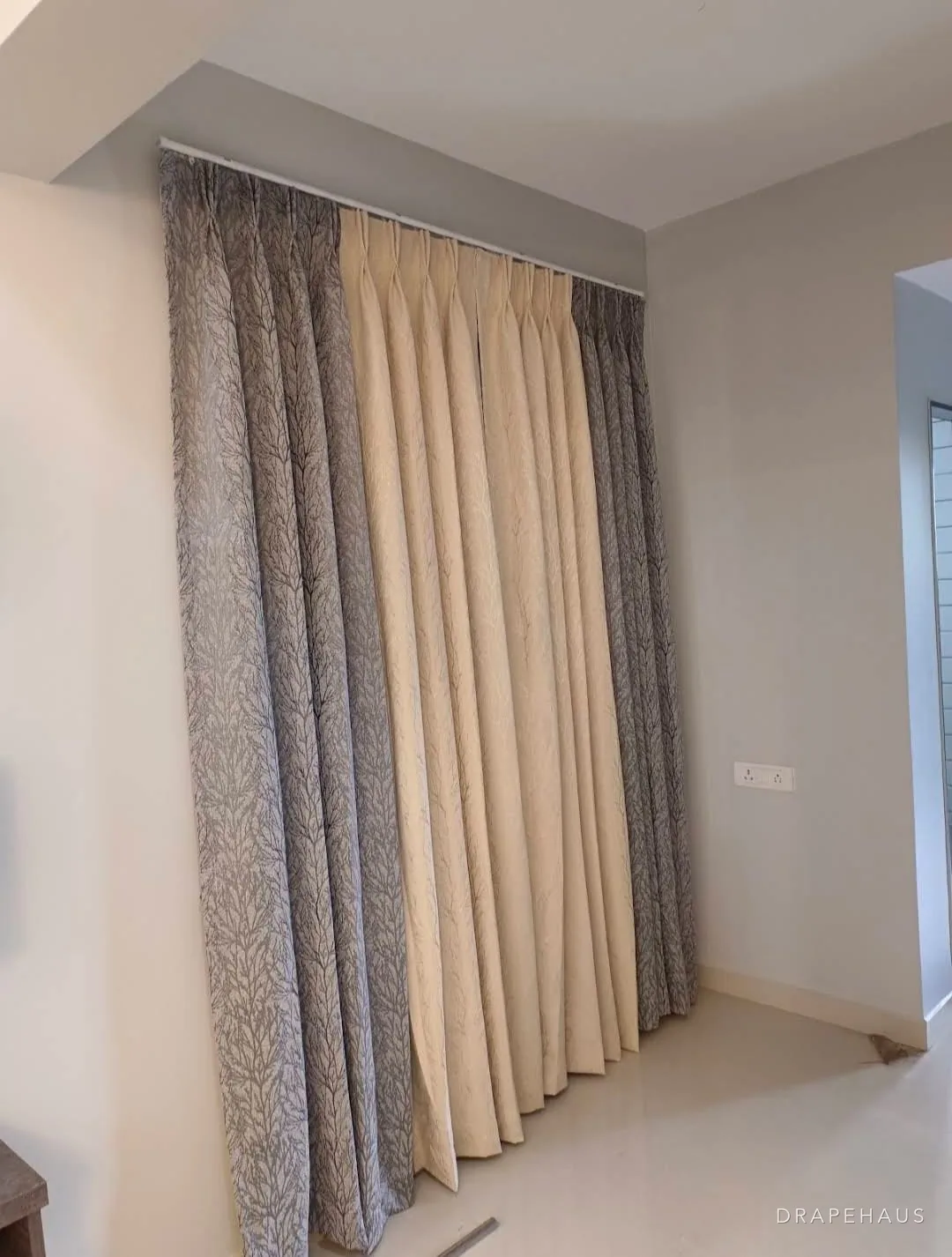
The most effective way to keep a house cool without AC is to stop the sun reaching the glass and the roof in the first place. After that come linings that reflect heat rather than absorb it, ventilation timed to the hours when outside air is actually cooler, and fans that cool the people in a room. Done together, in that order, they make a noticeable difference to a Goan house in April and May.
Goa's heat is humid heat, and that changes some of the usual advice. Nights here do not cool off the way they do inland, so throwing the windows open at sunset helps less than people expect. Air movement over the skin, on the other hand, helps more. And sealing the house tight all day, which works in a dry climate, can leave a Goan house stuffy and damp.
Below: what the climate figures say, then each measure in order of effect, with the mistakes that undo them.
Why Goa's summer heat is hard to escape
The India Meteorological Department describes April and May in Goa as 'uncomfortable with oppressive heat'. Its normals for Panjim put the mean maximum at 33.1°C in April and 33.6°C in May, which is not extreme by Indian standards. What makes it hard is everything else. The mean minimum in May is 26.4°C, so nights stay warm, and IMD notes that the daily temperature range from April to October is under 8°C because of the sea's influence. Humidity stays high too: May mornings at Panjim average 75%, evenings 69%.
Humid air makes heat feel worse, because sweat evaporates more slowly. Weather services capture this with a heat index, a measure of how hot it feels once humidity is counted with temperature. The US National Weather Service's worked example is an air temperature of 96°F (about 36°C) at 65% humidity, which feels like 121°F (about 49°C). Goa rarely reaches that temperature, but the principle holds: at 33°C and 70% humidity, a still room feels a good deal hotter than the thermometer says.
Two things follow. First, keeping heat out is worth far more than trying to get rid of it later, because the night air is not cool enough to flush a hot house quickly. Second, moving air across people matters more here than in a dry climate, because it helps the body shed heat that humid air will not take.
| Month | Mean max | Mean min | Humidity 08:30 / 17:30 |
|---|---|---|---|
| March | 32.3°C | 23.3°C | 81% / 65% |
| April | 33.1°C | 25.3°C | 76% / 67% |
| May | 33.6°C | 26.4°C | 75% / 69% |
| June | 30.6°C | 24.9°C | 88% / 83% |
1. Shade the glass from outside
Glass lets sunlight in and keeps much of its heat. The US Department of Energy puts it plainly: in cooling seasons, about 76% of the sunlight falling on standard double-pane windows enters to become heat. Once that heat is inside, curtains and blinds can only slow it down. Stop it outside the glass and it never enters the room.
That is why external shading comes first. The DOE's figures for awnings in the United States are a useful reference: an awning can reduce solar heat gain by up to 65% on south-facing windows and up to 77% on west-facing ones. The DOE also advises an opaque, tightly woven fabric, a light colour that reflects more sunlight, and some ventilation, through eyelets or open sides, so hot air does not get trapped between the awning and the window. Its guidance on exterior shades and shutters is that they are the most effective option for cutting solar heat gain, and the more open the weave, the less protection.
In Goa, the traditional answers already work this way. Deep roof overhangs and the covered balcão keep high sun off the front walls. Bamboo and chik blinds hung outside a window or across a verandah filter the low west sun while letting air through. Modern equivalents include outdoor blinds in shade mesh, which keep the view, and retractable awnings over a terrace or a run of west-facing glass. Anything outdoors here has to be planned for wind and the monsoon: retractable or removable, with wind protection on exposed sites.
Planting helps too, over time. The DOE notes that shade and evaporation from trees can lower surrounding air temperatures by as much as 6°F (about 3°C), and that vines on a trellis can shade a wall while admitting breezes. It also warns against dense foliage right against a house in wet areas, where it keeps walls damp; in Goa, leave a gap between the planting and the wall so the monsoon doesn't turn shade into mould.
Heat stopped outside the glass never has to be removed from the room. Shade the west first.
Planning something like this?
We visit homes across North and South Goa, measure on site, and bring samples to see in your own light.
2. Curtains and blinds that reflect, not absorb
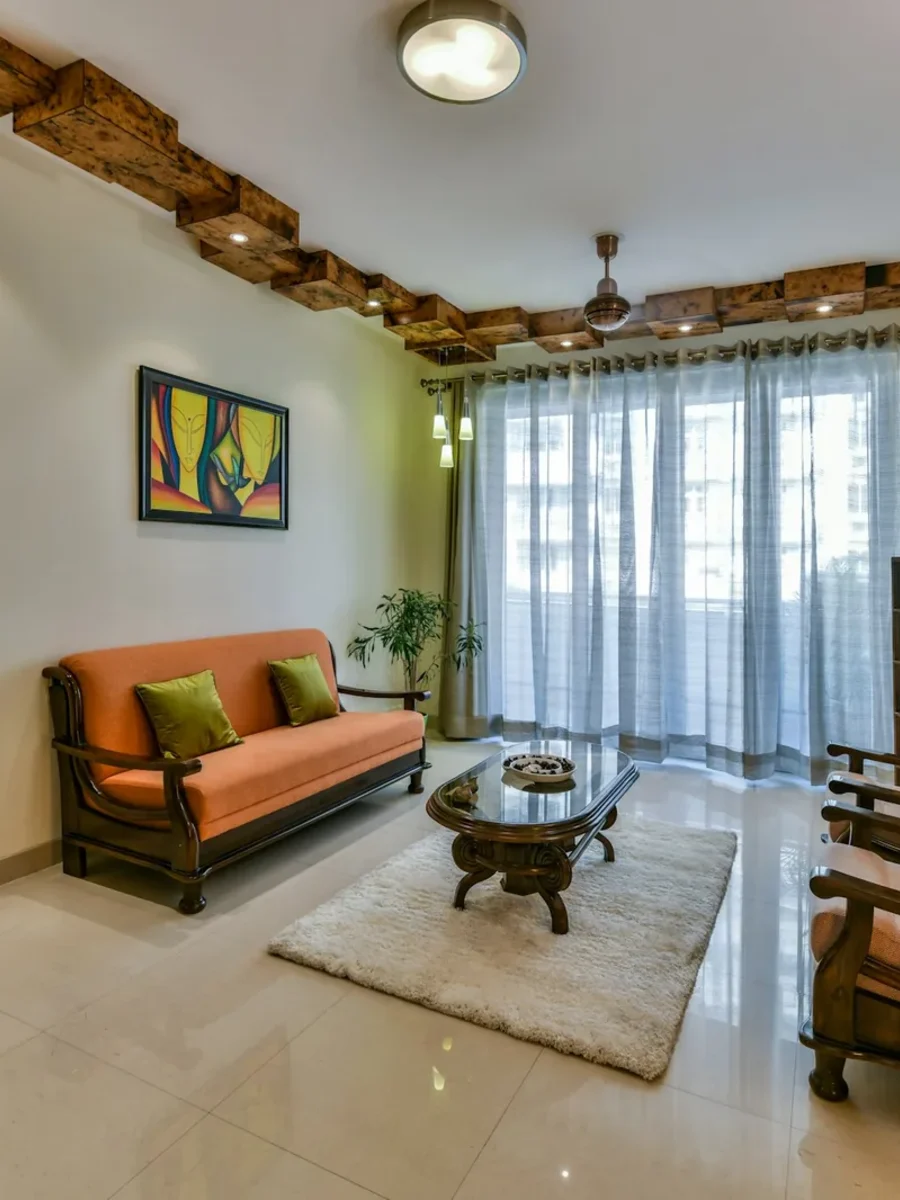
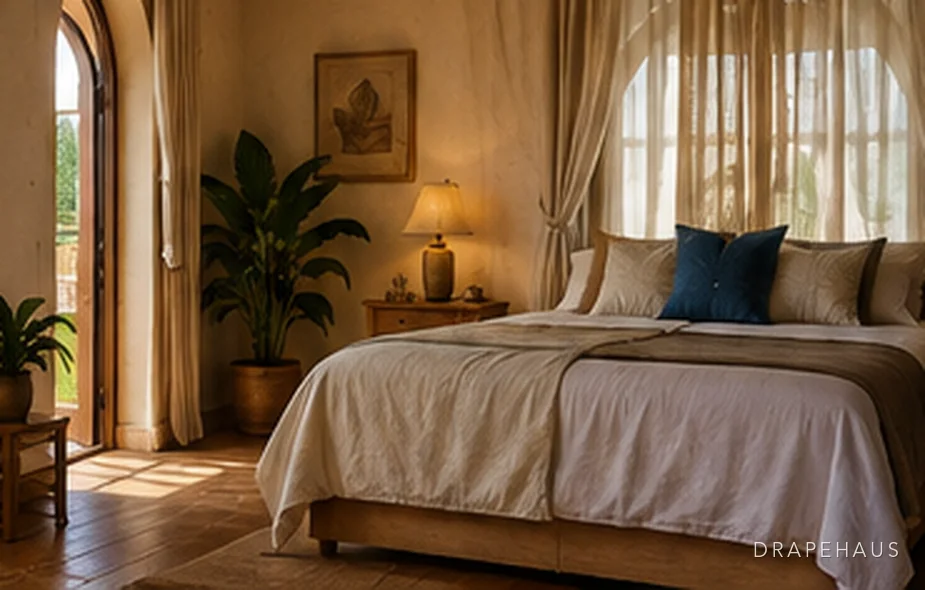
Inside the window, what matters is what the sun hits first. A dark, unlined curtain drawn across a sunny window absorbs the heat and warms up itself, then passes that heat into the room. A light-coloured backing facing the glass reflects much of it back out. The DOE's figure here is a good one to remember: studies show that medium-coloured curtains with white plastic backings can reduce heat gains by 33%. It also advises closing curtains on windows that receive direct sun on summer days, and notes that highly reflective blinds, fully lowered and closed, can reduce heat gain.
In practice, that means lined curtains or blackout curtains with a white or light lining on west and south-west windows, rather than dark unlined fabric. Thermal curtains, as they are often sold, are simply curtains with a dense or coated lining that does the same job. Among blinds, the DOE singles out cellular or honeycomb shades: in cooling seasons, fitted tightly, they can reduce unwanted solar heat through windows by up to 60%. Honeycomb blinds are worth considering for bedrooms that bake in the afternoon. Roller and roman blinds, the DOE notes, offer little insulation and are mostly about blocking the sun itself.
The DOE makes one more observation that is easy to act on: according to a DOE study, 75% of residential window coverings stay in the same position every day. A curtain that is open when the sun hits it does nothing. Close the east side in the morning and the west side from early afternoon, and open the shaded side for light. Our guide to heat gain goes into which windows matter most in a Goan house.
3. Ventilate by the thermometer, not the clock
Public health advice in India and elsewhere agrees on the daily rhythm. The Indian health ministry's heat advisory says to keep windows and curtains closed during the day, especially on the sunny side of the house, and open them at night to let cooler air in. UK guidance puts it more precisely: open windows when the air feels cooler outside than inside, for example at night, and try to get air flowing through the home.
That last condition is the important one in Goa. Because nights stay warm and the daily range is small, outside air is cooler than a sun-heated room for fewer hours than in a dry climate. The US DOE's guide to natural ventilation says it works best in dry climates with cool nights, and warns that in humid climates it may contribute to mould and mildew. So don't open everything at 3 pm on the assumption that a breeze must help. An inexpensive indoor-outdoor thermometer settles the question: open up when outside falls below inside, usually from late evening, and close up again by mid-morning before the sun gets round.
When you do ventilate, make the air go somewhere. Wind enters through windows on the windward side and leaves on the leeward side, so open windows on opposite sides of the house rather than several on one wall. Warm air rises, so high windows, ventilators or a stairwell opening let it escape while cooler air comes in low; the DOE calls this the stack effect. In Goa the afternoon breeze is generally from the west and north-west, which IMD's records show strengthening towards evening in the hot season. Good sliding window nets make it practical to leave windows open at night without letting mosquitoes in.
Don't block the path. A tall wardrobe across a window, a sofa back pushed against the only low opening or heavy curtains left drawn at night all stop the air the house is relying on.
4. Fans: cool the people, not the room
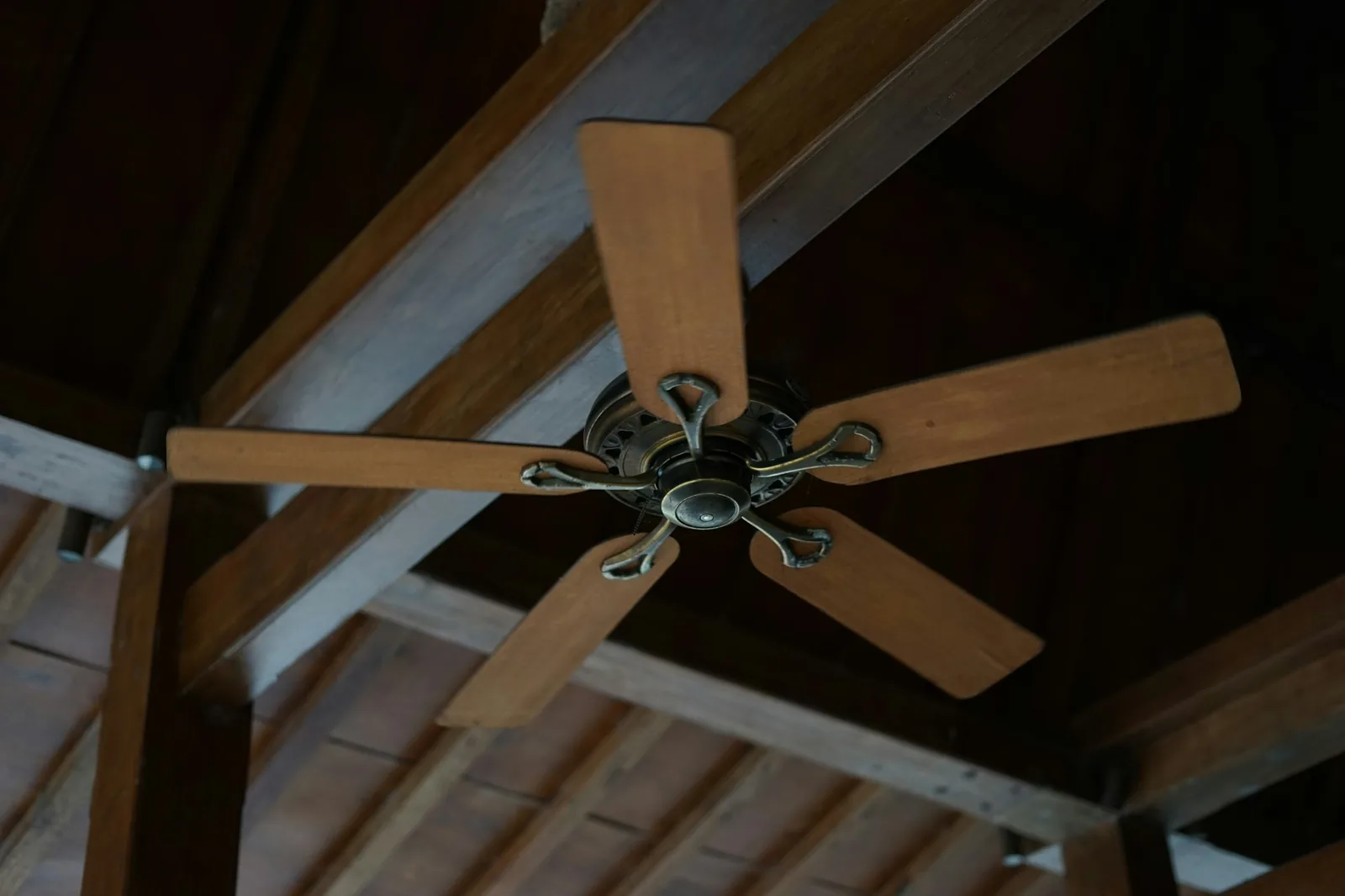
Fans do not lower the air temperature. The DOE describes them as creating a wind-chill effect that makes you feel more comfortable, and in humid heat that effect is precisely what is needed. Ceiling fans are the most effective kind. The DOE also notes that, where air conditioning is used, a ceiling fan lets you set the thermostat about 4°F (roughly 2°C) higher without losing comfort, and that in moderate climates ceiling fans can sometimes replace air conditioning altogether.
There is a temperature above which fans stop helping. UK health guidance is to use electric fans when the air is below 35°C, and not to aim them directly at the body. Goa's mean maximum in May, 33.6°C, sits just under that line, so on most days a well-placed fan is genuinely useful, but on the hottest afternoons, cooling the body directly with water and staying in the shadiest room makes more sense.
Placement makes a large difference. ENERGY STAR advises mounting a ceiling fan in the middle of the room, at least 7 feet (about 2.1 m) above the floor and 18 inches (about 45 cm) from walls, with 8–9 feet (about 2.4–2.7 m) best for airflow. In high-ceilinged Goan houses that often means a longer downrod. The DOE suggests more than one fan in rooms longer than about 18 feet, roughly 5.5 metres. Window fans can help as well: placed facing away from the wind, they exhaust hot air while windows elsewhere draw cooler air in.
In India, ceiling fans are a mandatory appliance under the Bureau of Energy Efficiency's star-labelling programme, so every new fan should carry a BEE label you can compare. A fan runs for hours a day through the hot months, so its rating matters. And because fans cool people rather than air, switch them off in empty rooms.
5. The roof and the top floor
A roof in full sun is the largest hot surface on most houses. The DOE notes that a conventional roof can reach 150°F (about 66°C) or more on a sunny summer afternoon, while a reflective, or 'cool', roof under the same conditions can stay more than 50°F (28°C) cooler. White roofing products reflect about 60–90% of sunlight. In buildings without air conditioning, the DOE says, a cool roof improves comfort and safety by reducing the heat flowing down into the rooms below.
Two cautions apply in Goa. The DOE warns that in warm, moist places light-coloured roofs show algae and mould growth more visibly than dark ones, and that some coatings include chemicals to resist it for a few years, so a white terrace coating needs cleaning and recoating after a few monsoons. Second, a coating is a building job: it has to go onto a sound, clean, dry surface, which means the dry months, and it is no substitute for the waterproofing a flat terrace needs. That is work for a roofing or waterproofing contractor; Drape Haus does not do it.
Traditional Goan roofs of clay tile have an advantage the DOE recognises: unglazed terracotta tiles are typically a naturally cool colour. Under a slab, a false ceiling with a ventilated gap above it slows the heat reaching the room, but get advice before cutting vents. Meanwhile, the simplest move costs nothing. The Indian health ministry's heat advice includes staying on lower floors during the day, and in a two-storey house the ground floor is almost always the cooler place to spend a May afternoon.
6. Stop making heat indoors
Every appliance that runs turns electricity into heat inside the house. UK heat guidance includes switching off lights and electrical equipment that are not in use, and the Indian health ministry's advisory recommends avoiding cooking during the peak summer hours and opening doors and windows to ventilate the cooking area. In a Goan kitchen, that means cooking earlier in the morning or later in the evening during the hot weeks, running the exhaust fan whenever the stove is on, and keeping the kitchen door shut so its heat doesn't spread.
Other small sources add up: a refrigerator in a closed alcove with no room to breathe, chargers and set-top boxes left on all day, old incandescent or halogen lamps. None is large on its own, but in a house relying on passive cooling, a few degrees saved inside matters.
Mistakes that make a humid house hotter
Most homes that feel unbearable in May are not short of measures; they are using the right ones at the wrong time. The usual culprits are habits rather than missing equipment, and most are free to fix. When the remaining problem is a run of west-facing glass or an exposed terrace, that is where awnings and outdoor shade earn their place.
- Dark, unlined curtains on west windows: they absorb the afternoon sun and radiate it into the room
- Curtains and blinds left in the same position all day, whatever the sun is doing
- Opening every window at mid-afternoon, when outside air is hotter than the room
- Sealing the house tight day and night, which traps heat and moisture together
- Clear plastic sheeting left down on a sunny balcony, which traps heat like a greenhouse
- Fans running in empty rooms while the occupied room has none
- Furniture blocking the only cross-ventilation path through a room
- A white terrace coating left uncleaned until algae has turned it grey
How to cool a house without AC, step by step
In rough order of effect. The first three cost little and work in almost every Goan house.
Find the hot windows
Note which windows take direct sun and when. In most houses, the west and south-west windows from early afternoon cause most of the heat. Start there.
Shade them from outside
Fit chik blinds, outdoor blinds or awnings outside the hottest windows and verandahs, light-coloured and opaque for heat, mesh where you want the view. Plan how each comes down for the monsoon.
Line the curtains
Replace dark unlined curtains on sunny windows with curtains lined in white or a light colour facing the glass, or add honeycomb blinds behind them.
Move the coverings with the sun
Close east windows in the morning and west windows from early afternoon. Open shaded windows for light.
Ventilate when outside is cooler
Use a thermometer. Open windows on opposite sides of the house once outside falls below inside, usually late evening, and close them by mid-morning.
Set up the fans
Mount ceiling fans centrally and at the right height, add a second fan in long rooms, and switch fans off when a room is empty. Below 35°C, fans help; above it, cool the body with water too.
Deal with the roof
Ask a roofing contractor about a reflective coating or a ventilated false ceiling for a top-floor room under a slab, and spend the hottest afternoons downstairs.
Cut indoor heat
Cook in the cooler hours, use the kitchen exhaust, and switch off lights and equipment that aren't in use.