 Drapehaus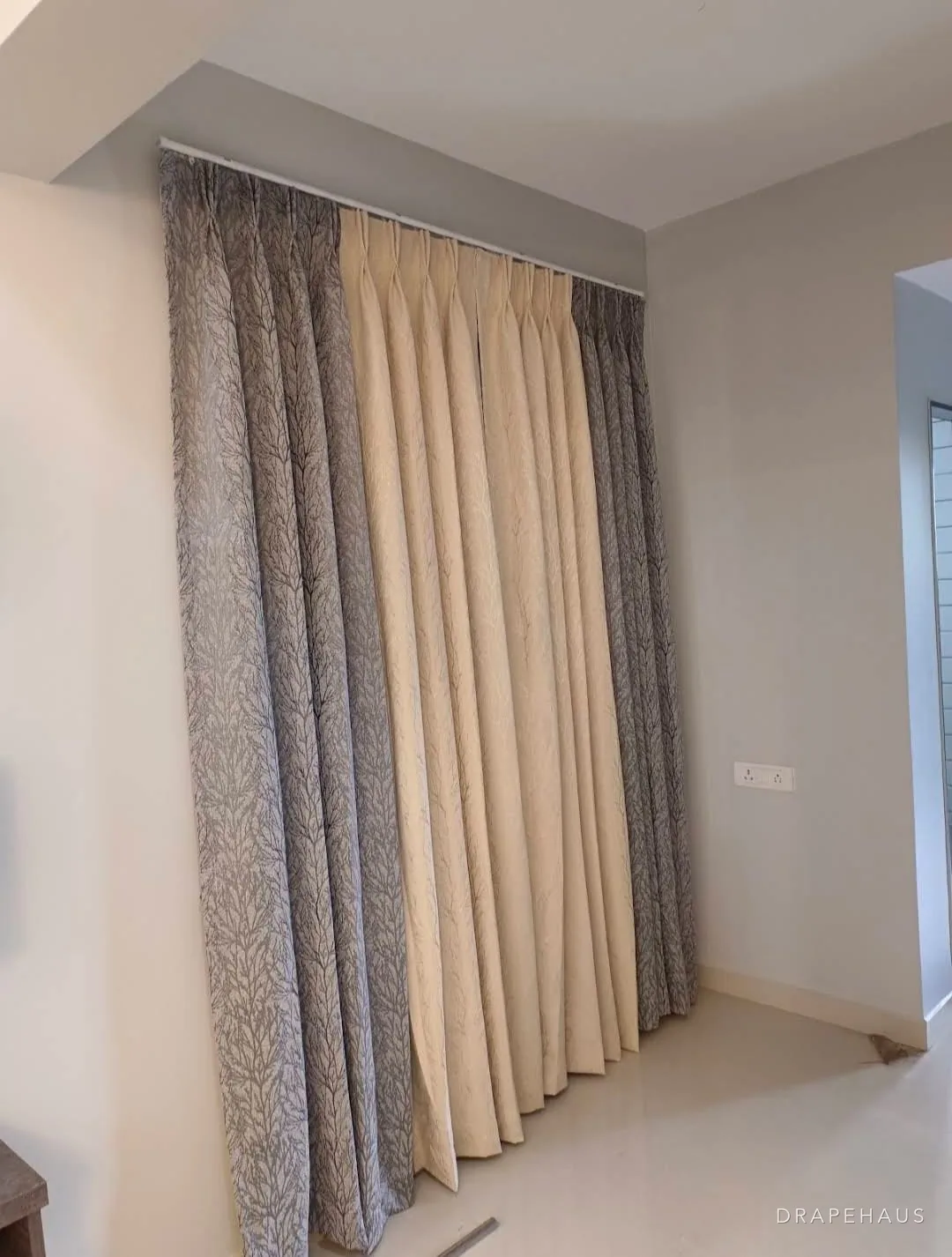
Drapehaus
Preparing the room
Drapehaus
Preparing the room
Curtains
Real darkness in a bedroom that faces the morning sun, a media room, or a homestay where guests sleep late. The fabric is only half of it — how the curtain meets the wall decides whether light gets round it.
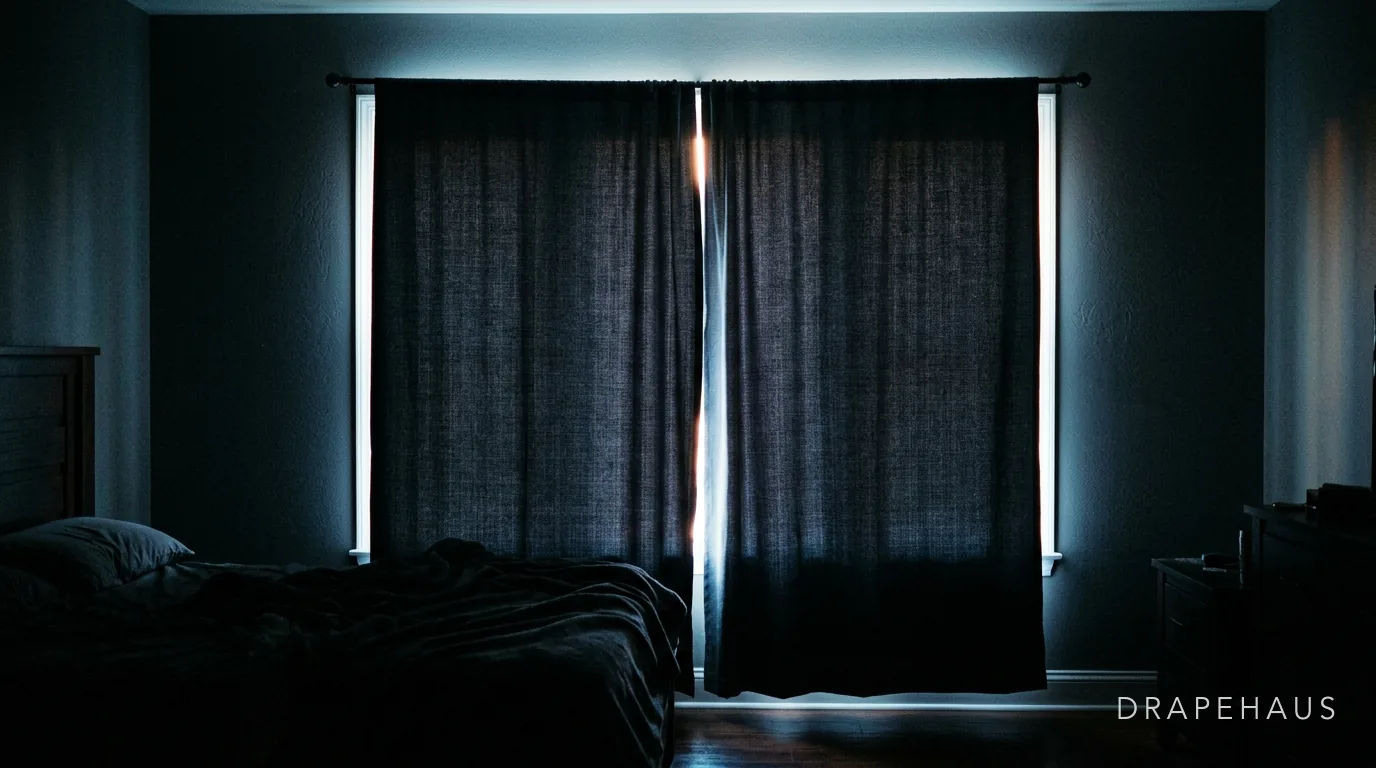
Blackout · Midday
Treatment
Time of day
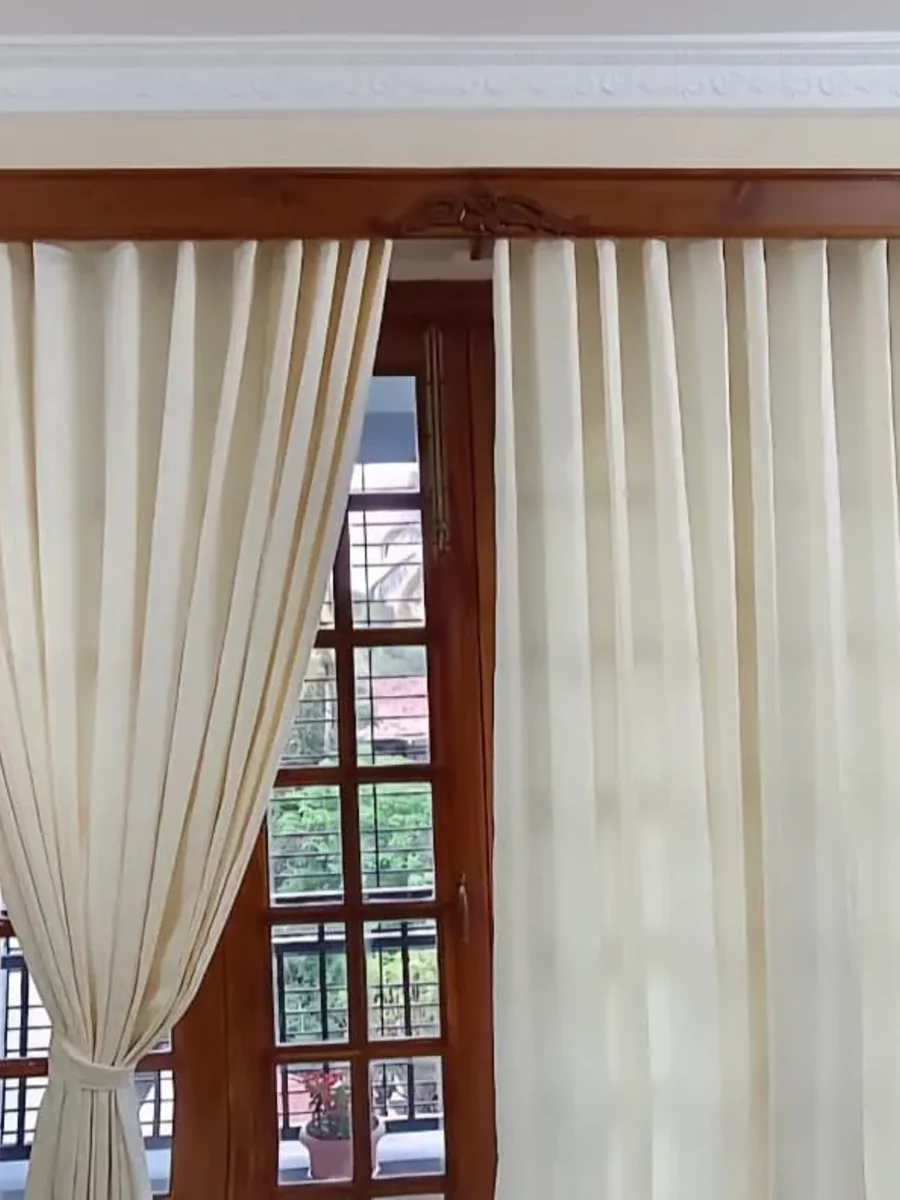
Near-total darkness — because the pole runs past the window and the curtain overlaps the frame. Light leaks at the edges, not through the fabric.
In short
By the Drapehaus studio · How we write
Is it right for you?
A blackout curtain is a curtain whose lining stops light completely, made and hung so that the only light in the room is the light you switch on. It is not a particular fabric. Almost any face fabric — a linen-look weave, a cotton blend, a print — can be made up as blackout, which means you choose the look of the room first and the performance follows.
It is worth being precise about what you need. True blackout matters for people who sleep past sunrise, for shift workers, for children's daytime naps, for projectors and screens used in daylight, and for guest rooms where every guest has different hours. For many other bedrooms, a well-lined curtain that dims the room is enough, and it drapes more softly.
Blackout curtains are the wrong answer where the real complaint is heat on a sunny façade — a solar blind or external shading does that better — and they are a poor fit for rooms that are open to the breeze all day, where a heavy lined curtain simply gets in the way of the air.
The details
Most blackout curtains leak. Light comes in at the sides, over the top and under the hem, and a gap of two centimetres is enough to wake someone. We measure for overlap: the track runs wider than the window, the curtain returns to the wall at each end, and a ceiling-fixed track or pelmet closes off the top.
The blackout itself is a lining, not a coating on the face fabric, so you can choose any curtain fabric you like. In Goa we specify linings that breathe, because a sealed layer against a window in the monsoon traps moisture and grows mildew.
Your options
There is more than one way to make a curtain black out. The choice affects how it drapes, how it is cleaned and how it survives heat and humidity.
Swipe for all 5 →
The honest view
Darkness on your schedule
A well-fitted blackout curtain lets a room be dark at any hour. For a bedroom facing the morning sun or a guest room used by people on different clocks, that is the whole point.
Any fabric can be used
Because darkness comes from the lining, you are free to choose a face fabric for its colour, texture and pattern. The room looks the way you want and still performs.
Protects the face fabric
The lining takes the sun, so the fabric facing the room fades far more slowly. On sunny glass, a blackout lining can add years to the life of a coloured curtain.
Cuts heat and noise
A dense lined curtain drawn across sunny glass reduces the heat reaching the room and softens sound from outside, which helps in air-conditioned bedrooms.
Only as good as the fitting
A blackout curtain on a short track or a wall fix below the ceiling will leak light at the sides and top. The fitting has to be planned with the curtain, not after it.
Heavier and stiffer
Coated linings add weight and body. The folds are firmer and the stack wider, and the track and brackets need to be specified for the extra load.
Cleaning is more involved
Sewn-in blackout curtains usually need dry-cleaning, and the coating should not be tumble-dried or ironed hot. A detachable lining avoids much of this.
Side by side
Curtains are not the only route to a dark bedroom. Here is how they compare with the realistic alternatives.
| Blackout curtain | Blackout roller with channels | Blackout roman blind | Solid shutters | |
|---|---|---|---|---|
| Darkness achievable | Very high if fitted well | Highest | High, some edge leak | High if well fitted |
| Softness in the room | High | Low | Medium | Low |
| Suits wide openings | Yes | Several blinds needed | Poorly | Needs folding panels |
| Clears the glass | Stacks aside | Rolls up | Stack sits in window | Fold back |
| Humidity tolerance | Good with breathable lining | Good | Fair | Timber needs care |
| Cleaning | Dry-clean or detachable | Wipe | Dry-clean | Wipe and oil |
Swipe to compare →
For the darkest possible room, combine a blackout roller behind a lined curtain.
Rather see it in your own room?
We bring samples to the house, measure every window, and specify for the light and exposure you actually have.
Room by room
Especially when the room faces east or south-east and catches the sunrise. Pair with a sheer on a double track so the room is not dark all day.
Daytime naps and early summer sunrises both call for real darkness. A detachable lining makes washing the face fabric simple, and a cord-free track keeps the window safe.
Guests arrive from every time zone and sleep at every hour. Full blackout with generous overlap is one of the details reviewers notice most.
Rarely needed. A dim-out or light-filtering curtain controls screen glare without leaving the room in darkness. Keep blackout for rooms used for video or projection.
Useful where a projector or large screen is used by day. Otherwise a lined curtain with a sheer usually gives a more comfortable balance.
Possible, but heavy and hard to seal at the top. Blackout at great height needs a motorised, heavy-duty track and a ceiling pocket or pelmet.
In depth — tap a heading to read
Most leaks come from the edges, and we plan the track for that. But a blackout curtain can also leak through its own construction. Every stitch that passes through the coated lining makes a tiny hole, and against bright morning glass a line of stitching can glow like a row of pinpricks. Good blackout making keeps stitching through the lining to a minimum, uses the lining's selvedge where possible and sets the heading so needle holes sit behind the tape.
The joins between widths are another path. On a wide window the lining is joined as well as the face, and a poorly finished seam lets a thin line of light through. We join blackout linings flat, seal the seam line where needed and place joins where they fall into a fold rather than across a flat face.
Finally, look at the heading. On a track with widely spaced gliders, light can glow through the gap between the top of the curtain and the track. A heading set close to the track, or a ceiling pocket that hides it, closes that last path.
A closed blackout curtain on sunny glass creates a pocket of trapped air between the lining and the window. That pocket can become far hotter than the room, which is good for keeping heat out and hard on the lining. Coated linings that face this heat year after year are what crack and stiffen, and the hottest windows are where we insist on a lining made for it.
The pale back of a blackout lining matters here. A light-coloured backing reflects some of the sun back out through the glass; US DOE Energy Saver guidance puts the heat-gain saving for medium-coloured drapes with white plastic backings at about a third. A dark back absorbs heat instead and passes more of it into the room.
The same pale backing is what the street sees. Across the front of a house, a row of matching white or ivory lining backs looks deliberate. A mix of coloured linings, each chosen room by room, looks disordered from the lane.
On the hottest glass, the lining is working hardest. That is where the lining specification matters most.
A blackout curtain kept closed through the monsoon in an unoccupied room is a sealed layer against cool, damp glass. Condensation and stale air collect behind it, and the face fabric and the heading tape are where mildew appears first. In a house that will be shut, we either leave blackout curtains drawn back to let air reach the glass, or take them down for the season.
Detachable linings are particularly useful in this climate. The face fabric can be washed and dried properly at the end of the dry season, and the lining can be wiped, aired and stored flat. Rehanging both before the house reopens takes minutes.
In an air-conditioned bedroom that runs through the monsoon, the room air is drier and the risk is lower. The glass is warm and damp on the outside rather than the inside, and the curtain stays in good condition as long as the room is not left closed and unconditioned for weeks.
Blackout curtains are heavier than their face fabric suggests, and they are usually drawn fully closed and fully open every day. A track specified for the weight, with brackets spaced for the load and overlapping master carriers where the two curtains meet, is part of the blackout, not an accessory to it.
Motorisation suits blackout well. A motor draws the curtain to exactly the same closed position every time, with the overlap correct, and it can open the room gently at a set hour. In guest rooms it also removes the most common cause of damage, which is guests pulling a heavy curtain at the leading edge.
Living with it
Dust both faces gently with a brush attachment. Shaking or beating a coated lining can crease and crack the coating along the folds.
Sewn-in coated linings are usually dry-cleaned. Detachable linings can often be wiped down while the face fabric is washed on its own.
Heat softens and marks blackout coatings. Press the face side only, on a low setting, or steam gently while hanging.
Once a year, close the curtains on a bright morning and look for new points of light. Worn coating or loosened seams can be repaired before they spread.
Open blackout curtains on dry spells so the glass and the lining can dry. Never leave them closed in an unused room for weeks.
Avoid these
A curtain sold as blackout can still leave a bright room if it is too narrow or fixed below the ceiling. Specify the fitting and the curtain together.
Blackout in a living room or study can make it feel heavy and airless. Keep it for rooms that genuinely need darkness and use dim-out elsewhere.
A light track under a blackout curtain bows between brackets and lets the curtain drop at the centre, which opens a gap at the top. Size the track for the weight.
A room with only blackout is either dark or bare. Add a sheer on a second track so the room has a daytime setting too.
Checklist
More in curtains
Curtains measured on site, cut to the window and specified for what it actually faces — from airy sheers on a veranda door to full blackout in a bedroom that catches the sunrise.
From the Journal
All articlesOur process
One team from the first visit to the last bracket, so nothing is lost between the person who specified it and the person who fits it.
FAQ
Because of the fitting, not the fabric. Light leaks at the sides and over the top. A track wider than the window, curtains that return to the wall, and a ceiling fix or pelmet above close those gaps.
Yes. Blackout is added as a lining behind the face fabric, so the fabric you like for the room can be made into a blackout curtain.
They can, if the lining is fully sealed and the window is closed for months. We use breathable blackout linings and advise leaving a gap for air in a house that is shut for the season.
In rooms where someone sleeps past sunrise, naps by day or uses a screen in daylight, yes. They also protect face fabric from fading and help keep sunny rooms cooler. In rooms used mainly by day, a dim-out lining or light-filtering curtain is usually the more comfortable choice.
Blackout linings stop light completely; room-darkening or dim-out linings cut most of it but let some through. Blackout suits bedrooms that must be dark at dawn and media rooms. Dim-out drapes more softly and suits shaded bedrooms and rooms that just need to be calmer.
Often, yes. A detachable blackout lining can hang behind an existing curtain on the same track or from the heading. Whether it works depends on the heading, the track and the weight the curtain can carry, which we check on site.
Some coated linings have a slight smell when new, which fades with airing. Better-quality multi-coat linings have little or none. If you are sensitive to it, a triple-weave fabric or a detachable lining that can be aired before hanging avoids the issue.
Because the two curtains meet edge to edge instead of overlapping. A track with overlapping master carriers, or a curtain made with extra width at the leading edges, closes that line. It is a fitting issue, not a fault in the lining.
Next step
Blackout is decided at the window, not in the showroom. On a home visit we measure each opening, check the ceiling and wall for the track position, look at where the morning light arrives, and bring face fabrics and linings to test against your own glass. We then specify lining, track and overlap together, make the curtains in our workroom and fit them so the edges close properly. Book a home visit and we will plan the room with you.