 Drape Haus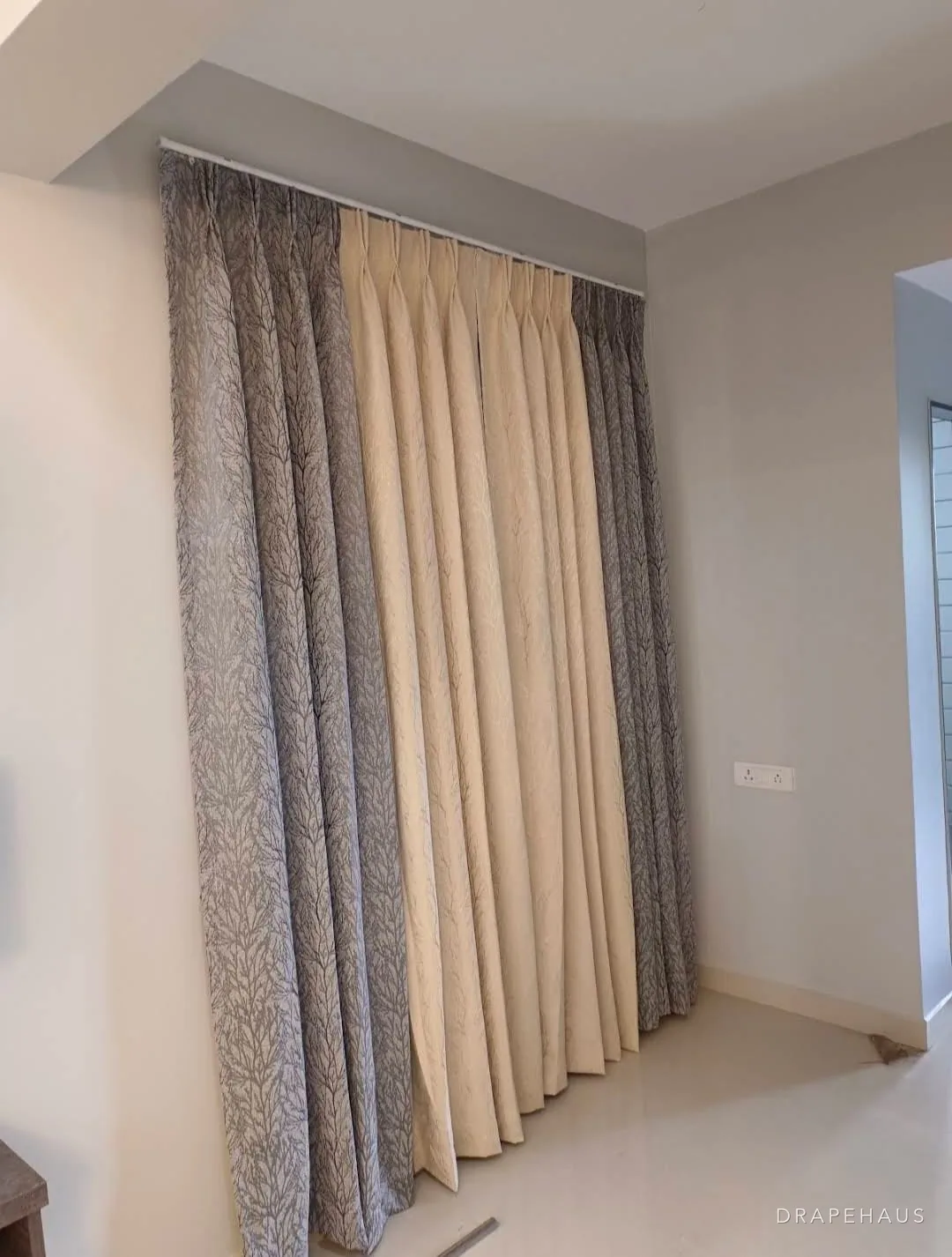
Drape Haus
Preparing the room
Drape Haus
Preparing the room
Master Bedroom · Curtains
Floor-to-ceiling curtains that make a large room feel finished — soft and bright for the sitting corner by day, completely dark over the bed at night.
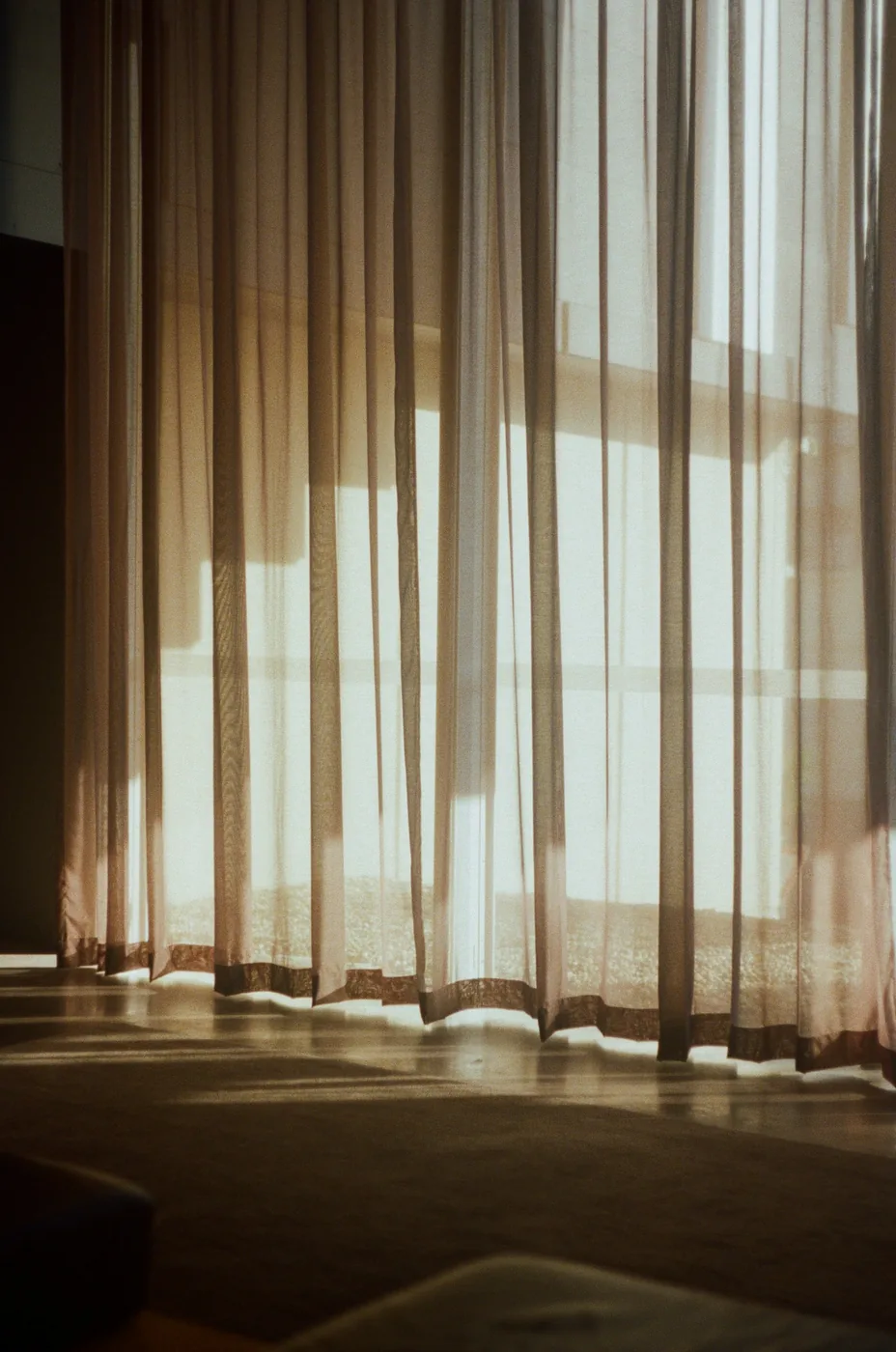
Sheer + blackout · Midday
Treatment
Time of day
Two layers on a double track: the sheer stays drawn for the day, the blackout closes over it at night. The most flexible answer for a bedroom.
In short
In most villa master bedrooms we recommend two layers on a ceiling track: a sheer at the front of the glass for daytime and a blackout-lined curtain in front of it for sleep, with a ripple-fold or pinch-pleat heading. Run the track wall to wall where the glass is wide, so open curtains stack beside the balcony door rather than across it.
What your master bedroom asks of curtains
See it in your master bedroom
We bring samples to your home, hold them to your light and measure every opening — anywhere in North or South Goa.
Many master bedrooms have two or three openings on one wall — a window, a balcony door and another window. Curtaining each separately leaves stripes of wall between them and lots of small stacks. Running a single ceiling track across the whole wall, with curtains that can close over everything, makes the room calmer and the windows look larger.
This also solves light leaks: one continuous blackout curtain has fewer edges than three separate pairs.
A ripple-fold heading gives regular, modern waves and is ideal on long tracks. A double or triple pinch pleat looks more tailored and traditional, and suits Portuguese-era houses with panelled doors. Eyelets are best left for smaller, more casual rooms — they look thin at this scale.
Plan generous fullness. On a large window, skimping on fabric is the most visible economy in the room.
Choose the curtain after the bed wall is decided. If the wall is panelled in timber or a dark charcoal, a pale, textured curtain balances it. If the wall is papered with a pattern, a plain curtain in a colour from the paper keeps the room calm.
In sea-facing suites, warm neutrals and soft colours hold up better in the light than strong saturated tones. The blackout lining also protects the face fabric from the afternoon sun.
A dressing area off the bedroom often has its own small window. A matching roman blind or a short curtain in the same fabric ties it to the bedroom. The en-suite needs a moisture-tolerant blind rather than a curtain — fabric soaks up steam and spots.
In Goa
Villa master suites near the sea take the full salt air through the balcony door. Use aluminium ceiling tracks and stainless fittings, and choose blackout linings that resist mildew. Twice a year — before and after the monsoon — have curtains vacuumed and checked.
If the villa is closed for months, take large curtains down and store them dry, or arrange for the room to be opened, aired and the curtains drawn back regularly. Heavy fabric hanging in a sealed room through the rains is where mould begins.
More for your master bedroom
Curtains for other spaces
We measure and fit curtains across Goa — Panjim, Porvorim, Dona Paula, Mapusa, Candolim, Calangute, Assagao, Anjuna & Vagator, Siolim, Benaulim, Colva, Varca, Cavelossim, Margao, Majorda, Vasco da Gama, Canacona & Palolem, Ponda.
FAQ
Usually layered curtains on a ceiling track — a sheer for daytime and a blackout-lined curtain for sleep — with a ripple-fold or pinch-pleat heading in a textured linen, a quality blend or a velvet.
Yes, in almost every case. Starting at the ceiling makes the room look taller and stops morning light spilling over the top.
In a villa being built or renovated, yes — a recessed pocket in a false ceiling hides the track entirely. We work with your contractor to size it.
In an air-conditioned master suite, lined and aired regularly, yes. Avoid velvet in rooms left closed and unventilated through the monsoon.
Yes, across North and South Goa. We bring samples, measure every opening in the suite, and give you a written quote.