 Drape Haus
Drape Haus
Preparing the room
Drape Haus
Preparing the room
Curtains
A curtain that falls in one continuous, identical S-shaped wave from end to end. Ripple fold — often called wave curtains — runs on its own track with carriers at fixed spacing, so the folds are set by the hardware rather than by hand.

Sheer · Midday
Treatment
Time of day
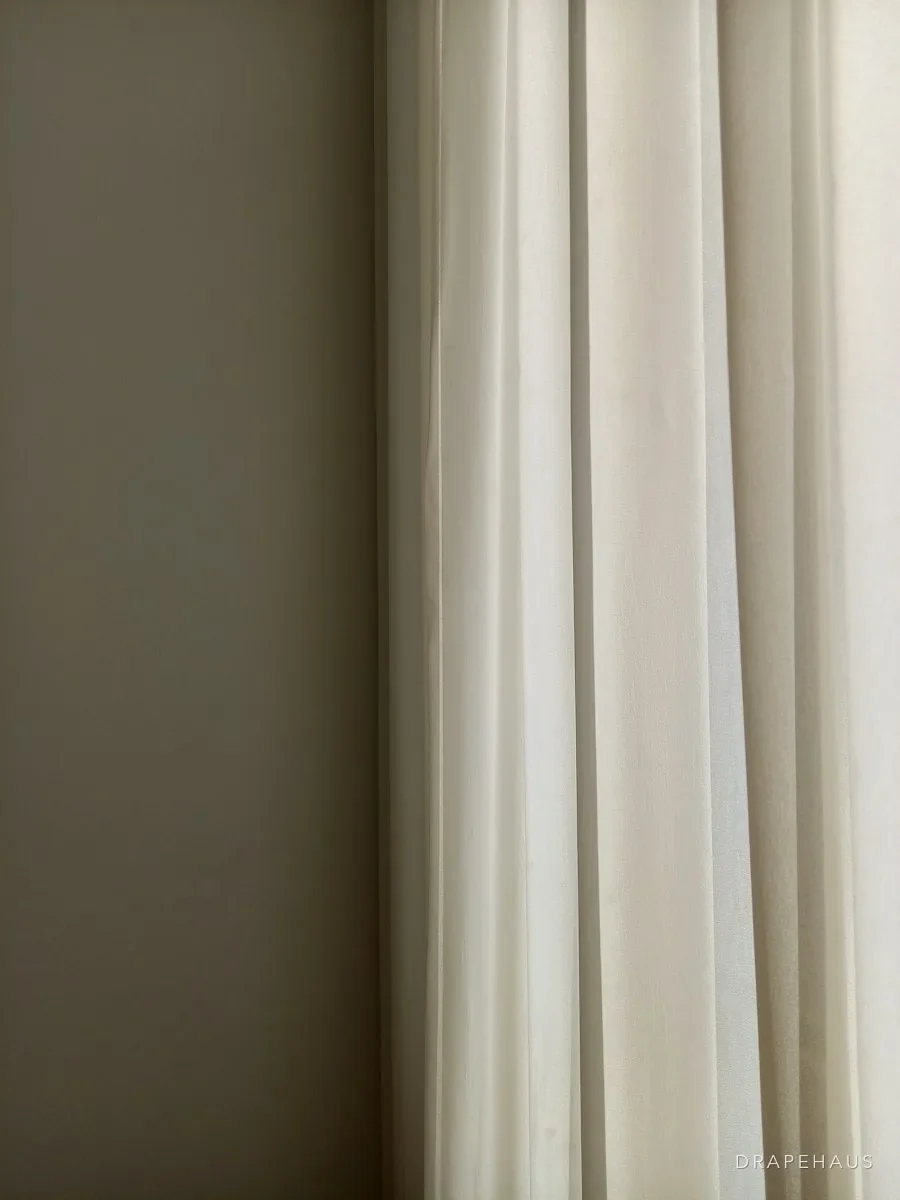
Softens glare and keeps the view by day. After dark, with lamps on, a sheer on its own hides almost nothing — pair it with a lined curtain for the night.
In short
By the Drape Haus studio · How we write
Is it right for you?
Most curtain headings form their folds in the fabric. A ripple-fold curtain forms them in the track. The carriers that hold the curtain are linked by a cord or chain at a fixed distance, and the heading tape clips or hooks to them. When the curtain is closed, the carriers stop at that set spacing and the fabric between them swings out and back in a smooth curve. Every fold is identical because every gap is identical.
That gives ripple fold a calm, architectural presence. It suits rooms with lots of glass, straight lines and plain walls: a living room opening onto a pool deck, a bedroom with a full-width sliding door, a villa with floor-to-ceiling windows. It looks especially clean ceiling-fixed or recessed, so the curtain appears to fall from the ceiling plane itself.
It is less natural in a heritage room, where the strict regularity can look out of period against carved timber and lime plaster, and it cannot be used on a decorative pole. It also commits you to a specific track system, so the decision is best made while the ceiling and power points are still being planned.
The details
The wave is made by the track, not the sewing. A flat heading tape with snap buttons or hooks clips onto carriers that are linked at a fixed distance by a cord or chain. When the curtain closes, the carriers spread to that spacing and the fabric swings alternately in front of and behind the track, forming the same curve every time.
That precision is why ripple fold appears in hotels and contemporary villas. It looks equally orderly open and closed, it stacks into a narrow bundle when drawn back, and it is the heading that runs most smoothly on a motorised track, because every carrier moves in step.
The track is the decision you cannot reverse. Ripple fold needs a dedicated ripple-fold track, ceiling-fixed, wall-fixed or recessed — it cannot hang from a pole. We specify the track, the carrier spacing and the fabric fullness together so the wave has the depth you want and clears the glass, the sill and any window handles.
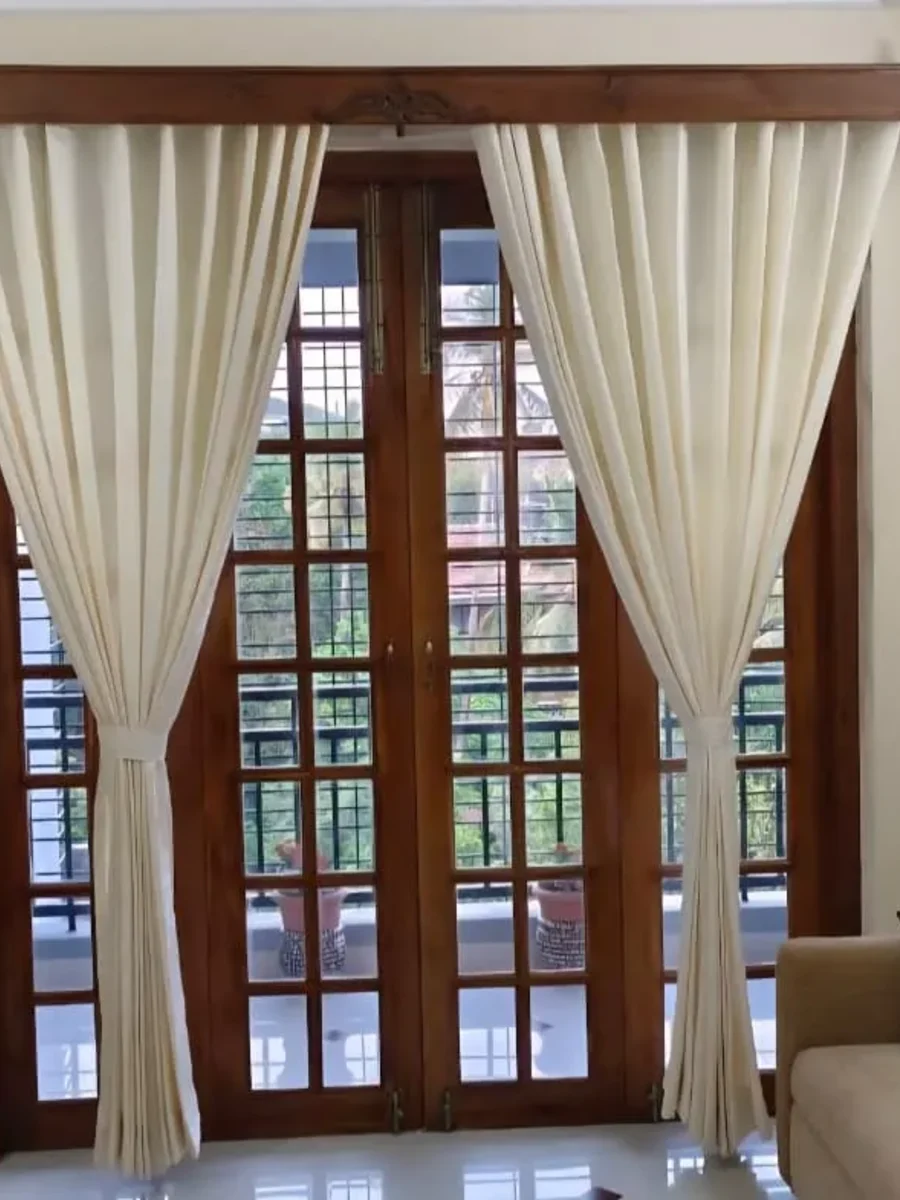
It suits sheers especially well. A voile on a ripple-fold track ceiling-fixed in front of a wall of glass softens the light along the whole run with a calm rhythm, and in the humid months the regular spacing lets air move freely between the folds.
Your options
The family is small, but the choices inside it change the look a good deal: how the fabric attaches, how deep the wave is and what the curtain is made of.
Swipe for all 6 →
The honest view
Perfectly regular folds
The wave never needs dressing. Open, closed or halfway, the curtain looks deliberate, which is why hotels use it.
The narrowest stack
Ripple fold compresses tightly when open, so more of the glass and view stays clear and less wall is needed either side.
Runs well on motors
Linked carriers move together, so a motor draws the curtain without the leading edge racing ahead of the rest.
Quick to remove and rehang
Snap or hook attachment lets the curtain come down for washing or monsoon storage without losing its shape.
Track-specific
It needs its own ripple-fold track; it cannot go on a pole or most ordinary tracks. Changing heading later means changing the track.
Can look clinical
The perfect regularity that suits a modern room can feel cold in a traditional one. A pinch pleat is kinder in heritage interiors.
Needs clear depth
The wave swings both sides of the track. Handles, sills and deep frames can catch it if the track is not positioned for them.
Side by side
The decision is usually between ripple fold, a pinch pleat on a track and an eyelet curtain on a pole.
| Ripple fold | Pinch pleat | Eyelet | |
|---|---|---|---|
| Fold shape | Identical S-wave | Tailored pleats | Round tubes |
| Set by | Carrier spacing in the track | Stitching in the heading | Rings on the pole |
| Hardware | Dedicated track | Track or pole | Pole only |
| Stack-back | Narrowest | Moderate | Widest |
| Ceiling or recessed fix | Yes | Yes | No |
| Motorising | Best | Good | Not possible |
| Suits heritage rooms | Rarely | Very well | Sometimes |
Swipe to compare →
If you want the ripple-fold look in a room with a decorative pole, there isn't a true equivalent. An eyelet curtain on the pole is the closest.
Rather see it in your own room?
We bring samples to the house, measure every window, and specify for the light and exposure you actually have.
Room by room
A ceiling-fixed ripple-fold sheer across the full width softens glare and stacks narrowly at the ends, keeping the doors usable and the view open.
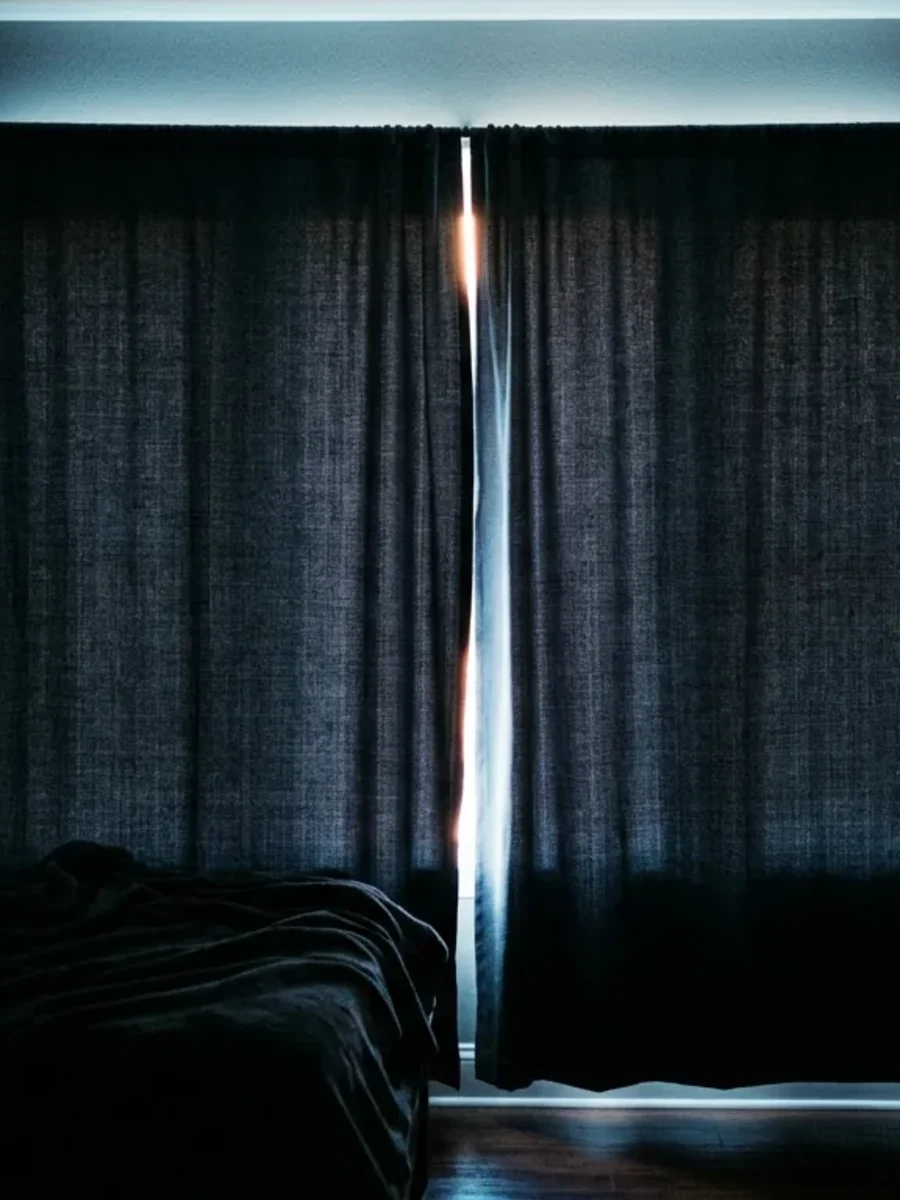
A blackout ripple fold on a ceiling track, often paired with a sheer on a second track, gives darkness with a clean line. Add a motor for wide openings.
The consistent look across many rooms, easy removal for cleaning and smooth motorised running are exactly what a hospitality setting needs.
Works very well when motorised. Hand-drawing a tall ripple fold is possible with a draw rod, but the length makes a motor the practical choice.
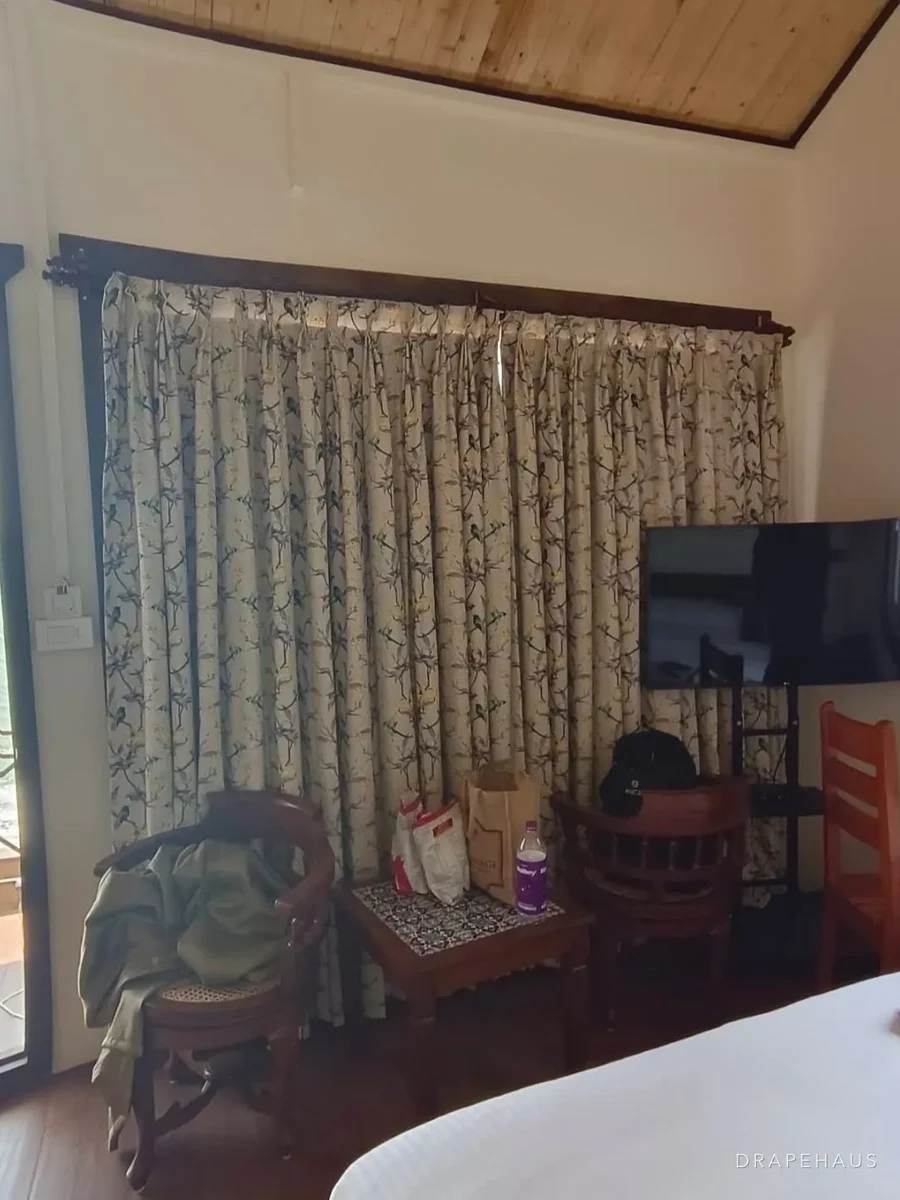
The precise wave can look out of period against carved timber and lime plaster. A pinch pleat usually suits better.
The wave needs room behind the track. Bring the track forward or ceiling-fix it further out so the curtain clears them.
A light-filtering ripple fold keeps glare off screens without fussy folds in the background of video calls.
In depth — tap a heading to read
The wave is defined by two numbers: the distance between carriers, and how much fabric hangs between each pair. More fabric for the same spacing produces a deeper curve; less fabric produces a shallow ripple. Because the carriers set the spacing, ripple fold uses fabric very predictably, and the closed curtain always covers the same width.
We choose the wave depth by the room and the space available. A deep wave projects further in front of and behind the track, which looks generous in a large room but can foul window handles in a tight one. On sheers, a medium wave gives a soft, even filter; on blackout, a slightly shallower wave keeps the curtain closer to the window and reduces light at the edges.
Measure the clear depth from the glass to the track position before choosing a deep wave.
Ripple-fold tracks can be ceiling-fixed, wall-fixed on brackets or recessed into a channel in the ceiling. Ceiling fixing gives the strongest line and lets the curtain close tight to the ceiling. Recessing hides the track completely but must be planned before a false ceiling is closed up, with timber or metal backing to carry the weight.
The track is cut to length and fitted with end stops, and on a pair of curtains, overlapping master carriers at the centre so the two halves close without a gap of light. On wide openings we usually split the run so each curtain stacks to its own side. Our ceiling curtain tracks and motorised curtain tracks pages cover the hardware choices in more depth.
Not every fabric waves equally well. Fluid, medium-weight fabrics — voiles, linen-look polyesters, soft cotton blends — swing into the curve naturally. Very stiff fabrics resist the wave and can look angular; very thin ones collapse between carriers. A brief hang test with a sample on a ripple-fold track tells you more than a swatch in the hand.
Near the sea, synthetics and blends keep the wave most consistently through the year because they do not lengthen and shrink with humidity. Pure linen will still wave beautifully, but the hem may need a hook adjustment between the dry season and the monsoon.
The track is aluminium in most systems, which resists salt air far better than steel, and the carriers are usually nylon or acetal. Problems near the coast come from fine sand and salt crystals in the channel, which make carriers drag and motors work harder. A wipe along the track each season keeps it running freely.
The fabric side is kinder. Because the folds are open and regularly spaced, air moves between them more freely than through a tightly bunched heading, which helps a curtain dry out after a humid night. Keep the hem clear of the floor so it does not wick up moisture from mopped tiles.
A ripple-fold curtain draws easily by hand on a well-fitted track, especially with a draw rod clipped to the leading carrier so the fabric itself is not pulled. For very wide or very tall windows, a motor makes daily use far easier and keeps the fabric clean. Our motorised curtains page explains controls and what happens in a power cut.
Living with it
Detach the curtain from the carriers rather than taking the track down. Wash or clean according to the fabric, and rehang slightly damp sheers so they drop straight.
Wipe the channel with a dry cloth each season. Grit and salt make carriers stick and strain motors.
Pull from the leading carrier with a rod rather than tugging the fabric. The wave stays even and the heading lasts longer.
In a house closed for the season, unsnap and store curtains clean and dry; the track and carriers can stay in place.
If the wave becomes uneven, a carrier cord may have slipped. It is a quick adjustment, not a new curtain.
Avoid these
A deep wave catches handles and stays. Measure clear depth and set the track position accordingly.
Stiff cloths form angular waves. Hang a sample on the track before committing.
Without overlapping master carriers, a pair of blackout curtains leaves a bright line down the middle.
A recessed track in a false ceiling needs timber or metal support behind it, fitted before the ceiling is closed.
It can look out of place against heritage detail. Consider a pinch pleat there instead.
Checklist
More in curtains
Curtains measured on site, cut to the window and specified for what it actually faces — from airy sheers on a veranda door to full blackout in a bedroom that catches the sunrise.
From the Journal
All articlesOur process
One team from the first visit to the last bracket, so nothing is lost between the person who specified it and the person who fits it.
FAQ
Yes, in everyday use. Both describe a curtain that hangs in a continuous S-shaped wave set by carriers at fixed spacing on a track. Different systems attach the fabric in different ways, but the look is the same.
No. The wave depends on carriers linked at a set distance inside a track. On a pole the spacing is lost and the curtain simply gathers.
The wave swings in front of and behind the track, so it needs clear depth on both sides. We check the gap to the glass, handles and sills before fixing the track position.
They are the best heading for motors. Linked carriers move in step, so the curtain opens and closes evenly without bunching at the leading edge.
Yes. A blackout lining sewn to the face fabric follows the same wave. A ceiling-fixed track and a generous overlap at the centre stop most light from getting round it.
Usually a little less, depending on the wave depth chosen. Because carrier spacing is fixed, the fabric quantity is very predictable for a given width.
Only if it is a ripple-fold track with linked carriers. A standard glider track will not hold the spacing. We check the existing hardware at the visit.
Yes, on a bent ripple-fold track, though tight angles can disturb the wave at the corners. Gentle bays work best.
On a ceiling-fixed track with returns at the ends and an overlap at the centre, very little light gets round them. On a wall-fixed track some light passes above.
Next step
Wave depth is hard to judge from a swatch. We visit, measure the opening and the clear depth to the glass, check where the track can fix and whether power is available for a motor, and bring fabrics to hang so you can see the wave they make in your light. We then specify the track, carrier spacing, fullness and fabric together and fit the system complete. Book a home visit to begin.