 Drape Haus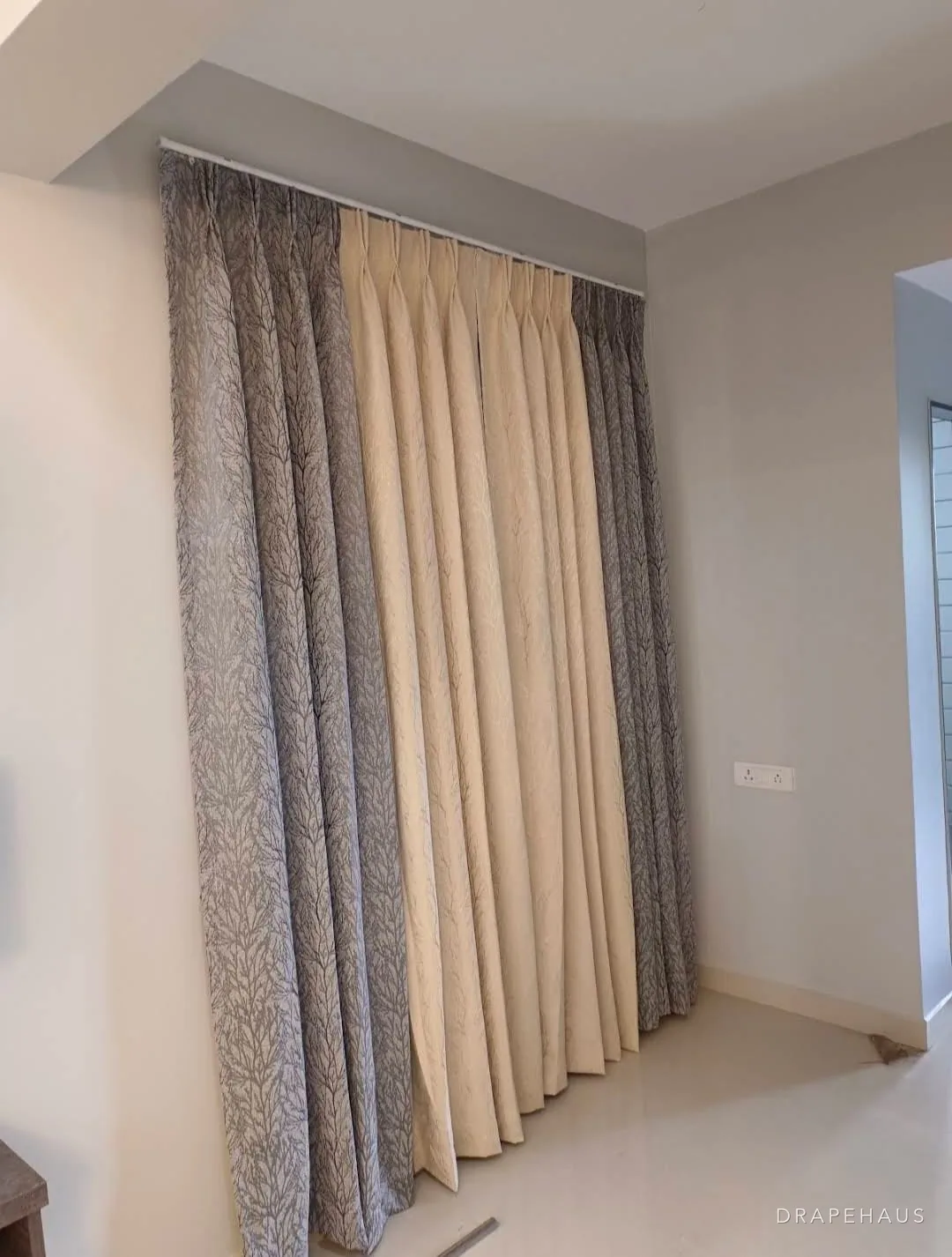
Drape Haus
Preparing the room
Drape Haus
Preparing the room
Hall · Curtains
A hall usually has more windows and doors than any other room in the house. The curtains have to tie all of them together, keep the room private from the road, and stand up to a houseful of guests.
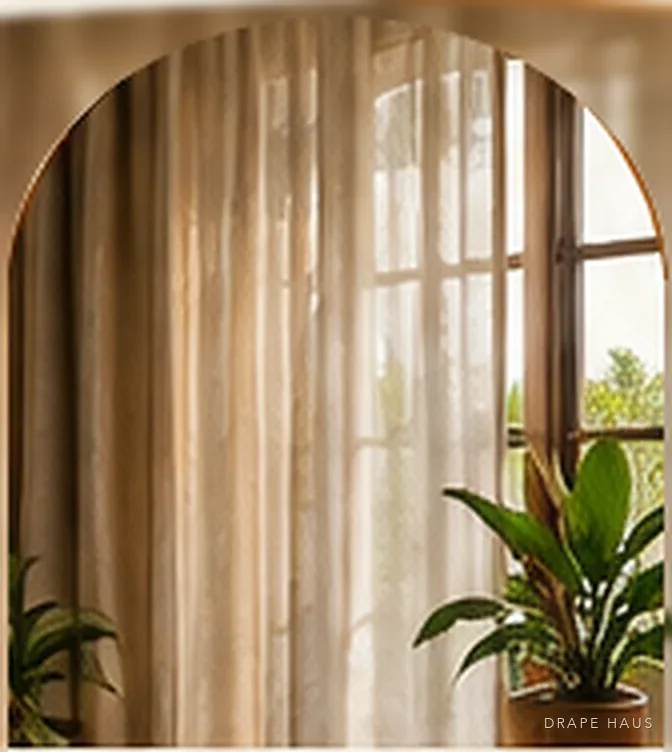
Lined · Midday
Treatment
Time of day
A lining protects the face fabric from sun and salt, and makes the curtain properly private at night.
In short
Treat the hall as one composition: a single fabric family across every window, a ceiling-fixed track on the main wall of openings, and a lined or dim-out curtain wherever the room faces a road or a neighbour. On doors people walk through all day, use a heading that stacks tightly and a tieback or holdback so the fabric stays out of the way.
What your hall asks of curtains
See it in your hall
We bring samples to your home, hold them to your light and measure every opening — anywhere in North or South Goa.
Start by listing every opening and what it is for. A typical Goan hall might have two tall windows facing the road, a pair of doors onto the balcão, a side window towards the neighbour, and internal doorways to the bedrooms and kitchen. Each of these has a different job, and it is fine for the curtains to differ in weight while sharing a colour.
A common solution is a lined linen on the road windows, the same linen as a sheer on the side that faces the garden, and a matching plain cotton on the internal doorways. Seen from the centre of the room, it reads as one scheme; up close, each opening has what it needs.
When the hall fills for Christmas, a wedding lunch or a family function, the curtains get pushed, leaned on and brushed past far more than usual. Tiebacks or concealed holdbacks keep fabric clear of chairs and buffet tables, and a heading on gliders rather than rings means the curtains can be drawn quickly when the evening light changes without anyone climbing a chair to free a snag.
Think, too, about where the crowd stands. If a sliding door to the balcony becomes the main route between the hall and an outdoor gathering, give that door a curtain that stacks completely off the glass, or leave it with a blind instead.
In a high hall, fix the track as close to the ceiling as the beams or the cornice allow and let the curtains finish a centimetre above the floor. The extra length makes the windows look as tall as they really are. Where the ceiling is timber or has a false ceiling, the fixing method changes, so we check this on the visit.
Wide halls need more fabric than people expect. For a pleated heading, plan roughly twice the track width; on a long run of windows, it is often better to split the track into sections so each pair of curtains stacks between windows rather than piling up at the far corners.
The hall is the first room visitors see, so it is tempting to pick a strong colour. In Goan light, rich reds, teals and golds fade on the sun-facing side long before the shaded side, and the difference shows when the curtains hang next to each other. Lining the strong colours, or keeping the sun-side curtains in a warm neutral and using colour on cushions and the sofa, avoids that.
If the hall has a home altar or a family shrine, the curtains around it usually look best quiet — ivory, sand or a soft stone — so the altar remains the focus.
In Goa
Many older halls have wooden shutters or window frames set deep into thick laterite walls. Curtains can hang inside the reveal, but on deep walls they usually work better fixed outside it so the shutters can still open fully inward. Laterite and old lime plaster need the right anchors; a track fixed into crumbling plaster will pull loose under the weight of long lined curtains.
Through June to September the front of the house takes the driving rain. Keep road-side curtains drawn back during dry spells so the fabric and the window frames can air, and if the family is away for the monsoon, have the long curtains taken down and stored rather than left hanging in a shut hall.
More for your hall
Curtains for other spaces
We measure and fit curtains across Goa — Panjim, Porvorim, Dona Paula, Mapusa, Candolim, Calangute, Assagao, Anjuna & Vagator, Siolim, Benaulim, Colva, Varca, Cavelossim, Margao, Majorda, Vasco da Gama, Canacona & Palolem, Ponda.
FAQ
Normally a pair for each window or door, though on a long run of windows we sometimes use single panels that draw to the walls between them. We count the panels on the visit once we have seen where they can stack.
They should look related, not necessarily identical. One colour in a sheer and a lined weight, chosen per opening, is usually the best balance between unity and function.
A lined or dim-out curtain on the road side, layered over a sheer if you want daytime light. Once lamps are on inside, an unlined sheer shows the whole room to the street.
Yes. A simple cotton panel on a rod or a short track across a bedroom or kitchen doorway gives privacy from guests while keeping the door open for air — a common arrangement in Goan houses.
Yes. We visit homes across North and South Goa, measure every opening in the hall, bring samples to see in your light and give you a written quote.