 Drapehaus
Drapehaus
Preparing the room
Drapehaus
Preparing the room
Curtains
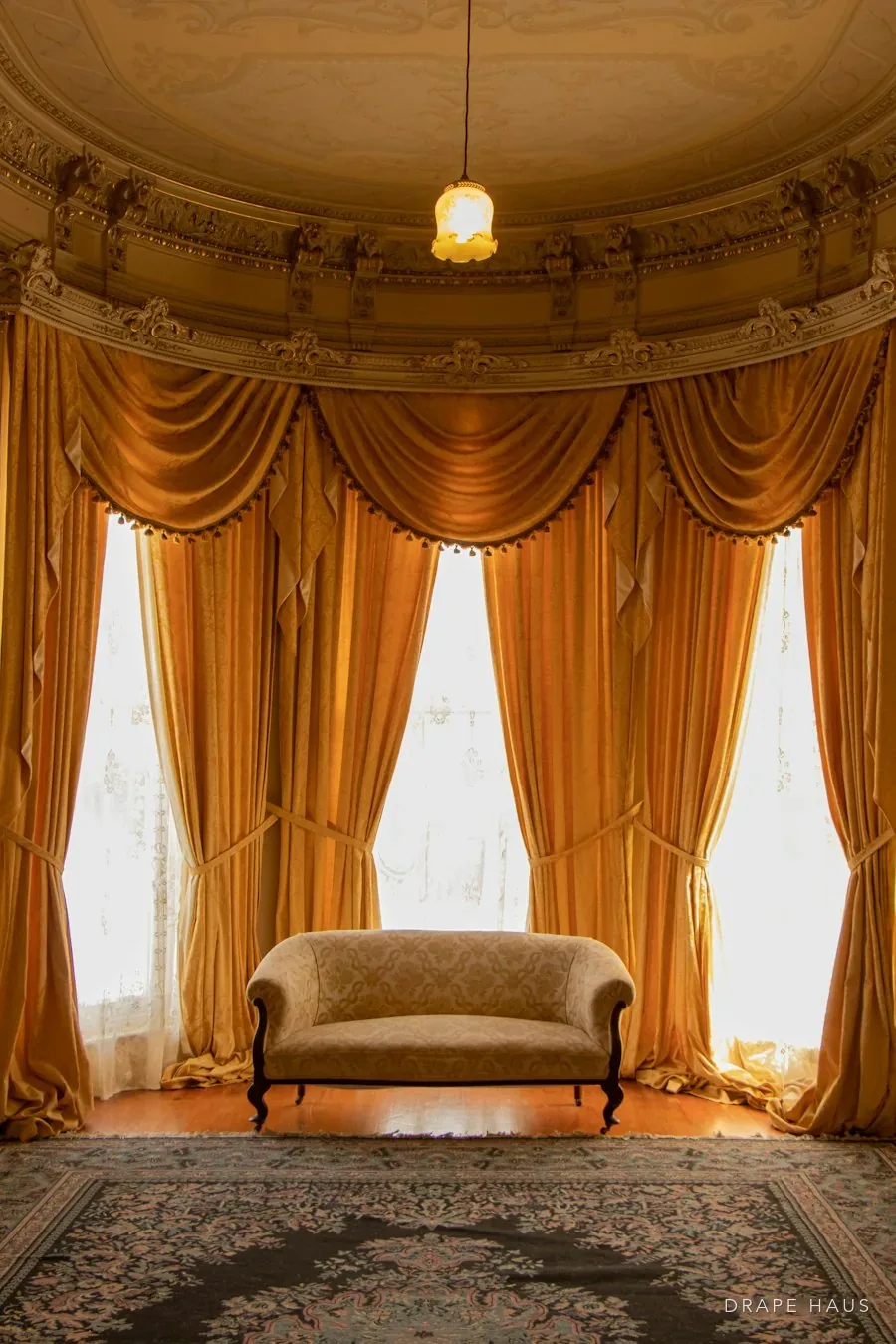
Velvet brings depth and a quiet, muffled luxury to a room — and it is the one fabric where we are careful about where it goes. In a sealed, air-conditioned room it is superb. In a naturally ventilated coastal room, it holds damp.

Lined · Midday
Treatment
Time of day
A lining protects the face fabric from sun and salt, and makes the curtain properly private at night.
In short
By the Drapehaus studio · How we write
Is it right for you?
Velvet and heavy drapes are curtains chosen for weight: a dense pile or a thick woven cloth that falls in deep, slow folds and changes the way a room looks and sounds. Velvet catches light on the tips of its pile, so the colour shifts from rich to glowing as you move, and the effect in a lamp-lit room is unlike any flat fabric.
They suit rooms that are sealed and cooled — air-conditioned bedrooms, media rooms, studies, hotel suites — and formal rooms with high ceilings, where the scale of the architecture carries the weight of the fabric. They suit people who want a room to feel enclosed, quiet and warm in tone after dark.
They do not suit rooms that rely on the breeze, rooms that stay open to the sea air, or houses closed through the monsoon without climate control. The page above explains why; this guide is about getting velvet right in the rooms where it does belong.
The details
Heavy pile fabrics trap moisture in their surface, so in a house that is open to the sea air or closed up for the monsoon they are prone to mildew. In an air-conditioned bedroom, media room or hotel suite, where humidity is controlled, velvet is at its best: rich colour, deep folds and excellent light and sound control.
We make velvet curtains lined and weighted, on a heavy-duty track sized for the extra weight — the most common reason a velvet curtain sags is hardware specified for a lighter fabric.
Your options
Velvet is not one fabric, and several heavy weaves give a similar weight without a pile. Each behaves differently in light, in use and in humidity.
Swipe for all 5 →
The honest view
Depth of colour
The pile holds colour deeply and plays with light, so jewel tones and dark neutrals look richer in velvet than in any flat fabric. In a lamp-lit room the effect is especially strong.
Sound absorption
Dense pile absorbs echo and softens noise from outside. In media rooms, bedrooms on busy sides of the house and rooms with hard floors, the difference is audible.
Insulation against hot glass
A heavy drape drawn across a sunny window in an air-conditioned room slows the heat reaching the room and helps the cooling do its work.
Presence at scale
In tall rooms, heavy drapes hold their shape over long drops and give the windows a presence that light fabrics cannot match.
Only for controlled rooms
In humid, naturally ventilated rooms, velvet holds moisture and mildews. It limits where velvet can go in a coastal house.
Heavy on track and wall
Velvet curtains are heavy. They need strong tracks, closely spaced brackets and sound fixings, which matter especially in old laterite or lime walls.
Marks and needs specialist care
The pile shows handling marks and crush lines, and cleaning is best left to specialists who know how to treat pile fabrics without flattening them.
Side by side
Weight, darkness and warmth of tone can come from several fabrics. Velvet is the most dramatic, but not always the most practical.
| Polyester velvet | Chenille or heavy weave | Heavy lined linen-look | Blackout-lined blend | |
|---|---|---|---|---|
| Look | Rich sheen, deep colour | Textured, matt | Relaxed, textured | Depends on face fabric |
| Sound absorption | Very high | High | Medium | Medium |
| Humidity tolerance | Controlled rooms only | Fair | Good | Good |
| Weight on track | Very heavy | Heavy | Medium | Medium |
| Handling marks | Shows marks | Hides marks | Hides marks | Depends on fabric |
| Cleaning | Specialist | Specialist or dry-clean | Dry-clean | Dry-clean or detachable |
Swipe to compare →
Where weight and quiet matter but humidity is a concern, a heavy weave or a lined linen-look is often the safer route to a similar mood.
Rather see it in your own room?
We bring samples to the house, measure every window, and specify for the light and exposure you actually have.
Room by room
In an air-conditioned bedroom, velvet gives warmth of tone, quiet and darkness. Pair it with a sheer on a double track for the daytime.
Velvet's sound absorption and light control make it the natural choice. Dark colours reduce reflections from screens and make the room feel enclosed.
Only in a formal, air-conditioned living room. In a living room open to the garden and breeze, heavy drapes block the air and hold damp.
A performance velvet in an air-conditioned suite looks special and darkens well. Plan for specialist cleaning between seasons and a strong track.
Heavy weaves quieten a study and reduce echo on video calls. Keep the colours lighter if the room is used in the daytime.
Velvet over very tall drops is extremely heavy. It needs a motorised, heavy-duty track and careful structural fixing, and is only advisable in climate-controlled rooms.
In depth — tap a heading to read
Velvet has a nap: the pile leans in one direction, and the colour looks different depending on whether you look with it or against it. Every width in a room must run the same way, or panels will appear to be different shades. Pile running upward gives a deeper, richer colour; pile running down looks lighter and sheds dust more easily. We decide the direction for each room and mark every width before cutting.
Velvet also creeps under the needle, with the two layers sliding against each other as they are sewn. Good making uses basting, careful pinning and slower sewing to keep seams straight and prevent puckering. Hems and leading edges are best finished by hand so the pile is not crushed by machine stitching.
Linings for velvet should be light enough not to add unnecessary weight but dense enough to protect the pile from the sun. A pale, breathable lining is our usual choice; where full darkness is needed, we often use a blackout roller behind rather than a heavy coated lining.
Velvet absorbs a great deal of light. A deep colour that looks luxurious in a showroom can make a room feel smaller and darker after sunset, especially if lighting is low. We look at the room in the evening where possible, or at least discuss its lighting, before settling on a shade.
Mid-depth colours — ochre, rust, teal, olive, warm grey — often suit coastal houses better than black or very dark navy. They keep velvet's richness while reflecting enough light to keep the room from feeling closed in, and they fade more gracefully if sunlight reaches the curtain edges.
Because the pile catches light, velvet shows both lightening from sun and darkening from handling. A curtain that is drawn by hand at the leading edge will show a slightly different tone there over time. Motorised or wand operation reduces this.
Choose velvet colour by lamplight as well as daylight. It is an evening fabric first.
The rooms where velvet works are those where humidity is controlled: an air-conditioned bedroom or suite used through the year, a media room with dedicated cooling. But even these rooms change when the air-conditioning is off. A villa closed for the monsoon with its cooling switched off becomes a humid room like any other, and the velvet curtains become vulnerable.
For houses that are closed for part of the year, we plan velvet curtains either to come down and be stored for the season, or to be hung in rooms where a dehumidifier or occasional cooling will run. Relative humidity in the monsoon months is well above the levels at which mould begins, so a closed, uncooled room is not a safe place for a pile fabric.
A heavy curtain puts a steady load on the track, the brackets and the wall. We calculate the actual weight of the made curtain, including the lining, and specify a track rated for it, with brackets spaced closely enough that the track never bows. On old laterite or lime plaster, we check what lies behind the surface and use fixings that spread the load.
Heavy curtains are also harder to draw by hand, particularly on long runs or tall windows. Pulling at the leading edge marks the pile and strains the heading. A cord-drawn track or a motor moves the whole curtain evenly, keeps hands off the fabric and makes daily use effortless, which for velvet is as much about preserving the fabric as about convenience.
Living with it
Use a soft brush attachment and work in the direction of the pile to lift dust without flattening it.
Hold a steamer a short distance from the back of the fabric and let the pile lift. Never iron velvet on the face.
Have velvet cleaned by specialists who understand pile fabrics. Home washing can crush the pile and distort the curtain.
If the room will be uncooled for months, clean the curtains, roll them pile outward around a tube and store them in breathable covers.
Avoid these
Cutting widths without checking the nap leaves panels that look like two shades. Mark and run every width the same way.
In a naturally ventilated room velvet holds damp and blocks the air. Reserve it for rooms where humidity is controlled.
Velvet darkens considerably in lamplight. Test the colour in the evening, or choose a mid-tone.
Drawing heavy curtains by hand marks the pile and strains the heading. Use a wand, cord or motor.
Checklist
More in curtains
Curtains measured on site, cut to the window and specified for what it actually faces — from airy sheers on a veranda door to full blackout in a bedroom that catches the sunrise.
From the Journal
All articlesOur process
One team from the first visit to the last bracket, so nothing is lost between the person who specified it and the person who fits it.
FAQ
In an air-conditioned room, yes. In a naturally ventilated room near the sea, or a house closed through the monsoon, velvet holds moisture and is prone to mildew, so we usually suggest another fabric there.
Usually the track, not the curtain. Heavy fabric needs a track and brackets rated for the weight, with brackets closer together than for a light curtain.
Velvet is dense and blocks a great deal of light, especially lined. For complete darkness, it still needs to be fitted with generous overlap and a closed top, and many clients add a blackout roller behind to reach true blackout without making the velvet heavier.
Yes. The dense pile absorbs sound, reducing echo inside the room and softening noise from outside. The effect is strongest with full-length curtains at generous fullness, drawn across the window.
Vacuum gently with a soft brush in the direction of the pile, and steam from the back to lift crush marks. For a full clean, use a specialist familiar with pile fabrics. Home washing usually damages the pile and distorts the curtain.
Mid-depth colours such as ochre, rust, teal, olive and warm grey show velvet's richness without making a room feel too dark. Very dark shades suit media rooms. Always check the colour in evening light, where velvet looks noticeably deeper.
Often, yes. Velvet with a lining can weigh far more than a lighter curtain of the same size. We specify heavy-duty tracks with closer bracket spacing and check the wall fixing so the track stays straight and the curtain runs smoothly.
Next step
Velvet rewards careful planning more than any other curtain. On a home visit we confirm which rooms are climate-controlled, check the walls and ceilings for fixings, and bring velvets and heavy weaves to see in both daylight and lamplight. We then specify the fabric, pile direction, lining and track, make the curtains with hand-finished edges and install them so they hang true. Book a home visit to plan the room.