 Drape Haus
Drape Haus
Preparing the room
Drape Haus
Preparing the room
Hotel · Wall Panels
Headboard walls that define every room, corridor cladding that shrugs off luggage trolleys, a lobby wall that carries the brand, and panels that calm the echo in a banquet hall.
In short
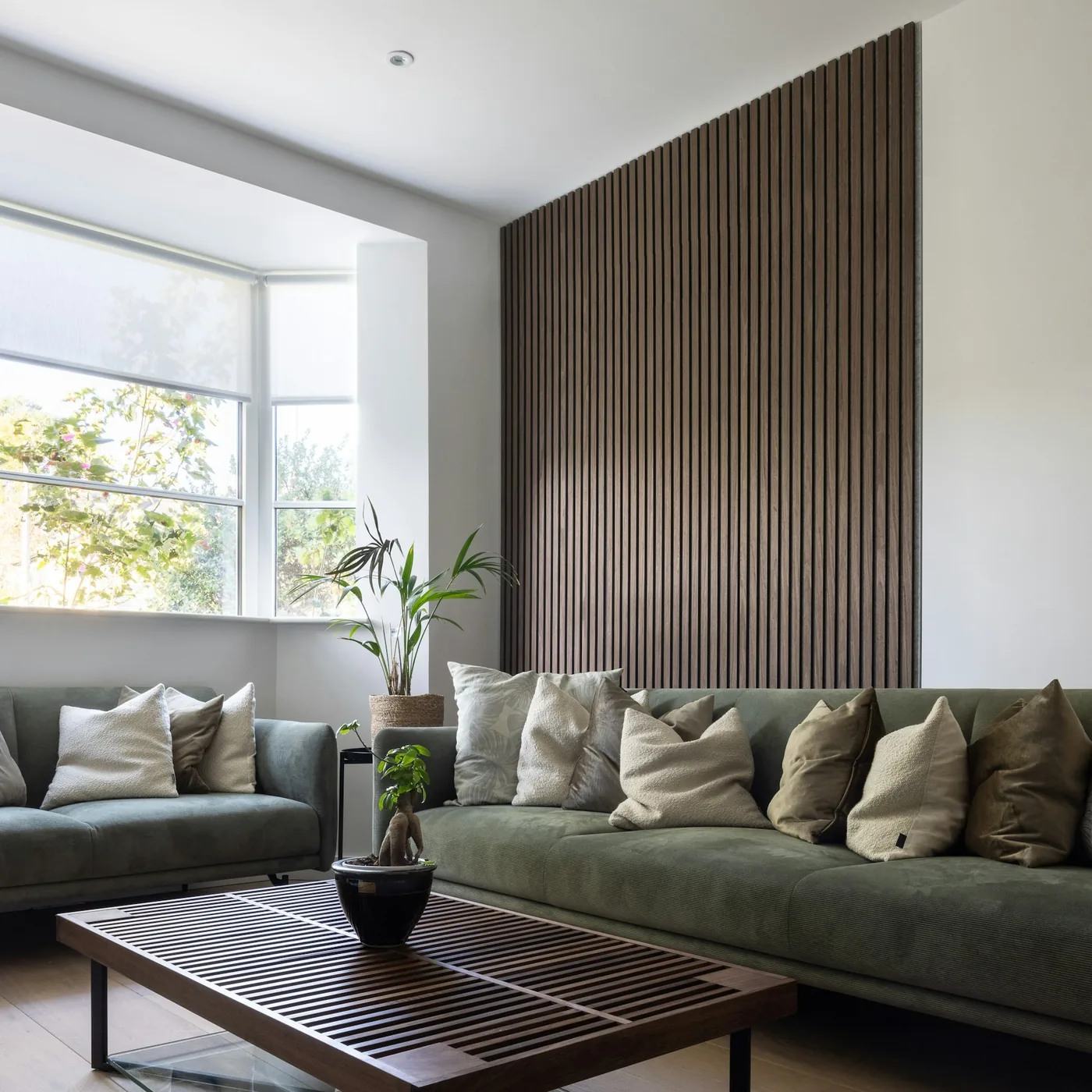
Use panelled headboard walls in guest rooms, impact-resistant PVC or WPC on corridor walls up to dado height, timber-look or fluted features in the lobby, and acoustic panels in banquet and conference halls. Choose moisture-tolerant materials and fix them so the walls behind can still breathe.
What the hotel asks of wall panels
See it in the hotel
We bring samples to your home, hold them to your light and measure every opening — anywhere in North or South Goa.
The headboard wall appears in every photograph of a guest room and on every booking site. A panelled treatment — fluted, slatted, upholstered or framed with moulding — gives the room a clear focus and protects the plaster from being marked by pillows and heads over thousands of nights.
Bedside lights, switches and charging points are best built into the panel rather than added later. That needs your electrician on site before the panels close the wall, so we plan the layout together at the survey stage. For a multi-room rollout we fix the design to a standard width and adjust only where a room's dimensions demand it.
Hotel corridors take a surprising amount of punishment. Hard-shell suitcases, trolleys turning at doorways and vacuum cleaners all strike the lower wall. A panelled dado in impact-resistant PVC or WPC, finished with a capping rail, keeps corridors looking fresh between repaints. When a panel is damaged, it can be replaced without redecorating the length of the corridor.
Above the dado, a scrubbable wallcovering or paint completes the look. See our hotel wallpaper page for corridor-grade wallcoverings.
The wall behind reception, or the long wall of the lobby lounge, is where a hotel shows its character. Wooden or timber-look panels bring warmth; charcoal panels, marble-effect sheets or 3D panels feel more contemporary. Lighting washed over the surface or set into the panel joints brings the wall to life in the evening, when most guests arrive.
Big rooms with tiled floors, glass and high ceilings turn every voice into a roar when they are full. Acoustic panels on the walls cut the reverberation, so a wedding speech or a sales presentation can be heard at the back without turning the sound system up. They can be fabric-faced in the hall's colours or finished to look like timber slats.
Be clear about what they do: acoustic panels improve sound inside the room. They do not stop noise passing through a wall into a neighbouring room — that is a construction question, not a panel one.
In Goa
MDF-based panels can swell and open at the joints in humid corridors during the rains. PVC and WPC panels stay stable. On exterior walls or anywhere damp is known, fix the panels on battens with an air gap at top and bottom so the wall behind can dry, and find the source of any damp before it is hidden.
In beachfront hotels, use stainless or coated fixings. A rusting screw behind a pale panel will bleed through the joint within a season.
More for the hotel
Wall Panels for other spaces
We measure and fit wall panels across Goa — Panjim, Porvorim, Dona Paula, Mapusa, Candolim, Calangute, Assagao, Anjuna & Vagator, Siolim, Benaulim, Colva, Varca, Cavelossim, Margao, Majorda, Vasco da Gama, Canacona & Palolem, Ponda.
FAQ
PVC or WPC for corridors and wet areas, fluted or upholstered panels for headboard walls, timber-look panels for lobbies, and acoustic panels for banquet and conference halls.
Yes. A panelled dado takes the knocks from cases and trolleys, and damaged panels can be replaced individually.
No. They reduce echo inside a room, making halls and restaurants more comfortable, but they don't stop sound passing through walls.
PVC and WPC panels tolerate moisture and suit bathrooms, provided the room is well ventilated.
Yes. We work floor by floor and coordinate with your operations and housekeeping teams.