 Drape Haus
Drape Haus
Preparing the room
Drape Haus
Preparing the room
Wall Panels
Solid timber boards, veneered panels and painted timber cladding. Nothing matches real wood for warmth, but in a humid, termite-prone climate it has to be chosen, treated and fixed with care.
In short
By the Drape Haus studio · How we write
Is it right for you?
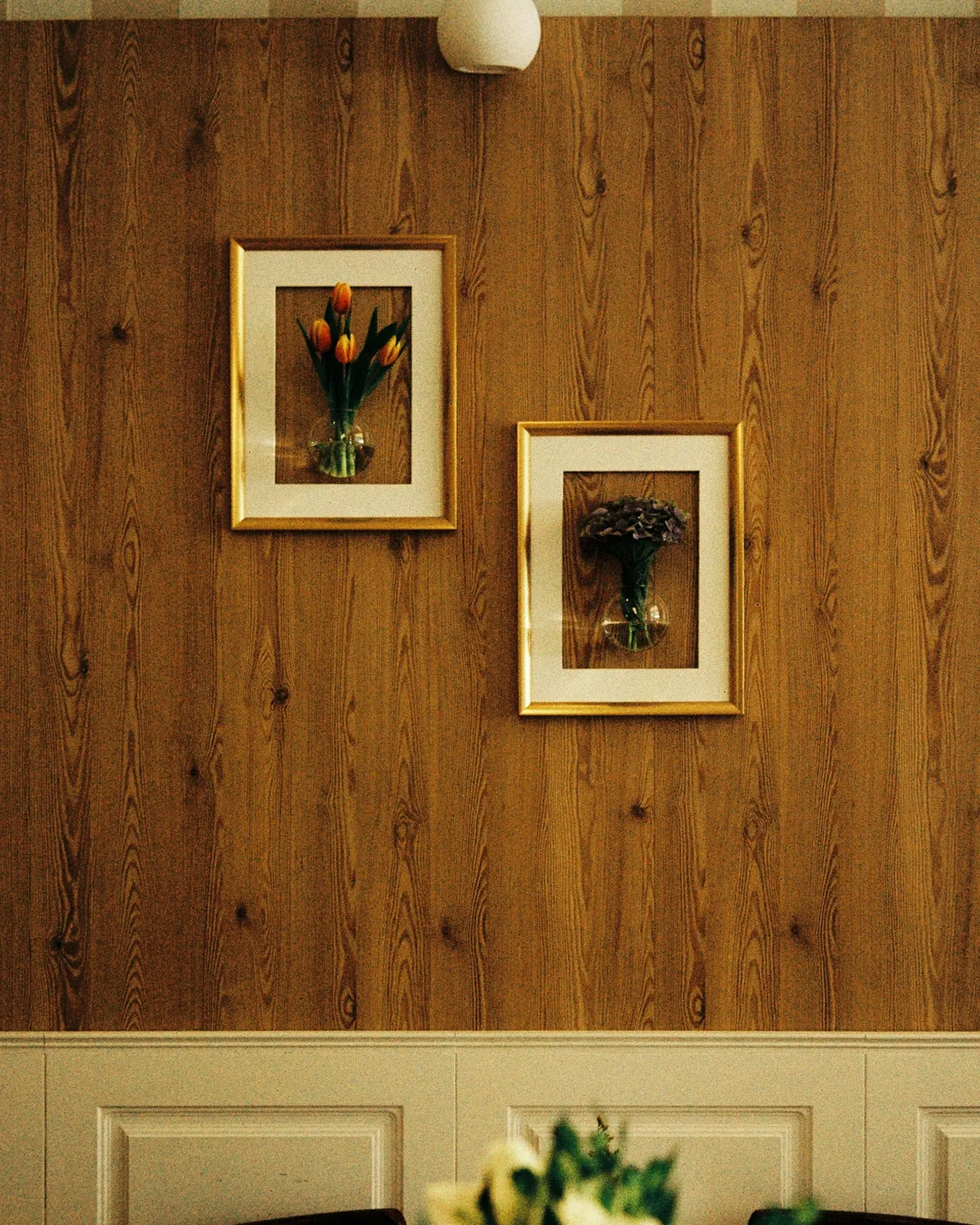
Nothing quite replaces real wood on a wall. The grain changes as you move past it, the colour deepens with age, and a timber-lined room feels quieter and warmer than one finished in paint or plastic. In older Goan houses, wooden ceilings, doors and window shutters are part of the architecture, and wooden panelling can sit naturally alongside them in a way a printed imitation never quite does.
It also asks the most of its owner. Timber is a natural material that takes up and gives off moisture, so it swells through the monsoon and shrinks in the dry months. It is food for termites, and in a damp, still room it can grow mould on its surface. None of that means you should avoid it, but it does mean the wood must be the right kind, properly treated, sealed on every face and fixed in a way that lets the wall and the panel both breathe.
Choose wooden panelling if you value the real material and will look after it, if the room is reasonably dry or air-conditioned, and if the wall can be checked and prepared first. Choose WPC or PVC with a timber finish instead for a bathroom, a house left closed for months, a ground-floor room against damp laterite or a rental that will see little care.
The details
Real wood moves. It takes up moisture through the monsoon and gives it back in the dry months, so boards swell and shrink across their width. Panelling that is fixed tight with no room to move cups, splits or opens at the joints. We acclimatise the timber in the room, leave movement gaps and fix with methods that let the boards breathe.
Termites and fungus are the other two concerns. We use naturally durable or treated timber, treat the battens as well as the boards, seal every face including the back, and keep the panelling off the floor slab. Veneered plywood on a marine-grade core is a stable option for large, flat panels.
Wooden panelling should never be fixed flat against a wall that is damp or that takes driven rain. A batten frame with an air gap, vented top and bottom, lets the wall dry and keeps the timber out of contact with moisture.
Done properly, a timber wall is the most rewarding panel there is. It suits older Goan homes with high ceilings and wooden ceilings, bedrooms, studies and libraries, and it can be refinished rather than replaced when it shows its age.
Your options
Wooden panelling covers several quite different materials. They look related but behave very differently in damp weather.
Swipe for all 5 →
The honest view
Real warmth and grain
The depth of colour and the way light moves across genuine wood cannot be printed. It gives a room a calm, settled character.
Can be refinished
Solid timber and thick veneers can be sanded, re-oiled or re-lacquered, so a tired wall can be brought back rather than replaced.
Softens the acoustics
Timber, especially slatted on a felt or open backing, takes the edge off the echo of hard floors and plaster.
Belongs in older houses
Alongside timber ceilings, shutters and old furniture, wooden panelling looks like part of the house rather than an addition.
Termites
Untreated or poorly treated timber in contact with a wall or floor is vulnerable. Treatment of the timber, the wall and the battens is essential.
Seasonal movement
Solid boards swell in the monsoon and shrink in the dry season. Fixed too tightly, they buckle or split; fixed carelessly, gaps open.
Mould in closed rooms
In a shut, humid house, mould can grow on the surface and especially on the hidden back face. Sealing all faces and ventilating behind the panel prevents it.
Needs ongoing care
Oil finishes need renewing, and any damage to a lacquer or edge should be fixed before water gets in.
Side by side
Most people asking for wooden panels are also offered WPC and PVC with a timber finish. Here is the honest comparison.
| Solid timber | Veneered ply | WPC wood finish | PVC wood print | |
|---|---|---|---|---|
| Look up close | Genuine grain | Genuine grain | Good, uniform | Printed film |
| Moisture movement | Noticeable | Low | Very low | Negligible |
| Termite risk | Needs treatment | Needs treatment | Very low | None |
| Mould risk in closed rooms | Moderate | Moderate | Low | Low |
| Can be refinished | Yes, repeatedly | Lightly | No | No |
| Upkeep | Regular | Moderate | Minimal | Minimal |
Swipe to compare →
A common compromise is real veneered timber in the dry, air-conditioned living spaces and WPC in the bathrooms, ground floor and rental rooms.
Rather see it in your own room?
We bring samples to the house, measure every window, and specify for the light and exposure you actually have.
Room by room
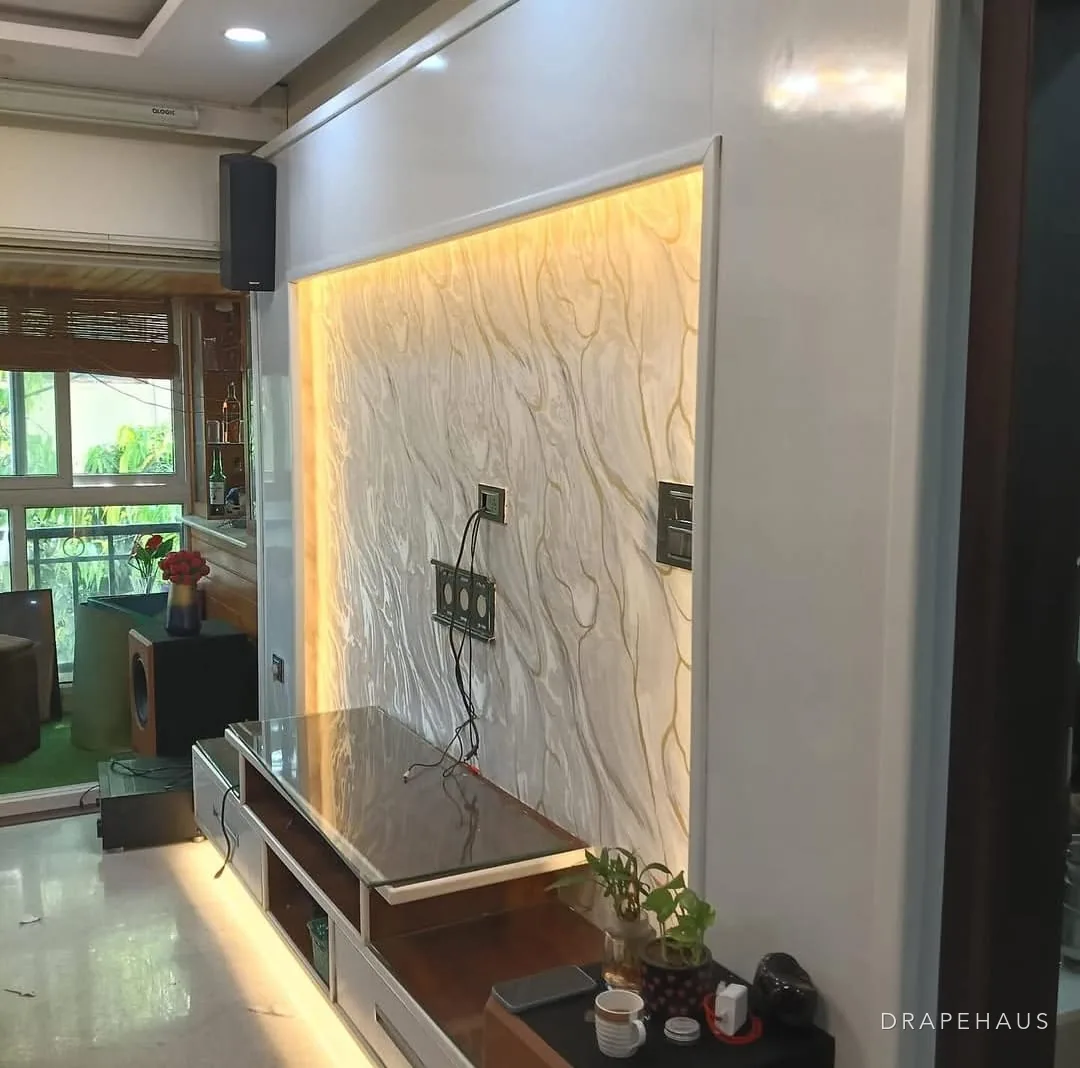
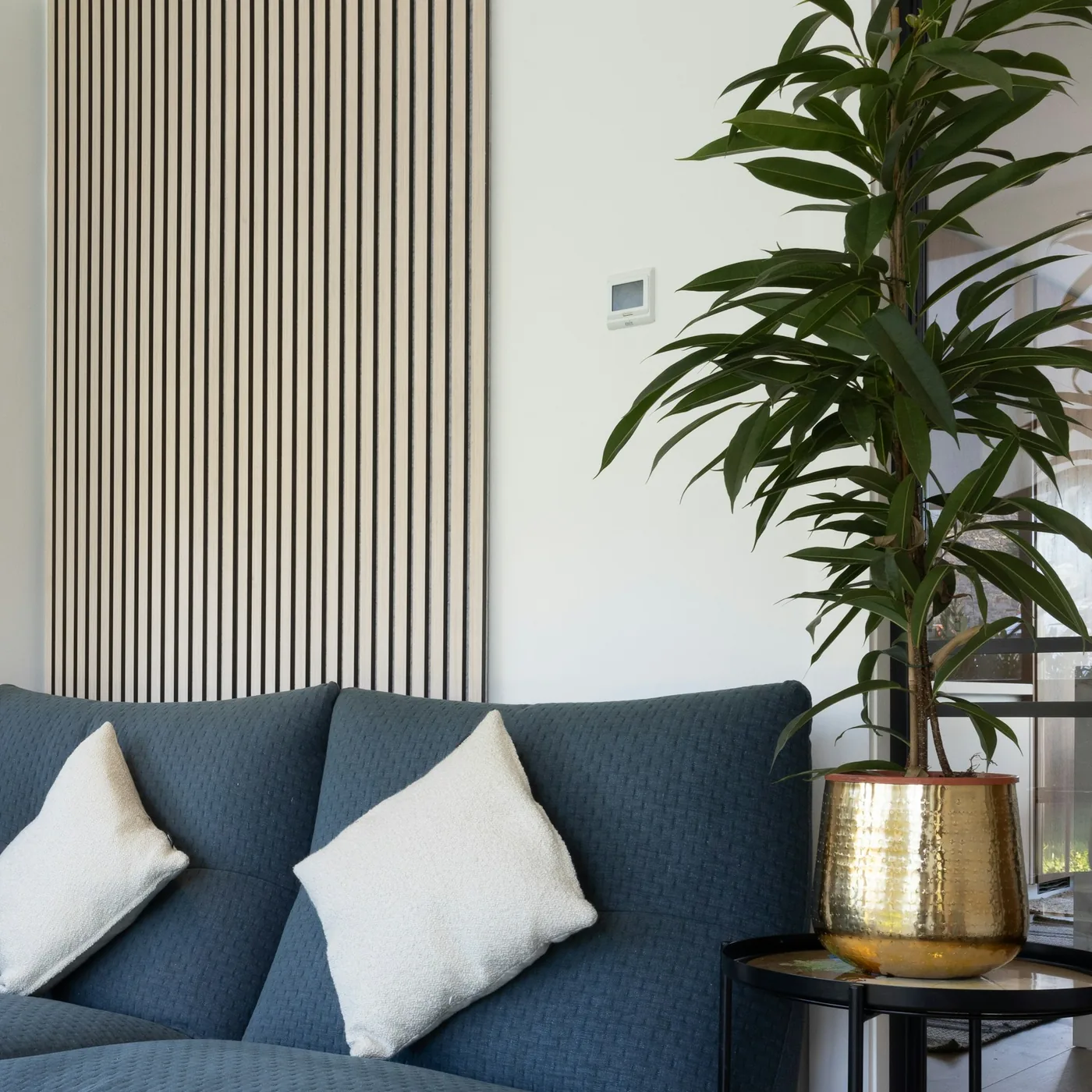
A timber-lined wall, a slatted backdrop for the television or panelling to dado height brings warmth to a large plastered room. Keep it clear of a wall that faces the monsoon rain.
Wooden panelling and bookshelves belong together. A study is usually kept dry for the sake of books and electronics, which suits timber well.
A wooden bed wall is calm and quiet. If the room is shut and unconditioned for long periods, choose veneered ply or slats on battens rather than solid boards fixed flat.
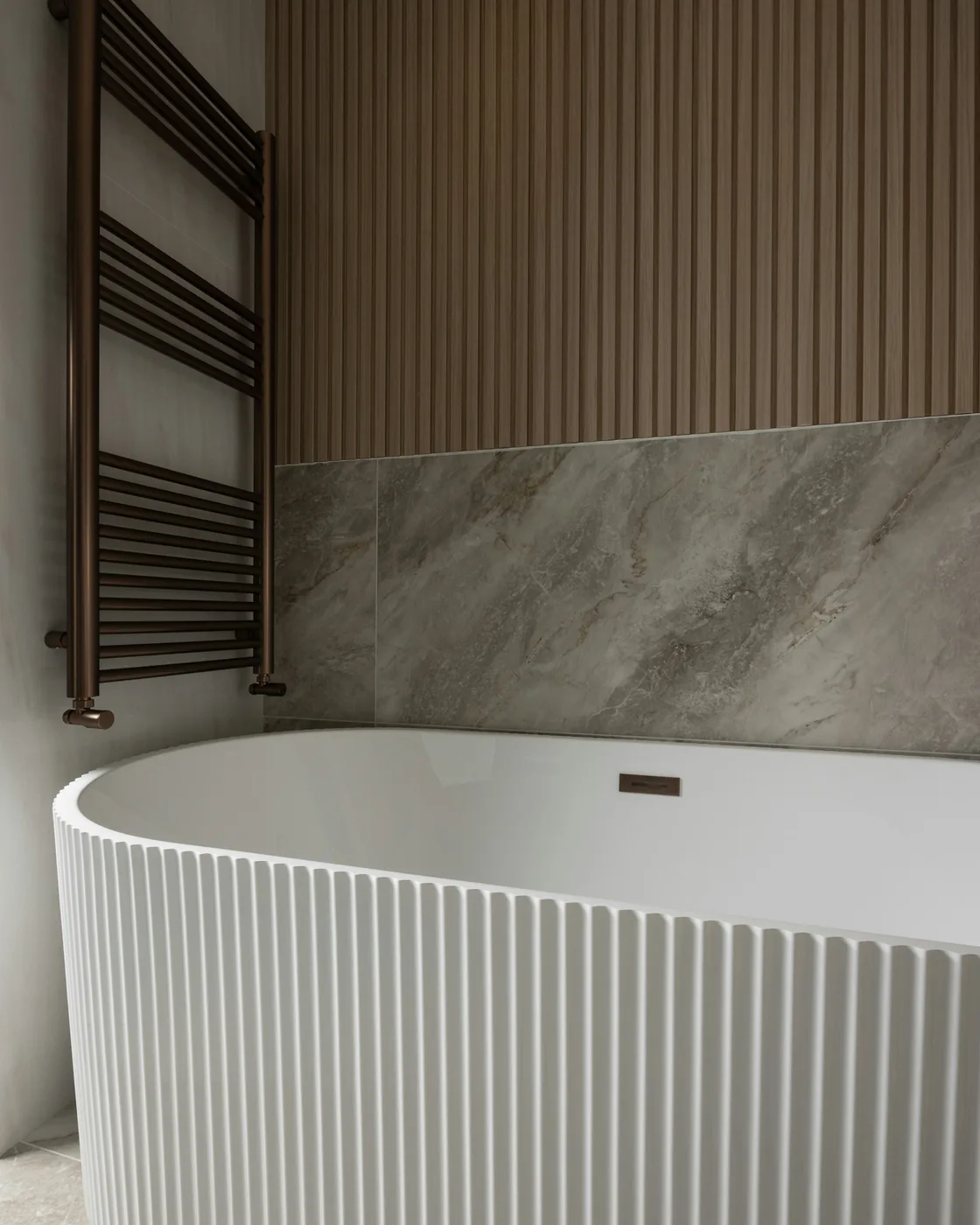
Steam and splashing are hard on timber. Leave real wood to dry vanity walls only, and use WPC or PVC near showers.
Rising damp and ground-level termites make this the riskiest place for timber. Test the wall, treat it, and keep the panel off the floor on battens with a gap.
Real timber needs care that rentals rarely get, and closed seasons invite mould. WPC with a wood finish is usually the sensible choice.
Timber gives a warm, lived-in feel. Use hardwearing lacquered veneers below table height where chairs and bags knock the wall.
In depth — tap a heading to read
Termites are the first conversation about wood in Goa. They travel through the ground, up inside walls and along hidden voids, and a timber panel fixed against a plaster wall is exactly the dark, undisturbed place they prefer. The damage is usually invisible until the panel sounds hollow or crumbles.
Protection is layered. The timber is chosen for natural durability or treated with a preservative. The wall is inspected for existing mud tubes and treated if there is any sign of activity. The battens are treated timber or a composite that termites ignore, and the panel stops short of the floor so a gap can be inspected. In houses with a history of termites, a pre-construction or post-construction treatment by a pest specialist is worth doing before any panelling goes up.
If you can see mud tubes on the wall now, treat the termites first. Panelling over an active colony hides the problem until it has spread.
Laterite blocks are porous, and a wall that faces the monsoon rain or sits on damp ground can hold moisture for months. Before we panel a wall we take moisture readings at several heights and look for tide marks, peeling paint and white salt deposits. If the wall is wet, the cause comes first: an external crack, a missing drip, a blocked gutter or damp rising from below.
Wooden panelling is always fixed on battens, never glued flat to the plaster. The battens hold the panel off the wall and create a ventilation gap, usually open at the top and bottom, so air can move behind the timber and carry moisture away. A breathable membrane can go on the wall in borderline cases. The gap is what stops the back of the panel from sitting against cool, damp masonry and growing mould unseen.
Timber delivered from a dry store and fixed straight away in a humid room will swell after it goes up. Boards and sheets should sit in the room, stacked with spacers so air reaches them, for some days before fitting, so they settle to the moisture level they will live at. In the monsoon this matters even more.
Sealing is the second half. A board finished only on its visible face takes up moisture through its back and edges and cups. Every face, including the back and every cut edge, should get at least a sealing coat. Cut edges made on site around switches and corners are the usual weak point and need sealing before the panel is fixed.
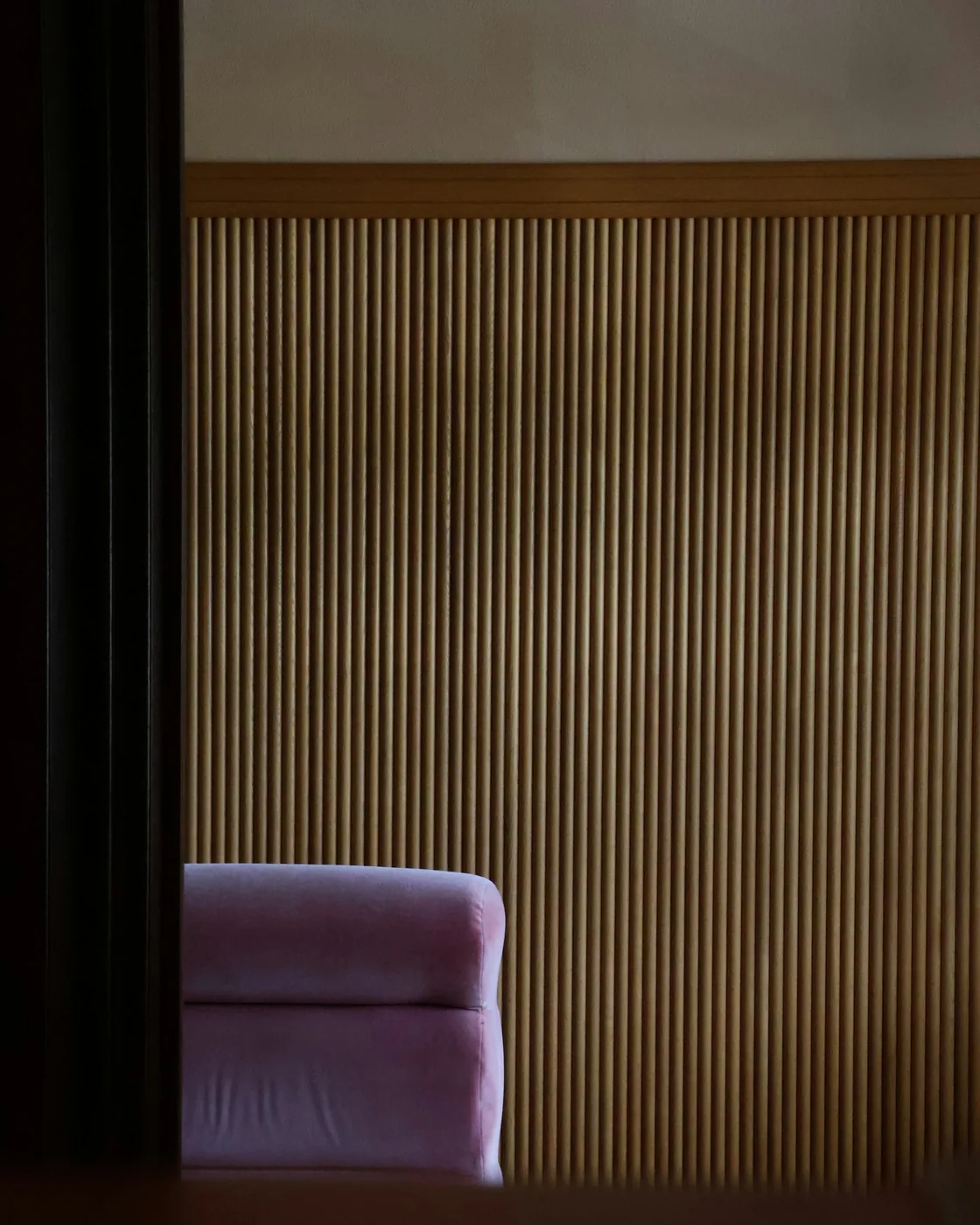
In an older house with high ceilings and tall windows, timber panelling to dado or door height echoes the shutters and the beams. A darker stain with a soft oiled finish looks settled; a glossy lacquer can look out of period. Lime-washed walls above timber below is a combination that suits these rooms.
In a newer flat or villa, timber is often used as a single slatted wall or a band behind the bed, with a matt, natural finish. Pale woods keep a small room light; darker woods make a large room feel more intimate. Wherever it goes, the grain direction and the finish should be consistent with the doors and furniture nearby.
Near the sea, salt-laden air dulls oil finishes faster and corrodes ordinary steel screws and nails, which then stain the timber black around each fixing. We use stainless or coated fixings. Strong afternoon sun through a west window bleaches and dries timber; a UV-protective finish or a blind on that window slows it down.
A house closed for weeks through the monsoon is the hardest test. Without air movement, humidity stays high and the surface of the timber can grow a grey bloom. A dehumidifier on a timer, a caretaker opening windows on dry days, or simply wiping the panels down before you leave all reduce the risk considerably.
Living with it
Dry dusting keeps grit off the finish. Avoid wet mops and sprays that leave water on the surface.
Oiled timber looks pale and dry when it needs feeding. A thin coat, wiped off well, restores it.
A scratched lacquer or a chipped edge lets moisture in. Touch it up rather than waiting for the next full refinish.
Check the lowest boards and the gap behind them each year for mud tubes, dampness or soft spots.
Open windows on dry days, run a fan or dehumidifier, and do not push furniture tight against panelling.
Avoid these
It traps moisture behind the wood and leaves no gap to check for termites. Always use battens and an air gap.
Timber fixed the day it arrives moves once it meets a humid room. Let it settle in the space first.
Unsealed backs and cut edges absorb moisture and make boards cup. Seal every face.
Panelling over active termite tracks hides them. Treat first, then panel.
Standard interior plywood delaminates when damp reaches it. Specify a water-resistant core in Goa.
Checklist
More in wall panels
PVC, WPC, wood, fluted, acoustic and marble-effect panels, chosen for the wall they are going on as much as for the look.
Our process
One team from the first visit to the last bracket, so nothing is lost between the person who specified it and the person who fits it.
FAQ
Untreated softwood often does. Durable or treated timber, treated battens, a gap above the floor and regular checks keep the risk low.
Veneered marine plywood is more stable across wide panels. MDF is fine for painted work in dry rooms, but swells if water reaches an unsealed edge.
On the inside face of one, yes, on a ventilated batten frame. Directly on a laterite wall that gets wet in the rains, no.
Dust regularly, keep the room aired in the monsoon, wipe off any white bloom early, and re-oil or refinish when the surface looks dry.
They can be, in a dry or air-conditioned room, with the right timber, termite treatment, sealing on every face and a ventilated batten fixing. In bathrooms, damp ground-floor rooms and rentals, a wood-finish WPC is usually the better choice.
By treating the timber, inspecting and if needed treating the wall, using treated or composite battens, and leaving a gap at the floor so the back can be inspected. Existing termite activity must be dealt with before anything is fixed.
Solid boards move with humidity. Acclimatising them in the room, sealing all faces and fixing them so they can expand slightly keeps that movement small. Veneered ply moves much less.
Real wood looks and ages better and can be refinished. WPC ignores moisture and termites and needs almost no care. Many homes use timber in the main living spaces and WPC where conditions are harder.
Not until the cause of the damp is found and repaired. After that, they go on treated battens with a ventilation gap so the wall can dry and the timber stays clear of it.
Next step
We visit, test the wall for moisture, look for signs of termites and talk through how the room is used and how often the house is closed. Then we bring samples of solid timber, veneers and wood-finish composites to compare side by side, and recommend the material and fixing that suits that wall rather than the one that looks best in a catalogue. Book a home visit to begin.