 Drape Haus
Drape Haus
Preparing the room
Drape Haus
Preparing the room
Hall · Blinds
Not every opening in a hall wants a curtain. Windows behind furniture, narrow windows between doors and openings that people walk past all day are often better served by a blind.
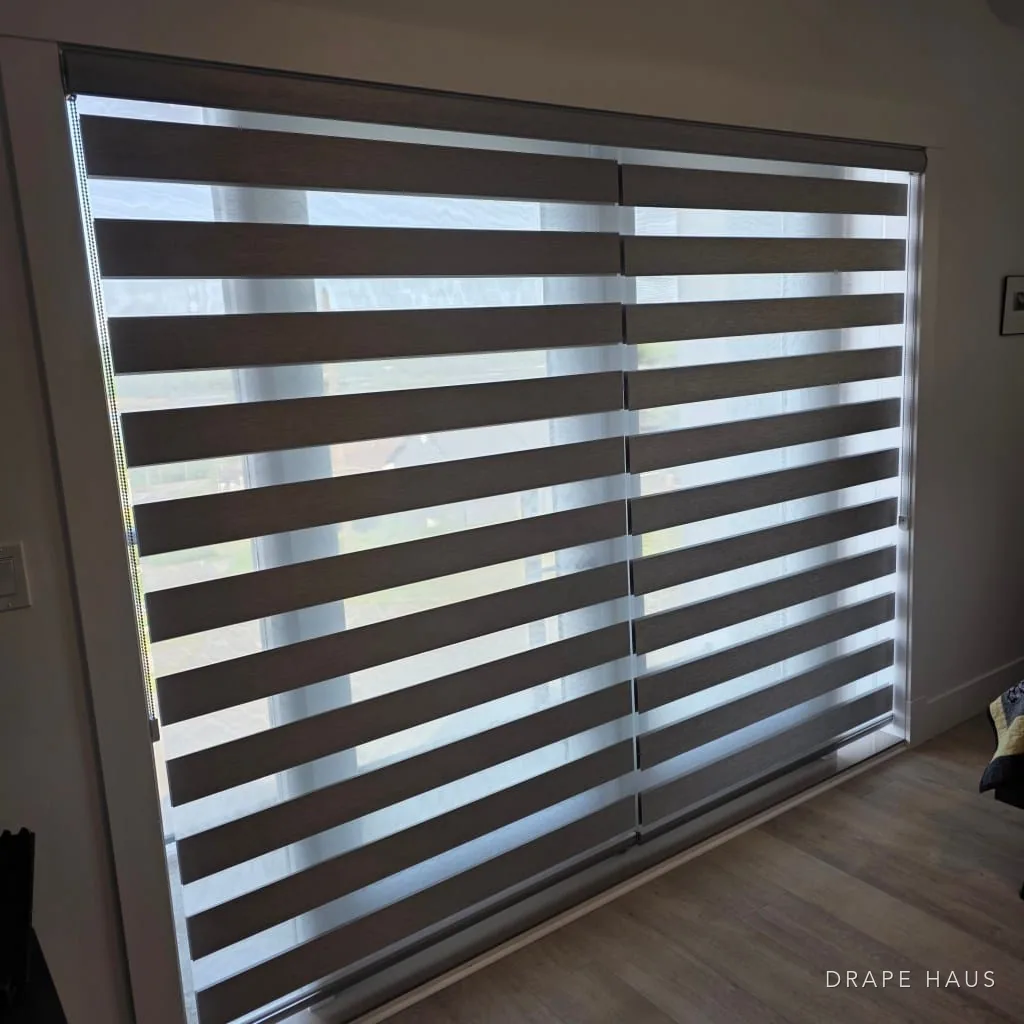
Zebra · Midday
Treatment
Time of day
Alternating sheer and solid bands: slide them into line for light and a filtered view, offset them for privacy.
In short
Use blinds in the hall where curtains would get in the way: behind a sofa, beside the television, on narrow windows between doorways, or on a window that faces the road at eye level. Zebra blinds give the easiest daily control, roman blinds keep the softness of fabric, and vertical blinds suit wide sliding doors. Match the colour to the curtains on the other openings so the hall still reads as one room.
What your hall asks of blinds
See it in your hall
We bring samples to your home, hold them to your light and measure every opening — anywhere in North or South Goa.
Walk round the hall and ask of each opening: does anything stand in front of it, do people walk through it, and does it need to be fully dark or just private? Openings with furniture against them and narrow windows wedged between doors are natural candidates for a blind. Large statement windows and tall pairs of doors usually look better with curtains.
Many halls end up mixed: curtains on the main wall, blinds on the side windows and the window behind the sofa. That works well as long as the colours relate — a sand zebra blind beside sand linen curtains looks planned, a grey blind beside them looks like an afterthought.
On a big road-facing window, a blind inside the frame and a curtain outside it is a strong combination. The blind handles daytime privacy and glare; the curtain is drawn in the evening and softens the room. It also means the curtain can be an unlined, lighter fabric because the blind is doing the hard work.
Check the depth before ordering. A blind fitted inside the reveal needs enough room for its headrail and for any window handles to turn; if the reveal is shallow, the blind goes on the wall above the frame instead, and the curtain track moves forward to clear it.
In flats the hall almost always opens onto a balcony through a wide sliding door. A vertical blind or a ripple-fold curtain are the two good answers; horizontal blinds across a door that people use all day get knocked and tangled. If the door also needs a mosquito net, plan the blind and the net together so the blind does not foul the net frame when it is drawn.
With children and guests in the hall, loose looped cords are best avoided; ask for tensioned chains, wand control or cordless operation. On a high window above the main door or a clerestory window, a motorised blind on a remote saves keeping a ladder in the room.
In Goa
The hall is often the room facing the sea breeze and the monsoon rain. Fabric blinds on the weather side should be in polyester or a treated fabric that dries quickly; untreated natural fabrics can spot with mildew if the window stays shut through August. Bamboo and chik should be wiped and aired regularly in the wet months.
For homes near the beach, ask for aluminium headrails and non-rusting brackets. Salt air finds plain steel quickly, and a rust stain spreading down a pale blind is hard to remove.
More for your hall
Blinds for other spaces
We measure and fit blinds across Goa — Panjim, Porvorim, Dona Paula, Mapusa, Candolim, Calangute, Assagao, Anjuna & Vagator, Siolim, Benaulim, Colva, Varca, Cavelossim, Margao, Majorda, Vasco da Gama, Canacona & Palolem, Ponda.
FAQ
Usually both, used in different places. Curtains suit the main windows and tall doors; blinds suit windows behind furniture, narrow windows and openings where a curtain would be in the way.
A zebra blind. With the bands offset you get filtered light and a hazy view out; with them aligned, the window is closed off. A dim-out roller lowered halfway also works on low windows.
Yes. Roman blinds are made from curtain-weight fabric, so a matching blind on a side window and curtains on the main ones is a straightforward way to keep the hall consistent.
Polyester-based fabric blinds, PVC and aluminium blinds cope well. Natural fabrics and bamboo need airing and the occasional clean in the wet months, especially in a house that is shut for long periods.
Yes. We decide on the visit whether the blind goes inside the reveal, on the face of the wall or on the frame, so that the shutters still open and close.