 Drapehaus
Drapehaus
Preparing the room
Drapehaus
Preparing the room
Blinds
Vertical vanes that rotate and draw to the side — the practical answer for sliding doors, wide picture windows and offices where a horizontal blind would be too heavy to raise.
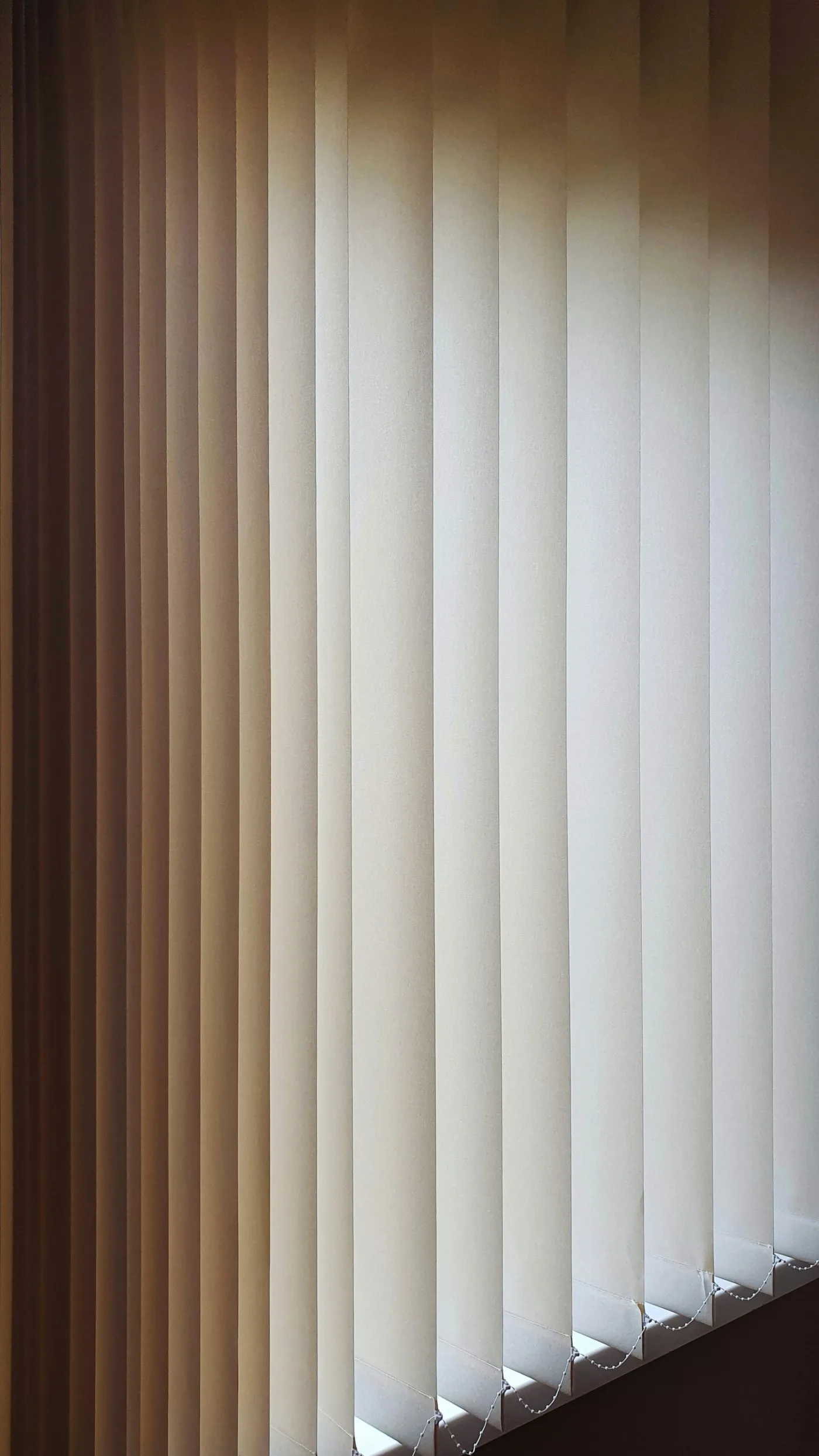
Vertical · Midday
Treatment
Time of day
Vanes that turn and stack to one side — made for wide sliding doors, where a horizontal blind would be too heavy to lift.
In short
By the Drapehaus studio · How we write
Is it right for you?
A vertical blind hangs a row of long vanes from carriers in a headtrack. One control rotates every vane at once, from edge-on to fully closed; the other draws the whole set to one or both sides, where the vanes stack neatly like a folded curtain. Because nothing has to be lifted, a vertical blind can cover a very wide opening and still move with one hand.
That makes verticals the practical answer for sliding and folding doors, full-height glazed walls, and offices, clinics and reception spaces with long runs of windows. They let you walk through a door without raising a heavy blind, and rotating the vanes controls light while leaving a slatted view.
In most living rooms and bedrooms, though, they read as functional rather than domestic, and a curtain or a set of split roller blinds usually sits better. They also sway and clatter when a door is open to a sea breeze unless the vanes are properly weighted, and on a small window their stack takes up a disproportionate share of the glass.
The details
Verticals stack to one side like a curtain, so a sliding door stays usable without lifting anything, and the vanes rotate to control light while keeping the view. They also shed dust better than horizontal slats, which helps in a breezy coastal house.
We fit them on commercial and office glazing as often as in homes, choosing fabric or PVC vanes by how the room is used and how much light it needs to hold back.
Your options
The vane material decides the look and the maintenance. The stack direction and control decide how well the blind works with the door or window behind it.
Swipe for all 6 →
The honest view
Works with doors
Vanes draw aside so a sliding door can be used without raising anything. The stack sits beside the opening rather than above it.
Covers very wide glass
Because the blind is drawn rather than lifted, a single vertical can span an opening far wider than any horizontal blind could manage.
Sheds dust
Vertical vanes collect much less dust than horizontal slats, which helps in breezy coastal houses with sand and salt in the air.
Replaceable vanes
Individual vanes clip onto carriers and can be replaced without remaking the blind, useful in offices and rentals.
Office look
In a home, verticals can feel institutional. Fabric vanes, soft colours and a concealed headtrack help, but a curtain is often warmer.
Sway in a breeze
With the door open, unweighted vanes swing and clatter against each other and the glass. Weights and a bottom chain reduce it but do not remove it entirely.
Light at the vane edges
Closed, the vanes overlap but light still shows along their edges. Verticals darken a room; they do not black it out.
Side by side
On a sliding door or wide glazed wall, the realistic choices are verticals, a pair of curtains on a track, split roller blinds and panel track blinds.
| Vertical blind | Curtains on a track | Split rollers | Panel track blind | |
|---|---|---|---|---|
| Door access | Draw aside | Draw aside | Must be raised | Slide aside |
| Adjust light without opening | Yes, rotate vanes | No | No | No |
| Look | Functional | Soft | Minimal | Clean, architectural |
| Behaviour in a breeze | Sways if unweighted | Billows | Stable when down | Stable, heavy panels |
| Humidity tolerance | High with PVC | Fabric-led | High | High |
| Cleaning | Wipe or vacuum vanes | Clean off-site | Wipe | Wipe panels |
Swipe to compare →
Rather see it in your own room?
We bring samples to the house, measure every window, and specify for the light and exposure you actually have.
Room by room
Practical and easy to use daily. Choose textured fabric vanes and conceal the headtrack under a pelmet or in a ceiling recess to soften the look.
Rotate the vanes to keep glare off the screen while keeping a view. PVC or fabric both work.
PVC vanes on a kitchen door to the garden wipe clean and ignore steam. Keep them clear of the hob.
Weighted vanes and a bottom chain are essential if the door stands open to the breeze.
Light shows at the vane edges and the look is less restful. Curtains or a blackout roller usually suit better.
Durable, easy to maintain and available in flame-retardant fabrics, which many hotels and public spaces require.
In depth — tap a heading to read
On a sliding door, the direction of the stack is the first decision. The vanes should gather over the fixed panel, not the moving one, so the opening is clear and nobody walks into a bunch of vanes. On a door that slides into a wall pocket, the stack goes to the opposite side.
The headtrack must sit high enough and far enough forward that the vanes clear the door handle when rotated. We measure the handle projection and the depth to the frame, and fix the track to the ceiling or wall above with enough clearance that the vanes hang straight to just above the floor without catching.
In a coastal house, sliding doors stand open for much of the dry season, and an onshore breeze through the opening sets loose vanes swinging and tapping against each other and the glass. It is the most common complaint about vertical blinds, and it is almost entirely a specification problem.
Each vane should carry a weight in a pocket at its base, and a light chain should link the weights so the vanes move as one. PVC and aluminium vanes are stiffer and sway less than fabric. When the door is fully open, drawing the blind back into its stack or rotating the vanes edge-on to the breeze stops the movement.
Monsoon onshore wind peaks in July. Before then, check that every vane's weight and chain is still in place.
Verticals are a mainstay of offices, clinics and hotels because they are durable, easy to clean and cover large glazed areas economically in hardware. Rotating the vanes keeps glare off screens without losing daylight, which matters more at a desk than almost anywhere else in a building.
For hospitality and public spaces, fabric flammability standards often apply. India's standard for curtains and drapes is IS 15741, and hotels commonly request BS 5867-2 or NFPA 701 compliant fabrics. We can specify vertical vane fabrics tested to those standards where a project requires it.
Most of the office look comes from three things: a visible white headtrack, stiff plain vanes, and vanes that stop short of the floor. Change those and a vertical blind can sit comfortably in a house. Recess the headtrack into the ceiling or hide it behind a pelmet, choose a textured or linen-look fabric vane in a warm neutral, and let the vanes run to just above the floor.
On a very wide glazed wall with sliding doors, verticals can also be paired with curtains: the blind handles light and privacy during the day, and a pair of full-length curtains on a separate track adds softness in the evening.
The headtrack of a vertical blind houses a row of carriers on a gear rod, and near the sea those carriers and the chain that links them are the parts salt attacks. We specify aluminium tracks with nylon or corrosion-resistant carriers and stainless bottom chains, because a rusted chain marks light vanes quickly.
Sand and fine dust also find their way into the track on a door used daily to the garden or a verandah. A periodic vacuum along the track keeps the carriers running smoothly and stops the vanes rotating unevenly.
Living with it
Wipe PVC and aluminium vanes with a damp cloth and mild detergent; vacuum fabric vanes with a soft brush, working from top to bottom.
Vacuum along the headtrack every few months, especially on doors that open to the garden or the beach.
Before the monsoon, make sure every weight and the bottom chain are in place, so vanes do not swing in the wind.
A creased or marked vane unclips from its carrier and can be replaced without taking the blind down.
On humid days, rotate fabric vanes open so air circulates, rather than leaving them closed flat against damp glass.
Avoid these
Vanes that gather over the opening panel block the door. Stack them over the fixed panel.
Unweighted vanes clatter in the breeze. Specify weights and a linking chain for any door that opens.
Vanes that stop well above the floor look like an office. Run them to just above the floor.
They rust and stain the vanes. Use stainless chains and non-corroding carriers.
The stack covers too much of the glass. A roller or Roman suits a small window better.
Checklist
More in blinds
Blinds do what curtains cannot: tight light control in a shallow recess, a clean line on a busy window, and genuine blackout when they run in side channels.
Our work
Our process
One team from the first visit to the last bracket, so nothing is lost between the person who specified it and the person who fits it.
FAQ
They are one of the best options. They draw to one side so the door can be used without raising a heavy blind, and rotate for light control when closed.
Fabric vanes look softer and suit living rooms; PVC vanes are wipe-clean and better for kitchens, offices and humid spaces.
Yes. The headtrack can be made in sections that meet at the angles of a bay, or bent to follow a gentle curve, so the vanes run continuously around the window. Each section is measured separately on site, because bays in older houses are rarely symmetrical.
Fit a weight at the base of each vane and a chain linking them so they move together. Choose PVC or aluminium vanes, which are stiffer, and draw the blind into its stack or rotate the vanes edge-on when the door is fully open.
Not when specified well. Textured fabric vanes, a recessed or concealed headtrack and vanes running to the floor give a far more considered look than the plain white office blinds most people picture.
No. Even closed, light shows at the edges of each vane and around the blind. Dim-out fabric vanes darken a room well, but for a bedroom that must be dark, curtains or a blackout roller are better.
89 mm vanes suit most homes, with finer control and a lighter look. 127 mm vanes suit large offices and commercial glazing, where fewer, wider vanes look calmer across a long run.
Next step
Verticals on a busy sliding door need careful planning: stack direction, handle clearance, weighting for the breeze and a track that suits the ceiling. We visit, measure each opening, watch how the doors are used and bring fabric, PVC and aluminium vanes to see in your own light. We then specify vanes, stack, controls and track, make the blinds and fit them. Book a home visit, and we will plan the openings with you.