 Drape Haus
Drape Haus
Preparing the room
Drape Haus
Preparing the room
Dining Room · Blinds
A blind takes no floor space, stays out of the way of chairs, and can be tilted or lowered just enough to take the sun off the table.
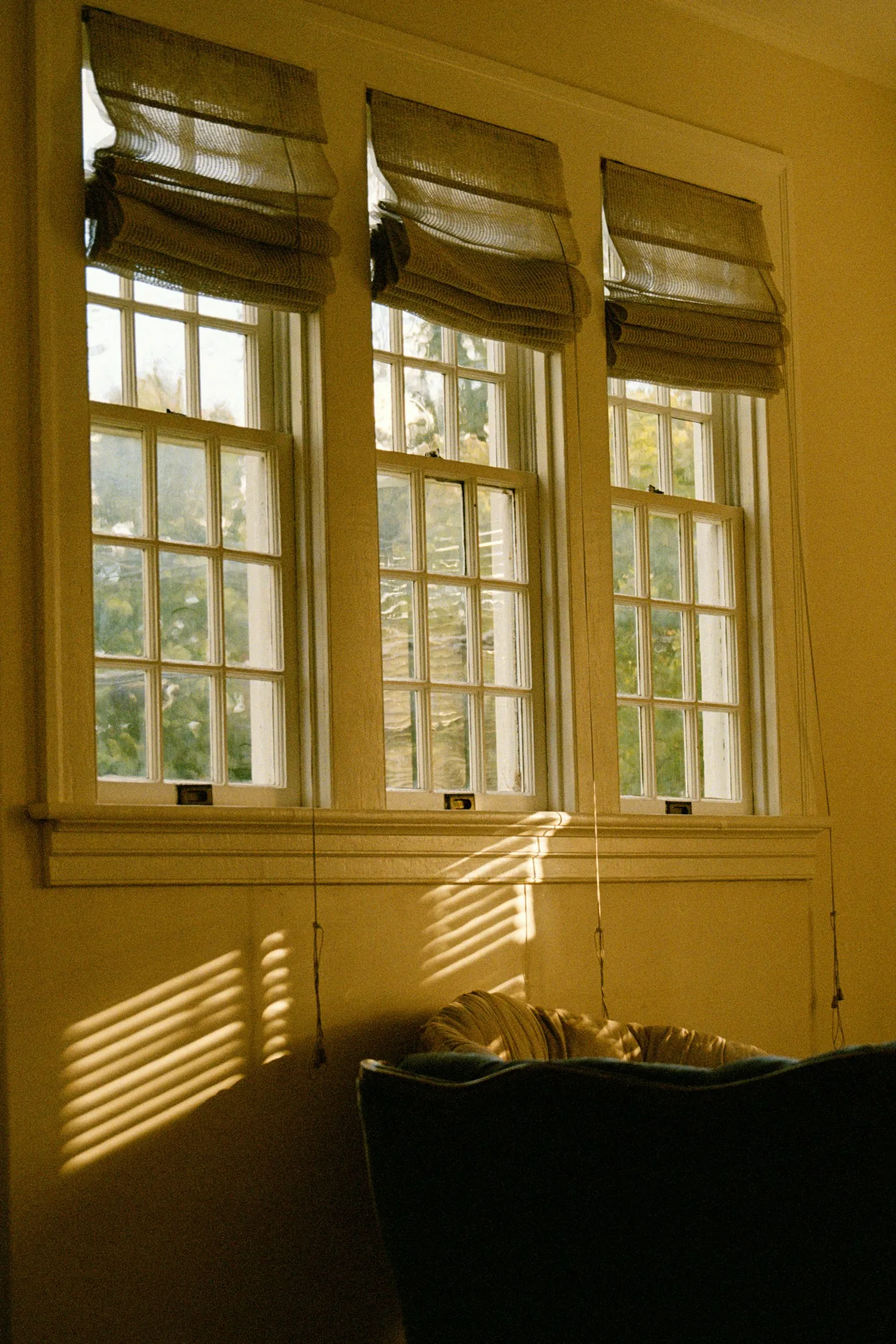
Zebra · Midday
Treatment
Time of day
Alternating sheer and solid bands: slide them into line for light and a filtered view, offset them for privacy.
In short
Blinds suit dining windows that sit right behind the chairs, above a sideboard or next to the kitchen. A zebra blind gives quick control of lunch-time glare, a roman blind adds softness that matches curtains in the hall, and faux-wood or PVC slats are the easiest to wipe clean near cooking.
What your dining room asks of blinds
See it in your dining room
We bring samples to your home, hold them to your light and measure every opening — anywhere in North or South Goa.
The strongest case for a blind is a window directly behind the dining chairs. A curtain there is constantly brushed and pushed; a blind inside the recess simply isn't touched. The same goes for a window above a sideboard or a buffet counter, where full-length curtains would have to hang behind the furniture.
A wide window or a door onto the garden often still suits a curtain. Many dining rooms end up mixed: a blind on the window behind the table, a curtain on the big opening. Keep the colours related and it reads as one scheme.
Glare at the table is about angle more than brightness. A low sun reflecting off glass tumblers or a polished table top is uncomfortable even when the room isn't hot. Tilting slats upward, or lowering a zebra blind to its sheer bands, redirects that light to the ceiling and keeps the room bright.
Roller and roman blinds do the same by height: lower them until the edge of the shadow falls just beyond the table. Choose a light-filtering fabric rather than a blackout — you want to see your food, not eat in the dark.
A blind near the stove or a frying pan gathers a sticky film over time. Faux-wood and PVC slats can be wiped with mild soapy water. Fabric roman and zebra blinds should be dusted regularly and spot-cleaned; ask for a fabric that can be sponged rather than one that marks with water.
Real wood is the most beautiful but the least forgiving of damp cloths and steam. Keep it for a dining room that is separate from the kitchen and not on the sea-facing side of the house.
Fitted inside the frame, a blind looks neat and leaves the sill free for a plant or a jug. Fitted outside on the wall, it covers more of the glass and blocks light gaps at the sides — better if the window faces a neighbour you'd rather not see at dinner. We'll check the depth of the recess and the straightness of old plaster on the visit.
In Goa
Older Goan houses often have deep window reveals in laterite or plastered stone, rarely perfectly square. We measure each corner separately so an inside-fit blind doesn't scrape or leave a wedge of light. In the monsoon, fabric blinds pulled down all day against wet glass can spot with mildew; raise them when it's dry outside to let air in.
Close to the coast, chains, brackets and headrails need to resist salt. Ask for aluminium or coated components, and avoid real timber on a sea-facing dining window.
More for your dining room
Blinds for other spaces
We measure and fit blinds across Goa — Panjim, Porvorim, Dona Paula, Mapusa, Candolim, Calangute, Assagao, Anjuna & Vagator, Siolim, Benaulim, Colva, Varca, Cavelossim, Margao, Majorda, Vasco da Gama, Canacona & Palolem, Ponda.
FAQ
Blinds for windows behind chairs or above a sideboard; curtains for wide openings and doors. Many dining rooms use both, coordinated in colour.
Faux-wood or PVC slatted blinds. They tolerate humidity and wipe clean of grease and smoke with a damp cloth.
No. Aligned on its sheer bands it lets most daylight through while cutting the glare; aligned solid, it gives privacy at dinner.
Yes — it can be made from the same fabric as your curtains or from one in the same range, which ties an open dining area to the hall.
Yes. We measure uneven reveals carefully and choose brackets that fix securely into old plaster and laterite.