 Drapehaus
Drapehaus
Preparing the room
Drapehaus
Preparing the room
Other Services
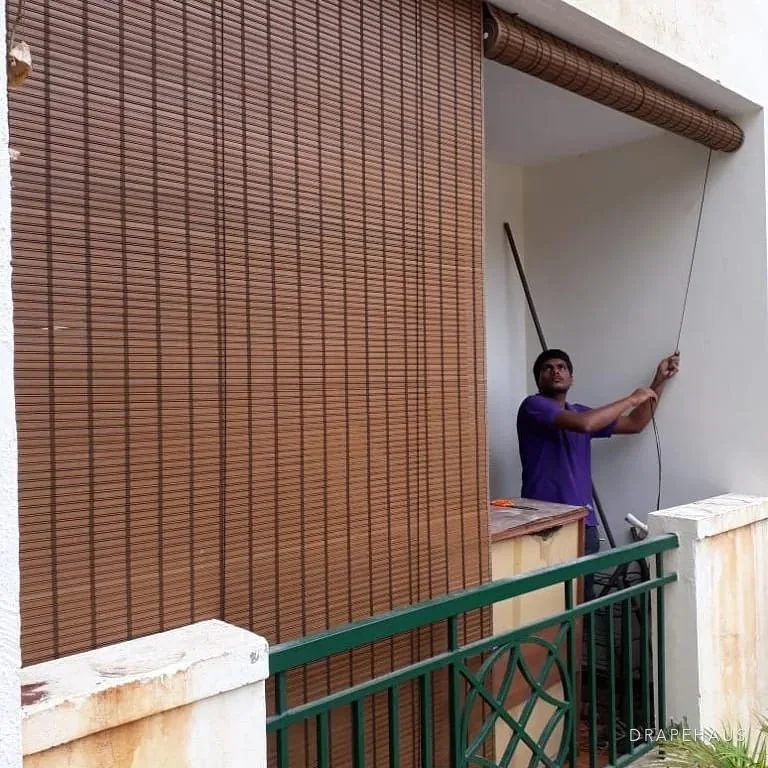
Retractable and fixed shade for verandas, terraces and balcões. External shade does more for a hot room than any interior treatment, because it stops the sun before it reaches the glass.
In short
By the Drapehaus studio · How we write
Is it right for you?
Once sunlight passes through glass, most of its energy becomes heat inside the room, and an interior blind can only return part of it. External shade stops the sun before it reaches the glass, which is why it works so much better. US Department of Energy guidance puts the reduction in solar heat gain from awnings at up to 65 per cent on south-facing windows and 77 per cent on west-facing ones, and field research has found exterior shades far more effective than interior roller shades at cutting dangerous indoor heat.
Awnings suit houses with hot west and south glazing, verandas and terraces that are unusable through the afternoon, and rooms where an interior blind would block a view the owners want to keep. They also create outdoor rooms: a shaded sit-out is used for hours longer each day than an exposed one.
They are harder to justify on very exposed rooftops and sea-facing positions where wind is frequent, on heritage façades that cannot take new fixings, or in apartments where the building restricts external changes. Sometimes a vertical screen, a fixed canopy or a planted pergola is the better answer, and we will say so.
The details
The constraint in Goa is wind: anything extended in a pre-monsoon squall needs a real wind rating and a plan for retraction. We specify wind sensors and automatic retraction where the position is exposed.
Canvas gives full shade; PVC mesh keeps the view. Both are chosen in solution-dyed materials that hold their colour, and we retract and store them for the monsoon.
Your options
The right type depends mostly on the sun angle you are fighting and the wind exposure of the position. These are the main options.
Swipe for all 5 →
The honest view
Far more effective against heat
Shade outside the glass stops heat entering the room at all, easing air-conditioning load and making rooms comfortable that interior blinds could not fix.
Keeps the view
Interior blinds lowered against the sun close off the garden or the sea. An awning or mesh screen keeps it in sight while taking the heat and glare away.
Adds usable outdoor space
A shaded terrace becomes somewhere to eat, work or rest through the afternoon, rather than an area crossed quickly between rooms.
Protects interiors from fading
Blocking direct sun at the glass protects floors, rugs and upholstery from the sun that fades them most.
Wind is the real constraint
Any awning extended in a squall is at risk. Exposed positions need wind sensors and motorised retraction, and some positions are simply too exposed.
Seasonal work every year
Awnings are retracted, and often removed, for the monsoon. That is a yearly routine, not an optional extra.
Fixings need strong walls
Folding-arm awnings put large loads on their brackets. Old laterite, lime plaster and timber may need structural advice or an alternative.
Salt and sun age frames
Close to the sea, fixings and frames need corrosion-resistant materials and periodic inspection, even with the best finishes.
Side by side
The choice depends on which sun you are dealing with and how exposed the position is. These are the realistic options for a hot room or terrace.
| Retractable awning | Vertical exterior screen | Interior blind | Fixed pergola or roof | |
|---|---|---|---|---|
| Heat stopped outside | Yes | Yes | No | Yes |
| Low western sun | Partly | Yes | Yes | Partly |
| View kept | Yes | With mesh | Only when raised | Yes |
| Wind tolerance | Retract in squalls | Good in channels | Not an issue | Good, if engineered |
| Monsoon | Retract or remove | Raise, or remove | Stays | Stays |
| Creates outdoor space | Yes | Partly | No | Yes |
| Heritage façades | Case by case | Case by case | Yes | Rarely |
Swipe to compare →
On many west-facing rooms the best answer is two layers: an exterior screen for heat and an interior sheer for softness.
Rather see it in your own room?
We bring samples to the house, measure every window, and specify for the light and exposure you actually have.
Room by room
The hottest glass in most houses. Vertical exterior screens stop the low afternoon sun that horizontal awnings miss, while keeping the view.
A folding-arm awning extends the shade of the roof and makes the space usable through the afternoon. Retract it when the wind picks up.
Drop-arm awnings keep high sun off the glass and bring down the heat in the room before evening, with a window view kept open below.
Awnings or vertical screens make outdoor seating usable longer. They need motorised operation and wind sensors, since staff are busy when squalls arrive.
A traditional balcão often has shade already from its roof. Where more is needed, careful survey of old masonry and timber comes before any fixing.
Shade sails or freestanding structures suit open decks. Choose fabrics resistant to chlorine and plan to take them down for the monsoon.
Wind exposure is high. Only well-engineered structures with sensors are worth considering, and some rooftops are better with fixed shade.
In depth — tap a heading to read
An awning is a geometry problem. In the middle of the day the sun is high, and a modest horizontal projection over a south-facing window shades the whole glass. In the late afternoon on a west-facing wall the sun is low, and it slips under any horizontal awning of reasonable size. That is why west glass is usually better served by vertical screens, or by an awning combined with a vertical drop valance or screen.
Projection and pitch are set together. More pitch sheds rain and wind better and shades lower sun, but reduces headroom and view. We measure the wall, the openings and the space below, and look at the sun at different times of day, before recommending a size.
Average wind near the coast is modest even in July, when it blows onshore from the west and south-west. The danger is the gust: pre-monsoon squalls and thunderstorms arrive fast and hit extended fabric like a sail. An awning left out in one can bend its arms, tear its fabric or pull its brackets from the wall.
For exposed positions we specify motorised awnings with wind sensors that retract them automatically when movement or wind speed passes a set threshold. Where the house is often empty, this is not optional. Even with sensors, awnings should be retracted at night and whenever the house is left.
Solution-dyed acrylic canvas is coloured through each fibre before weaving, so it holds its colour in sun far better than printed or piece-dyed cloth. It gives full shade and a soft, textile look. PVC-coated polyester mesh lets you see out while cutting heat and glare, dries quickly and resists mould. Both are available in many colours; lighter shades reflect more heat, darker ones cut more glare.
Near the sea, frames and fixings face the most corrosive conditions, and chloride deposition is highest closest to the shore. We specify powder-coated aluminium frames and stainless steel fixings of a suitable grade, and inspect them every year when the awning goes back up after the rains.
The closer to the sea, the more the fixings matter. Salt finds the weakest screw first.
A folding-arm awning concentrates its load on a few brackets, and that load reverses when the wind lifts the fabric. Concrete slab edges and sound reinforced walls take it well with the right anchors. Laterite walls vary in strength, and plastered surfaces can hide weak areas. We drill test holes and choose anchors and bracket spacing to suit what we find.
Heritage houses need more care still. Lime plaster, old timber and decorated façades should not be loaded or drilled casually. Often the answer is a lighter awning, a freestanding frame or a fixed canopy that spreads its load, and occasionally the answer is to leave the façade alone.
No awning should be left extended through the monsoon. Retracted into a full cassette, fabric is protected from rain and debris, but in exposed positions it is still safest to remove the fabric and store it dry. Open-roller awnings without cassettes should always be removed or covered.
We retract, remove and store awning fabric as part of our seasonal service, checking frames and fixings for corrosion and cleaning fabric before storage. In October everything is refitted, tested and sensors checked before the dry season's sun returns.
Living with it
Brush off dust and leaves and rinse salt from fabric with fresh water every few weeks, letting it dry fully before retracting.
If an awning must be retracted wet, extend it again to dry as soon as the weather allows, or mildew can form in the roll.
Test wind sensors and motor limits in April and May, before pre-monsoon storms arrive.
Remove fabric from exposed awnings, clean and dry it, and store it ventilated until October.
Avoid these
Low afternoon sun passes underneath. Use vertical screens or add a vertical drop.
Squalls arrive without warning. Specify a motor and sensor wherever the position is open.
Brackets in poor masonry pull out under wind load. Survey the wall and use anchors suited to it.
Rain, mould and wind damage fabric left in place. Retract, remove and store it.
Checklist
More in other services
The work that keeps a Goan house in good order through the year: storing curtains through the monsoon, motorising windows nobody can reach, shading verandas, and fitting out hotels and villas to a specification that can be repeated.
Our work
From the Journal
All articlesOur process
One team from the first visit to the last bracket, so nothing is lost between the person who specified it and the person who fits it.
FAQ
Not extended. Awnings are retracted — and in exposed positions stored — for the monsoon, and wind sensors retract them automatically in a squall.
Canvas for full shade, mesh where you want to keep the view.
Yes, considerably. Because they stop sun before it reaches the glass, awnings are much more effective than interior blinds. US Department of Energy guidance puts the reduction in solar heat gain at up to 65 per cent on south-facing windows and 77 per cent on west-facing windows.
Solution-dyed acrylic canvas for full shade and colour retention, or PVC-coated polyester mesh where you want to keep the view and dry quickly. Both resist UV and mould well. The frame and fixings matter as much as the fabric near the sea.
It depends on the awning's size, design and wind rating, and on how it is fixed. Gusts do the damage, not average wind. Retract awnings when wind rises, and use a wind sensor with a motor on exposed positions.
Yes. Motorised awnings can be operated by switch or remote, set on schedules, and linked to wind and sun sensors. On exposed positions and houses that are often empty, motorisation with a wind sensor is strongly recommended.
Sometimes. It depends on the condition of walls and timber and any heritage restrictions. We survey first, and may recommend a lighter awning, a freestanding frame or a different form of shade to protect the building.
Next step
We start with a visit to the terrace, veranda or façade, looking at how the sun moves across it, how exposed it is to wind, and what the wall can carry. We bring canvas and mesh samples to see in the real light, and recommend a type, size and operation. Then we make, fix and commission the awning or screen, and look after it through the seasons. Book a home visit to plan it.