 Drapehaus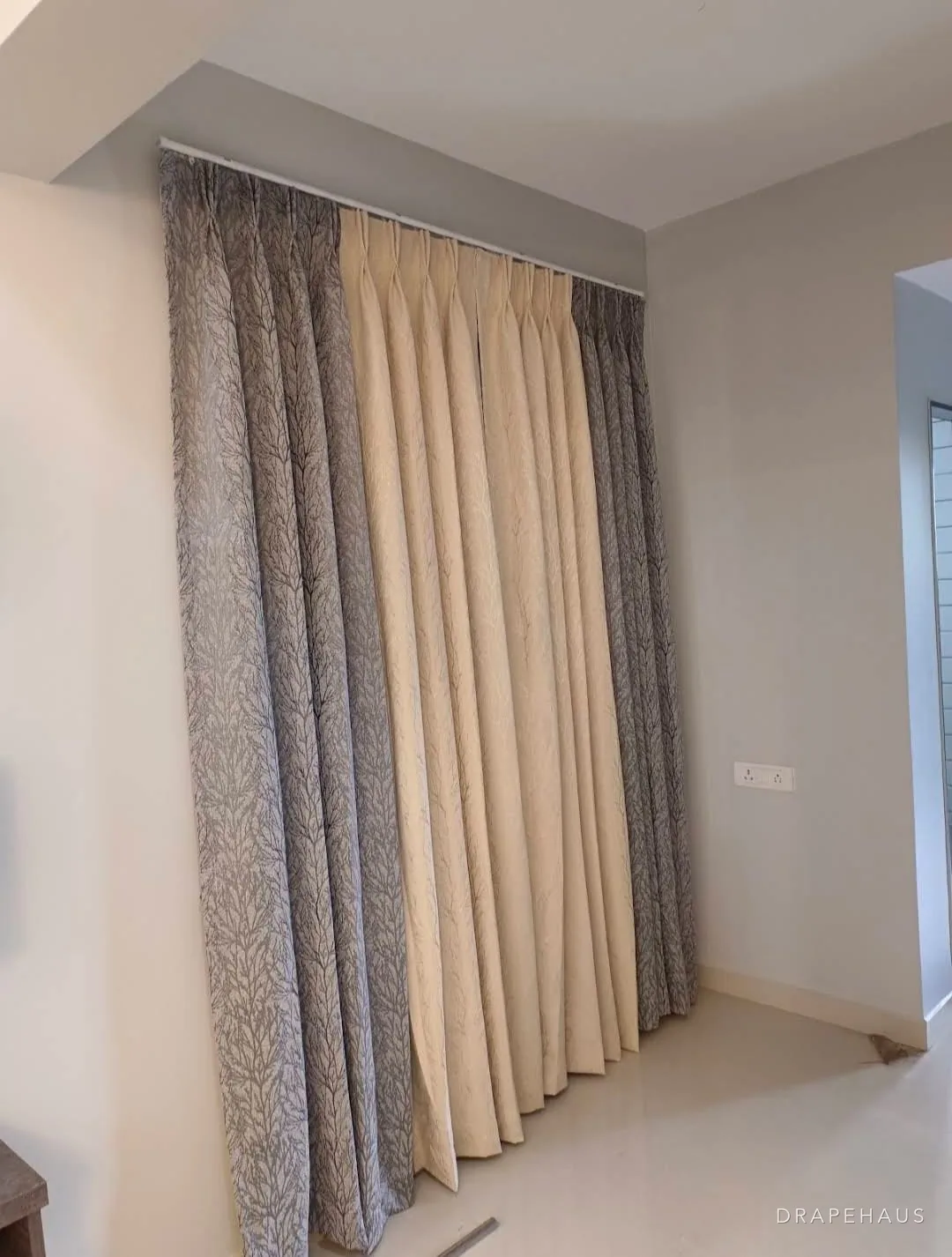
Drapehaus
Preparing the room
Drapehaus
Preparing the room
Other Services
Remote, scheduled and solar-powered blinds and curtains for windows nobody can reach — stairwells, double-height glass and long runs where a manual pull becomes a daily chore.
Sheer + blackout · Midday
Treatment
Time of day
Two layers on a double track: the sheer stays drawn for the day, the blackout closes over it at night. The most flexible answer for a bedroom.
In short
By the Drapehaus studio · How we write
Is it right for you?
A motor does one simple thing: it moves a blind or curtain that a person would otherwise move by hand. The value lies entirely in which windows it is fitted to. On a stairwell window three metres up, a run of glass across a double-height living room or a heavy interlined curtain six metres wide, the motor is what makes the treatment usable at all. On a small bedroom window within easy reach, it is a convenience rather than a necessity.
Motorisation also suits houses that are often empty. Blinds that lower on west glass every afternoon keep heat and sunlight off floors and furniture while nobody is home, and a house that opens its blinds in the morning looks occupied.
It is less suitable where a window is opened and closed constantly for ventilation and the blind is mostly left up, where the owner prefers the feel of drawing curtains by hand, or in a heritage room where no motor housing can be hidden. We specify motors window by window, not house by house.
The details
Anything above normal reach that is operated by hand gets demonstrated once at handover and then never again, which is why we treat motorisation as a requirement on stairwell and double-height glazing rather than an upgrade.
We fit battery, solar-charged and mains-wired motors, always with a manual override, and a physical switch as well as a remote or app — because power cuts happen.
Your options
Almost any blind or curtain can take a motor, but each mechanism behaves differently and suits different windows. These are the ones we motorise most often.
Swipe for all 6 →
The honest view
Unreachable windows get used
A blind that needs a pole or a ladder stays in one position for years. Motorised, it is lowered against the afternoon sun and raised again, which is what it was bought for.
No cords or chains
Motorised blinds need no loose cords or looped chains, which removes a known hazard in children's rooms and gives a cleaner window in every room.
Protection while the house is empty
Scheduled blinds keep strong sun off floors, rugs and upholstery during the months the house is closed or between guests, which slows fading and reduces heat build-up.
Less wear on heavy curtains
Heavy curtains drawn by hand are pulled at the leading edge and slowly distorted. A motor draws them evenly from the master carrier, so the fabric and the hand stitching last longer.
Parts that can fail
A motor, a receiver and a battery are more to go wrong than a chain. Quality motors are reliable, but they need occasional attention, and a failed motor on a high window needs access to replace.
Battery charging is a chore
Battery motors need recharging from time to time, and a blind in an awkward place is awkward to charge. Solar panels or wiring solve this at the specification stage.
Controls can confuse guests
Too many remotes, apps and scenes in a rental villa lead to calls and complaints. The simplest controls are usually the best for guests.
Side by side
The power source decides where a motor can go and how it is looked after. This is the practical difference between them, alongside a manual chain for comparison.
| Manual chain | Battery motor | Solar-charged | Mains-wired | |
|---|---|---|---|---|
| Needs wiring | No | No | No | Yes, at the head |
| Suits finished rooms | Yes | Yes | Yes, with glass for the panel | Only with chasing |
| Heavy curtains, long runs | Hard to pull | Limited | Limited | Best choice |
| Many cycles a day | Tiring | Drains the battery | Usually fine | Best choice |
| Routine attention | None | Periodic charging | Clean the panel | Very little |
| In a power cut | Unaffected | Unaffected | Unaffected | Needs manual override |
| Heritage walls | Yes | Yes | Yes | Rarely appropriate |
Swipe to compare →
On an unreachable window, the cost of the ladder or scaffold usually outweighs the difference between motors. Choose the one that will need the fewest visits.
Rather see it in your own room?
We bring samples to the house, measure every window, and specify for the light and exposure you actually have.
Room by room
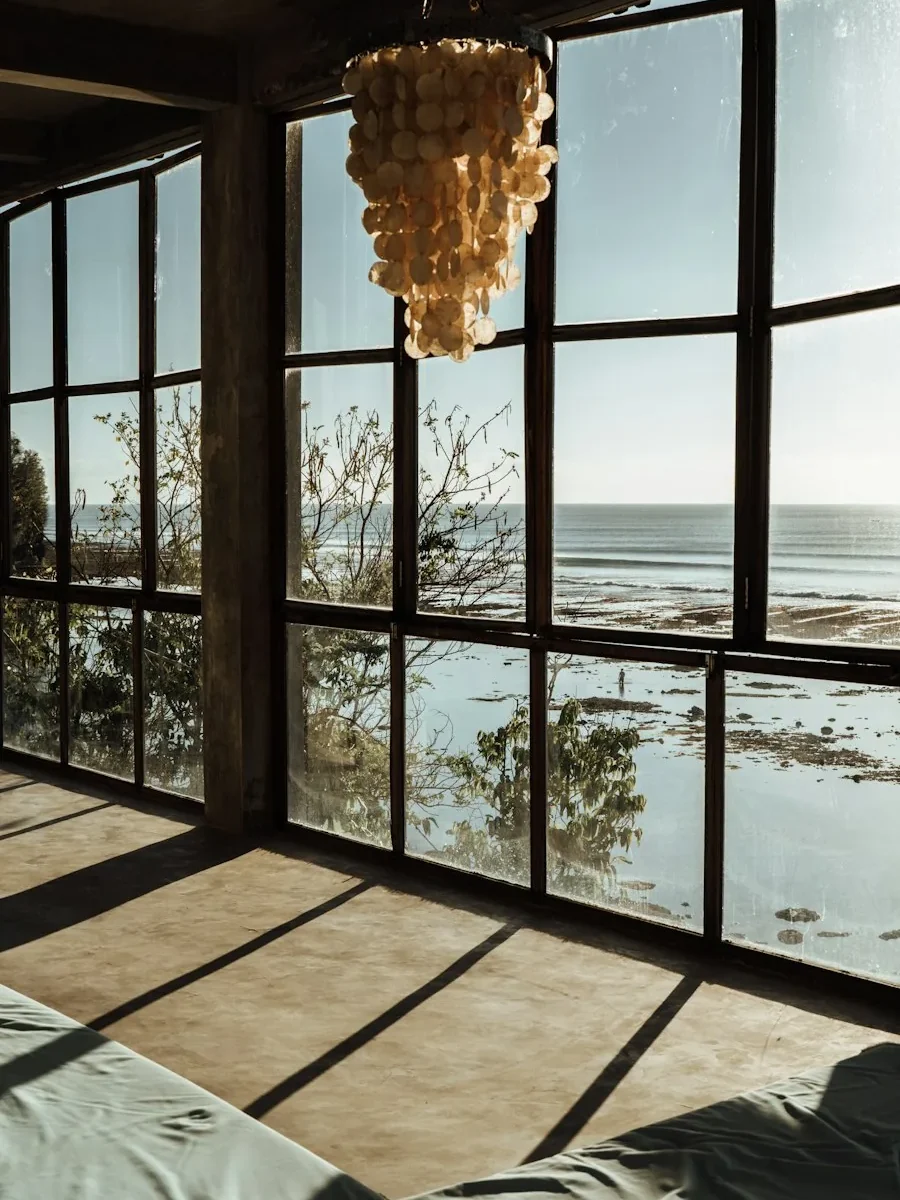
The window nobody reaches. A solar-charged roller blind needs no wiring and almost no attention, and it can be set to lower on hot afternoons.
Tall glass and heavy curtains are the strongest case for wired curtain tracks, ideally planned before the ceiling is closed. Group upper and lower blinds so they move together.
A blackout blind or curtain on a bedside switch, with a quiet motor and a gentle speed, is the most appreciated motorisation in most houses.
Blackout blinds that close with the screen are a genuine convenience. Pair them with side channels if full darkness matters.
A single wall switch per window, clearly labelled, works best. Avoid apps and hidden scenes that guests cannot find at night.
Removing cords and chains is a safety gain. Keep the switch within adult reach or on a schedule.
Usually a small, reachable window. A motor is rarely worth it unless the window sits behind a counter or a range.
In depth — tap a heading to read
We look at four things at each window. Reach: whether an adult can operate the blind comfortably from the floor. Load: the width, drop and weight of the treatment, which rises with lined and interlined curtains. Frequency: whether it will move once a day or many times. And grouping: whether it belongs with other windows that should move together, such as a row of tall doors to a veranda.
A window that fails on reach or load should be motorised. One that fails only on frequency or grouping may be worth it, depending on how the room is used. The rest can stay manual, and there is no need for every window in a house to match. It is common, and sensible, for a villa to have motors on the stairwell, the double-height room and the principal bedroom, and nowhere else.
Every motorised window should have a physical control in the room: a wall switch or a wall-mounted remote in a fixed holder. Handheld remotes are useful, but they wander, and a window that can only be operated from a missing remote is no better than a stuck one. Apps and home-automation systems can sit on top of this, never instead of it.
Schedules are where motorisation earns its keep in Goa. West-facing blinds can lower after midday and rise at sunset; bedroom blinds can open gently in the morning. Sun and temperature sensors can do the same thing responsively. Keep scenes few and named plainly, so a guest or a caretaker understands them without instructions.
For an owner who is away for months, a schedule can keep blinds on sunny glass lowered through the hottest part of the day, protecting floors, rugs and upholstery from fading and holding down the heat that builds up in a sealed room. A morning and evening cycle also makes the house look lived in.
Regular movement helps the mechanism too. A blind that sits in one position through the monsoon is more likely to stick or mark where the fabric has been wrapped. Before the house closes, battery levels should be checked and charged, and schedules confirmed, so nothing stops working in August with nobody there to notice.
Before a long absence, charge every battery motor and test each schedule once. It is a short job in May and an awkward one in August.
A motor has to be taught its upper and lower limits, paired to its controls and grouped with other windows. We set these on site after the blinds and curtains have hung for long enough to settle, then run every window through several full cycles, checking that fabric rolls straight, curtains close fully at the centre and nothing catches on a sill or handle.
At handover you receive a record of every motor: its type, its location, its channel on each remote and its schedule. Spare remotes are labelled. If the house has a caretaker, we show them how to use the manual override, how to charge the batteries and how to reset a limit, because those are the three things most often needed later.
Motors live inside tubes and headrails, but they still breathe the same air as the room. Near the sea that air carries salt, and for four months it is close to saturated. We specify motors and receivers suited to humid conditions, keep electrical connections away from any glass that sweats, and avoid mounting motors in positions where a leaking frame would drip onto them.
Rechargeable batteries also age faster when they sit fully discharged, so a battery motor that has quietly run flat through a closed monsoon loses capacity. A charge before closing and after reopening is the best habit.
Living with it
Vacuum or brush the fabric while the blind is lowered. Do not force a motorised blind by hand unless it has a manual override.
Wipe the small panel on the glass every few months. Salt film and dust reduce its charge.
Top up every battery motor before you leave for the monsoon, and again when the house reopens.
A motor that starts to labour, stop short or click is usually telling you about a snag in the fabric or a failing battery. Deal with it early.
Avoid these
Motors on reachable windows add parts without adding much. Motorise where reach, weight or schedules demand it.
When the remote goes missing, the blind stops. Fit a wall switch or fixed remote in every room.
A blind cycled many times a day drains its battery. Use solar or wired motors there.
Fabric settles and stretches slightly after hanging. Set limits once it has, and recheck at the first service.
A caretaker cannot fix what nobody wrote down. Leave the schedules and channels with the house.
Checklist
More in other services
The work that keeps a Goan house in good order through the year: storing curtains through the monsoon, motorising windows nobody can reach, shading verandas, and fitting out hotels and villas to a specification that can be repeated.
From the Journal
All articlesOur process
One team from the first visit to the last bracket, so nothing is lost between the person who specified it and the person who fits it.
FAQ
Every wired installation has a manual override, and battery and solar motors keep working without mains power.
Not necessarily. Battery and solar-charged motors need no wiring, which suits finished rooms and heritage walls.
On windows above normal reach, very wide glazing and heavy curtains, yes, because without a motor they are rarely used as intended. On small, reachable windows the case is weaker. Most houses benefit from motors on a few key windows rather than all of them.
It depends on the size of the blind, the motor and how often it moves. On a roller blind used once or twice a day, a charge commonly lasts many months. A solar panel on the glass can keep it topped up in Goan light, which suits windows that are awkward to reach.
Most quality motors can connect to common home-automation systems and voice assistants through a hub or bridge. We check compatibility with your system before specifying, and always keep a physical switch that works independently, so the blinds still operate if the network or hub is down.
Good motors are quiet, and many offer a slow, quieter speed for bedrooms. The track and carriers make as much noise as the motor, so a well-installed, straight track with good carriers matters as much as the motor itself.
Yes, if the motors are connected to a hub with internet access. For absentee owners, though, local schedules stored in the system are more dependable than remote commands, because they keep running even if the connection drops.
Next step
We start with a visit, walking the house to judge reach, weight and use at each window, checking where power runs and whether the walls can take chasing. We bring fabric samples to see in the room's own light, and talk through controls and schedules with whoever will use them. You receive a window-by-window specification with the motor type and controls for each. We then make, install and commission everything, and hand over a clear record. Book a home visit to plan it.