 Drapehaus
Drapehaus
Preparing the room
Drapehaus
Preparing the room
Problem
Goa sits at fifteen degrees north, and the UV load here is high year-round rather than seasonal. Fabric that would hold its colour for a decade in a temperate climate can look visibly faded in two or three years on a south or west elevation.
By the Drapehaus studio · 19 September 2026 · How we write
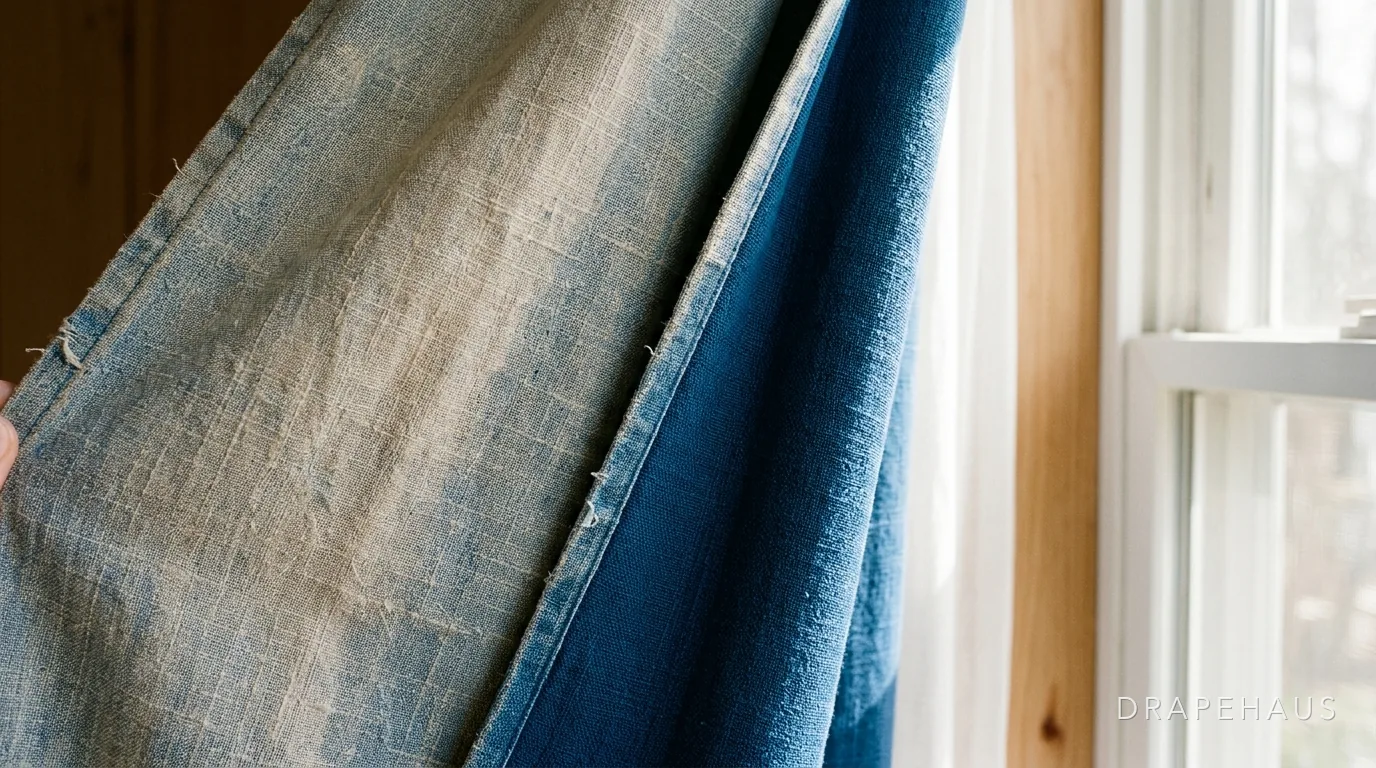
Fading is also uneven, which is what makes it conspicuous. The leading edge, the fold that sits in the sun, and the bottom third where light reflects off a pale floor all go first, so the curtain does not fade evenly into a softer version of itself — it goes patchy.
The variables you control are fibre, dye method, lining and how much direct sun the fabric takes. Three of those are decided at specification.
Solution-dyed fabric has pigment added to the liquid polymer before the fibre is formed, so colour is distributed through the entire cross-section. UV degrades the surface first, but there is identical colour underneath, so fading is far slower and far more even.
Piece-dyed and surface-printed fabrics carry colour only on or near the surface. Once UV breaks down that layer the undyed core shows through, which is why a printed fabric fades faster and blotchier than a solid one of the same fibre.
This is why an inexpensive solution-dyed acrylic will comfortably outlast a more expensive piece-dyed natural fabric on a sunny elevation. It is a specification decision, not a price decision.
A lining is a sacrificial UV layer. It takes the direct radiation and the face fabric behind it is substantially protected, which is why lined curtains hold colour far better than unlined ones on a sunny window.
The consequence is that the lining fades instead, and that is fine — it is inexpensive, it is not seen from inside, and replacing a lining is much less work than remaking a curtain. Treat it as a consumable with a life of its own.
Where a house rule or society bye-law already requires a white external lining, this comes free. Elsewhere it is worth adding on any window with real sun exposure even if the fabric would otherwise be used unlined.
Rather see it in your own room?
We bring samples to the house, measure every window, and specify for the light and exposure you actually have.
More on this — tap a heading to read
Deep saturated colours have further to fall and show change most obviously, particularly reds and bright blues, which lose their intensity noticeably. Black fades to a dusty brown-grey that reads as tired.
Mid-tone neutrals, muted earths and anything with visible texture hold up best, partly because they genuinely fade more slowly and partly because texture disguises the unevenness that makes fading conspicuous.
This is one of the reasons the natural and undyed palette suits Goan light so well. It is not only that it looks right against strong sun and white plaster; it is that it still looks right in four years.
Fading usually starts where you are not looking. Turn back the leading edge of a curtain and compare the face fabric in the fold, which has been shaded, with the face exposed at the front. A visible difference means the curtain is already losing colour, even if the room looks fine at a glance.
The lining tells the same story more clearly. A lining that has yellowed, gone brittle or developed a powdery surface on the window side has been absorbing heavy UV for some time. When the lining starts to split along the folds, the face fabric is next. We also look at other furnishings. Faded upholstery, a pale patch on a rug, or a timber floor that has lightened near the window all show where the sun reaches and how strongly.
Ordinary window glass blocks most UVB but lets through much of the UVA, according to the Skin Cancer Foundation, and UVA is a significant cause of fading. So a closed window reduces the problem, but does not stop it. UV-control window film can block more than 99 percent of both UVA and UVB, according to the same source. It is a strong option for a room with valuable furnishings, artwork or a floor that is fading. It does not stop visible light and heat entirely, which also contribute to fading, so it works best alongside sensible fabric choices.
Where the glazing is being replaced anyway, laminated or coated glass with good UV performance is worth considering. Either way, the fabric still matters: film and glass slow fading, fabric choice decides how gracefully the curtain ages. It is also worth remembering that neither film nor glass does anything for the lining, which still takes the visible light and heat, so it will continue to need replacing at intervals.
A single house can need three different approaches. North-facing and shaded rooms can take natural fibres, prints and deeper colours, because they receive little direct sun. East rooms get strong but short morning sun and do well with lined fabric in mid-tones. South and west rooms need the most robust choices: solution-dyed acrylic or good polyester, lined, in colours that age gracefully.
For rooms with valuable furnishings, the window treatment protects more than itself. A solar roller or lined curtain drawn in the hours of direct sun protects floors, rugs and upholstery as well. That is often the stronger argument for a treatment in a sunny living room than the condition of the curtain itself.
UV in Goa is high throughout the year, but the pattern of damage follows the sky. From November to May, clear skies and long hours of direct sun do most of the fading, with the hardest months in the run-up to the monsoon. From June to September, heavy cloud cover reduces direct sun considerably, though diffuse UV continues. That makes the months after the monsoon a good time to check linings, rotate cushions and consider replacing a tired lining before the long dry season begins. A curtain that enters the dry season with a sound lining is protected for the months that matter most.
In a holiday let or hotel, curtains are often left open all day, because guests want the view and nobody is responsible for closing them. That means maximum exposure. Solution-dyed or high-quality polyester fabrics, sacrificial linings and a colour palette that ages evenly are the practical defaults for guest rooms with sun.
Uneven fading is the main risk in a rental, because guests see curtains side by side. A single replaced panel beside faded ones stands out immediately. Buying a little extra fabric at the outset, and replacing whole sets rather than individual panels, keeps rooms looking consistent and makes future maintenance simpler.
Housekeeping routines help as well. A simple instruction to draw the solar blind or curtain on the sunny side of a room between bookings costs nothing and keeps floors, cushions and curtains out of the strongest sun when nobody is there to enjoy the view. Over several seasons it noticeably narrows the difference between the guest rooms that face the sun and those that do not.
Diagnosis
WhySouth and west elevations take vastly more UV than north and east. The fabric is performing as expected for its exposure.
FixSpecify by elevation rather than uniformly. Solution-dyed and lined on sunny sides; freer choice elsewhere.
WhySurface-applied colour breaking down unevenly to reveal undyed fibre beneath.
FixSolution-dyed or solid piece-dyed fabric on sunny windows. Save prints for rooms with limited direct sun.
WhyThat is the lining doing its job as a sacrificial UV layer.
FixReplace the lining and keep the curtain. Far less costly than remaking, and it resets the protection.
WhyLight reflecting off a pale tiled floor delivers a second dose of UV to the lower part of the fabric.
FixExpected on pale floors. Lining helps; so does choosing a fabric where this reads as texture rather than damage.
WhyYears of direct UV have broken down the fibres of the lining, which has been acting as a sacrificial layer.
FixReline the curtain before the face fabric starts to degrade. Choose a durable polyester-cotton lining for sunny windows.
WhyThe originals have lost colour over time, so a fresh panel from the same fabric looks darker and brighter.
FixReplace the whole set on that window, or buy spare fabric at the outset and store it for repairs.
WhyDirect sun reaches furnishings during the hours when the curtain or blind is left open.
FixDraw a solar roller or lined curtain during peak sun hours, consider UV film on the glass, and rotate rugs and cushions.
Checklist
Specify fabric by elevation, not one choice for the whole house
Prefer solution-dyed for south and west windows
Line anything with real sun exposure
Treat lining as a replaceable consumable
Favour mid-tones and texture over deep saturated flat colour
Expect extra fading low down where pale floors reflect
Compare shaded folds with exposed faces to catch early fading
Consider UV-control film where floors or artwork are at risk
Buy spare fabric for rental rooms to allow matching repairs
Inspect and replace tired linings after each monsoon
From the Journal
All articlesFAQ
High UV year-round rather than seasonally, at fifteen degrees north. Fabric that would last a decade in a temperate climate can look visibly faded within two or three years on a south or west window, and it fades unevenly, which makes it far more noticeable.
Solution-dyed acrylic is the most fade-resistant widely available option. Pigment is added before the fibre is formed, so colour runs through the whole cross-section and there is no undyed core to show through as the surface degrades.
It dramatically slows it. The lining takes the direct UV and fades instead of the face fabric, which is exactly what it is for. Treat it as a consumable — replacing a lining is far less costly and quicker than remaking the curtain behind it.
Mid-tone neutrals, muted earth colours and anything with visible texture. Deep saturated reds and blues lose intensity conspicuously, and black fades to a dusty brown-grey. Texture also disguises the unevenness that makes fading obvious.
It helps a great deal. According to the Skin Cancer Foundation, UV window film can block more than 99 percent of UVA and UVB. Visible light and heat also contribute to fading, so film slows it rather than stopping it entirely. It works best combined with fade-resistant fabric and a lining.
Sometimes, if the fabric is natural fibre and the fading is fairly even. Re-dyeing rarely gives a perfectly even result on patchy fading, and synthetic fibres such as polyester and acrylic are difficult to dye at home. Replacing the lining and moving the curtain to a less sunny room is often a better use of the fabric.
The face fabric can still fade, because it faces the room and the window side is usually a coated lining. The lining itself takes most of the UV and can yellow, crack or become brittle over time. A good three-pass acrylic-coated lining lasts better than a foam-backed one in Goan heat and humidity.
Usually because light reflects off a pale tiled or marble floor and reaches the lower part of the fabric a second time. It can also happen where furniture shades the upper part of the window. A lining helps, and a fabric with texture or a muted colour disguises the difference.
Far less than those on south or west windows, because they receive little direct sun for most of the year. They still take diffuse daylight, which fades fabric slowly over many years, so deep colours and silks will change eventually. North-facing rooms are the best place in the house for prints, natural fibres and colours you would not risk on a sunny elevation.
Keep reading